
Views: 0 Author: Site Editor Publish Time: 2026-10-29 Origin: Site


Picture this: you step into your greenhouse on a sweltering summer morning. You flip the main pump switch. You expect the steady hum of water rushing to your crops. Instead, you find sputtering lines and bone-dry soil at the far end of the row. System blockages are a relentless threat in modern farming. This frustrating scenario brings us to a critical operational question: do agricultural irrigation filters actually clog?
The short answer is yes, they certainly do. In practical terms, when a filter traps debris, it is successfully performing its primary function. However, excessive or unmanaged accumulation quickly escalates into catastrophic failures. This leads to poor crop yields and expensive infrastructure repairs. This comprehensive guide explores the underlying causes of these blockages. We will break down the distinct differences between various filtration technologies and share actionable maintenance strategies. Our goal is to ensure your Agricultural Irrigation systems deliver optimal, reliable performance season after season.
Blockages are Natural but Manageable: Filtration systems are engineered as sacrificial barriers. Systematic maintenance prevents natural accumulation from causing mechanical failures.
Water Source Dictates Risk: The origin of your water determines your contamination level. Silt, algae, and scale are the primary culprits behind blocked networks.
Technology Choice Matters: Selecting the right equipment heavily influences maintenance frequency. Depth filtration handles organic loads far better than surface screens.
Defending the Emitters: A well-maintained filter is your first line of defense. It protects delicate micro-emitters from permanent, irreversible damage.
Automation is the Standard: Upgrading to self-cleaning equipment slashes manual labor hours. It guarantees consistent water quality and stable system pressure.
To truly understand maintenance, you must first recognize the fundamental purpose of an irrigation filter. It acts as a protective shield. It is intentionally designed to intercept physical, biological, and chemical contaminants before they travel downstream. Trapping these hazards naturally leads to a gradual buildup of material. In real-world farming, water is rarely pristine. As the media captures particulate matter, the open area available for water to pass through shrinks. This accumulation is not a design flaw. Rather, it is empirical evidence that the mechanism is actively preventing harmful grit from reaching your sensitive valves.
Catching suspended solids is expected behavior. However, unmanaged Clogging transitions into a severe operational hurdle when it restricts flow. A filter operates efficiently only up to a certain debris threshold. Once breached, the pressure differential between the inlet and the outlet spikes dramatically. Severe restrictions starve crops of essential hydration. The network simply cannot deliver the designed flow rate. Furthermore, excessive pressure buildup against a heavily soiled element causes physical damage. It can tear a screen or warp plastic components, instantly flushing concentrated dirt directly into your lateral lines.
Inorganic physical debris remains the most common cause of blockages in farming environments. Systems drawing water from natural sources like rivers, canals, or surface reservoirs are highly susceptible. They regularly ingest silt, sand, and suspended grit. Even groundwater extracted from deep wells carries fine sediment, especially if the well casing is aging. Coarse sand is easily trapped. Fine silt, however, quickly packs into the microscopic pores of a filter element. It creates an impermeable, concrete-like layer. During heavy rainfall, surface water sources experience a massive surge in turbidity. This drastically increases the sediment load and overwhelms standard equipment in a matter of hours.
Biological contamination is a whole different beast. Warm weather and nutrient-rich surface water create the perfect storm for microorganisms. Unlike rigid grains of sand, organic matter is soft, pliable, and incredibly sticky. When algae enters the housing, it does not bounce off the surface. Instead, it smears. It creates a dense, gelatinous biofilm. If you run your bare hand over a neglected screen, this slimy green residue is unmistakable. It rapidly blinds filter screens and drastically reduces flow rates. It will even continue to grow inside the housing if the system is not regularly flushed.
Chemical scaling is a less visible but equally destructive phenomenon. It is primarily driven by the chemical composition of your water source. Hard water containing elevated concentrations of calcium, magnesium, or iron is highly prone to precipitation. Changes in temperature or pressure within the network cause these dissolved minerals to crystallize. Once formed, they create a hard, cement-like scale on the inner workings of the equipment. Iron bacteria can also oxidize dissolved iron, generating a thick, rust-colored sludge. Unlike loose dirt, mineral scale chemically bonds to the plastic or metal. It requires specialized acidic treatments to dissolve the buildup.
Commonly referred to as screen filtration, this technology utilizes a woven metal or plastic screen to intercept particles. Water passes through microscopic holes, while debris larger than the aperture is retained on the surface. Mesh Filtration is highly cost-effective. It performs exceptionally well when dealing with rigid, inorganic debris like gravel. However, it relies entirely on two-dimensional surface filtration. Because it only has a single plane to catch dirt, it has a relatively low holding capacity. When faced with soft organic matter like algae, the material easily flattens and smears across the flat screen. This quickly blinds the mesh and demands frequent manual scrubbing.
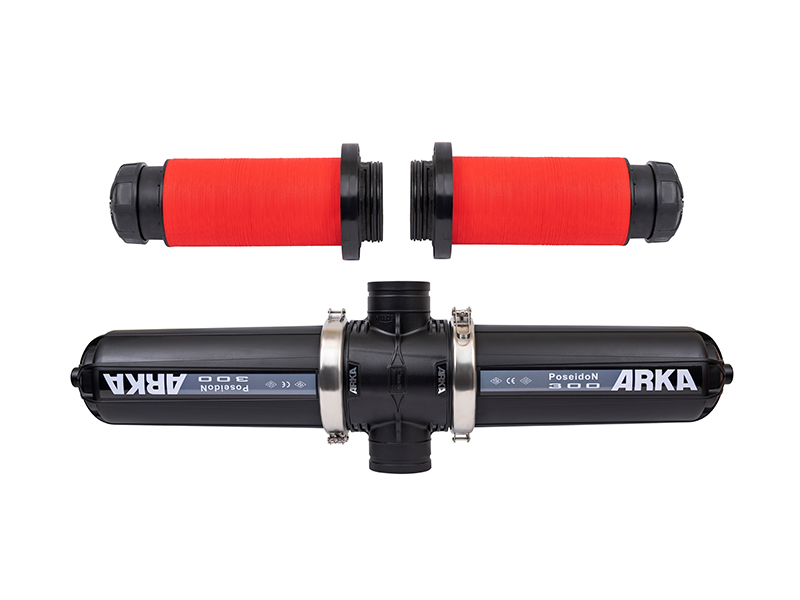
Investing in a high-quality Disc Filter represents a more advanced approach to agricultural water treatment. Instead of a flat screen, this mechanism uses a stack of tightly compressed, color-coded plastic rings. Each ring features a series of microscopic, intersecting grooves. When compressed, these grooves create a complex, three-dimensional matrix. This traps debris throughout the entire depth of the stack, rather than just on the surface.
For instance, commercial operations frequently deploy robust equipment like the Automatic Filter H-Type 3-inch Disc Filter. Engineered for high-demand environments, these units offer precise 120-mesh or 130-micron filtration. The large 3-inch inlet accommodates massive flow rates, while the H-Type configuration maximizes the internal surface area. This depth filtration mechanism allows the unit to hold a significantly larger volume of debris before experiencing a pressure drop. More importantly, the three-dimensional grooves trap algae without allowing it to smear. This makes it vastly superior for biologically active surface water.
Feature | Mesh Screen Technology | Disc Technology (e.g., H-Type) |
|---|---|---|
Filtration Mechanism | 2D Surface Filtration | 3D Depth Filtration |
Best Suited For | Well water, rigid sand, inorganic grit | Surface water, algae, heavy organics |
Debris Holding Capacity | Low to Moderate | Very High |
Maintenance Frequency | High (requires frequent manual scrubbing) | Low (highly efficient during backwashing) |
The most severe consequence of a neglected maintenance routine is the irreversible damage inflicted upon your Drip System. Modern drip tape relies on micro-emitters featuring incredibly narrow flow paths. These are often less than a millimeter in diameter. If a housing becomes so heavily blocked that the internal element tears, unfiltered water rushes directly into the lateral lines. Once grit enters the tubing, it is only a matter of time before the emitters plug completely. You cannot simply open and wash a clogged emitter. It is notoriously difficult to clean, almost always requiring the complete and expensive replacement of the affected drip tape across the entire field.
Even before a catastrophic failure occurs, a partially restricted element ruins the hydraulic dynamics of your entire network. As debris builds up, it creates severe friction. This leads to a substantial drop in water pressure downstream. Sprinklers and emitters are engineered to operate within specific pressure ranges to ensure uniform application. When the pressure plummets, distribution becomes highly erratic. Plants located near the pump receive adequate hydration. Meanwhile, crops at the far end of the greenhouse suffer from severe drought stress. This guarantees uneven growth and diminished harvest quality.
Recent shifts in agricultural water management highlight a growing crisis. Farmers are facing declining water quality combined with severe labor shortages. Field data shows that operations are increasingly forced to draw from marginal water sources heavily laden with organics and silt. Because of this, relying on manual cleaning is quickly becoming financially unsustainable. The industry is rapidly pivoting toward automated, differential-pressure-driven filtration. Smart sensors now monitor head loss in real-time, triggering flush cycles only when necessary. This isn't just a modern convenience. It is a vital, data-driven adaptation to ensure crop survival amid unpredictable water conditions and tightening operational budgets.
The most objective method to determine the status of your equipment is monitoring pressure differentials. A properly installed system must feature two pressure gauges. One sits at the inlet before the housing, and one at the outlet. Under normal, clean conditions, the pressure difference should be minimal, typically between 1 to 3 psi. As debris accumulates, the outlet pressure drops while the inlet pressure remains constant or spikes. A significant pressure drop, usually beyond a 5 to 7 psi difference, is your primary indicator of a severe restriction. Relying on gauges removes all guesswork. It allows operators to initiate cleaning exactly when necessary.
In addition to monitoring gauges, observational data is critical in the field. A noticeable reduction in water output at the sprinkler heads is a clear sign of restricted flow. You might observe dry patches in the soil. You may also notice that watering cycles take much longer to achieve the desired soil moisture levels. Routine visual checks of the element itself are mandatory. Opening the housing to inspect the internal components immediately reveals the extent of the biofilm or scale buildup. This confirms whether immediate intervention is required to restore optimal hydraulics.
Preventing catastrophic failures requires a disciplined maintenance schedule. The frequency depends entirely on your water source, but establishing a baseline is non-negotiable. For manual units, routine flushing involves isolating the line, opening the housing, and physically removing the element. Rinse it thoroughly with clean, pressurized water. For ring-based variations, you must loosen the central spine. This allows the rings to decompress, letting water flush out the grit trapped deep within the grooves. Systems drawing from dirty ponds usually demand daily or weekly manual flushing. Clean well water may only dictate a monthly inspection.
Physical scrubbing is often insufficient for removing hard mineral scale or severe biological biofilms. When standard pressurized rinsing fails to restore the original pressure differential, chemical treatments step in. To dissolve calcium or magnesium scale, soak the element in a mild acid solution. Agricultural-grade phosphoric acid works well. Ensure the pH is carefully monitored to avoid damaging the plastic components. For severe algae buildup, soaking the element in a diluted bleach solution kills the organic matter and breaks down the sticky slime. Following any chemical treatment, you must rigorously rinse the components with clean water before putting them back online.
For large-scale operations, manually cleaning housings is a massive drain on labor resources. Upgrading to automatic, self-cleaning filters is a transformative operational shift. These advanced systems utilize integrated differential sensors to monitor status continuously. The moment the pressure difference reaches a pre-set threshold, the controller automatically initiates a backwash cycle. By reversing the water flow or utilizing specialized internal cleaning nozzles, the unit purges the accumulated debris through a flush valve in seconds. It does all of this without interrupting the main irrigation cycle or requiring a farmhand to turn a wrench.
Determining whether to upgrade requires a careful cost-benefit analysis. Do you rely on highly contaminated surface water? Is manual cleaning consuming excessive labor hours and causing watering delays? If so, investing in high-quality, self-cleaning equipment is highly justifiable. While the initial capital expenditure is higher than manual alternatives, the return on investment is realized rapidly. Automated setups protect expensive infrastructure from premature failure. They guarantee uniform crop watering and free up your personnel for more critical agricultural tasks.
Every filtration unit will eventually experience debris buildup. However, it is a highly manageable aspect of routine farm maintenance. Trapping contaminants is not a failure; it is proof that the equipment is successfully intercepting hazards that would otherwise destroy your infrastructure. By understanding your specific water source and selecting the appropriate technology, you significantly reduce your maintenance burden. Adhering to a strict cleaning routine and monitoring pressure differentials ensures your network remains protected. Don't let preventable blockages ruin your harvest or damage your drip lines. Whether you need a robust manual unit or an advanced Automatic H-Type 3-inch Disc Filter, upgrading your setup is the smartest investment you can make. Evaluate your current setup today, and visit ARKA Irrigation to explore professional-grade solutions tailored to your specific water conditions.
The frequency depends entirely on your water source and equipment type. Systems drawing from dirty surface water like ponds may need daily or weekly flushing. Clean well water might only require monthly maintenance. Always rely on pressure gauge readings. When the differential exceeds 5 to 7 psi, it is time to clean.
Yes. If a housing becomes so heavily restricted that the internal element ruptures under immense high pressure, a concentrated wave of unfiltered debris rushes directly into the lateral lines. This permanently plugs the micro-emitters. They are nearly impossible to clean, often requiring the complete replacement of the drip tape.
Absolutely. Mesh screens only offer two-dimensional surface filtration. Soft algae easily smears across the surface and blocks water flow almost instantly. Depth filtration traps organic matter within its microscopic intersecting grooves. This prevents smearing and allows it to hold significantly more debris before restricting the flow.
Physical scrubbing isn't enough for hardened mineral scale. You need to soak the internal element in a mild acid solution, like agricultural-grade phosphoric acid or diluted white vinegar. This safely dissolves the crystallized minerals. Always follow this chemical soak with a very thorough rinse using clean water.
Rapid restriction usually indicates that the micron rating is too fine for your specific water source. It can also mean your water source experienced a sudden surge in contaminants, such as heavy silt after a rainstorm. If the problem persists, you may need to install a pre-filter, like a hydrocyclone sand separator, to handle heavy sediment loads first.
The ideal micron rating depends on your emission devices. For standard drip tape, a 130-micron (120 mesh) rating is the industry standard to prevent emitter plugging. Micro-sprinklers generally require 200-micron (80 mesh) filtration. Always check the manufacturer specifications of your specific irrigation emitters to ensure you select the correct filtration level.
A clean, newly installed unit should show a pressure drop of roughly 1 to 3 psi. As it traps debris, this differential will increase. An acceptable working pressure drop is up to 5 to 7 psi. Once the differential exceeds 7 psi, the element is significantly restricted and requires immediate backwashing or manual cleaning to prevent system damage.


