
Views: 0 Author: Site Editor Publish Time: 2026-10-28 Origin: Site


Do cooling towers silently drain your facility energy budget? Every plant manager knows the struggle. Industrial cooling systems act as massive, unintentional air scrubbers. They constantly pull in airborne dirt, pollen, and organic matter. When this environmental debris combines with internal mineral scale, thermal efficiency plummets. This fouling drives up energy costs. It forces expensive downtime. It demands excessive chemical treatments.
Fortunately, modern filtration technology offers a highly effective solution. This guide breaks down how advanced filtration stops scale in its tracks. We will compare conventional methods with cutting-edge automated systems designed to keep your cooling water pristine and your operations running smoothly.
Picture a typical industrial park on a breezy afternoon. Wind-blown dust, agricultural debris, and foliage are swept directly into the open basin of a cooling tower. Because these towers rely on massive fans drawing ambient air through cascading water to facilitate evaporation, they continuously scrub the surrounding air. Concurrently, internal degradation adds to the problem. Dissolved minerals precipitate out of the water as hard scale. Aging iron components shed rust. Organic nutrients fuel the rapid spread of bacterial slime. Left unchecked, this cumulative debris load circulates through the entire cooling infrastructure.
The core function of any cooling setup is heat rejection. This process lives or dies by the cleanliness of heat exchanger surfaces. The physics of thermal conductivity are unforgiving. Even microscopic layers of insulation severely impede heat transfer. Field data demonstrates that a mere one-millimeter layer of mineral scale or bio-fouling can slash heat transfer efficiency by over ten percent. As thermal resistance climbs, chillers are forced to run longer cycles. Circulation pumps must strain against elevated pressure drops. Ultimately, the entire facility consumes significantly more electrical energy just to maintain baseline cooling outputs.
Beyond bloated utility bills, accumulated sludge poses a severe threat to equipment integrity. When suspended solids settle in low-flow zones of the basin or inside heat exchanger tubes, they create dangerous anaerobic pockets. These localized deposits become breeding grounds for harmful bacteria, including Legionella pneumophila. Worse yet, the metabolic byproducts of these colonies trigger Micro-biologically Influenced Corrosion. This aggressive under-deposit corrosion eats away at metal surfaces. It leads to premature pitting, unexpected pipe failures, and structural damage that standard chemical inhibitors simply cannot reach.
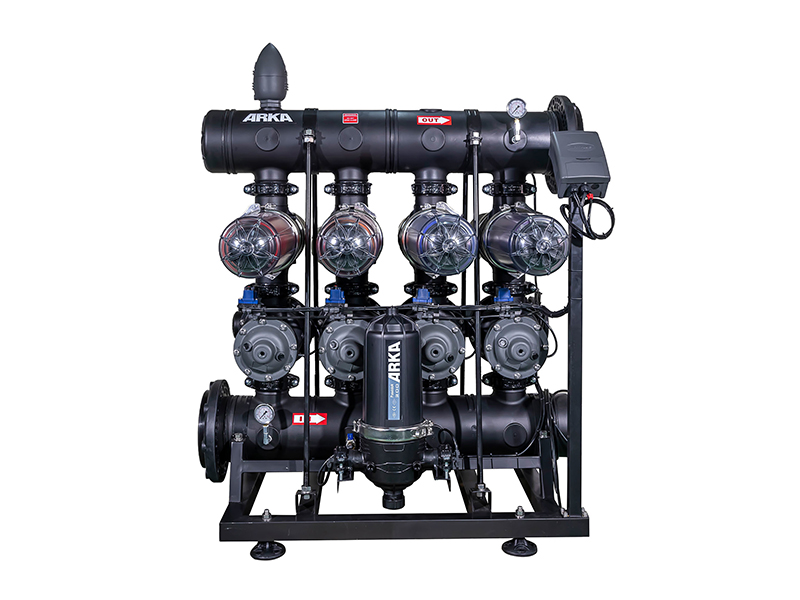
To combat this continuous influx of fouling agents, modern facilities are deploying specialized filtration technologies. At the forefront of this shift is the industrial disc filter. Engineered for harsh industrial environments, its anatomy consists of several highly durable components. The central element is a rigid spine holding a tightly stacked column of synthetic, color-coded discs. These discs are safely enclosed within a corrosion-resistant pressure vessel. A programmable logic controller or hydraulic valve manages the entire operation, continuously monitoring internal pressure to trigger cleaning cycles long before human intervention is required.
What truly sets this technology apart is the precise geometry of the synthetic discs. Each disc is etched with microscopic, diagonally cut grooves radiating from the center to the outer rim. When hydraulic pressure compresses the stack along the central spine, the grooves of adjacent discs intersect at opposing angles. This intersection forms a deep, complex, three-dimensional filtration matrix. Rather than acting as a simple two-dimensional surface barrier like a mesh screen, the stacked discs force water through a tortuous path. Particles are ensnared not just on the outer surface, but deep within the internal maze of the disc stack.
Cooling water profiles vary wildly from a dusty cement plant to a sterile pharmaceutical facility. Therefore, these filters utilize a standardized color-coding system to indicate specific micron ratings. Manufacturers generally offer discs ranging from a coarse 400 microns down to a highly precise 20 microns. A facility dealing with heavy, coarse debris might deploy a 200-micron configuration. Conversely, a plant relying on highly sensitive plate-and-frame heat exchangers will likely specify a 50-micron setup. This modularity empowers engineers to dial in the exact filtration precision required for their specific equipment tolerances.
During normal operation, dirty cooling water is directed from the outside of the disc stack toward the hollow inner spine. The system internal water pressure squeezes the stacked discs tightly together, locking the intersecting grooves into a rigid matrix. As water navigates this three-dimensional maze, suspended solids ranging from crystallized scale flakes to biological slime are effectively trapped. Only purified water successfully reaches the inner spine, flowing out to cool the industrial process.
To maintain stable flow rates, the system must clean itself before it becomes overly restricted. The controller utilizes a differential pressure switch to constantly compare the inlet and outlet pressure. As dirt accumulates within the grooves, flow resistance increases, causing a drop in outlet pressure. Once this differential hits a predetermined setpoint—usually around 0.5 to 0.7 bar—the system recognizes the discs are fully loaded. It then automatically initiates the self-cleaning sequence, serving as a highly reliable automatic backwash filter.
The cleaning phase is aggressive and remarkably fast. Upon triggering, the control valve reverses the water flow into the specific housing. Simultaneously, the hydraulic pressure compressing the disc stack is released. The discs decompress and loosen. High-pressure jets of filtered water are then blasted outward from the inner spine. These angled jets strike the loose discs, forcing them to spin rapidly in a centrifugal motion. This hydrodynamic scrubbing violently dislodges trapped scale and organics, flushing the wastewater out through a drain manifold in mere seconds.
Industrial cooling cannot afford downtime. To guarantee uninterrupted water flow to the chillers, facilities typically install these filters in a multi-pod configuration. When a backwash cycle is triggered, the controller sequences the cleaning one pod at a time. While one housing isolates itself for a short spin cycle, the remaining pods continue to filter the main water supply. The heat exchangers never experience a drop in flow or pressure, ensuring seamless plant operations.
When upgrading filtration, engineers must choose the right technology for the specific challenges of cooling tower water. Below is a practical comparison of the three most common industrial filtration methods.
| Feature | Disc Filter | Screen Filter | Sand Media Filter |
|---|---|---|---|
| Filtration Type | 3D Depth Filtration | 2D Surface Filtration | Deep Bed Filtration |
| Organic Matter Handling | Excellent. Traps algae and slime without blinding. | Poor. Organics smear and extrude through mesh. | Good, but prone to mud-balling over time. |
| Backwash Water Usage | Very Low. Seconds per pod. | Low to Moderate. | Extremely High. Requires massive fluidization. |
| Physical Footprint | Compact and modular. | Compact. | Massive. Requires heavy steel tanks. |
Screens utilize a stainless steel or synthetic mesh to block particulate matter. While excellent at stopping hard particles like sand or pipe scale, they possess a fatal flaw when applied to cooling towers. Soft organics easily deform under water pressure, extruding through the mesh or smearing across the surface to cause rapid blinding. Sand media filters provide excellent depth filtration but present massive logistical hurdles regarding physical footprint and water consumption. Fluidizing thousands of pounds of sand during a backwash cycle requires vast volumes of water. Modern disc alternatives provide comparable depth filtration but occupy a fraction of the space and use up to eighty percent less backwash water.
Recent market analyses tracking thermal management trends reveal a definitive pivot in how facilities handle cooling water. Driven by escalating global water scarcity, rising municipal utility costs, and increasingly stringent effluent discharge regulations, industrial plants are aggressively phasing out traditional high-waste sand filters. The industry is moving rapidly toward Zero Liquid Discharge protocols. Automated, low-water-waste filtration technologies are no longer viewed merely as operational upgrades. They are now considered the baseline standard for regulatory compliance and corporate sustainability initiatives. This industry-wide shift underscores the financial imperative of modernizing cooling infrastructure to minimize environmental impact while maximizing thermal output.
The architectural design of grooved discs grants them a massive dirt-holding capacity compared to flat surface filters. Because particles are trapped throughout the entire depth of the intersecting grooves rather than just accumulating on a two-dimensional outer layer, the system can process significantly larger volumes of suspended solids before experiencing a pressure drop. This extended capacity means the filter undergoes fewer backwash cycles, conserving water and reducing mechanical wear on valves over the equipment lifespan.
Traditional filter maintenance is a grueling, reactive chore. It involves technicians pulling out clogged strainer baskets, scrubbing blinded screens with harsh acids, or scheduling expensive downtime to shovel out exhausted sand media. Upgrading to an automated disc filter system transforms this dynamic. Because the centrifugal backwash mechanism physically spins the discs apart, it reliably restores the elements to a completely clean state. Maintenance teams are freed from manual scrubbing and can be reallocated to proactive facility management.
Cooling systems rely heavily on expensive chemical regimens like biocides, scale inhibitors, and anti-corrosion agents. Unfortunately, suspended solids actively sabotage these programs. Dirt and organic debris consume chlorine before it can neutralize target bacteria. Suspended scale particles bind with chemical inhibitors, neutralizing them. By continuously stripping these solids from the water loop, the filtration system ensures treatment chemicals remain active and concentrated exactly where they are needed. This often allows facilities to significantly reduce their annual chemical dosing volumes.
Proper engineering is critical. An undersized filter will backwash endlessly, while an oversized one wastes capital. Facility managers must first decide between full-flow and side-stream filtration. Full-flow filtration treats all the water leaving the cooling tower, which is ideal for smaller setups or highly sensitive processes. Conversely, side-stream filtration continuously draws and filters ten to twenty percent of the total recirculation rate. For large industrial plants, side-stream setups are highly cost-effective. For instance, high-capacity systems like an 8-pod unit with 4-inch backwash valves can effortlessly handle massive basin volumes, turning over the water multiple times a day to maintain excellent clarity.
Selecting the right micron rating is a balancing act between water clarity and backwash frequency. If the rating is too fine, the system will clean itself constantly. For general cooling tower applications, 130 microns is the industry standard. It effectively captures airborne dust, pollen, and large scale flakes without excessive backwashing. For highly sensitive equipment, such as capillary tubes or narrow plate heat exchangers, a tighter 50-micron rating is recommended. The color-coded nature of the discs allows operators to easily swap ratings if site conditions change.
Cooling water is a notoriously harsh environment. It is highly oxygenated, thermally dynamic, and packed with oxidizing biocides. Therefore, the construction materials of your cooling water filter must be carefully vetted. The internal discs and spines should be manufactured from high-grade, chemical-resistant polymers like reinforced polypropylene or polyamides. External housings and manifolds must be constructed from robust materials to withstand both internal chemical attack and external environmental exposure.
Water scarcity directly impacts the bottom line. Traditional sand filters consume thousands of gallons of water just to fluidize and clean their media beds. That water is subsequently flushed down the drain, incurring both makeup water costs and sewer discharge fees. In stark contrast, the highly concentrated centrifugal backwash of a disc filter requires only a few gallons per pod, finishing in under twenty seconds. Over a fiscal year, this dramatic reduction in wastewater translates directly into massive utility savings.
The most substantial financial return stems from energy preservation at the chiller plant. Chillers are typically the largest electricity consumers in any facility. By continuously removing the insulating scale and biological matter that foul heat exchanger tubes, the filtration system ensures chillers operate at their designed condensing temperatures. Preventing the compressor from working against elevated head pressures maintains a low energy profile, yielding electrical savings that frequently pay for the entire filter installation within the first twelve to eighteen months.
Capital equipment in cooling infrastructure represents a massive financial investment. Suspended solids act as abrasive sandpaper, accelerating mechanical wear on pump impellers and mechanical seals. Furthermore, trapped debris initiates the under-deposit corrosion that permanently destroys piping and tube bundles. By maintaining pristine water quality, an automated filtration system actively mitigates these abrasive and corrosive forces. It adds years to the operational lifespan of core cooling equipment and delays multi-million-dollar capital replacements.
Managing scale and debris is absolutely non-negotiable for industrial cooling efficiency. By upgrading to an automated disc filtration system, facilities can drastically reduce maintenance labor, slash water and energy consumption, and protect their most expensive capital equipment. Ready to optimize your thermal performance? Explore advanced configurations and request a quote for a tailored disc filter system designed specifically for your plant demands today.
No, disc filters are designed specifically to remove suspended solids, which includes crystallized scale flakes that have already broken off from pipe walls. To treat dissolved calcium and magnesium and prevent them from precipitating out of solution in the first place, chemical water treatment programs or water softeners must be used in conjunction with the filtration equipment.
Very little water is consumed during the cleaning phase. Because the system utilizes high-pressure jets to centrifugally spin the uncompressed discs, a typical backwash cycle takes only ten to twenty seconds per pod. This utilizes a mere fraction of the water required by traditional sand media filters, significantly reducing your wastewater discharge and makeup water costs.
While full-flow filters process all the water and offer maximum protection, side-stream filtration is generally the most cost-effective and practical method for large industrial cooling towers. By continuously drawing and filtering ten to twenty percent of the total recirculation flow, a side-stream setup effectively keeps the entire basin clean without requiring massive, highly expensive filter manifolds.
A properly sized, clean disc filter system typically operates with a very low initial pressure drop, usually between 0.1 to 0.2 bar. As debris accumulates in the disc grooves, this differential pressure naturally rises. The automated controller is usually set to trigger a backwash cycle once the differential reaches 0.5 to 0.7 bar, ensuring downstream equipment is never starved of flow.
The grooved discs are manufactured from highly durable, chemical-resistant synthetic polymers. Because they are mechanically robust and immune to standard cooling water chemicals like biocides and inhibitors, the discs can easily last for five to ten years or more with proper routine maintenance, making them a highly economical long-term investment.
Yes, it helps indirectly but significantly. Legionella bacteria thrive in environments where they are protected by biofilms and organic debris, which they use as a food source and breeding ground. By continuously removing the organic matter and scale that provide this habitat, the filtration system dramatically increases the effectiveness of your biocide treatments, lowering the risk of bacterial proliferation.


