
Views: 0 Author: Site Editor Publish Time: 2026-10-28 Origin: Site


Modern high-density fish farming faces a critical bottleneck. As stocking densities increase, the volume of organic waste skyrockets. Uneaten feed and fish excrement quickly break down into toxic ammonia and nitrites. Relying on outdated manual screens or basic settling tanks often leads to catastrophic water quality failures during peak feeding seasons. Today, the global aquaculture industry is rapidly shifting toward zero-water-exchange models. Strict environmental regulations and growing water scarcity make efficient, automated filtration an absolute necessity. To maintain pristine water quality and protect your livestock, integrating a reliable water treatment filter is no longer optional. It is the foundation of a profitable operation.
Every seasoned farm manager knows the struggle of suspended solids. These microscopic particles cloud the water and irritate fish gills. Worse, they serve as breeding grounds for harmful pathogens. When traditional filters clog, flow rates drop. This starves the biological biofilters of oxygen. The result is a sudden ammonia spike. Fish become stressed, growth rates plummet, and mortality rates climb.
Furthermore, manual filter cleaning drains labor resources. Waking up at 2 AM to backwash a clogged sand tank is a reality many operators despise. The hidden commercial cost of this manual labor, combined with the risk of human error, severely limits farm scalability. Upgrading your filtration infrastructure directly impacts your bottom line by ensuring stable water parameters and reducing operational stress.
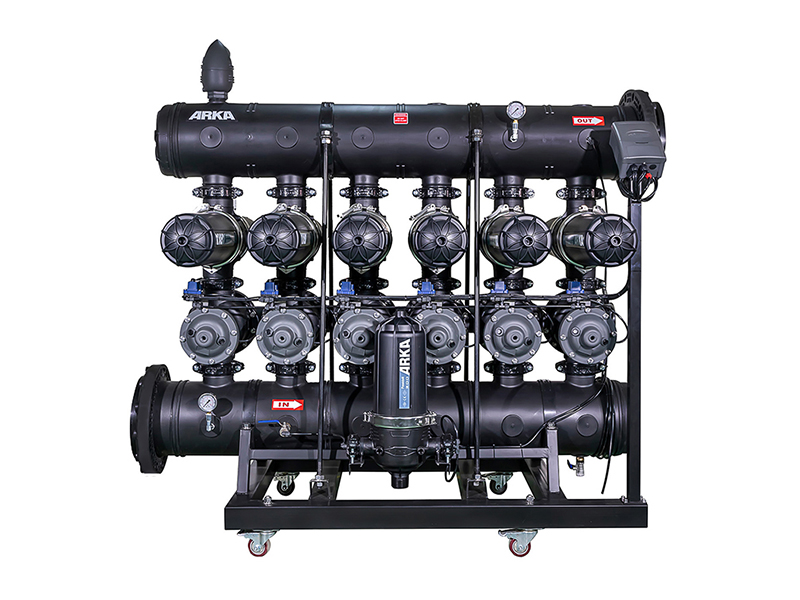
How do we achieve micron-level precision without constant human intervention? The answer lies in advanced polymer engineering. The core technology relies on a stack of color-coded, grooved synthetic discs. During the filtration phase, water pressure compresses these discs tightly together. The intersecting grooves create a dense three-dimensional filtration matrix. Water passes through, but suspended solids are trapped both on the surface and deep within the grooves.
When the pressure differential across the filter reaches a preset limit, the system initiates a self-cleaning cycle. A specialized valve reverses the water flow. The discs decompress and spin rapidly. High-pressure water jets blast the trapped debris away, sending the waste down the drain. This entire process takes mere seconds. Incorporating a robust disc filter system ensures continuous, uninterrupted flow to your tanks. For instance, advanced modular setups like the F406H series can handle massive flow rates ranging from 120 to 400 cubic meters per hour while maintaining a maximum working pressure of 8 bar.
For decades, sand filters were the industry standard. However, indoor recirculating aquaculture systems demand efficiency and a compact footprint. Space is money in indoor farming. Let us look at the hard engineering facts.
| Feature | Traditional Sand Filter | Advanced Disc Technology |
|---|---|---|
| Footprint | Requires massive floor space and heavy structural support. | Highly compact modular design. Saves up to 70 percent of floor space. |
| Backwash Water Waste | Consumes thousands of liters per cycle. Takes several minutes. | Uses minimal water. Cycles complete in 15 to 20 seconds. |
| Filtration Precision | Inconsistent. Subject to channeling and media degradation. | Absolute precision. Fixed micron ratings from 20 to 130 microns. |
| Maintenance Labor | Intensive. Requires periodic sand replacement. | Fully automated. Discs last for years with minimal inspection. |
In contrast to bulky sand tanks, modular polymer systems offer exact micron cut-offs. You know exactly what size particles are being removed. This predictability is crucial for sizing downstream UV sterilizers and ozone generators.
Selecting the correct equipment is not about guessing. It requires matching the hardware to your peak feeding biomass and total system volume. First, determine your required turnover rate. Most high-density tilapia or salmon hatcheries require the entire water volume to be filtered every hour. Once you have your target flow rate, you can build a modular manifold.
Specifically, a farm requiring 200 cubic meters per hour might utilize a 4-unit or 6-unit manifold configuration. Systems like the F406H-4 or F406H-6 are designed exactly for this scalable approach. If your farm expands, you simply add more filtration pods to the existing manifold. Choosing the right automatic backwash filter depends heavily on selecting the correct micron rating. A 50-micron or 100-micron disc stack is typically ideal for primary mechanical filtration in grow-out tanks. It captures heavy solids without triggering excessive backwash cycles.
From an engineering standpoint, installation requires attention to hydraulic details. The backwash mechanism relies on adequate water pressure. You must ensure your main circulation pump can deliver a minimum backwash pressure, usually around 2.8 bar, to spin the discs effectively. If the pressure is too low, the discs will not clean properly, leading to a cascading failure of the filtration matrix.
Additionally, always install a coarse pre-screen before the main manifold. This prevents large debris, such as stray feed pellets or small dead fish, from jamming the intake valves. Routine maintenance is virtually nonexistent, save for a monthly visual inspection of the pressure gauges and the drainage manifold. A well-calibrated self cleaning filter pays for itself within the first harvest cycle by drastically reducing water consumption and eliminating night-shift labor costs.
Water conservation is a major advantage of this technology. A single pod typically consumes only 30 to 50 liters of water per backwash cycle. Because the cycle lasts only 15 to 20 seconds, the total water loss is a fraction of what a traditional sand filter would consume. This makes it highly suitable for zero-exchange indoor facilities.
Yes. High-quality systems are manufactured from industrial-grade, corrosion-resistant polymers. They contain no exposed metal parts in the wetted areas. This makes them completely immune to saltwater corrosion. They are widely used in coastal shrimp hatcheries and land-based marine salmon facilities.
For high-end koi ponds where water clarity is paramount, a finer rating of 20 to 50 microns is often preferred to polish the water. In contrast, a commercial high-density tilapia farm generates a massive biological load. Using a 100-micron to 130-micron setup is much more practical. It removes the harmful bulk solids without causing the system to backwash every five minutes.
Securing your farm against water quality crashes requires professional-grade equipment. Stop relying on labor-intensive, outdated methods that put your livestock at risk. Evaluate your flow rate requirements and upgrade your infrastructure today. For superior water quality control, explore the robust and scalable solutions offered by ARKA Irrigation. Their advanced F406H series manifolds are engineered to meet the exact demands of modern aquaculture. Choose reliability, automate your maintenance, and watch your farm's productivity soar.


