
Views: 0 Author: Site Editor Publish Time: 2026-11-05 Origin: Site


Are clogged drip emitters silently ruining your crop yields? When drawing raw water from natural sources, it inevitably carries a heavy burden of sand, silt, and organic debris. If left unchecked, this abrasive buildup destroys sensitive downstream equipment with alarming speed. The result is uneven hydration, crop stress, and costly downtime. In this comprehensive engineering guide, you will discover how implementing a robust pre-filter solves these hydraulic nightmares before they even reach your mainline.
Understanding the underlying mechanics of this hardware is your first step toward optimizing an agricultural water network. Rather than relying on complex chemical treatments, these devices utilize highly effective physical barriers. They mechanically separate destructive solids from your raw water supply to maintain fluid integrity.
A standard industrial screen filter consists of three primary structural components. The first is the outer pressure housing. For lower-pressure agricultural zones, manufacturers typically cast this from durable, UV-resistant glass-reinforced polyamide. High-volume mainline applications, however, demand epoxy-coated carbon steel or stainless steel to withstand intense hydraulic water hammers.
Housed securely inside sits the actual filtration element. This cylindrical screen is constructed from woven stainless steel wire or molded nylon mesh. A rigid internal skeleton reinforces the mesh to prevent catastrophic collapse under sudden pressure surges. Finally, a flush valve located at the base of the housing allows field operators to expel accumulated sludge without dismantling the entire pipe network.
The core working mechanism is defined by surface filtration. As raw water enters the inlet port, it is channeled directly into the center of the mesh cylinder. Forced outward by hydraulic pressure, the water passes through microscopic apertures. Any suspended particles larger than the specific hole size are physically trapped on the interior surface of the screen.
Flow velocity must be carefully managed to ensure this process remains efficient. Pushing water through the system too aggressively creates excessive sheer force. This force can extrude soft organic debris, such as algae clumps, straight through the rigid mesh. Monitoring the pressure differential—the variance between inlet and outlet pressure gauges—is the most critical operational parameter. It dictates exactly when the unit requires purging to maintain optimal flow.
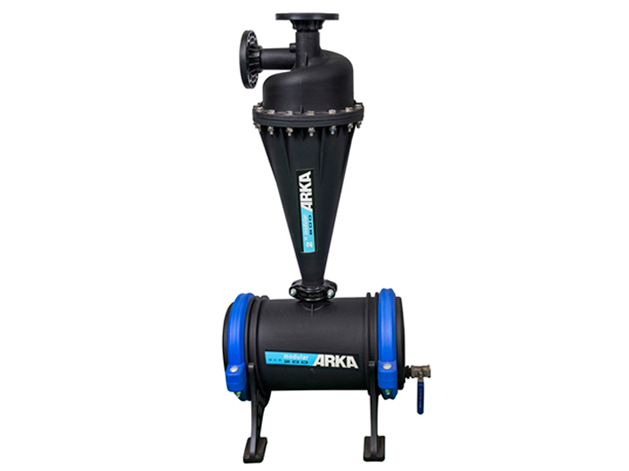
While fine filtration gets all the credit for protecting the actual crops, those microscopic mesh layers are simply not engineered to handle heavy debris loads. This is precisely where deploying a dedicated sediment filter becomes a non-negotiable requirement for commercial farming.
Think of the primary screen as a heavy-duty bodyguard for your most expensive secondary systems. Disc filters and media tanks operate with incredible precision. Unfortunately, they will quickly become overwhelmed and bind up if subjected to raw, unfiltered river water. Furthermore, intercepting large particulate matter protects precision fertilizer injectors. It shields booster pumps from abrasive damage, ultimately preventing premature mechanical wear on cast-iron impellers and rubber seals.
Modern precision agriculture relies heavily on micro-sprinklers and drip tape. These sophisticated emitters feature incredibly narrow internal labyrinths that often measure less than a millimeter in diameter. Imagine pulling water from a muddy reservoir during spring runoff. If a single piece of bark or a coarse grain of sand bypasses the main intake, it will travel through miles of piping until it inevitably wedges into an emitter. Removing oversized debris directly at the source eliminates the root cause of dry spots and uneven crop yields.
Hydraulic stability is the lifeblood of agricultural irrigation. When a system lacks a dedicated primary barrier, the fine filters bear the entire brunt of the contaminant load and blind over rapidly. A choked fine filter creates a severe pressure bottleneck across the mainline. Once pressure drops below the manufacturer design specifications, the emitters at the furthest edges of the field starve for water. Proper preliminary screening stabilizes the entire hydraulic network by absorbing the bulk of this initial trash.
Recent engineering trends indicate a massive global shift toward climate-resilient agricultural infrastructure. As seasonal droughts become more prolonged, groundwater tables are depleting. Consequently, farm managers are increasingly forced to draw from marginal surface water sources. These include shrinking, stagnant reservoirs with severe algae blooms or shallow agricultural runoff ponds heavily laden with organic silt.
Because of this shift, the market for robust primary filtration is expanding rapidly. Leading agronomists and irrigation engineers now view coarse filtration not as an optional accessory, but as a mandatory baseline requirement. Processing unpredictable, heavily contaminated surface water without a primary defense layer will inevitably cripple a farm's operational efficiency. Upgrading intake filtration is now recognized as one of the highest ROI investments in modern water management.
Selecting the correct separation technology requires matching the hardware to the unique physical characteristics of your water source. Different types of debris behave differently in fluid dynamics, requiring distinct physical separation methods.
| Technology Type | Primary Target Debris | Separation Mechanism | Ideal Application Scenario |
|---|---|---|---|
| Coarse Screen Filter | Leaves, twigs, large organic matter, gravel | Static physical surface barrier | Surface water, canals, and reservoirs with floating debris. |
| Hydrocyclone / Desander | Heavy inorganic sand and silt | Centrifugal force and specific gravity | Deep well water burdened with heavy, abrasive sand. |
| Sand Media Filter | Algae, colloidal clay, sticky organics | Three-dimensional depth filtration | Highly contaminated surface water requiring extreme clarity. |
A cyclone desander operates on the principle of centrifugal force rather than a static physical barrier. Water enters a conical chamber at a sharp angle to create a high-speed vortex. Heavy, inorganic particles like sand are thrown against the outer walls and slide down into a collection basin. This technology is strictly designed for well water burdened with heavy sand. It is completely ineffective against organic matter like leaves, which share a similar specific gravity to water and will simply float through the vortex.
In contrast, a screen filter is the optimal choice for capturing organics. In environments suffering from both heavy sand and floating debris, engineers frequently install a 4-inch nylon hydrocyclone in series with a secondary screen filter to achieve comprehensive protection.
A sand filter utilizes depth filtration. Water percolates slowly through a thick bed of crushed silica or basalt. This deep media bed is exceptionally efficient at trapping high loads of sticky algae and colloidal clay that would quickly smear and blind a standard wire mesh. However, media tanks demand a massive physical footprint, high initial capital, and substantial clean water volumes for backwashing. A coarse screen offers a much smaller footprint and is often deployed immediately upstream to remove large sticks before the water enters the media tanks.
Manufacturers produce these units in various structural configurations to accommodate specific flow rates, tight installation spaces, and differing operational budgets. Understanding real-world parameters is crucial for field integration.
The physical geometry of the housing dictates the internal fluid dynamics and installation flexibility.
In the agricultural sector, screens are universally rated by "mesh size." This term refers to the exact number of square openings per linear inch of the screen. A higher mesh number equates to more holes per inch, meaning the individual apertures must be smaller. In the context of preliminary defense, a coarse rating usually ranges from 20 to 80 mesh, translating to roughly 800 to 180 microns. Secondary filters designed to protect delicate drip emitters typically range from 120 to 200 mesh.
Selecting appropriate equipment is a critical engineering decision that dictates the daily operational efficiency of your entire farm. A mismatched unit leads to excessive pressure bottlenecks and constant maintenance interruptions. Follow this standardized methodology to ensure optimal integration.
Step 1: Analyze Your Contaminant Load
Identify the primary physical characteristics of your raw water. If you are pumping from a borehole that produces high concentrations of abrasive sand, a hydrocyclone is your scientifically appropriate starting point. Conversely, if you are drawing from a canal choked with seasonal algae and autumn leaves, a coarse screen is the definitive choice.
Step 2: Calculate Volumetric Flow Rates
A common field error is sizing a unit based solely on the existing pipe diameter rather than the actual volumetric flow rate. Calculate the maximum Gallons Per Minute required by your largest irrigation zone. Consult the manufacturer performance curves to select a housing size that maintains a clean pressure drop of less than 3 PSI at peak flow. High-velocity water forced through an undersized unit will simply push soft debris right through the metal mesh.
Step 3: Evaluate Secondary Interactions
Your primary defense mechanism must complement downstream equipment. If your main system utilizes a 120-mesh fine screen, installing a 40-mesh primary screen upstream creates a highly efficient stepped filtration process. This tiered approach drastically reduces the biological load on the fine discs and conserves water by extending the time between backflush cycles.
Step 4: Assess Labor and Budget Capabilities
Weigh your initial capital expenditure against ongoing operational labor. If farmhands are scarce or expensive, investing in a fully automatic, self-cleaning system yields a rapid return on investment by eliminating daily manual scrubbing. For smaller operations with relatively clean water, a durable polyamide manual housing is perfectly adequate.
Even the highest-quality hardware will fail to perform if installed incorrectly or neglected in the field. Adhering to strict engineering protocols ensures your equipment delivers maximum longevity.
The physical location of the unit within the hydraulic network is paramount. It must be positioned strategically to protect vulnerable components. Typically, the primary inline screen is installed immediately after the main discharge pump and check valve. Crucially, it must be placed upstream of any fertilizer injection equipment, as large debris can easily jam the precision proportional valves of a fertigation manifold. Standard agricultural engineering practice dictates installing a bypass manifold using three isolation valves. This allows operators to route water around the unit during emergency maintenance without killing the entire irrigation cycle.
Proactive maintenance is the cornerstone of system health. The most objective way to monitor a filter is through pressure differential monitoring. When the difference between the inlet and outlet pressure gauges reaches 0.3 to 0.5 Bar, it is time to clean the screen. Allowing the differential to exceed 10 PSI risks permanently deforming the internal stainless steel skeleton.
When executing a manual clean, operators must first depressurize the housing. After carefully extracting the cylinder, never strike it against hard surfaces to dislodge mud. Always use a soft-bristled nylon brush and a moderate-pressure hose. Wash from the outside in, or inside out depending on the flow direction, to safely flush trapped particulates without damaging the weave.
By acting as a formidable barrier against dirty water, a coarse screen filter inherently protects your entire agricultural investment. It serves as the ultimate first line of defense, intercepting destructive debris long before it can reach and ruin your precision emitters or expensive secondary tanks. When strategically paired with centrifugal separators for heavy sand or deep media beds for severe algae, this foundational technology guarantees optimal crop hydration and massive reductions in maintenance downtime.
Ready to protect your irrigation infrastructure from abrasive wear and tear? Evaluate your current hydraulic setup today and explore the full range of high-performance filtration solutions at Arka Irrigation. Whether you need a heavy-duty nylon hydrocyclone or a robust screen filter, upgrading your preliminary defenses ensures a more resilient and profitable harvest season.
The fundamental difference lies in the specific filtration mechanism. Screen filters utilize a single, rigid layer of woven mesh to block particles on the surface. This makes them highly effective and incredibly easy to wash when dealing with hard, inorganic debris like gravel or twigs. Disc filters consist of hundreds of tightly stacked, grooved plastic rings. Water must navigate a tortuous, three-dimensional path through these grooves. This depth filtration makes disc filters vastly superior for capturing soft, sticky organic matter like algae, which might otherwise squeeze through a two-dimensional wire mesh.
In commercial agricultural applications, these two technologies serve entirely different purposes and cannot replace one another. If your raw water source contains high concentrations of heavy sand, a centrifugal separator is strictly required. Attempting to use a standard mesh screen for heavy sand loads will blind the apertures within minutes, causing severe pressure drops. However, it is standard engineering practice to install a mesh screen immediately after a centrifugal separator to catch lighter, floating organic particles that the spinning vortex missed.
Maintenance frequency cannot be dictated by a rigid calendar schedule. It must be driven by objective water quality and real-time hydraulic data. A universal rule of thumb is to purge the unit whenever the pressure differential reaches 0.3 to 0.5 bar. In pristine well water, this might only occur once a month. When drawing from a river during a heavy spring algae bloom, this threshold might be reached multiple times a day. This is exactly why automated self-cleaning systems are heavily recommended for high-load environments.
The term sediment filter is a broad, overarching category used to describe any device designed to remove suspended particulate matter from a liquid stream. A coarse screen filter is simply one highly specific type of sediment filter. Other variations include deep media beds, spun polypropylene cartridges, and centrifugal sand separators. When irrigation professionals refer to a coarse screen, they are specifically talking about a robust mesh housing designed to intercept large physical trash before the microscopic filtration stages.
Drip irrigation tape features microscopic emitters that are highly susceptible to clogging. To adequately protect these delicate labyrinths, manufacturers universally recommend a final filtration level of 120 to 130 microns, which equates to roughly 120 mesh. However, pushing raw water directly into a 120-mesh filter will cause rapid fouling. You should utilize a coarse pre-filter, typically 40 to 80 mesh, to remove larger bulk debris before the water reaches the fine 120-mesh stage.
Rapid clogging is typically caused by three engineering oversights. First, the unit may be undersized for your volumetric flow rate, forcing too much debris into too little surface area. Second, the selected mesh size might be too fine for your specific water source, causing it to act as a secondary filter rather than a coarse pre-filter. Finally, you may be dealing with high loads of sticky organics or algae, which quickly smear across woven wire. In this case, switching to a disc filter or adding a sand media tank is required to handle the biological load.


