
Views: 0 Author: Site Editor Publish Time: 2026-10-31 Origin: Site


Are clogged emitters ruining your crops? There is perhaps nothing more frustrating, and financially devastating, for farmers, landscapers, and agricultural engineers than watching a meticulously planted field suffer because of compromised water delivery. Dirty water costs the agricultural sector thousands yearly in ruined equipment, localized crop stress, and lost yields.
Unfiltered sand destroys expensive pumps rapidly. It acts like liquid sandpaper on internal mechanisms. Implementing a robust sediment removal filter solves this exact issue, serving as the critical first line of defense in any agricultural or landscape water treatment setup.
Whether you are drawing from a sandy borehole, a murky surface pond, or a fluctuating municipal line, removing suspended solids is absolutely non-negotiable. In this comprehensive guide, we will explore system design intricacies, compare filtration technologies, and outline the precise maintenance steps required to prevent catastrophic system breakdowns.
In any agricultural or landscaping water network, suspended solids act as a silent, abrasive threat. When water containing sand, silt, rust, and organic debris flows through unprotected pipes, the abrasive nature of these particles degrades pump impellers. Furthermore, it heavily scores valve seals. More importantly, delicate micro-irrigation systems feature microscopic orifices designed for precise, uniform water delivery. Without a primary filtration barrier, these tiny emitters clog rapidly. Consequently, this leads to uneven water distribution, dry zones in the soil, and severe crop stress.
Field data and maintenance logs consistently paint a grim picture for unprotected networks. When you crack open an unfiltered mainline after a long growing season, you will likely find thick calcium scaling, packed mud, and slimy biological sludge coating the interior. This buildup drastically reduces the internal diameter of the pipes. It spikes friction loss and forces water pumps to work much harder just to maintain basic flow. The resulting energy inefficiency, combined with the inevitable need to excavate and replace ruined drip lines, creates a financial burden that easily dwarfs the initial cost of installing proper filtration.
Looking at recent agricultural trends, water management is undergoing a significant transformation. Climate volatility and the gradual depletion of pristine surface water reserves force modern operations to rely on lower-quality groundwater, reclaimed wastewater, or brackish sources. Recent engineering surveys indicate a sharp increase in total suspended solids in standard agricultural boreholes. As a result, advanced sediment filtration is no longer just an optional operational upgrade. It has become a fundamental survival necessity for modern farming. The industry is currently witnessing a massive pivot towards automated, multi-stage filtration architectures. These advanced setups are specifically designed to handle heavier, more unpredictable particulate loads without causing manual labor costs to skyrocket.
Basic filtration is the foundational step in comprehensive agricultural water treatment. By stripping out suspended solids, the system ensures that the water is clean enough for advanced applications like fertigation, which is the precise injection of liquid fertilizers. Clean water prevents chemical nutrients from binding with organic sludge. This guarantees that fertilizers are evenly distributed directly to the root zones where plants need them most.
Selecting the correct technology requires a solid understanding of the mechanics behind each unit. Different units are engineered to handle specific types of particulate matter and varying hydraulic conditions.
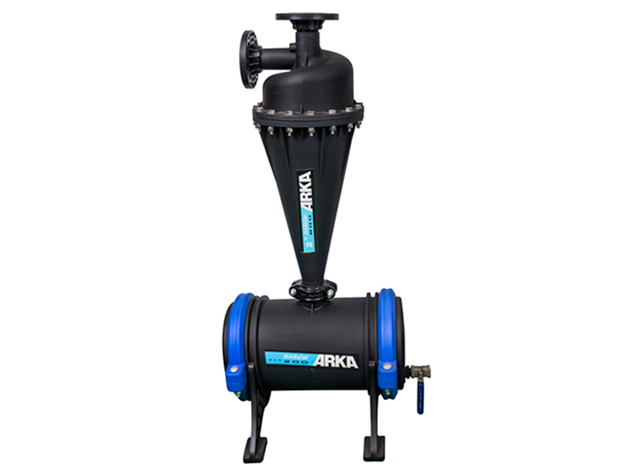
How it Works: A cyclone desander operates on the elegant principle of centrifugal separation. Raw water enters the conical chamber at a tangential angle, generating a high-speed vortex. For instance, modern units like a 3-inch nylon hydrocyclone are engineered to handle flow rates typically between 30 to 50 cubic meters per hour while maintaining a lightweight, corrosion-resistant profile. The resulting centrifugal force pushes heavier particles, such as sand and inorganic grit, outward against the walls. These heavy particles spiral downward into a lower collection chamber, while the lighter, clean water moves to the center of the vortex and exits through the top outlet.
Best For: This technology is optimal for deep well water containing high concentrations of heavy sand and inorganic fragments. Because it relies on specific gravity rather than a physical mesh, it is highly effective at removing particles heavier than water without ever clogging.
How it Works: In contrast, water in this system is forced to percolate down through a large, pressurized tank filled with a deep bed of crushed silica media. As the water travels through the jagged, microscopic spaces between the sand grains, fine debris, algae, and organic matter are physically trapped within the bed.
Best For: A sand filter is the undisputed industry standard for surface water sources, such as lakes, rivers, and open reservoirs. These sources typically contain high levels of organic matter, biological sludge, and fine silt that centrifugal separators simply cannot catch.
How it Works: Screen filters use physical stainless steel or plastic mesh barriers to block particles larger than the designated pore size. Disc filters utilize stacks of color-coded, grooved plastic rings tightly compressed together. As water passes from the outside to the inside of the stack, the intersecting grooves provide three-dimensional depth filtration, trapping particles across multiple layers.
Best For: These units are best utilized as secondary filtration stages, for municipal water applications, and as final safeguards installed directly before drip irrigation manifolds.
| Filter Type | Primary Target Contaminant | Ideal Water Source | Maintenance Requirement |
|---|---|---|---|
| Hydrocyclone | Heavy sand, inorganic grit | Deep wells, boreholes | Low. Requires periodic chamber purging. |
| Sand Media | Algae, organic sludge, fine silt | Rivers, lakes, open ponds | Medium to High. Requires regular backwashing. |
| Screen / Disc | Suspended trace solids | Municipal lines, secondary stages | Medium. Requires manual rinsing or automated flush. |
The efficiency and longevity of your setup are directly anchored to accurate flow rate sizing. Filtration units operate within highly specific hydraulic parameters. If the flow rate, measured in Gallons Per Minute or Liters Per Hour, crawls too slowly through a centrifugal separator, the water will simply fail to generate the centrifugal force needed to separate the heavy grit. This renders the entire unit practically useless. Conversely, aggressively pushing water too fast through a physical screen forces abrasive debris deep into the mesh. This causes extreme pressure loss and potential structural failure of the element.
Agricultural engineers rely on mesh and micron ratings to define precision. A micron is one-millionth of a meter, while mesh refers to the number of holes per linear inch of a screen. For standard micro-irrigation and drip tape, the baseline industry requirement is typically 120 mesh, which is approximately 130 microns. Understanding the manufacturer exact specifications for your chosen emitters is critical to selecting the correct rating and validating your equipment warranty.
Every single component added to a water network introduces friction, which inherently results in a pressure drop. When designing a system, engineers must calculate the pressure differential across the unit. A brand-new, clean element may introduce a minimal drop of just 2 to 3 PSI. However, as sediment accumulates during operation, this resistance increases significantly. Pump sizing must actively account for this variable friction loss to ensure adequate, uniform pressure reaches the furthest corners of the crop field.
Massive agricultural operations spanning hundreds of acres require highly scalable architecture. In these demanding scenarios, engineers design filter banks. These are multiple high-capacity units installed in parallel along a central manifold. This configuration allows massive volumes of water to be treated simultaneously without bottlenecks. Large-scale systems rely heavily on automated backwashing manifolds controlled by programmable logic controllers. When sensors detect a critical pressure differential, the system automatically reverses the flow in one tank at a time to flush out debris. This ensures continuous, uninterrupted water delivery.
Drip and micro-sprinkler systems demand the absolute highest level of water purity due to the microscopic pathways hidden inside the emitters. For these delicate applications, a single filtration stage is rarely sufficient. The engineering gold standard is a dedicated two-stage approach. First, a primary separator is installed right at the pump discharge to remove the bulk of heavy, abrasive sand. This is immediately followed by a fine disc or screen filter to capture lighter organic matter and trace silt. This multi-stage integration prevents the fine secondary mesh from being rapidly overwhelmed by heavy grit.
Consistent, proactive monitoring is the most effective preventative maintenance strategy you can employ. Operators should make it a habit to check the pressure gauges installed at the inlet and outlet daily. The pressure differential, which is the difference in PSI between the two gauges, is the primary empirical indicator of a clogged system. Visual inspections of the purge valve and the lower debris basin of a centrifugal separator should be conducted weekly. This ensures that wet sediment is not bridging or compacting into a solid block inside the collection chamber.
Manual screen and disc units require the operator to physically open a flush valve or remove the internal element for a thorough rinsing. Automated systems, frequently used with large media beds, utilize hydraulic valves triggered by a pressure differential switch, usually set around 7 to 10 PSI, or a digital timer to initiate a backwash cycle entirely on their own.
Over a long, hot growing season, disc filters can develop stubborn biological biofilms or hard calcium carbonate scaling. Deep cleaning becomes necessary. This involves disassembling the plastic disc stack and soaking the rings in a mild, agriculturally safe acid solution to dissolve mineral scaling. Alternatively, a diluted chlorine bath can break down organic slime, fully restoring original flow capacities.
Ignoring maintenance yields empirical, highly destructive results. As sediment packs tightly into the media, the pressure drop aggressively spikes. This forces the primary water pump to operate far outside its intended efficiency curve, leading to overheating, mechanical cavitation, and eventual motor burnout. Eventually, the immense differential pressure will literally rupture stainless steel screens, blow out rubber O-ring seals, and allow a massive influx of concentrated debris directly into the mainline. The final result is zero water pressure at the end of the line and widespread plant mortality.
Even meticulously designed networks encounter operational anomalies. Troubleshooting requires an objective, step-by-step evaluation of system hydraulics and raw water quality.
Issue: The unit is clogging far too quickly.
Specifically, the micron rating may be too fine for the primary stage, or the raw water quality has degraded significantly due to recent weather. The standard engineering solution here is to install a pre-filter, such as a centrifugal sand separator, ahead of the main unit. This handles the bulk of the heavy particulate load before it reaches the fine mesh.
Issue: Sand is still reaching the drip emitters.
This indicates a fundamental failure in the separation process. Either the flow rate through the centrifugal unit has dropped below the minimum velocity required to maintain a vortex, or the sand particles are simply too fine, possessing low specific gravity, for centrifugal separation. If the particles are too fine, transitioning to a media-based depth filtration system is strictly required.
Issue: Severe pressure drop across the system immediately after cleaning.
This points directly to a mechanical failure rather than a standard debris load. Field technicians should immediately inspect for a torn internal screen, heavily compacted and channeled sand media that requires complete replacement, or a malfunctioning automated backwash valve that is physically stuck in the closed position.
Selecting the correct unit is a critical engineering decision that directly impacts the operational efficiency and lifespan of your infrastructure. A mismatched unit can lead to excessive pressure drops or premature clogging. To ensure optimal performance, follow this objective, four-step decision matrix to evaluate your specific environmental conditions.
The origin of your water is the single most important variable. Groundwater drawn from deep wells typically contains high concentrations of inorganic particulate matter, like heavy sand and mineral fragments. Because these particles are heavier than water, centrifugal separation is highly effective as a primary defense.
Conversely, surface water is frequently laden with organic matter, including algae, biological sludge, and leaves. These materials possess a specific gravity very close to that of water, meaning centrifugal forces will not effectively separate them. For surface water, depth filtration through silica beds is widely considered the industry standard to trap lightweight organic debris as it percolates through the layers.
Next, consult the manufacturer technical specifications for your specific drip tapes or micro-sprinklers to determine the maximum allowable particle size. Drip systems feature microscopic pathways highly susceptible to clogging, generally requiring filtration down to 120 mesh. Impact sprinklers and center pivots have larger orifices and are more forgiving, often requiring only 40 to 80 mesh primary filtration.
Match the filter capacity to the peak flow rate of your pump. Sizing incorrectly based on flow rate will compromise the entire hydraulic integrity of the network. Exceeding the maximum designed flow rate of a screen or media bed will force debris through the physical barriers or aggressively compact the sand, resulting in rapid fouling. Always calculate total system demand and select a model that comfortably accommodates that peak demand.
Finally, assess your facility operational bandwidth regarding manual labor. If your farm operates with limited personnel, investing upfront in automated backwashing systems is highly recommended. Automated units utilize pressure differential switches to clean themselves without human intervention. If you have dedicated maintenance personnel and a tighter initial budget, manual flush setups remain a highly cost-effective alternative.
A reliable sediment filter is not just an optional accessory. It is the beating heart of your irrigation system longevity. It actively protects your expensive downstream components from abrasive wear and tear. Proper hydraulic design prevents crippling pressure drops and expensive, mid-season system failures.
By carefully matching your filtration technology to your specific water source, such as pairing a centrifugal separator with fine secondary screens for well water, you create an impenetrable barrier against debris. When combined with strict, proactive maintenance routines, this setup will save your operation thousands of dollars in replacement parts and wasted labor. Evaluate your current water quality today. For robust, field-tested solutions, explore the high-performance filtration systems at Arka Irrigation to safeguard your agricultural investments for seasons to come.
These two technologies operate on fundamentally different physical principles. A hydrocyclone utilizes centrifugal force to separate particles. As water enters the conical chamber at an angle, it spins rapidly. Heavy inorganic particles, such as sand, are forced outward against the walls and slide down into a collection basin, requiring no physical filter media. Conversely, a sand filter utilizes a large tank filled with crushed silica media. Water percolates through this bed, and lighter, organic debris like algae, sludge, and fine silt are physically trapped within the microscopic spaces between the sand grains.
For maximum protection, primary filtration units must be installed as close to the water source and pump discharge as physically possible. This configuration is known as pre-filtration. By removing abrasive suspended solids immediately after the water is drawn, you protect all downstream infrastructure, including expensive control valves, fertilizer injection manifolds, mainlines, and delicate micro-emitters. In large-scale setups, secondary filters may also be installed further down the line to catch any residual debris.
Cleaning frequency is entirely dependent on the fluctuating quality of your water source and the volume of water processed. However, the standard engineering metric for maintenance is the pressure differential. Operators should monitor the pressure gauges installed at the filter inlet and outlet. When the pressure drops by 5 to 10 psi across the unit, it indicates that the filter is restricting flow due to debris buildup and requires immediate flushing. During peak agricultural seasons, this may need to be performed daily.
No, centrifugal separation is largely ineffective against organic matter like algae or extremely fine inorganic particulates like suspended clay. Cyclone desanders are specifically engineered to remove particles that have a specific gravity significantly heavier than water. Because algae and clay are buoyant or neutrally buoyant, they will simply remain suspended in the vortex and bypass the collection chamber. To effectively remove these lightweight contaminants, operators must utilize three-dimensional depth filtration.
Pressure drop, or friction loss, is the reduction in water pressure that occurs as water is forced through the restrictive barriers of a filtration unit. Every filter introduces some level of resistance. If a filter is undersized for the system flow rate, the water must travel through the media at a higher velocity, which exponentially increases the pressure drop. This loss of kinetic energy can result in inadequate pressure reaching the end of the irrigation lines, leading to uneven water distribution. System designers must calculate the anticipated pressure drop of the clean filter and factor it into the initial pump sizing specifications.
Yes. When drawing from highly abrasive, sandy wells, the primary maintenance focus must be on the accumulation chamber of the centrifugal separator. If the collection basin fills completely, the separated sand has nowhere to go and will be re-entrained into the clean water stream, immediately overwhelming secondary screens. Operators must establish a strict purging schedule. For extreme conditions, installing an automated, continuous-bleed purge valve is highly recommended to ensure the collection chamber never reaches maximum capacity.
Both terms describe the degree of filtration, but they measure it differently. Mesh refers to the number of openings per linear inch of a screen. Therefore, a higher mesh number means more wires per inch, resulting in smaller openings and finer filtration. Micron is a direct unit of length used to measure the actual size of the particle that can pass through the filter. In practical terms, they are inversely related: a 120-mesh screen is roughly equivalent to 130 microns, while a coarser 80-mesh screen equates to about 177 microns.
For standard drip irrigation tape and micro-emitters, engineers generally specify a filtration level of 130 microns, which equates to a 120-mesh screen. Drip emitters have extremely narrow flow paths that easily trap fine silt and organic matter. Using a coarser filter, such as 80 mesh, will allow damaging particulates to bypass the barrier, leading to rapid clogging and uneven field watering. Always verify the exact micron requirement published by your specific emitter manufacturer.
To calculate the operational pressure drop across a filter, you must install two pressure gauges: one on the inlet manifold and one on the outlet manifold. Subtract the outlet pressure reading from the inlet pressure reading while the system is running at its normal flow rate. For example, if the inlet gauge reads 45 PSI and the outlet reads 40 PSI, your pressure drop is 5 PSI. System designers use manufacturer flow-curve charts during the planning phase to predict this friction loss based on the anticipated gallons per minute.


