
Views: 0 Author: Site Editor Publish Time: 2026-10-30 Origin: Site


Picking the right hardware is never a guessing game. You have to look at your specific field conditions. What is your water source? What are your emitter specs? Getting this right means your system runs at peak efficiency. It stops you from burning capital on the wrong gear. From an engineering standpoint, a data-driven choice keeps your infrastructure protected and your crops properly hydrated.
The origin of your agricultural water dictates the exact contaminants you will battle every day. Groundwater and surface water present vastly different challenges. They require specific mechanical solutions to prevent catastrophic line failures.
| Water Source | Primary Contaminant Type | Recommended Primary Filtration | Recommended Secondary Filtration |
|---|---|---|---|
| Deep Well | Heavy Sand, Silt, Inorganic Grit | Hydrocyclone Sand Separator | Screen Filter |
| Shallow Well | Light Sand, Mineral Scale | Sediment Filter | Screen Filter |
| River / Canal | Algae, Silt, High Organic Load | Sand Media Filter | Disc Filter |
| Pond / Reservoir | Heavy Biological Load, Moss | Sand Media Filter | Disc Filter or Screen Filter |
Your filtration degree must strictly align with the orifice size of your chosen emitters. We measure this capacity in mesh or microns. The golden engineering rule is simple. Size your filter to block particles that are one-tenth the size of the emitter opening.
Drip tapes and micro-sprinklers are highly prone to clogging. They demand fine filtration, usually around 120 to 150 mesh. For instance, installing a precision screen filter like a standard 3/4-inch Y-type model provides exact 120-mesh protection for lower flow zones without causing massive pressure drops. In contrast, center pivot systems or large impact sprinklers handle coarse debris easily. They run fine on 80 mesh. Do not over-filter. Pushing water through an overly tight mesh causes severe pressure drops and endless backwash cycles.
Every unit has a maximum flow rate capacity measured in gallons per minute or cubic meters per hour. You must size the housing to handle your primary pump's maximum output. Forcing high-velocity water through an undersized unit pushes debris right through the element. This creates a severe pressure drop across the entire field.
Furthermore, operating pressure is just as vital. Most automatic self-cleaning valves need a sustained minimum pressure, often around 30 to 40 PSI, to trigger a flush cycle. If your pump cannot hold that pressure, the flush fails, and the field starves for water.
Controlled Environment Agriculture demands ultra-clean water. In modern greenhouses and vertical hydroponic setups, water is the exact delivery vehicle for expensive liquid nutrients. Standards here far exceed traditional open-field farming.
Recent field data shows a massive shift toward precision water management. With seasonal droughts worsening and wastewater regulations tightening, commercial farms are rapidly adopting automated, multi-stage filtration. It is no longer just a defensive measure. It is the core backbone for smart fertigation and soil moisture sensor integration, maximizing the agronomic value of every single drop.
Many modern facilities use closed-loop networks to conserve resources. However, recirculating water introduces a massive biological risk. Waterborne plant pathogens like Pythium spread rapidly. To stop this, operators use multi-stage purification. The first step is physical separation. A fine disc filter strips out root debris, stray perlite, and suspended organics. You must remove this physical debris first. Otherwise, organic particles will literally shield pathogens from Ultraviolet lights or ozone treatments later down the line.
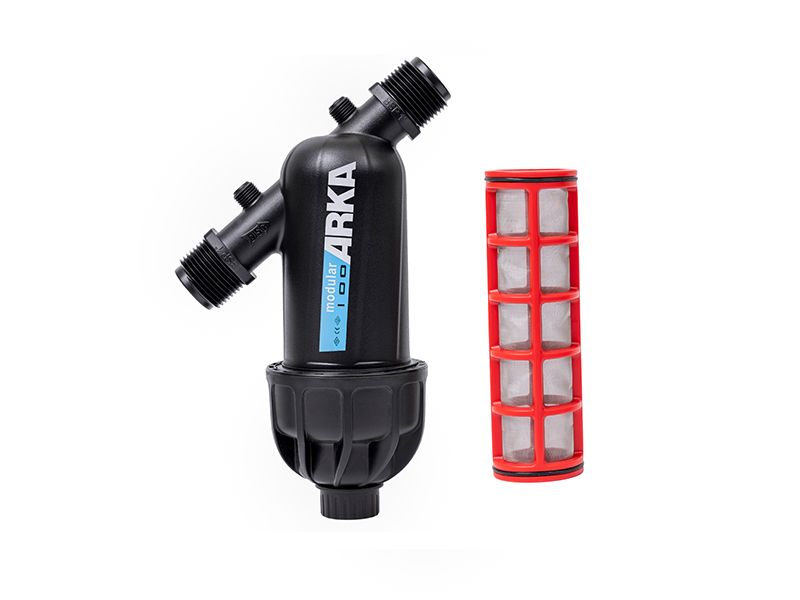
Even top-tier hardware fails without maintenance. Skipping routine upkeep leads to creeping pressure loss and ruined emitters. You need a data-driven maintenance routine to maximize system longevity.
When buying equipment, weigh daily labor costs against the upfront price tag. Manual units require a worker to walk to the manifold, open the housing, and scrub the element clean. This is fine for small plots. During peak season on a large farm, it becomes a logistical nightmare.
For larger acreage, automatic backflushing is the smart play. These systems use pressure differential sensors. When debris builds up and causes a 5 to 7 PSI drop, the controller reverses the flow. It flushes the trapped sludge out the discharge valve automatically. The equipment gets cleaned only when empirically necessary, drastically reducing manual labor.
Visual inspections catch minor wear before it causes a systemic failure. Imagine finding an entire row of wilted crops in July just because a torn mesh went unnoticed. Focus on hard metrics rather than guesswork.
| Component | Inspection Frequency | Action Required |
|---|---|---|
| Pressure Gauges | Weekly | Verify pressure differential. Clean if it exceeds 7 PSI. Replace broken gauges immediately. |
| Filter Element Mesh or Disc | Monthly | Inspect for tears, warping, or embedded scale. Soak in mild acid solution if mineral buildup is present. |
| O-Rings and Seals | Bi-Annually | Check for cracking or flattening. Lubricate with silicone-based grease to prevent leaks. |
| Flush Valves | Monthly | Manually trigger the flush valve to ensure the solenoid and hydraulic mechanisms operate smoothly. |
Filtration gear has a finite lifespan. Look for empirical signs of failure. Do you see a persistent pressure drop even after cleaning? Are drip tapes clogging more often? Is the housing manifold physically degrading? Upgrading is a strategic chance to align your water treatment with your current yield goals.
Treating water treatment strictly as a sunk cost is a flawed economic perspective. A properly sized, efficient setup delivers a massive Return on Investment across several operational areas.
Labor Savings: Unclogging micro-sprinklers takes hours of backbreaking work. Capturing abrasive grit at the pump drastically reduces in-field troubleshooting. You can reallocate those labor hours to actual crop management and harvesting.
Equipment Longevity: Fine sand acts like sandpaper inside your pipe network. It destroys booster pumps and scores solenoid valves. Solid pre-filtration is a mechanical insurance policy. It significantly extends the life of your entire irrigation infrastructure.
Higher Yields and Quality: The ultimate metric is crop yield. Clogged emitters cause erratic watering. One zone floods while another suffers drought stress. Uniform water application guarantees uniform growth. Specifically, pristine water allows for highly precise fertigation. Getting liquid nutrients evenly to the root zones directly creates a higher percentage of premium-grade produce at harvest time.
Clean water is the absolute foundation of a profitable harvest. Proper filtration works silently to protect your massive infrastructure investment day in and day out. You must understand your specific water source and emitter limits. Take the time to evaluate your hydraulic parameters carefully. By upgrading your hardware today, you safeguard your fields against unpredictable water conditions and ensure a highly profitable season.
Drip irrigation systems require extremely fine filtration to prevent microscopic emitters from clogging. Disc units or fine mesh screens, typically rated between 120 and 150 mesh, are the most effective choices. Disc technology provides a distinct advantage if your water source contains organic matter. Its three-dimensional grooved structure traps algae and slime far more efficiently than a flat screen.
These two systems address entirely different water quality nightmares. A hydrocyclone utilizes centrifugal force to spin heavy inorganic particles, like coarse grit and sand, out of well water. It contains no moving parts and functions strictly as a pre-filter. In contrast, a sand media tank is filled with crushed silica. It is designed to trap sticky organic matter, such as algae and biological sludge, primarily drawn from surface water sources like rivers and canals.
Cleaning frequency should always be dictated by real-time pressure data rather than a strict calendar schedule. As a best practice, check your pressure gauges weekly. It is time to initiate a cleaning cycle when the pressure differential, meaning the difference in PSI between the inlet and outlet gauges, reaches 5 to 7 PSI. Waiting longer risks forcing debris through the mesh and starving your crops of water.
Yes, indirectly but quite significantly. By intercepting coarse debris early, a sediment interceptor prevents the downstream clogging of your distribution lines. This guarantees uniform water and nutrient distribution during fertigation cycles. Uniform watering eliminates plant stress caused by localized artificial drought conditions, directly contributing to a higher-volume crop yield.
You must match the micron rating strictly to your emitter orifice size. The standard engineering rule is to select a mesh that blocks particles one-tenth the size of your smallest emitter opening. Drip systems typically require fine filtration around 120 to 150 mesh, while large impact sprinklers operate perfectly fine with a coarser 80-mesh rating.
Rapid clogging usually stems from undersizing the housing for your flow rate or pulling from a highly biological water source without adequate pre-filtration. Forcing high-velocity water through a small unit drives debris deep into the element. Always verify that your primary pump's output matches the maximum capacity of your filtration hardware.
Stop letting poor water quality dictate your crop yields and maintenance budget. Whether you need a robust 3/4-inch Y-type model for a greenhouse zone or a high-capacity automatic setup for open fields, choosing the right engineering solution is critical. Evaluate your field parameters and explore professional-grade filtration hardware at ARKA Irrigation to build a system that runs flawlessly season after season.


