
Views: 0 Author: Site Editor Publish Time: 2026-10-16 Origin: Site


Are brown patches ruining a meticulously manicured lawn? You run the system every morning. Yet, those stubborn dry spots persist. Debris, fine silica, and organic matter silently compromise irrigation nozzles. They act as invisible culprits behind landscape degradation. A sprinkler filter solves this costly problem. Proper filtration protects delicate equipment. It guarantees uniform water distribution and ultimately preserves your landscape investment.
The irrigation sector is currently experiencing a massive shift toward precision water delivery. Driven by global water conservation mandates, property managers and agricultural operators are investing heavily in smart weather-based controllers and soil moisture sensors. However, field data reveals a critical bottleneck. Algorithmic efficiency becomes entirely useless if the physical delivery mechanism fails. A smart controller simply cannot compensate for a clogged nozzle. Consequently, robust filtration hardware has transitioned from a basic maintenance accessory to the mandatory physical foundation for modern water conservation strategies.
Evaluate the water source at a microscopic level to understand why a protective barrier is indispensable. Different supplies carry varying contaminant profiles. Municipal water travels through miles of aging underground infrastructure. Along this journey, it picks up pipe scale, rust flakes, and mineral deposits. Well water frequently draws up fine silica sand and silt directly from the aquifer. Surface water sources present the highest biological risk. They carry heavy organic loads like algae and floating debris.
Installed directly into the irrigation mainline, a specialized mechanical filter intercepts these suspended solids. Its primary function is trapping particulates before they enter intricate valve manifolds. Adding reliable water filtration is not an optional luxury. It serves as a foundational component of any professional-grade setup. Without it, the internal mechanics of modern irrigation heads are left entirely exposed to foreign destruction. Integrating a dedicated unit is the definitive first step toward predictable operational stability.
Irrigation nozzles are precision-engineered components. Manufacturers design them with exact orifice dimensions to deliver specific flow rates and precise trajectory angles. When grit compromises these tiny openings, hydraulic efficiency degrades rapidly.
The most immediate threat to any watering system is clogging. Modern distribution devices feature incredibly small water passages. Microscopic grains of sand bridge across these fine orifices, blocking the flow completely. Imagine a standard pop-up spray head. It relies on a hair-thin slit to create a fan pattern. A single grain of coarse sand lodged in that slit creates a void in the spray. This immediately leads to a wedge-shaped dry spot on the turf. A high-quality physical barrier captures these micro-particulates, ensuring only clean water reaches the terminal ends of your lateral lines.
Unfiltered water causes insidious damage through abrasive wear. Forcing suspended sediment through a tiny nozzle orifice under high pressure creates a relentless sandblasting effect. Over months of operation, high-velocity abrasion scores the plastic edges of the nozzle. The opening artificially widens. A nozzle designed to output 1.5 gallons per minute might begin outputting 2.5 gallons per minute. This throws off the precipitation rate of that specific zone. Trapping abrasive materials at the source preserves the structural integrity and mathematical precision of your nozzles.
Pop-up rotors contain internal water-lubricated gear drives, stators, and rubber wiper seals. When grit bypasses the mainline, particles lodge in the delicate gear teeth. The rotor head jams and stops rotating. Furthermore, sediment trapped between the pop-up riser and the rubber wiper seal causes continuous leaking during operation. This creates a localized muddy puddle while starving the rest of the zone of necessary operating pressure. Effective physical filtration prevents this catastrophic mechanical failure.
Uniform coverage, known professionally as Distribution Uniformity, measures how evenly water is applied across a landscape. High distribution uniformity ensures every plant root receives the exact intended moisture without drastic overwatering in adjacent areas.
Irrigation networks are meticulously calculated hydraulic systems. Each zone operates at an optimal dynamic water pressure. Debris bypassing the mainline creates severe pressure imbalances. If silt partially blocks several nozzles in a single zone, the flow rate decreases. Water pressure within the lateral line spikes aggressively. Remaining unclogged nozzles then operate far outside their optimal range. They begin misting. These atomized droplets are easily blown away by mild breezes, leading to massive evaporation losses.
Conversely, if a neglected mainline filter restricts overall flow, dynamic pressure plummets. Low pressure prevents sprinkler heads from popping up fully. The throw radius shrinks instantly. Critical head-to-head coverage is lost. Relying on a dedicated sprinkler filtration unit ensures hydraulic pressure remains stable. Without it, restricted flow leaves overlapping zones completely dry.
Omitting a filtration device during installation is a classic false economy. Minor initial savings are quickly eclipsed by cascading maintenance costs and collateral landscape damage.
The most direct consequence of unfiltered water is the constant replacement of hardware. Professional-grade gear-driven rotors and brass solenoid valves are expensive. When debris scores a valve diaphragm, the valve fails to close. This requires a complete, labor-intensive replacement. The cumulative cost of purchasing replacement parts far exceeds the one-time purchase price of a durable filter housing.
Distorted spray patterns lead to severe water waste. Property owners often attempt to fix resulting dry spots by simply increasing the run time on the controller. This means blindly applying twice the required water to certain areas just to push adequate moisture to blocked sections. For agricultural users, a clogged drip tape causes localized death of high-value cash crops. Financial loss associated with dead landscaping or reduced agricultural yields remains the ultimate hidden cost of ignoring water quality.
Selecting the appropriate filtration mechanism is a critical foundational step. The industry relies on two primary technologies. Understanding their mechanical differences allows you to match the method perfectly to your water source.
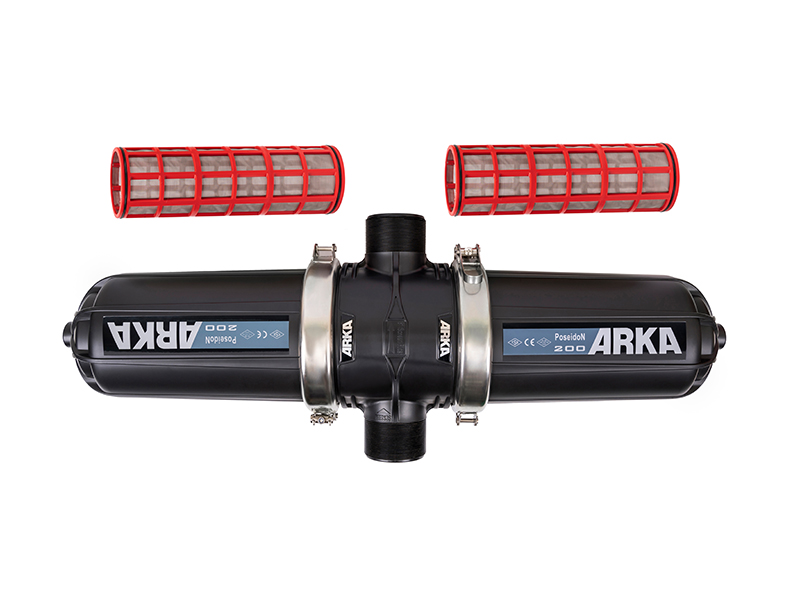
Operating as a straightforward physical barrier, this device consists of a rigid housing containing a cylindrical mesh cartridge. As water flows through the inlet, particulate matter larger than the mesh openings gets trapped on the surface. This design is highly effective for trapping inorganic, hard debris. If your water source contains sand, gravel, or rust particles, a high-quality irrigation screen filter provides reliable defense. The rigid nature of the metal or polyester mesh prevents sharp materials from forcing their way through.
A disc filter utilizes a stack of tightly compressed plastic rings. Each disc features microscopic diagonal grooves creating a deeply layered filtration matrix. These are specifically engineered to handle organic matter like algae and moss drawn from ponds. While organic slime quickly blinds a standard flat screen, the deep-depth matrix of a disc filter traps organic matter effectively without immediately compromising flow rates.
| Feature | Screen Technology | Disc Technology |
|---|---|---|
| Best Suited For | Sand, silt, pipe scale, inorganic debris | Algae, moss, heavy biological loads |
| Ideal Water Source | Municipal city water, deep wells | Open ponds, lakes, rivers, reservoirs |
| Maintenance Process | Simple to rinse and lightly scrub | Requires loosening and flushing the disc stack |
| Cost Efficiency | Highly cost-effective for standard setups | Generally higher initial investment |
| Durability Against Grit | Excellent defense against sharp, abrasive sand | Good, but heavy grit can embed in plastic grooves |
Purchasing a filter housing requires selecting the correct internal mesh size. In the irrigation industry, mesh refers to the number of openings per linear inch of the screen. A higher mesh number indicates a finer screen with smaller holes. Choosing the wrong size leads to catastrophic system failures.
To achieve optimal protection, match the screen size to your specific emitters. Drip emitters feature microscopic orifices. They require ultra-fine filtration, typically a 120-mesh or 150-mesh screen, to trap microscopic silt. Standard residential spray heads rely on precise internal gears. A medium filtration level of 80 to 100 mesh is generally sufficient. Agricultural impact sprinklers handle dirtier water and operate perfectly with a coarse 30 to 60-mesh screen.
When designing a robust commercial or agricultural system, engineers look for specific performance benchmarks. For instance, high-performance models like the F90HS 3-inch H-Type Plastic screen filter feature a highly durable reinforced plastic housing designed to withstand intense UV exposure and high field pressures. With a 3-inch connection, these units accommodate massive flow rates while utilizing a precision-woven stainless steel or durable polyester mesh. This ensures maximum trapping capacity with minimal pressure drop. Choosing equipment with these industrial-grade specifications guarantees long-term operational stability.
Even the highest quality hardware fails without proper maintenance. As debris accumulates on the mesh, the open area for water to pass through steadily decreases. This creates a pressure differential between the inlet and the outlet. Implementing a strict maintenance routine guarantees long-term protection.
Routine cleaning must be executed methodically. Never attempt to open a housing while the system is under pressure. Turn off the main water supply valve. Extract the internal mesh filter cartridge gently. Inspect the rubber O-rings for any signs of flattening. Wash the cartridge under a steady stream of clean water, directing the flow from the outside in to dislodge trapped particles. Use a soft-bristle nylon brush for hard mineral scale. Never use wire brushes. They will permanently tear the delicate mesh.
While physical screens are highly durable, they are not infinite-life components. Proactively replace the internal cartridge if you observe any visible tearing. Even a microscopic tear allows abrasive sand to bypass the barrier. For property owners managing highly contaminated water sources, modern Y-style housings equipped with a built-in flush valve offer a massive advantage. Opening the flush valve while the system is pressurized creates a vigorous scouring effect, flushing accumulated debris out onto the ground.
A dedicated mainline filter represents a minor upfront investment yielding massive long-term returns. By acting as the primary line of defense against abrasive sand and pipe scale, it protects expensive nozzles from premature failure. Clean water consistently guarantees stable hydraulic pressure. This remains the absolute prerequisite for uniform coverage across any landscape or crop field.
Evaluate your current water source today. Check your nozzles for signs of abrasive wear. Upgrade your system with a reliable filtration unit to safeguard your investment. For industry-leading protection, explore the complete range of high-performance filtration solutions at ARKA Irrigation to find the exact specifications suited for your project.
Yes. While municipal water is rigorously treated for biological safety, it transports through miles of aging underground infrastructure. Along the way, the water frequently picks up pipe scale, rust flakes, and sediment from mainline breaks. These inorganic particulates are large enough to score the internal gears of pop-up rotors and permanently clog fine orifices.
Standard household water filters improve water chemistry. They utilize activated carbon blocks or reverse osmosis membranes to remove dissolved chemicals and chlorine. In contrast, an irrigation filter is a purely mechanical device. It utilizes a physical mesh barrier specifically engineered to trap solid particulate matter and sand. Its sole purpose is protecting mechanical watering components.
The required cleaning frequency depends on your specific water source and the volume of water passing through the system. Systems drawing from private wells or open ponds may require weekly cleaning to prevent severe pressure drops. Systems connected to clean municipal water supplies might only require inspection and rinsing once or twice per watering season. Installing pressure gauges before and after the housing is the most empirical way to determine exactly when cleaning is necessary.
A properly sized, clean filter causes a very minimal pressure drop, usually between 1 to 3 PSI. This is factored into the initial design of the irrigation network. However, if the internal mesh becomes severely clogged with trapped debris, the restricted flow causes a significant drop in dynamic pressure. Regular maintenance is vital for maintaining uniform water coverage.
The most obvious visual indicator of a clogged unit is a sudden reduction in sprinkler throw distance. If your pop-up heads fail to rise completely out of the ground, or if the spray pattern looks weak and uneven, restricted flow is likely the culprit. For a professional diagnosis, checking the pressure differential between the inlet and outlet gauges will immediately confirm if the mesh is blinded by debris.
While screen models are exceptional at stopping hard, inorganic debris like sand, they are not the optimal choice for heavy algae loads. Algae and biological slime tend to smear across the flat surface of the wire mesh, quickly blinding the pores and restricting flow. For water sources with high organic content, a disc filter is highly recommended due to its three-dimensional trapping matrix.


