
Views: 0 Author: Site Editor Publish Time: 2026-10-12 Origin: Site


Spending time and money installing an irrigation system only to watch sprinkler heads constantly clog or sputter is a massive frustration for property owners. Many people assume their water supply is clean enough for direct use. The reality is often quite different. Unfiltered water contains microscopic debris, suspended sand, and organic algae. Over time, these particulates severely damage internal sprinkler mechanisms and block delicate drip emitters.
The global landscaping industry is rapidly shifting toward sustainable water management. Property owners increasingly rely on harvested rainwater, surface ponds, or municipal reclaimed water to irrigate their lawns. While excellent for the environment, these eco-friendly sources carry significantly higher particulate loads. Even standard city water lines frequently introduce rust and pipe scale from aging infrastructure. Filtration is no longer an optional accessory. It is a fundamental requirement for system longevity.
The solution to this persistent issue is the irrigation filter. Choosing the right filtration device saves money on replacement parts, conserves water by maintaining optimal pressure, and significantly reduces weekly maintenance. This guide will walk you through exactly how to protect your landscaping investment. From understanding mesh sizes to comparing filter types, we will help you select the precise equipment required for your hydraulic setup.
Modern irrigation components are precision-engineered devices. The fine nozzles of gear-driven rotors, static spray heads, and micro-sprinklers operate using very tight tolerances. Even microscopic grit can accumulate inside these nozzles. This buildup distorts the spray pattern or blocks the flow entirely. A dedicated filter catches this debris before it ever reaches the distribution lines. The result is that your sprinklers perform exactly as the manufacturer intended.
Beyond the sprinkler heads themselves, a high-quality sprinkler system filter plays a critical role in protecting the brain of your irrigation zones—the solenoid valves. These automated valves rely on small internal diaphragms and microscopic ports to open and close effectively. If pipe rust enters the valve assembly, it can cause the mechanism to stick in the open position. This easily floods your yard overnight. Alternatively, it can remain closed and starve your plants during a heatwave. Proper filtration acts as an essential insurance policy for these expensive mechanical parts.
When debris bypasses a barrier and clogs a nozzle, that specific sprinkler fails to throw water its designated distance. You will immediately notice uneven water distribution. This creates dry brown spots in your lawn alongside over-saturated muddy areas. Clean water maintains consistent hydraulic pressure across the entire irrigation zone to ensure uniform coverage.
Choosing the correct filtration medium depends entirely on what type of debris is present in your water source. There is no one-size-fits-all solution. Understanding the mechanics of each type is vital for system efficiency.
| Filter Type | Filtration Mechanism | Best For Catching | Ideal Water Source |
|---|---|---|---|
| Screen Filter | Physical barrier mesh cylinder | Hard inorganic debris like sand, silt, and pipe rust | Municipal city lines, clean private wells |
| Disc Filter | Compressed grooved plastic rings | Soft organic matter like algae, moss, and biological slime | Surface ponds, lakes, reclaimed water |
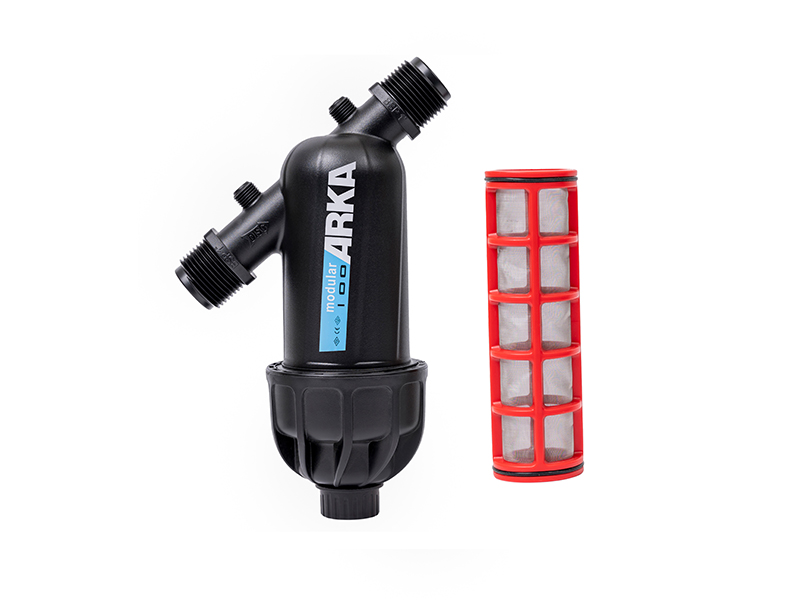
A screen filter utilizes a cylindrical mesh—typically constructed from stainless steel or durable plastic—to physically block particles from passing through. They are highly effective at filtering out hard materials such as sand and pipe scale. The Y-screen design is the industry standard for residential and light commercial use. Its angled body allows heavy debris to settle at the bottom of the casing, safely away from the main water flow.
Disc filters consist of a stack of tightly compressed grooved plastic rings. As water passes through the microscopic grooves between the discs, debris is trapped. Because they offer three-dimensional depth filtration, disc filters are vastly superior for trapping soft organics. They are the preferred choice for systems pulling water from lakes or reclaimed agricultural sources.
When shopping for filtration equipment, you will inevitably encounter two primary measurement standards—Mesh and Microns. Grasping the difference between these terms is essential for selecting the exact level of protection your yard needs.
Mesh refers to the number of holes per linear inch of the filter screen. A higher mesh number means more holes, which translates to a finer weave and tighter filtration. Conversely, microns measure the actual physical size of the particle being filtered. A higher micron number means a larger particle can pass through. As a general rule of thumb, higher mesh equals finer filtration, whereas higher micron equals coarser filtration.
Selecting the right mesh is a delicate balancing act. If the mesh is too fine for your water source, it will clog constantly and force you to clean it daily. If it is too coarse, harmful debris will slip through and damage your sprinklers. For standard pop-up sprays and rotors, a 120-mesh screen—which filters particles down to roughly 125 microns—is the industry sweet spot. Micro-sprinklers and drip lines feature much smaller emitters and generally require 120 to 150 mesh protection.
A remarkably common mistake among DIY landscapers is buying a filter based solely on the physical size of the irrigation pipe. While pipe diameter matters for installation, the internal filter must be sized according to the hydraulic demands of your system.
Your chosen water filter for sprinkler system applications must handle the maximum flow rate of your largest irrigation zone. For instance, if your largest zone utilizes six rotor sprinklers that each consume 3 Gallons Per Minute, that entire zone requires 18 Gallons Per Minute to function. You must select a filter rated for at least that volume. Standard 3/4-inch Y-filters are typically engineered to handle these residential flow capacities perfectly.
Water naturally loses pressure as it forces its way through the tiny holes of a filter screen. This phenomenon is known as friction loss. If you install an undersized filter, it will choke the water supply and cause a severe drop in pressure. This drop prevents your sprinkler heads from popping up fully. Always ensure the pressure drop remains within acceptable limits—usually under 5 Pounds per Square Inch.
Once you verify the flow capacity, match the filter inlet and outlet size to your main irrigation line. Common residential sizes feature 3/4-inch male threaded connections. Using reducing bushings to force a smaller filter onto a larger pipe is highly discouraged because it creates an immediate plumbing bottleneck.
Before finalizing your purchase and digging into your valve box, evaluate these critical factors to ensure long-term reliability and ease of use.
Y-filters are strongly preferred for residential setups. The Y shape allows the debris collection chamber to sit at an angle. When it comes time to clean the unit, you can easily unscrew the cap and slide the screen out. You never have to dismantle the entire filter body from the pressurized plumbing line.
Irrigation systems are often exposed to harsh elements or buried in damp muddy valve boxes. Look for filter bodies constructed from heavy-duty plastics that resist environmental wear. The internal screen should ideally be stainless steel for maximum longevity against abrasive sand particles.
For homeowners looking for a reliable and easy-to-maintain solution for standard residential zones, selecting a proven filtration unit is essential to avoid constant troubleshooting.
A highly recommended option for standard setups is the Arka 3/4-Inch Y-Screen Filter. Designed with a robust 120-mesh stainless steel screen, it provides the exact level of precision needed to protect standard pop-up sprays, rotors, and delicate micro-irrigation lines from municipal or clean well water particulates.
This sprinkler water filter utilizes the preferred Y-body design with 3/4-inch male threaded connections. This makes it incredibly straightforward for homeowners to unscrew, inspect, and clean the internal screen without needing professional plumbing tools. Constructed from high-quality plastic, it is engineered to withstand standard residential water pressure while resisting environmental wear and tear inside a damp valve box. It is the ideal safeguard for residential lawns and raised garden bed drip lines where consistent flow is non-negotiable.
For maximum protection, the filter should be installed downstream from your backflow preventer and main shut-off valve, but strictly before the zone control valves. This strategic placement ensures that both the delicate solenoid valves and the downstream sprinkler heads are fully shielded from incoming debris.
A filter only works efficiently if it is kept clean. During the peak summer watering season, check and flush your filter once a month. If you draw from a well with high sediment, you may need to inspect it bi-weekly. A sudden drop in sprinkler spray distance is the most common indicator that your filter screen is clogged and requires an immediate rinse.
If you live in a climate that experiences freezing temperatures, winterizing your filter is critical. Water left inside the filter housing will expand as it freezes and easily crack the hard plastic body. Always unscrew the filter cap, remove the screen, and allow all water to drain out completely before the first hard freeze.
A high-quality sprinkler system filter is a relatively small investment that yields massive returns. It prevents frustrating maintenance headaches, protects expensive mechanical valves, and extends the life of your sprinkler heads. Always evaluate your specific water source, verify your system flow rate, and identify your precise mesh needs. By upgrading your irrigation setup today with a reliable option like the Arka Y-Screen filter, you ensure a healthy and flawlessly watered landscape for years to come. Explore Arka's professional-grade filtration products to find the exact match for your landscaping needs.
The optimal location is after your main water shut-off valve and backflow preventer, but before the irrigation manifold where your zone valves are located. Installing it here ensures that the sensitive internal diaphragms of your zone valves are protected from grit, preventing them from sticking open or closed.
Yes, absolutely. If a filter becomes severely clogged, it restricts water flow and creates immense backpressure. If you are using an irrigation pump to draw water from a well or pond, this restriction forces the pump to work much harder. Over time, this can cause the pump motor to overheat and significantly shorten its lifespan.
While it is technically possible on very clean municipal water, it is highly discouraged by irrigation professionals. Even treated city water can carry pipe scale and rust from municipal line repairs. Over time, these micro-abrasives wear out sprinkler seals and permanently clog fine nozzles.
A properly sized and clean filter will cause a negligible pressure drop—usually between 1 to 3 Pounds per Square Inch—which will not noticeably affect system performance. However, if you install a filter that is too small for your flow rate, or if you allow the screen to become heavily clogged, it acts as a severe bottleneck and significantly reduces your water pressure.
The most obvious visual sign is a noticeable drop in your sprinkler spray distance or the sudden appearance of dry brown spots on your lawn. As a standard maintenance practice, you should open and check the filter monthly during the active watering season.
Mechanically, they function in the exact same way. The primary difference lies in the required mesh size. Standard lawn sprinklers typically require 80 to 120 mesh screens. Drip irrigation systems require much finer filtration—typically 120 to 150 mesh—because drip emitters have microscopic water pathways that clog far more easily than larger rotor nozzles.


