
Views: 0 Author: Site Editor Publish Time: 2026-10-18 Origin: Site


Are you constantly replacing clogged water filters? Heavy sand, geological grit, and rust flakes destroy fine downstream components rapidly. When raw water carries a heavy particulate load, forcing it through a single fine mesh or spun cartridge inevitably causes severe pressure drops. This leads to high maintenance costs. Integrating a centrifugal filter solves this specific issue. It acts as a primary mechanical barrier for sensitive equipment.
To understand why pre-filtration is critical for water system longevity, we must first define the core technology. Frequently referred to in engineering contexts as a desander or hydrocyclone, this specialized device strips large, heavy particulates from a water supply. It accomplishes this long before the debris can reach delicate secondary filters.
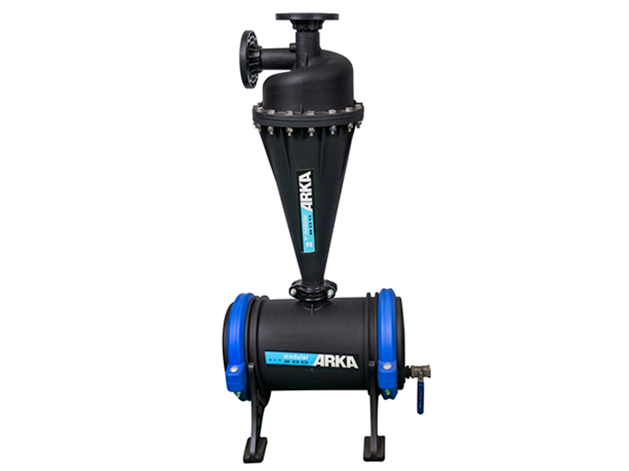
The operation of a cyclonic separator is grounded in basic physics. It utilizes centrifugal force and specific gravity. When untreated water enters the chamber, it is forced through a directional nozzle or tangential inlet at a precise angle. This entry creates a rapid, spinning vortex inside the cylindrical body.
As the fluid spins at high velocity, centrifugal force pushes particles heavier than water outward against the chamber walls. This includes materials with a specific gravity greater than 1.0, like silica sand, rust flakes, and mineral scale. Gravity subsequently takes over. These heavy particles slide downward and settle into a dedicated collection basin at the bottom. Meanwhile, the clean water is drawn upward through the low-pressure center of the vortex. It then exits the unit to continue downstream, stripped of abrasive bulk debris.
The most significant engineering advantage of this design is its elegant simplicity. It relies entirely on the kinetic energy of the water. There are no moving mechanical parts to wear out and no porous barriers to blind over. Consequently, the unit is incredibly durable. It can effortlessly handle massive sediment influxes that would instantly destroy a conventional physical barrier.
Facility managers, farmers, and homeowners often make a critical error. They rely on a single fine filter to treat highly contaminated water. When a water system lacks proper pre-filtration, the financial and operational consequences compound rapidly.
Recent industry analyses of water treatment infrastructure reveal a significant shift in operational strategy. Due to the rising inflation of synthetic filter media and the high replacement costs of delicate Reverse Osmosis membranes, modern facilities are aggressively moving away from single-stage filtration. The current standard involves a massive adoption of multi-stage architectures. Coarse debris is intercepted mechanically early in the process. This shift mitigates supply chain vulnerabilities. It also drastically reduces the recurring overhead associated with consumable parts.
Standard sediment filter cartridges, such as 5-micron spun polypropylene or pleated polyester, are designed to capture microscopic impurities, suspended solids, and fine silt. They are absolutely not engineered to handle large volumes of heavy sand. When exposed to raw, gritty well water, the microscopic pores of these fine media become instantly overwhelmed. A cartridge designed to last three to six months may become completely packed with mud in a matter of days.
As a downstream cartridge packs with heavy debris, it creates a physical wall. This severely restricts water flow and results in a drastic pressure drop across the plumbing network. To maintain the required flow rate, well pumps and booster pumps must work significantly harder. This increased workload leads to higher electrical consumption and thermal stress on the pump motor. Furthermore, it elevates the risk of cavitation, a phenomenon that can permanently pit and destroy internal pump impellers.
The financial impact of overloading secondary filters is frequently underestimated until the invoices pile up. Consider a commercial irrigation setup dealing with moderate sand intrusion. Without pre-filtration, maintenance crews might swap out expensive 20-inch cartridges weekly. This wastes thousands of dollars annually on consumables alone. In addition, the labor hours spent depressurizing lines, scrubbing housings, and bleeding air from the system drain valuable operational time.
The primary function of a cyclonic pre-filter is not to purify water to potable drinking standards. Instead, it acts as a heavy-duty, sacrificial shield for the equipment that actually does the purifying. By stripping out particles 50 microns and larger, it drastically reduces the physical burden placed on secondary systems.
Advanced water treatment components are notoriously sensitive to abrasion. Sharp sand grains and metal shavings can physically slice through the delicate, semi-permeable layers of a Reverse Osmosis membrane. This causes permanent cross-contamination. Additionally, heavy particulate loading will quickly blanket the porous surface of a carbon block. This prevents it from adsorbing dangerous chemicals like chlorine. Pre-treatment ensures these expensive components only process dissolved solids and chemical impurities.
One of the most frustrating aspects of traditional barrier filtration is the continuous degradation of flow rate as dirt accumulates. A hydrocyclone filter operates on a completely different paradigm. The separated debris falls into an isolated bottom purge chamber rather than being trapped directly in the flow path. Therefore, the system maintains a consistent flow rate. Even when the collection basin is nearing its maximum capacity, the pressure drop across the unit remains virtually unnoticeable.
Investing in centrifugal separation technology yields several measurable advantages. It transforms chaotic, high-maintenance plumbing into a streamlined, predictable operation.
The most immediate and tangible benefit is the return on investment regarding consumable parts. While a sand separator requires an upfront capital expenditure, it effectively pays for itself. It slashes the purchase frequency of disposable downstream media. By removing the bulk of the geological mass, secondary filters take months to reach their differential pressure limits, rather than days.
Traditional media tanks, such as large backwashing sand filters, require frequent, prolonged cleaning cycles. These flush hundreds of gallons of treated water down the drain. In stark contrast, purging a cyclonic unit is exceptionally water-efficient. The process involves opening a valve at the bottom of the collection chamber for just a few seconds. This releases a concentrated slurry of sludge and grit while wasting only a minute fraction of water.
Maintenance on these units is remarkably straightforward and physical-labor-free. It does not require system depressurization, wrestling with tight filter housings, or scrubbing slimy screens. The operator simply opens the purge valve while the system remains actively running and pressurized. For remote or highly automated facilities, an electronic solenoid valve set to a specific timer can handle this process entirely.
Implementing a robust pre-filtration strategy is critical across various sectors where raw water sources contain high levels of particulate matter. This technology's maximum value is realized in environments where abrasive debris poses a constant threat to operational efficiency.
In the agricultural sector, efficiency and uniform water distribution are paramount. Modern drip emitters and micro-sprinklers feature incredibly small orifices. These are notoriously prone to clogging from river water grit. A clogged emitter leads to dry spots, stunted crop yields, and labor-intensive field repairs. Deploying a reliable irrigation pre-filter at the pump station is the standard solution for this industry. Specifically, integrating a Nylon Lightweight 3-inch model ensures heavy particulates are stripped from the water before they infiltrate the intricate network of drip lines.
Many rural homeowners relying on private wells frequently encounter the nightmare of pumping fine sand directly into their plumbing. Over time, this abrasive material acts like liquid sandpaper. It degrades washing machine inlet valves, ruins the seals inside water heaters, and completely clogs whole-house softening systems. Installing a cyclonic separator between the well pressure tank and the primary house filter provides an excellent buffer.
In industrial settings, cooling towers and heat exchangers require massive volumes of water for thermal regulation. Airborne dust, pipe scale, and heavy rust can accumulate in the cooling water. This leads to severe scaling and reduced thermal efficiency. Centrifugal separators are frequently deployed in a side-stream configuration to continuously filter the basin water. This prevents grit from scoring the internal plates of expensive heat exchangers.
When designing a water treatment architecture, engineers often evaluate whether to specify a centrifugal unit or a standard cartridge filter. The reality is that these technologies serve fundamentally different purposes in a modern step-down filtration setup.
| Feature | Centrifugal Pre-Filter | Standard Cartridge Filter |
|---|---|---|
| Primary Function | Bulk removal of heavy, coarse debris | Fine polishing and removal of suspended solids |
| Target Particles | Sand, rust, metal flakes, heavy grit 50+ microns | Silt, clay, algae, fine sediment 1 to 50 microns |
| Pressure Drop | Consistently low, does not increase as chamber fills | Increases rapidly as the media becomes clogged |
| Maintenance Cost | Zero consumable parts; occasional manual or auto purge | High recurring cost for replacement cartridges |
In professional water treatment design, it is rarely an either-or scenario. The most resilient and cost-effective systems utilize a synergistic approach. A cyclonic unit is installed first to handle the heavy, abrasive bulk. This is followed immediately by a standard sediment filter to polish the water and catch the microscopic, suspended fines.
Selecting the correct unit requires precise engineering considerations. Because the technology relies on fluid dynamics, careful attention must be given to sizing and material specifications to ensure the vortex forms correctly.
The single most critical factor in choosing the right unit is matching it to your system's actual flow rate. Centrifugal force only works if the water velocity is perfectly dialed in. If the filter is oversized, the water will move too sluggishly through the chamber. The cyclone will fail to form, and sand will simply bypass the unit. Conversely, if it is undersized, water will be forced through too quickly, resulting in excessive pressure loss. Always consult the manufacturer's performance curves to match your pump's output in Gallons Per Minute or Liters Per Hour.
Evaluate the operating environment. Units manufactured from reinforced polyamides, such as the widely used Nylon Lightweight 3-inch models, offer excellent corrosion resistance. They are highly favored in agricultural irrigation and can handle standard operating pressures up to 150 PSI. However, for extreme high-pressure industrial applications, carbon steel or epoxy-coated stainless steel models are generally required to ensure long-term structural integrity.
Buyers must also decide how they will manage the collected debris. Manual purge valves are highly cost-effective but require a human operator to physically open the valve. They are best for residential applications. In contrast, automatic electronic purge valves can be programmed to open at specific time intervals. They are ideal for remote agricultural sites dealing with extremely heavy sand loads.
Upgrading your water infrastructure with a centrifugal pre-treatment device is a strategic engineering decision that pays immediate dividends. It stops heavy, abrasive debris in its tracks. This saves your delicate downstream filters from premature failure and protects your expensive pumps from irreversible wear. Whether you are managing a rural residential well, a sprawling agricultural drip system, or an industrial cooling tower, proper pre-filtration is the cornerstone of operational efficiency.
Ready to protect your water system and drastically reduce maintenance costs? Evaluate your specific flow rates and sediment loads today. Visit Arka-Irrigation to explore our complete line of high-performance centrifugal filters and find the exact specifications required to safeguard your downstream equipment.
When sized accurately according to your system's flow rate, a cyclonic separator causes a very minimal and consistent pressure drop. This is usually between 2 to 5 psi. Unlike traditional cartridge filters, which create severe and escalating pressure restrictions as their physical pores clog, this unit maintains a steady pressure profile regardless of how much sand is resting in the bottom collection chamber.
These units are highly effective at separating particles that are 50 microns in diameter and larger. However, the critical factor is mass, not just size. The technology relies on specific gravity. The particles must be heavier than the water itself to be pushed to the outer walls. It excels at removing sand, rust, and heavy grit, but will not remove lightweight organics like algae.
No, it cannot act as a complete replacement. It is strictly a pre-filter designed to remove heavy bulk debris and protect downstream infrastructure. Because it operates via fluid dynamics rather than a physical barrier, fine silt, lightweight clay, and suspended organic materials will pass through the vortex. You still require a downstream cartridge or mesh screen to capture these finer contaminants.
For maximum protection, it should be installed as close to the water source as possible. In a well system, it is typically placed between the well pump and the pressure tank. This prevents sand from accumulating in the tank or damaging the pressure switch. In irrigation or industrial setups, it should be the very first component inline after the main feed pump.
The required purging frequency is entirely dependent on the sediment load of your specific water source and your daily usage volume. In environments with heavy sand intrusion, the chamber may need to be flushed daily or even multiple times a day. In cleaner well systems, purging once a week may suffice. To eliminate the guesswork, installing an automatic purge valve on a set timer is highly recommended.


