
Views: 0 Author: Site Editor Publish Time: 2026-10-20 Origin: Site


You just spent a considerable amount of time and capital trenching new lines. You laid down fresh drip tape and installed additional sprinkler heads for your agricultural plot or commercial landscape. But the moment you fire up the pump to test the expanded network, your once-powerful water pressure dwindles to a pathetic trickle.
Expanding your setup often overwhelms legacy equipment. This causes severe pressure loss immediately after the expansion. While incredibly frustrating, this is rarely a sign of a broken component. Rather, it is a mathematical symptom of a mismatched hydraulic system.
In this comprehensive guide, we will break down exactly why this bottleneck occurs. More importantly, we will walk you through the practical, step-by-step diagnostic process to identify the restriction. We will also share the most effective equipment upgrades to permanently restore optimal flow to your fields.
To accurately diagnose hydraulic issues in a commercial watering setup, one must first grasp the concept of Pressure Drop. Field engineers commonly refer to this in fluid dynamics as Delta P. Pressure drop is simply the difference in water pressure measured between the inlet, where raw water enters the housing, and the outlet, where clean water exits.
Even completely pristine units cause a slight pressure drop due to the physical barrier of the screen or disc element. However, this minor reduction transforms into a severe, system-choking restriction when your infrastructure is pushed beyond its engineered limits.
Recent agricultural trends heavily favor high-density planting and precision watering to maximize crop yields per acre. Consequently, commercial growers are expanding their networks at unprecedented rates. Field data shows that a significant majority of these rapid expansions suffer from immediate hydraulic bottlenecks. Growers often lay miles of new drip tape but leave the legacy filtration infrastructure completely untouched. This oversight ignores a fundamental rule of fluid dynamics. Pushing a massive new volume of water through an old, undersized orifice guarantees systemic failure.
The physical impact of system expansion is frequently underestimated. When you add new pipes or emitters, you fundamentally alter the flow dynamics of the entire property. The water source must now push a significantly larger volume of fluid through the exact same mainline and filtration orifice. According to the Hazen-Williams equation, as the velocity of water increases through a fixed space, friction loss increases exponentially. Experiencing pressure degradation post-expansion is simply the mathematical reality of your new water demand outpacing the physical dimensions of your current setup.
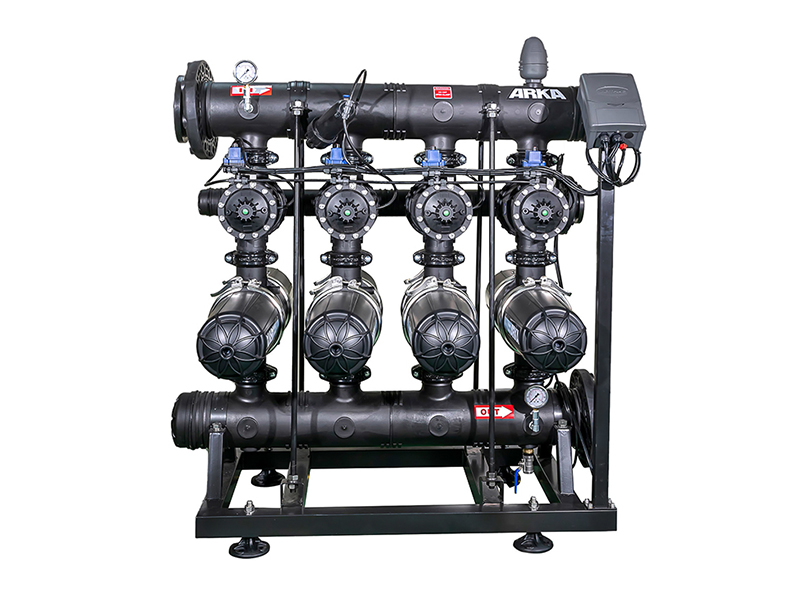
Defining your equipment's filter flow capacity is the critical first step in resolving post-expansion pressure issues. This metric refers to the maximum volume of water a specific unit can process within a given timeframe, typically measured in Gallons Per Minute or cubic meters per hour, while maintaining an acceptable pressure drop of under 5 PSI.
When system demand exceeds this specific rating, a severe bottleneck effect occurs. Imagine forcing a four-lane highway of rush-hour traffic into a single lane. The volume of cars remains the same, but the speed drastically decreases, causing a massive backup miles down the road. In an agricultural network, the backup is the dangerous backpressure placed on your well pump. The slowdown is the lack of hydraulic force reaching your newly installed sprinkler heads.
Specifically, the mesh size of the internal element directly interacts with flow capabilities. Finer filtration, such as a 130-micron screen required to protect delicate drip tape, naturally offers less open surface area for water to pass through compared to a coarse gravel screen. To maintain a high flow rate with ultra-fine filtration, the physical size of the housing and the internal element must be significantly larger.
Diagnosing pressure issues requires a systematic, objective approach. When an expanded field fails to deliver adequate water, the root cause usually falls into one of the following four scenarios.
The most frequent culprit behind pressure loss is simply asking too much of small hardware. Adding just two extra watering zones can push the water velocity past structural limits. If your original layout required 40 Gallons Per Minute and your hardware was rated for 50 Gallons Per Minute, it functioned perfectly. But if your recent expansion adds 20 Gallons Per Minute of demand, the total flow now forces water through a restricted orifice. This generates massive friction loss, resulting in a noticeable drop in pressure by the time the water reaches the crops.
System expansions require higher water flow, which in turn increases the velocity of the water being drawn from your source. If you are pulling from a retention pond or an older well, this increased suction is highly effective at stirring up silt from the bottom or scouring the inside of old metal casings. Consequently, the water entering the mainline carries a much heavier particulate load than before. Hardware that previously required a quick rinse once a month may now choke with mud and algae within hours of operation.
Occasionally, the filtration unit itself is perfectly capable of handling the expansion, but the surrounding plumbing infrastructure is not. If you expand a layout but force the massive new water volume through narrow PVC mainlines or undersized zone valves, the pressure drop will occur before the water even reaches the expanded zones. It is critical to ensure that the entire hydraulic path, from the pump discharge to the furthest emitter, is sized appropriately to prevent pipe friction.
Pressure drops observed at the gauges might actually originate deep underground. Every water pump operates on a specific pump curve, which plots Head Pressure against flow volume. As you demand more water volume to feed your expansion, the maximum pressure the pump can physically produce inherently decreases. If the pump was not originally sized to accommodate future growth, the entire pressure profile will sag. This systemic low pressure will reflect on the gauges, mimicking a restriction when the pump is actually just exhausted.
Before rushing out to purchase replacement parts, you must physically and mathematically verify the source of the pressure drop. Field mechanics rely on hard data. Follow this diagnostic checklist to isolate the hydraulic failure within your expanded network.
Install reliable pressure gauges on both the inlet and outlet ports of your housing. Turn on the newly expanded zones and observe the readings closely. If the inlet pressure is high, for example, 50 PSI, but the outlet pressure is low, such as 35 PSI, your irrigation system filters are the undeniable bottleneck. Conversely, if both the inlet and outlet pressures are exceptionally low, the issue lies upstream, pointing toward an undersized pump or a clogged intake screen.
Shut down the pump, depressurize the lines, and thoroughly extract the screen or disc element. Scrub away all organic matter, sand, and calcium scale. Reassemble the unit and run the pump again. If the pressure returns to normal but plummets again rapidly within a few hours, your layout is suffering from rapid clogging due to the increased sediment load mentioned earlier. If the pressure remains stubbornly low even when the element is completely pristine, the housing is physically too small for the new water volume.
To confirm if your equipment is undersized, calculate the exact water demand of your expanded setup. Count the number of new emitters, micro-sprayers, or sprinkler heads and multiply by their specified flow rate. Add this new figure to your original baseline demand. Compare this grand total against the manufacturer's specification sheet for your current hardware. If the total demand exceeds the rated capacity, replacement is not optional. It is mandatory.
When diagnostic testing confirms that a simple manual cleaning is no longer sufficient, upgrading becomes a strict operational necessity. Continuing to operate with undersized hardware will result in dry spots in your crops, uneven fertilizer distribution, and premature failure of expensive water pumps due to continuous backpressure.
Choosing the right replacement requires understanding the different technologies available for large-scale operations. Standard screen models, while cost-effective for small residential setups, frequently fail in expanded agricultural applications. They rely on a single, two-dimensional surface area. In environments with high organic loads, this flat surface becomes blinded almost instantly.
To clearly illustrate why a technology shift is necessary after a major expansion, review the performance differences in the table below.
| Performance Metric | Legacy Screen Technology | Modular Automatic Disc Technology |
|---|---|---|
| Flow Capacity Scaling | Fixed physical limit. Easily overwhelmed by expansion. | Highly scalable. Multi-unit manifolds handle massive volume spikes. |
| Filtration Surface Area | Two-dimensional flat surface. Blinds over quickly. | Three-dimensional depth matrix. Traps significantly more debris. |
| Maintenance Requirement | Requires frequent manual disassembly and scrubbing. | Fully automated self-cleaning cycles based on pressure differential. |
| Pressure Drop Impact | High friction loss when pushed beyond rated limits. | Consistently low friction loss due to expansive surface area. |
Disc technology bridges the performance gap perfectly. These units utilize stacks of color-coded, diagonally grooved synthetic discs. When compressed, these grooves intersect to create a deep, three-dimensional filtration matrix. This allows them to hold significantly more debris than a flat screen while maintaining a highly compact footprint. This makes them the ideal upgrade for fields that have recently outgrown their original parameters.
For operations that have outgrown daily manual maintenance, upgrading to a high-capacity automatic disc filter is the most efficient, empirically sound solution. Advanced multi-unit modular systems are engineered specifically to handle massive flow capacities and heavy debris loads without sacrificing downstream water pressure.
The primary advantage of disc filtration in expanded layouts is its exceptional surface area. Because the filtration matrix is three-dimensional, water can pass through the housing at much higher velocities without generating excessive backpressure. In addition, these systems feature a scalable, modular architecture. For instance, a 6-unit modular manifold design utilizing robust 3-inch or 4-inch connection points can distribute massive water volumes evenly across several disc pods. This ensures the velocity through any single pod remains low, thereby eliminating friction-based pressure loss entirely.
The true operational brilliance of these systems lies in their automated self-cleaning mechanisms. The backwash cycle is governed by a differential pressure switch. When the controller detects that the pressure drop across the manifold has reached a specific threshold, usually around 7 PSI, it automatically triggers a cleaning cycle.
A specialized hydraulic valve reverses the water flow while simultaneously releasing the pressure compressing the disc stack. High-pressure jets then spray water tangentially against the loosened discs, spinning them rapidly. This centrifugal force aggressively ejects trapped sand and algae out through a drainage port in a matter of seconds. Once clean, the discs recompress. Normal, full-pressure watering resumes immediately, ensuring zero downtime for your crops.
Installing high-capacity hardware resolves the immediate pressure drop, but long-term hydraulic stability requires strategic system management. Implementing a few core best practices will protect your equipment and ensure your expanded field operates at peak efficiency.
Just because a field has been expanded does not mean every single zone must operate simultaneously. The most effective way to manage water demand is through intelligent zoning. Utilize smart controllers to stagger watering times. By running the original zones in the early morning and the newly expanded zones in the late evening, you keep the peak volume demand low. This ensures your pump and filter flow capacity remain well within their optimal efficiency ranges.
When purchasing new equipment to accommodate your current expansion, standard engineering practices highly recommend applying a 20 to 30 percent capacity buffer. If your hydraulic calculations dictate a 2-inch unit, installing a 3-inch housing provides a massive operational advantage. The larger surface area results in a lower initial pressure drop and significantly longer intervals between backwash cycles. More importantly, it provides a built-in buffer, allowing you to add even more drip lines next season without facing another equipment overhaul.
While automatic self-cleaning systems drastically reduce manual labor, they still require seasonal oversight. Establish a routine inspection schedule to check differential pressure sensors and verify that flush valves are not continuously leaking. At the end of the watering season, extract the disc spines and soak them in a mild acidic solution to dissolve calcium scale. A mild chlorine bath will remove stubborn organic algae buildup, restoring the grooves to factory condition.
A clean unit typically has a baseline pressure drop of 2 to 5 PSI due to natural fluid friction. If the pressure differential between the inlet and outlet gauges exceeds 7 to 10 PSI, the element is either heavily clogged with debris or physically too small to handle the current flow rate.
Yes, absolutely. An undersized unit restricts water flow, creating high backpressure within the mainline. This forces the well or surface pump to work significantly harder to push water through the bottleneck. This routinely leads to motor overheating, spiked electrical energy costs, and premature mechanical pump failure.
You must calculate the total Gallons Per Minute of your newly expanded layout when all active zones are running. If your total required volume exceeds the maximum capacity listed on your current manufacturer specification sheet, you must upgrade to a larger unit to prevent severe pressure degradation.
If water pressure drops right after a thorough manual cleaning, your intake is likely pulling in a high volume of sediment that instantly blinds the mesh. Alternatively, your water flow demand is simply too high for the limited physical surface area. Upgrading to a modular, automatic self-cleaning disc system usually resolves this hydraulic bottleneck permanently.
First, identify the flow rate of a single emitter or sprinkler head in your new zone. Multiply that rate by the total number of emitters in the zone to find the zone's total flow demand. Add this to the demand of any existing zones that run simultaneously. Finally, select a unit that has a maximum flow rating at least 20 percent higher than your calculated total to ensure a safe operational buffer.
Screen technology utilizes a flat, two-dimensional mesh that traps debris on a single surface, making it prone to rapid clogging in high-flow or high-organic environments. Disc technology uses stacks of grooved rings that create a deep, three-dimensional filtration matrix. This depth allows disc units to trap vastly more debris and handle much higher water velocities without suffering severe pressure drops.
Stop letting legacy hardware bottleneck your agricultural yields. If your recent field expansion is suffering from severe pressure drops, it is time to upgrade your hydraulic infrastructure. Explore the industry-leading solutions at ARKA Irrigation. Our modular automatic self-cleaning disc filter systems are engineered to handle massive flow capacities while maintaining perfect downstream pressure. Visit ARKA Irrigation today to find the exact filtration powerhouse your expanded network demands.


