
Views: 0 Author: Site Editor Publish Time: 2026-10-21 Origin: Site


The global agricultural sector is facing unprecedented water scarcity. Precision water management is no longer a luxury; it is an absolute necessity for commercial farming viability. China has rapidly emerged as the dominant manufacturing hub for complex fluid control systems, offering unmatched scale and cost efficiency. However, sourcing from overseas is fraught with hidden engineering and commercial risks. Navigating this highly fragmented supplier base requires more than just requesting quotes. A single defective pilot mechanism can cause a catastrophic pressure surge, destroying miles of delicate drip tape and severely damaging expensive pumping infrastructure.
To avoid these costly procurement mistakes, overseas buyers must adopt a rigorous, engineering-first approach to vendor selection. This guide serves as a practical blueprint for identifying top-tier manufacturing partners capable of delivering equipment that withstands the brutal realities of commercial agriculture.
Global procurement patterns for agricultural fluid control are shifting rapidly. Recent market analyses highlight a massive transition away from basic manual hardware. Modern commercial farms now demand automated, IoT-ready fluid management systems. Buyers prioritize seamless integration with remote soil moisture sensors and centralized weather forecasting software. Consequently, there is a surging demand for highly sensitive, electrically actuated units rather than traditional mechanical gates.
Furthermore, strict environmental regulations mandate the use of eco-friendly, chemical-resistant polymers. These modern materials must handle aggressive liquid fertilizers without degrading over time. The era of purely price-driven purchasing is effectively over. Today, savvy procurement managers focus squarely on lifecycle value, minimizing maintenance downtime, and ensuring seamless automation compatibility.
Before issuing a purchase order, you must match the mechanical design to your field's exact hydraulic profile. Utilizing broad terminology during supplier negotiations often leads to severe compatibility issues upon delivery.
In delicate micro-sprinkler networks, maintaining stable downstream water pressure is non-negotiable. A pressure reducing valve automatically dampens fluctuating upstream surges to deliver a constant output. Without a highly responsive pilot mechanism, sudden pump surges will inevitably burst thin-walled delivery tubes across the field, leading to catastrophic water waste.
As farms transition to centralized smart controllers, the solenoid control valve has become an essential procurement item. These units marry electrical actuators with robust hydraulic bodies. For example, industry-standard designs like the 2-inch T-type solenoid valve feature heavy-duty glass-reinforced nylon construction. When sourcing these components, strictly verify local electrical compatibilities. You must specify whether your network requires 24V AC for standard wired controllers or 9V DC latching solenoids for remote, battery-operated field nodes.
At the mechanical heart of most agricultural fluid systems sits the diaphragm valve. Its operation relies on a flexible rubber membrane reacting to line pressure. Because untreated agricultural water frequently contains abrasive sand and suspended silt, prioritize simple internal structures with high flow capacities. A debris-resistant design prevents clogging and ensures consistent operation over multiple harsh harvesting seasons.
| Valve Category | Core Function | Best Agricultural Application | Critical Specification to Check |
|---|---|---|---|
| Pressure Reducing | Stabilizes downstream pressure | Drip tape networks, micro-sprinklers | Pilot sensitivity and adjustment range |
| Solenoid Control | Electronic on/off automation | Smart farming, timed fertigation zones | Coil voltage match: 24VAC or 9VDC |
| Diaphragm (T-Type) | High-flow hydraulic regulation | Mainline distribution, sandy water | Membrane material: Virgin EPDM |
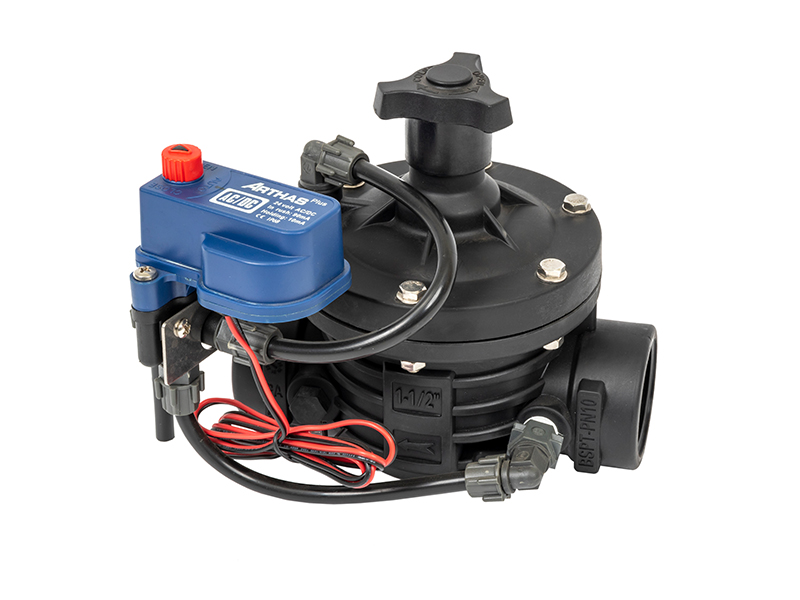
Since overseas buyers cannot physically inspect the product during the initial sourcing phase, establishing uncompromising material standards is mandatory. The physical construction dictates resistance to UV degradation, corrosive fertilizers, and continuous mechanical stress.
The exterior housing must survive brutal field conditions. Glass-filled nylon is highly favored for modern field installations because it offers exceptional resistance to chemical fertilizers and will never rust. Conversely, ductile iron coated with heavy epoxy is necessary for high-pressure municipal distribution where extreme tensile strength is required.
Internal components dictate the true lifespan of any hydraulic control valve. The flexible membrane undergoes constant flexing under intense pressure shifts. Explicitly demand high-grade synthetic elastomers. Ethylene Propylene Diene Monomer rubber is the industry gold standard due to its superior resistance to ozone aging and water-borne chemicals. Insist that all internal springs, nuts, and fastening bolts are machined from 304 or 316 stainless steel to prevent premature oxidation.
One of the most persistent risks for global importers is unknowingly partnering with a trading company instead of a direct factory. Middlemen often add unnecessary markups and lack the technical authority required to modify engineering specifications or handle complex warranty claims.
The first step in vendor due diligence is requesting a copy of the supplier's Chinese business license. Cross-reference this document on the National Enterprise Credit Information Publicity System. A genuine manufacturer will have words like manufacturing or production explicitly listed in their registered business scope. Additionally, ensure the facility holds an active ISO 9001 certification, guaranteeing standardized quality management frameworks across all production batches.
Geographical distance should never prevent a thorough facility audit. Professional manufacturers routinely host live virtual tours via video conferencing. During these sessions, ask to see the raw material storage area. Observing actual injection molding lines and testing stations provides empirical evidence of the supplier's true operational capacity.
Consistency is the bedrock of B2B procurement. Understanding the exact testing protocols a factory employs is just as critical as evaluating the product design itself. A rigorous protocol dictates that every single manufactured unit undergoes hydrostatic testing before packaging. The shell test ensures the body can withstand pressures significantly higher than its rated capacity without fracturing. Concurrently, the seal test verifies that the internal diaphragm seats perfectly, preventing any fluid bypass.
An inefficient design creates friction, restricting water flow and causing severe head loss. This pressure drop forces expensive water pumps to work harder, dramatically increasing energy consumption. Ask the engineering team for empirical flow characteristic charts. These documents demonstrate exactly how much water passes through the unit at a specific pressure drop, ensuring the component will not become a hidden bottleneck.
Agricultural plumbing standards vary drastically by region. Imagine a container arriving in California, only for the installation crew to realize the threads are European standard. Buyers must confirm that the factory can produce specific threading. Clearly stipulate whether you need British Standard Pipe threads for European markets, or National Pipe Thread for North American systems.
For wholesale distributors, brand visibility is a major commercial priority. A capable direct manufacturer offers comprehensive private labeling services. This includes molding custom corporate logos directly into the plastic housing and matching specific brand color codes. Always inquire about tooling costs associated with custom molds and the volume thresholds required to waive these setup fees.
Transitioning from technical evaluation to commercial negotiation requires careful attention to supply chain mechanics. Factories set minimum order quantities to absorb production setup costs. The threshold for a standard off-the-shelf irrigation valve is generally much lower than for custom-molded OEM products. Smart buyers negotiate a small pilot run before committing to a full container, mitigating financial risk and allowing for real-world field testing.
Understanding the manufacturing schedule is critical, as planting seasons are highly time-sensitive. Typical production lead times in China range from 15 to 35 days. Buyers must account for national holidays, especially the Chinese New Year, which can halt production and port logistics for up to four weeks.
Heavy agricultural equipment requires efficient logistics planning. Clear agreement on shipping terms is vital. Free On Board Ningbo or Shanghai is the industry standard, meaning the supplier covers all costs and customs clearances until the goods are loaded onto your chosen vessel.
Even with a structured procurement process, warning signs can indicate a high-risk supplier. If a quotation comes in drastically lower than the market average, it almost always indicates compromised material integrity. Unscrupulous suppliers may use recycled regrind plastics instead of virgin nylon, or substitute premium rubber with cheap fillers. These materials will quickly warp or rupture under continuous commercial stress.
Transparency is the foundation of B2B trust. If a sales representative hesitates to provide detailed CAD drawings or live video evidence of their facility, terminate the negotiation immediately. Furthermore, if a supplier cannot readily provide individual spare parts like replacement solenoid coils or springs, they are likely a trading company sourcing fully assembled units from an undisclosed third party.
Sourcing fluid control systems from China offers incredible cost advantages and access to world-class manufacturing capabilities, provided you execute proper due diligence. Never rush the complex procurement process. Always start with a sample to verify technical performance under your local water conditions.
Ready to source premium, rigorously tested equipment for your next agricultural development? Explore our extensive catalog of high-performance solutions at Arka Irrigation. Contact our engineering team today to secure a customized, project-specific quote and build a reliable, long-term supply partnership.
With proper routine maintenance and the specification of high-quality raw materials, these components reliably operate for 5 to 10 years. Lifespan depends heavily on local water quality, the presence of abrasive sand, and usage frequency. Specifying glass-reinforced virgin nylon bodies and EPDM rubber diaphragms drastically increases field longevity.
Yes, reputable Chinese manufacturers actively encourage sample orders. Overseas buyers should utilize this crucial step to physically test the equipment under their specific local water pressure and environmental conditions before committing significant capital to a full container load.
Direct-acting models use a magnetic solenoid to physically pull open the main orifice, making them suitable for smaller, low-flow applications. In contrast, pilot-operated models use the actual pipeline's water pressure to open and close the main rubber diaphragm. This mechanical advantage makes pilot-operated models highly efficient and the standard choice for large-scale agricultural networks.
The choice depends entirely on your regional infrastructure. NPT features tapered threads designed to form a seal through friction and is the standard across North and South America. BSP is the standard in Europe, Asia, and Australia. Mixing the two thread types will inevitably cause severe leakage under high pressure.
Premature failure is most commonly caused by abrasive sand tearing the internal rubber membrane, or chemical degradation from aggressive liquid fertilizers. Specifying a debris-resistant internal design and ensuring the membrane is made from chemical-resistant EPDM rubber will prevent the vast majority of these early field failures.
Warranty terms must be clearly established in the formal proforma invoice before any deposit is paid. Reliable suppliers honor warranties by shipping replacement components free of charge. These parts are usually included in your subsequent container order or sent via express air freight for urgent field failures.


