
Views: 0 Author: Site Editor Publish Time: 2026-10-14 Origin: Site


Picture this. It is the peak of the growing season. You walk your field and discover an entire row of crops wilting under the sun. The culprit is often microscopic. A tiny piece of algae or silt bypassed your primary screen and choked a delicate emitter. Dirty water silently destroys expensive modern irrigation setups. This leads to uneven watering, severe plant stress, and exorbitant repair costs.
A high-performance disc filter solves this costly problem. Acting as an impenetrable physical safeguard, this technology removes suspended solids before they ever reach your distribution lines. In this comprehensive guide, we break down the engineering behind these devices. We will compare them to traditional purification methods and help you configure the ideal setup for your farm's unique water profile.
Before diving into the mechanics, we must look at the broader agricultural landscape. Global farming operations are currently grappling with intensifying water scarcity. Consequently, industry analysts note a massive pivot in water treatment strategies. We are seeing a rapid transition away from passive, labor-intensive screening. Farms are moving toward automated, high-efficiency depth filtration. Modern precision agriculture demands systems that protect intricate micro-irrigation networks while drastically minimizing wastewater during flush cycles. Advanced filtration technology is no longer an optional upgrade. It is a non-negotiable cornerstone for sustainable crop management.
For agricultural professionals transitioning from basic wire mesh setups, grasping the structural engineering of an irrigation disc filter is the first step toward superior water management. Rather than acting as a simple sieve, it functions as a highly precise water treatment device. Engineers design these units specifically to intercept suspended solids from unpredictable agricultural water sources.
The architecture here is distinctly different from legacy filtration methods. It consists of three primary components working in unison. First is the outer housing. This durable, pressure-resistant casing is usually crafted from reinforced polyamide or stainless steel. It directs incoming dirty water to the outside of the filter element. Second is the central spine. This rigid internal skeleton holds the filtration media in place. In advanced models, this spine contains hydraulic mechanisms that compress or release the media during different operational cycles. Finally, the true heart of the system is the disc stack. This media consists of hundreds of color-coded, synthetic rings stacked tightly together. Each disc features diagonal grooves molded into both sides.
Building on this mechanical foundation, the true engineering value lies in its discrete channel structure. The central spine compresses the grooved discs tightly together. At this point, the diagonal grooves of one disc intersect with the opposing grooves of the adjacent disc.
This intersection creates a highly complex, microscopic three-dimensional maze of channels. Hydrodynamic pressure forces water to navigate through these overlapping pathways from the outside of the stack to the hollow center. As the water changes direction multiple times within this matrix, particles of various sizes become trapped in the intersecting points. Consequently, debris is caught not just on the outer surface, but throughout the entire depth of the stack.
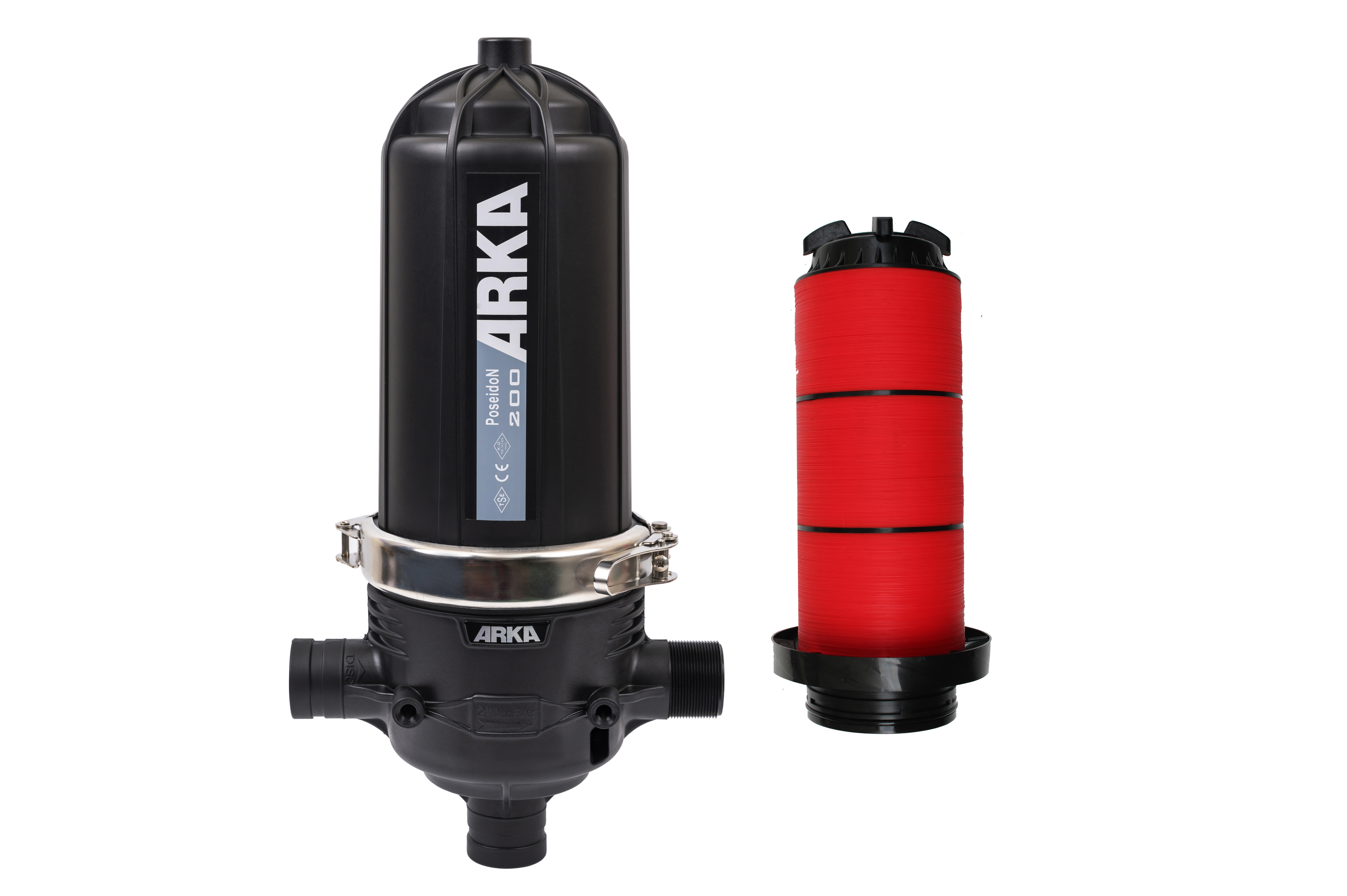
To truly appreciate why this equipment excels in field conditions, one must examine the physical science of solid-liquid separation. This section breaks down the mechanics that make this technology a reliable safeguard for modern farming infrastructure.
Standard screen filters and disc technology differ fundamentally in their filtration dimensions. Standard screens rely entirely on two-dimensional surface filtration. They act like a basic sieve where water passes through a single layer of woven mesh. If a particle is larger than the hole, it stops. While effective for large, hard debris like heavy sand, surface filters quickly become blinded by soft organic matter. This blinding causes severe pressure drops across the irrigation zone.
In contrast, depth filtration operates in three dimensions. The intersecting grooves create a thick physical barrier. Therefore, debris is trapped at multiple levels. Large particles are caught on the outer surface. Smaller, finer particles are driven deeper into the microscopic discrete channels before being trapped. This unique dynamic allows the unit to hold a significantly larger volume of dirt before requiring a cleaning cycle. Ultimately, this maintains a highly consistent water pressure across the field.
| Feature | Standard Screen Filter | Disc Filter Technology |
|---|---|---|
| Filtration Dimension | 2D Surface | 3D Depth Matrix |
| Organic Matter Handling | Poor, clogs rapidly | Excellent, traps algae securely |
| Dirt Holding Capacity | Low | Very High |
| Maintenance Frequency | High manual intervention | Low, easily automated |
Empirical data and agricultural field studies indicate exceptional filtration efficiency when dealing with sticky, fine particles. Water sourced from rivers, canals, or open reservoirs often contains high levels of algae, organic sludge, clay, and silt. These soft, malleable particles can easily deform. Under pressure, they squeeze right through the rigid, two-dimensional holes of a standard wire mesh screen.
However, when forced into a three-dimensional maze, the constant changes in flow direction and velocity cause these sticky particles to adhere to the grooved walls. In practical field applications, this makes them highly effective at preventing the specific types of microscopic debris that are notorious for clogging delicate drip tape.
Agricultural operations vary vastly in size, water source quality, and operational budget. Recognizing this, engineers have developed several configurations to meet highly specific field requirements.
Manual units demand scheduled physical intervention. When the housing reaches maximum debris capacity, field operators must shut off the flow. They extract the stack, loosen the compression on the spine, and manually wash the rings with a high-pressure hose. While cost-effective, they are best suited for smaller plots or clean well water where cleaning is infrequent.
Conversely, commercial agriculture and high-debris water sources require modern automation. An automatic disc filter utilizes a self-cleaning mechanism triggered by a differential pressure controller. When the pressure drop reaches a predetermined threshold, the central spine decompresses the discs. Clean water is then forced in reverse from the inside out. This spins the discs rapidly to dislodge and flush away trapped debris in mere seconds. It requires zero manual labor and ensures uninterrupted irrigation.
For spatial constraints or localized zone control, the Y type disc filter remains a highly popular configuration. Named for its distinct angled housing, this design allows the filter element to sit at an angle to the main water pipe. Let us look at standard industrial parameters. A typical 2-inch Y-type or T-type unit handles flow rates up to 25 cubic meters per hour. They feature heavy-duty polyamide housings designed to withstand operating pressures up to 8 bar.
The primary advantage here is accessibility. Operators can easily unscrew the cap and remove the element for manual cleaning without dismantling the main irrigation piping. Because of its compact footprint, it is frequently utilized as a secondary localized safeguard. Installers place them directly at the valve head of specific irrigation zones.
For massive commercial farming operations requiring flow rates exceeding thousands of gallons per minute, individual units are insufficient. In these scenarios, multiple large-capacity pods are manifolded together in parallel arrays. These modular systems allow for continuous irrigation. While one pod goes into an automatic backflush cycle, the remaining pods continue to supply filtered water to the crops.
A common decision at the bottom of the purchasing funnel is choosing between traditional sand media filters and modern synthetic discs. Both utilize depth filtration, but they operate on fundamentally different engineering principles.
Sand media filters rely on a deep bed of crushed silica or basalt to trap dirt. While effective, the filtration precision is highly variable. Over time, high water pressure can create channeling. These are pathways where water bores straight through the sand bed without being properly filtered. This allows dangerous debris to escape into the irrigation lines.
With synthetic discs, the filtration precision is absolute. The micron rating is physically molded into the plastic grooves. When you run your hand over a high-quality disc, you can barely feel the grooves. Yet, these microscopic ridges cannot shift or channel under pressure. If a unit is rated for 130 microns, absolutely no particle larger than 130 microns will pass through the compressed stack.
Backwashing efficiency is a critical metric for long-term operational costs. Sand filters require a massive volume of water and sustained high pressure. This is necessary to fluidize and lift the heavy sand bed during a backwash cycle. This process can take several minutes per tank, wasting significant amounts of treated water.
By comparison, disc technology requires only a fraction of the water and time. Because the rings are physically separated and spun during the backflush cycle, trapped dirt is released almost instantly. A typical automatic backwash cycle lasts only 10 to 20 seconds per pod. This results in substantial water and energy conservation.
Selecting the right hardware materials is crucial for the longevity of your system. Manufacturers construct these devices using various materials to withstand different environmental and chemical stresses.
The vast majority of agricultural units are made from engineered heavy-duty plastics like Polypropylene or glass-reinforced Nylon. These materials are highly resistant to corrosion, UV degradation, and the harsh chemicals commonly used in fertigation. Plastic remains the standard, cost-effective choice for most farming applications.
Furthermore, in extreme industrial environments, stainless steel housings are utilized. Agricultural setups dealing with exceptionally high operating pressures or abrasive sand loads might prematurely wear down plastic. While the internal rings remain synthetic, the steel exterior provides maximum burst-pressure resistance.
The agricultural irrigation industry uses a standardized color-coding system for filtration media. This allows operators to instantly identify the precision of their system. The rating dictates the size of the particles the unit will trap, measured in microns or mesh.
Implementing the wrong size or type can lead to pressure drops, constant clogging, or total system failure. Follow this standardized engineering framework to determine your ideal setup.
The origin of your water dictates the type of debris you must manage. Well water typically contains inorganic matter like sand and fine grit. While a basic screen might suffice for exceptionally clean wells, depth filtration offers superior insurance against unexpected sand surges. Surface water from rivers, canals, or ponds contains high levels of algae and organic sludge. This strictly requires depth filtration to prevent the organic matter from blinding the system.
A unit must be sized according to the maximum output of your irrigation pump, not just the diameter of your pipes. If you force more water through the housing than it is rated for, you will create a severe hydrodynamic pressure drop. Calculate your system's peak cubic meters per hour. Select a manifold array that exceeds this number by at least 20 percent to account for debris loading.
The final decision often comes down to budget versus ongoing labor. If you are operating a small orchard with relatively clean water, a manual unit is highly economical. However, if you are managing a large-scale commercial farm drawing water from a muddy canal, a manual unit will require a worker to clean it multiple times a day. In this scenario, the return on investment of an automated battery is realized very quickly through saved labor hours and zero downtime.
Even the most precisely engineered equipment requires a structured maintenance protocol to maintain optimal hydrodynamic performance. Establishing a routine inspection schedule prevents unexpected pressure drops and ensures long-term reliability.
Manual units are highly reliable, but they rely entirely on operator intervention. Cleaning them is a straightforward process. However, it must be executed correctly to avoid damaging the synthetic rings or compromising the sealing mechanisms. Follow these core steps.
First, system depressurization is a critical safety step. Never attempt to open a housing while the system is under pressure. Turn off the primary pump and open a downstream flush valve to bleed residual pressure. Next, carefully unscrew the outer clamp or threaded cover. Remove the cover to expose the internal element. Remove the entire spine assembly from the housing. Loosen the compression nut at the top of the spine. This allows the individual color-coded rings to separate slightly.
Hold the loosened stack under a steady stream of clean water. Manually spin the rings along the spine to ensure the water penetrates all the grooved channels. Avoid abrasive tools or harsh chemical solvents. Once completely clean, tighten the compression nut to lock the stack back into its rigid cylindrical shape. Reinsert the spine, ensure O-rings are properly seated, and secure the outer cover.
To minimize water waste while keeping the filtration matrix pristine, operators must configure two primary triggers on their automated controllers.
The most efficient way to trigger a cleaning cycle is by monitoring the pressure drop across the unit. Industry standards recommend setting the differential pressure switch to initiate a backflush when the pressure reaches between 0.4 and 0.5 bar. Waiting until the pressure reaches 0.8 bar or higher can force microscopic debris deeper into the grooves. This causes pinching that makes the backwash cycle less effective.
While pressure differential is the primary trigger, a time-based override serves as a vital failsafe. Set the controller to execute a mandatory backflush every 4 to 6 hours during continuous irrigation, regardless of the pressure readings. This prevents organic matter from solidifying or fostering bacterial growth inside the housing.
A high-quality filtration setup protects your entire agricultural investment perfectly. By preventing clogged emitters, you drastically reduce expensive farm maintenance and eliminate the risk of uneven crop hydration. Depth filtration effectively traps the stubborn organic matter and fine sand that traditional screens leave behind. Upgrading to the right system ensures better crop yields, massive labor savings, and peace of mind. Evaluate your water source, calculate your flow rates, and choose the right technology today to secure your agricultural future. For industrial-grade solutions tailored to your specific flow rates and water conditions, explore the precision-engineered filtration arrays available at Arka Irrigation to find the perfect fit for your farm.
The fundamental difference lies in the dimensional physics of how they trap debris. A screen filter relies on two-dimensional surface filtration. Water passes through a single layer of woven mesh, and any particle larger than the hole is stopped on the surface. While effective for hard particulates, soft organic matter can easily deform and squeeze through under pressure. Depth filtration utilizes tightly stacked, grooved rings to create a complex matrix of intersecting channels. Water must navigate a microscopic maze. This creates multiple trapping points that make it vastly superior for capturing sticky, soft, and organic materials.
The frequency of manual cleaning is entirely dependent on the quality of your source water and the daily volume of water processed. As a general rule, a manual unit should be cleaned when the pressure drop across the unit exceeds 0.35 to 0.5 bar. If you are pulling water from a surface source during the summer, you may need to clean the unit every few days. For clean groundwater, a monthly inspection may be sufficient.
Yes, it is highly effective at removing algae. This is one of its primary advantages over traditional mesh screens. Algae is soft, malleable, and highly organic. When algae hits a standard wire screen, hydraulic pressure often extrudes it directly through the holes. Because depth filtration employs a three-dimensional maze, the physical structure of the discrete channels prevents the algae from deforming and passing through.
It is named for its distinct angled housing geometry. It is primarily used as a compact, highly accessible solution for secondary filtration, zone control, or smaller agricultural setups like residential farms and commercial greenhouses. Because of its angled design, the internal element is easily accessible for manual removal without having to dismantle the main pipeline.
Selecting the correct micron rating requires understanding the orifice size of your specific drip emitters. The industry standard rule of thumb is that your filtration media should filter out particles that are at least one-tenth the size of the emitter's flow path. For most standard agricultural drip tapes, a 130-micron or 120 mesh rating, typically denoted by red-colored rings, is the universally accepted standard.
No. One of the greatest engineering achievements of these automated systems is their extreme water efficiency, especially when compared to traditional sand media filters. A standard sand tank can take several minutes to backwash, consuming hundreds of gallons of water per cycle. In contrast, an automated synthetic system requires only 15 to 20 seconds per pod to spin and eject trapped debris. This utilizes minimal water while fully restoring capacity.
Industrial-grade units typically feature reinforced polyamide or glass-reinforced nylon housings engineered for high-stress environments. Standard agricultural models are designed to safely withstand maximum operating pressures of 8 to 10 bar. For extreme industrial applications exceeding these limits, stainless steel housings are deployed.
Sizing is dictated by your system's peak flow rate, not just the pipe diameter. You must determine the maximum cubic meters per hour your pump delivers to the field. Once calculated, select a filter or a manifold array that exceeds this peak flow by 15 to 20 percent. This buffer ensures that as the unit loads with debris and pressure drops slightly, your irrigation lines still receive the necessary water volume.


