
Views: 0 Author: Site Editor Publish Time: 2026-10-14 Origin: Site


Imagine walking your fields during peak summer heat, only to find localized dry spots. Clogged emitters ruin crop yields fast. Poor water quality damages irrigation networks rapidly. Algae, fine sand, and organic slime cause costly system breakdowns and highly uneven watering. Fortunately, a highly engineered filtration setup solves this exact issue.
In this comprehensive technical guide, you will learn the hydraulic mechanics behind these devices. We will explore how to match specific equipment to your water source and discover the exact engineering steps to safeguard your agricultural investments.
Water quality dictates the operational lifespan and efficiency of any agricultural or commercial landscaping watering system. At its core, this specialized mechanical filtration device is explicitly designed to extract suspended solids from water before they reach sensitive distribution components downstream.
From an engineering perspective, the unit consists of a robust plastic or metal housing that encloses a cylindrical stack of synthetic, color-coded discs. Each individual ring features microscopic diagonal grooves radiating from its center to the outer edge. When compressed, these intersecting grooves create a highly tortuous path for the water.
Specifically, the fundamental operational principle of this equipment is known as depth filtration. In contrast to standard surface filters that only catch debris on a single flat plane, depth filtration forces water to navigate through a complex, three-dimensional matrix.
As pressurized water enters the filter housing, it is forced through the outer edges of the tightly compressed ring stack toward the hollow center spine. During this turbulent transit, suspended particles become trapped at various depths within the intersecting grooves. Larger debris is caught on the outer surface of the stack. Meanwhile, progressively finer particles are trapped deeper within the matrix. Consequently, this multi-layered trapping mechanism allows the unit to hold a significantly larger volume of debris before requiring cleaning. This drastically minimizes pressure loss across the entire irrigation network.
This unique structural design makes the apparatus highly effective against a wide spectrum of waterborne impurities. Rigid inorganic materials like sand, grit, and silt are easily trapped. However, the true engineering advantage lies in handling organic matter.
Soft, squishy biological materials—such as algae, bacterial slime, and fine clay particles—can often deform and squeeze through the square holes of a standard wire mesh under high pump pressure. Furthermore, the angular pathways of a grooved stack prevent this flexible organic matter from passing through. This guarantees pristine water delivery to the field emitters.
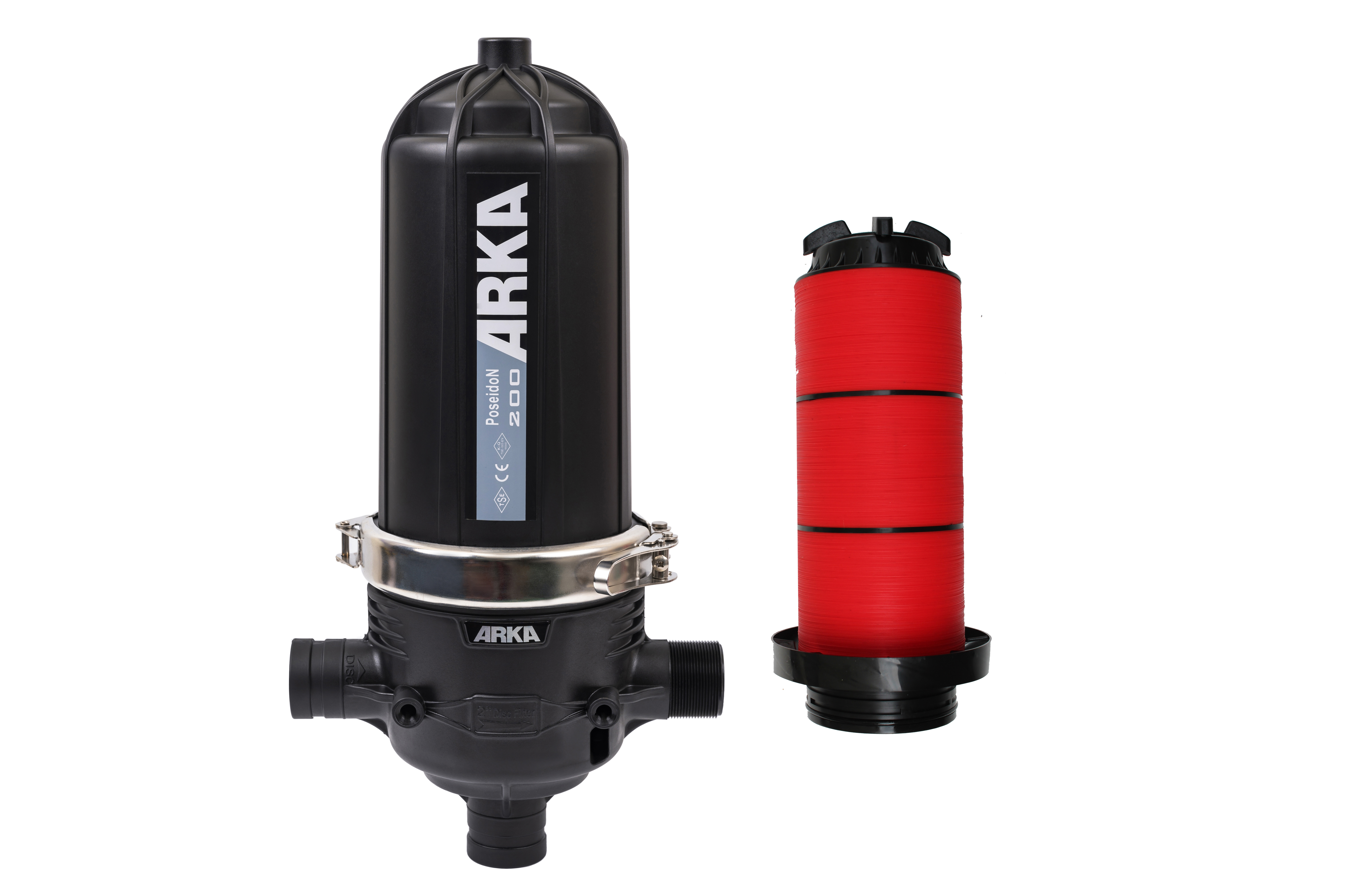
Selecting the correct filtration architecture requires matching the equipment to the scale of the operation, the available capital budget, and the specific application environment. Manufacturers categorize these units primarily by their cleaning mechanisms and housing designs.
The manual Y type disc filter derives its name from its distinct, Y-shaped housing configuration. Because this is a manual filtration unit, an operator must physically intervene when the internal cartridge becomes saturated with debris. This involves isolating the water flow, opening the housing, removing the internal spine, decompressing the rings, and washing them thoroughly with a high-pressure hose.
Due to the hands-on labor required, this type is optimally suited for applications utilizing relatively clean water sources. Deep sealed wells or municipal supplies are ideal. Typical use cases include residential landscaping, small greenhouse setups, and compact agricultural plots where flow rates are manageable and the biological debris load is virtually nonexistent.
For medium-to-large agricultural applications, T-type housings offer a more robust and scalable solution. The T-shape design allows for straight-line water flow through standard pipe configurations. This geometry significantly reduces internal turbulence and pressure drop.
In addition, these units are inherently modular. System designers can install multiple units in parallel on a single manifold. For example, a commercial 2-inch T-type disc filter can comfortably handle flow rates up to 25 cubic meters per hour. By banking several of these together, farm managers can scale the total filtration capacity to accommodate massive flow rates without the staggering expense of purchasing a single, oversized steel housing.
Commercial agriculture and heavy-duty industrial applications demand continuous, uninterrupted operation. An automated setup addresses this critical need by utilizing self-cleaning technology. These sophisticated systems rely on a pressure-differential switch.
As debris accumulates within the grooves, downstream water pressure naturally drops. Once this differential reaches a pre-set threshold, the system controller automatically triggers a rapid backwash cycle. It flushes out trapped debris in seconds without halting the primary irrigation schedule. This is a game-changer for operations pumping from open canals or retention ponds.
Micro-irrigation systems represent the pinnacle of watering efficiency. They deliver precise volumes of water and dissolved nutrients directly to the root zone of crops. However, this high level of precision introduces a severe structural vulnerability. You must manage it proactively.
The emitters integrated into modern drip tape or heavy-wall drip lines feature microscopic, labyrinth-like flow paths. These channels frequently measure less than 1 millimeter in diameter. They are engineered to regulate flow precisely across varying topographies, but they are exceptionally susceptible to blockages. Even microscopic particles of wind-blown sand, suspended clay, or biological growth can become permanently lodged within these emitter pathways.
When emitters clog, the consequences for a farming operation are immediate and financially damaging. Clogged lines cause severe crop stress, stunted growth, and ultimately, a drastic reduction in overall yield. Furthermore, modern agriculture relies heavily on fertigation, which is the precise injection of liquid fertilizers directly into the water stream.
If lines are blocked, fertilizer distribution becomes wildly uneven. This leads to nutrient deficiencies in some zones and toxic over-concentrations in others. The manual labor required to walk fields, identify faulty emitters, and splice in new drip tape severely erodes seasonal profit margins.
To mitigate these catastrophic risks, installing a dedicated drip irrigation filter is absolutely essential. This specific technology provides the exact micron-level interception required to safeguard microscopic emitters. By capturing the fine clay and algae that basic mesh screens typically miss, this equipment ensures that micro-irrigation networks run at their designed efficiency. It protects both the infrastructure investment and the seasonal harvest.
When buyers evaluate water purification options, they typically compare grooved ring technology against two other standard industry systems: screen meshes and sand media tanks. Understanding the objective performance differences is crucial for making an informed engineering decision.
Screen units utilize a woven stainless steel or nylon mesh to block debris, operating purely on the principle of surface filtration.
Sand media setups use massive fiberglass or steel tanks filled with crushed silica or basalt to trap debris within the sand bed.
| Feature | Grooved Ring Technology | Screen Mesh Technology | Sand Media Tanks |
|---|---|---|---|
| Filtration Type | Depth Filtration | Surface Filtration | Depth Filtration |
| Organic Matter Handling | Excellent | Poor to Fair | Excellent |
| Inorganic Handling | Excellent | Excellent | Excellent |
| Physical Footprint | Compact & Modular | Compact | Very Large & Heavy |
| Backwash Water Usage | Low | Low | High |
| Ideal Application | Wells, Reservoirs, Drip Systems | Clean Well Water, Sprinklers | Canals, Lakes, Heavy Algae |
Agricultural operations and large-scale landscaping projects are frequently forced to rely on marginal or low-quality water sources due to regional water scarcity and strict environmental regulations. Drawing water from retention ponds, rivers, and reclaimed wastewater facilities introduces severe operational challenges. These water bodies carry high concentrations of suspended solids, including fine clay particles, wind-blown sand, and heavy biological loads.
To address these harsh environments without incurring massive labor costs, upgrading to an automatic disc filter provides a highly engineered, hands-off solution. The operational continuity of an automatic system relies on precise fluid dynamics. Once the pressure differential reaches a predetermined set point, typically between 5 to 7 PSI, the controller initiates a backwash cycle that unfolds in three distinct stages:
The primary advantage of this automation is the dramatic reduction in operational expenditure. Manual scrubbing in environments with high algae content can require daily, or even hourly, maintenance during peak summer irrigation seasons. By automating the flushing sequence, farm managers save thousands of dollars in annual labor costs. Furthermore, it entirely eliminates human error, such as improper reassembly or operators forgetting to clean the unit, which could result in a catastrophic blowout.
Recent analyses of the global agricultural sector highlight a massive paradigm shift toward precision agriculture and smart water management. As global water scarcity intensifies, farmers are increasingly pivoting away from pristine groundwater. Instead, they are turning to marginal sources like brackish water, agricultural runoff, and treated municipal wastewater. This shift necessitates a corresponding, mandatory upgrade in filtration capabilities.
Industry experts and field engineers note that modern smart irrigation controllers, which rely on precise soil moisture sensors and weather data, are rendered entirely useless if the physical delivery pipes are compromised by clogs. Consequently, the integration of high-efficiency, self-cleaning filtration is no longer viewed as an optional accessory. It is the foundational prerequisite for any modern, automated farm. The ability of grooved ring technology to handle fluctuating water quality while minimizing wastewater during backflush cycles aligns perfectly with the global push for sustainable, high-yield agricultural practices.
Selecting the appropriate hardware is a critical engineering decision that impacts the longevity of your entire infrastructure. Buyers must carefully evaluate their specific water source, the emission devices in use, and the overall hydraulic capacity of their pump station.
The filtration grade determines the physical size of the particles that the unit will successfully intercept. Manufacturers utilize a standardized color-coding system to help operators quickly identify the internal filtration grade. A standard engineering rule dictates that the barrier should block particles one-tenth the size of the emitter orifice.
Matching the maximum flow capacity to the volumetric output of the irrigation pump is essential. Forcing a high volume of water through an undersized unit results in severe pressure drops, increased wear on the pump impeller, and premature blinding of the rings. For example, if you deploy a standard 2-inch industrial unit, you should ensure your system operates within its optimal 90 to 110 Gallons Per Minute range.
Conversely, oversizing slightly is generally a sound engineering practice. It increases the total surface area and extends the time between cleaning cycles. Always consult the manufacturer friction loss charts to ensure the unit can handle your flow rate while maintaining an acceptable pressure drop.
Even the highest quality equipment will fail to perform if installed incorrectly or neglected. Adhering to strict installation and maintenance protocols ensures the longevity and reliability of the hardware.
When installing the housing, operators must strictly observe the directional flow arrows molded directly into the plastic or metal casing. Reversing the flow will bypass the depth matrix entirely and can permanently damage the internal spine. Additionally, installing two analog pressure gauges—one immediately upstream and one downstream—is mandatory for proactive maintenance. The difference in reading between these two gauges provides visual, empirical confirmation of the clogging rate.
For manual units, routine maintenance should be conducted systematically. First, isolate the unit by closing the upstream and downstream valves. Open the flush valve to relieve internal pressure. Once the housing is removed, extract the cartridge and loosen the compression nut to allow the rings to separate.
Rinse them thoroughly with a high-pressure hose. If your water source contains high levels of calcium or magnesium, mineral scale may form, cementing the rings together. In this scenario, standard water pressure will not suffice. The separated rings must be soaked in a mild acid solution, such as a 10 percent hydrochloric acid or specialized agricultural descaler. Always use a dedicated, well-ventilated plastic bucket. Remember the golden rule of chemistry: always add acid to water, never water to acid. Rinse completely with fresh water before reassembly.
In climates subject to freezing temperatures, winterizing the system is critical. Water left inside a sealed plastic housing will expand as it freezes. This results in shattered casings and destroyed internal components. Before the first hard freeze, isolate the water source, open all flush valves, completely drain the housing, and ideally, remove the internal cartridge for safe indoor storage during the off-season.
Clean water quality is the undeniable lifeblood of any successful agricultural or landscaping operation. By intercepting algae, clay, and suspended solids before they reach your fields, a high-quality filtration system ensures consistent water delivery and protects your highly sensitive emitters from irreversible damage.
Upgrading your infrastructure not only reduces wasted water and eliminates the nightmare of costly clogs, but it also directly contributes to healthier plants and significantly higher crop yields. Evaluate your current water source carefully today, calculate your flow rates, and secure the long-term profitability of your irrigation investment. Ready to optimize your system? Explore our high-performance, engineered filtration solutions at ARKA Irrigation to find the exact match for your agricultural needs.
No. These units are designed solely to remove suspended solids, such as dirt, sand, clay, and algae. Dissolved minerals, including iron, calcium, and magnesium, are in a liquid state and will pass right through the microscopic grooves. Removing dissolved minerals requires chemical treatment, reverse osmosis, or specialized oxidation tanks. However, if the iron has been oxidized by exposure to air or chlorine and has precipitated into solid rust particles, an appropriately sized unit can successfully intercept those solid flakes.
From a strict engineering standpoint, you should initiate a cleaning cycle when the pressure differential across the filter housing reaches 5 to 7 PSI, which is roughly 0.35 to 0.5 Bar. Allowing the pressure drop to exceed 10 PSI forces debris deeper into the grooves, making it significantly harder to clean and severely restricting flow to your downstream emitters. Always rely on differential pressure gauges rather than a fixed calendar schedule.
Yes, they are exceptionally well-suited for this. Unlike screen meshes where algae can deform and squeeze through the holes, the three-dimensional grooved matrix traps flexible organic matter efficiently. For heavy algae loads drawn from ponds or canals, an automated self-cleaning system is highly recommended to prevent the overwhelming manual labor of constantly washing the rings.
In the vast majority of agricultural scenarios, absolutely. Drip emitters are highly susceptible to clogging from organic matter. Screen filters utilize basic surface filtration, meaning squishy, flexible debris like algae can be extruded through the mesh under high pump pressure. The stacked rings utilize depth filtration, creating a tortuous path that effectively traps both hard inorganic particles and flexible organic matter. This provides a much safer, more robust defense for micro-irrigation setups.
The internal synthetic rings are highly durable and, under normal operating conditions, can last for many years with proper routine cleaning. They do not degrade rapidly like sand media. However, certain consumable components will experience natural wear and tear. The rubber O-rings that seal the main housing will eventually flatten or crack and should be replaced every few seasons to prevent external leaks. In rare cases of severe over-pressurization or water hammer, the internal spine that holds the stack together may also require replacement.


