
Views: 0 Author: Site Editor Publish Time: 2026-10-14 Origin: Site


Are clogged drip emitters ruining your crop yield? Picture a mid-summer afternoon. Your pump is running at full capacity, yet dry patches appear across your fields. Poor water quality causes pressure loss, frequent blowouts, and uneven watering. Fortunately, sizing your equipment correctly solves this issue entirely.
In this comprehensive guide, you will discover the exact parameters to determine if a 2-inch filtration unit is the perfect match for your agricultural or commercial water line. As field engineers often emphasize, proper sizing is the difference between a system that runs seamlessly and one that requires constant, frustrating maintenance.
To make an informed purchasing decision, it is necessary to understand the structural mechanics of agricultural water management. Filtration is not merely about blocking dirt. Rather, it is about managing water velocity and particle retention without causing severe pressure drops in your mainline.
The core technology behind an irrigation disc filter relies on a tightly compressed stack of color-coded, grooved plastic rings. When housed inside the protective cylinder, a mechanical spine or heavy-duty spring compresses these components together. The grooves on the surface of each ring intersect with the grooves of the adjacent one. This creates a complex, three-dimensional matrix of microscopic water passages.
As water enters the housing, it is forced to pass from the outside of the stack to the hollow inside. Unlike a two-dimensional screen that only traps debris on its flat surface, this depth technology traps particles at multiple layers. Large debris is caught on the outer edges. Meanwhile, finer suspended solids are trapped deep within the intersecting channels. Consequently, the unit holds a significantly larger volume of debris before flow is restricted.
Why does the specific port measurement matter? When industry professionals refer to this size, the measurement designates the diameter of the inlet and outlet connection ports. It does not refer to the physical size of the external housing. Specifically, the port size directly dictates the maximum volume of water that can enter and exit the housing at a safe velocity. Forcing too much water through these ports inevitably leads to severe friction loss, pressure drops, and potential water hammer effects.
Before diving into specific rules of thumb, we must look at the broader agricultural landscape. Global water scarcity forces modern farms to draw from lower-quality sources. Reclaimed water and shallow, algae-prone ponds are now commonplace in commercial agriculture. Consequently, the demand for robust depth filtration has skyrocketed.
Standard flat screens simply cannot handle heavy biological loads. The 2-inch unit has emerged as the sweet spot for mid-sized operations. It perfectly bridges the gap between affordable manual maintenance and high-capacity debris retention. Farmers are moving away from reactive maintenance and investing in preventative hydraulic protection.
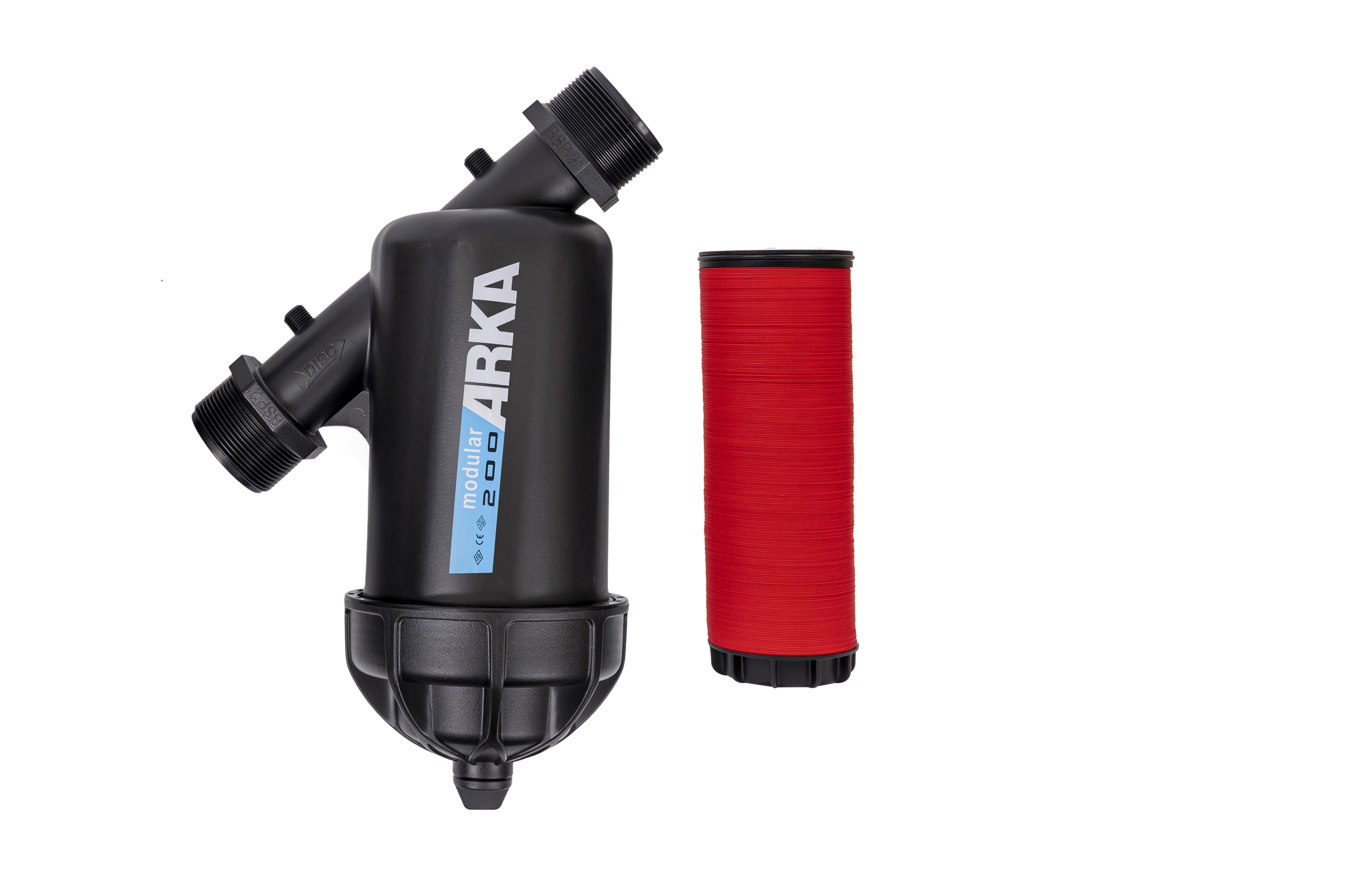
Selecting the correct size requires evaluating empirical data from your setup. You cannot guess your way to efficient hydraulics. The following parameters will help you determine if this specific disc filter fits your operational needs.
The most critical metric is your volumetric flow rate. A standard 2-inch connection is engineered to handle a specific range of water volume efficiently. The optimal operational flow rate is between 60 and 120 Gallons Per Minute. Pushing 150 GPM through these ports forces the water velocity to spike. This creates excessive friction loss, meaning the water pressure exiting the unit will be significantly lower than the pressure entering it. If your system requires higher flow, you must upscale to a 3-inch model or install dual units in parallel.
Furthermore, a standard rule of thumb in hydraulic design dictates that your filtration size should generally match, or be exactly one size larger than, your main water delivery line. For instance, if your mainline PVC tubing is 1.5 inches in diameter, installing a 2-inch unit is a highly recommended practice known as upsizing. Upsizing increases the total surface area. This extends the intervals between manual cleanings and reduces overall friction loss.
You must also evaluate your water source. Well water typically contains inorganic matter like sand and mineral scale. Surface water is rich in organic matter, including algae, moss, and slime. If you are drawing surface water, depth filtration is mandatory. Organic matter is gelatinous, easily extruding through flat screens. The 3D matrix effectively traps these soft particles.
Buyers frequently hesitate when choosing between screen and depth configurations. While both serve to protect downstream emitters, their performance diverges sharply based on water quality and maintenance requirements. When organic matter strikes a screen, the water pressure flattens the slime against the mesh, instantly blinding the holes. This causes an immediate, severe pressure drop.
In contrast, depth technology performs entirely differently. Organic matter is caught in the outer grooves while water finds alternative pathways through deeper channels. To make the choice clearer, review the direct comparison below.
| Performance Feature | 3D Depth Technology | Traditional Screen Mesh |
|---|---|---|
| Organic Matter Handling | Excellent. Traps algae and slime across multiple layers without immediate blinding. | Poor. Slime flattens against the flat surface, causing rapid pressure drops. |
| Debris Holding Capacity | High. The intersecting grooves hold significantly more volume before clogging. | Low. Only the two-dimensional surface area is available for trapping dirt. |
| Durability | Superior. Heavy-duty plastic rings resist tearing and withstand high pressure. | Moderate. Nylon or thin stainless wire can tear during aggressive manual scrubbing. |
| Best Application | Ponds, rivers, canals, and reclaimed water with high biological loads. | Clean municipal water or deep wells containing only hard sand. |
Once you have determined the size is appropriate, you must select an operational configuration. This decision impacts your daily labor resources and long-term budget.
A Y type disc filter is a static, manually operated unit. It features a simple housing with a removable cap that grants access to the internal cartridge. These manual models handle up to 25 cubic meters per hour and easily withstand standard agricultural pressures up to 8 bar. They are ideal for operations with restricted budgets or setups where farmhands are readily available to inspect the system weekly. However, if your water source has a high biological load, a manual unit may clog daily, making the labor cost economically unviable.
Scaling up to an automatic disc filter bank is the professional standard for commercial fields drawing highly contaminated surface water. These setups utilize a pressure differential switch that constantly monitors water pressure at the inlet and the outlet. Once the pressure difference reaches a pre-set threshold, the controller triggers a backwash cycle. Valves reverse the water flow, the compression spine decompresses, and high-pressure water spins the rings. This flushes trapped debris out of a discharge valve without any human intervention.
The most critical application for this equipment is serving as the primary defense mechanism in micro-irrigation systems. Imagine walking your rows mid-season only to find wilted plants because a single grain of sand bypassed a faulty screen. Drip tape and micro-sprinklers are engineered to deliver precise, low-volume water directly to the plant root zone. To achieve this, water must pass through microscopic, laser-cut labyrinth channels inside the emitter.
Even a small clump of algae can permanently plug an emitter, causing immediate plant water stress. Therefore, integrating a highly reliable drip irrigation filter is not an optional accessory. It is a mandatory structural component.
Filtration capability is measured in Mesh or Microns. The industry uses a standardized color-coding system to indicate these ratings. For standard micro-emitters, the industry gold standard is 120 Mesh, universally denoted by red colored rings. Selecting a mesh that is too fine will cause rapid clogging and unnecessary maintenance. Sticking to the 120-mesh ensures maximum protection without compromising system pressure.
Implementing proper filtration requires more than just purchasing the right equipment. Correct installation is the defining factor in how well the system performs. An improperly installed unit can lead to severe restrictions, threaded joint leaks, or even catastrophic housing failure under high pump pressure.
Before cutting into your main water line, ensure all necessary components are staged. You will need high-density thread sealant tape, heavy-duty PVC solvent cement, ratcheting pipe cutters, and two high-quality isolation ball valves. The physical location within the schematic is critical. The unit must always be installed downstream from the primary water pump and the backflow prevention device. Furthermore, it must be located upstream from any zone control valves or chemical injection systems.
When positioning the housing, you must observe the directional flow arrow molded into the hard plastic casing. Water must enter the housing, travel to the outside of the compressed stack, and be forced inward. If installed backward, water hits the inside of the cylinder first, instantly collapsing the rings.
One of the most common installation oversights is omitting pressure gauges. Without them, determining when the system needs cleaning relies entirely on guesswork. You must install one gauge immediately before the inlet and a second gauge immediately after the outlet. The difference between these two numbers is your baseline clean pressure drop. As debris accumulates, this differential will widen, acting as your empirical indicator for maintenance.
The primary advantage of depth technology over traditional surface screening is its exceptional capacity to hold large volumes of organic matter. However, regular maintenance remains non-negotiable. Understanding maintenance protocols prevents unexpected downtime and protects crop yields.
Cleaning should be triggered when the pressure differential reaches 7 to 10 PSI above your clean baseline. Waiting until the differential exceeds 15 PSI forces soft organic matter deep into the grooves, making manual cleaning significantly more difficult.
First, close the isolation ball valves and open the small flush valve at the bottom of the cap to relieve all internal static pressure. Never attempt to unscrew the housing while the system is pressurized. Next, unscrew the main structural collar and extract the entire inner cartridge. Loosen the tension nut at the top of the spine so the rings separate and spin freely. Finally, use a high-pressure hose to spray water tangentially against the loosened rings, spinning them by hand to flush out all trapped debris.
Even with diligent care, operators may occasionally encounter persistent pressure issues. If you experience a high pressure drop immediately after manual cleaning, inspect the rings when dry. A white, chalky residue indicates mineral scaling. To resolve this, soak the loosened stack in a diluted agricultural acid solution for one to two hours. If you experience zero pressure drop but downstream emitters are clogging, water is likely bypassing the matrix. Check if the tension nut is loose or verify that the housing O-rings are intact.
A properly sized 2-inch filtration unit is the ultimate safeguard for your agricultural investment. Perfectly suited for 60 to 120 GPM setups, it effortlessly traps heavy organic debris that would otherwise destroy delicate micro-emitters. Always double-check your flow rates before purchasing, match your mesh requirements to your specific emitters, and utilize pressure gauges to monitor system health. By choosing the right configuration and adhering to regular maintenance, you ensure consistent water delivery season after season. For a complete range of durable, field-tested solutions tailored to your specific flow requirements, explore the professional product lineups at Arka Irrigation to secure your crop yields today.
Yes, upsizing your filtration unit is a highly recommended and common agricultural practice. When you install a larger model on a smaller mainline, you significantly increase the total surface area available to the water flow. Because the internal volume is larger, the velocity of the water slows down, which dramatically lowers the friction loss across the device. This directly translates to longer intervals between manual cleaning cycles. You simply need standard PVC reducing bushings to adapt the threads to your existing pipe.
The pressure loss across any hydraulic device is dynamic. It depends entirely on the flow rate and the cleanliness of the matrix. When brand new or freshly cleaned, and operating within its optimal flow range, you should expect a baseline pressure drop of approximately 2 to 5 PSI. As an industry rule of thumb, when the pressure drop reaches 7 to 10 PSI above your clean baseline, it requires immediate flushing.
Unlike paper cartridges or delicate stainless steel mesh screens that can tear under pressure, grooved plastic rings are exceptionally durable and designed for long-term reuse. Under normal operating conditions, you do not need to replace them routinely. With proper manual flushing and care, a high-quality stack can easily last for five to ten years. The only scenario that typically requires replacement is severe, untreated mineral scaling from hard water that permanently fuses the plastic together.
The ideal choice depends entirely on the scale of your operation and your specific water chemistry. Sand media tanks offer the absolute highest capacity for handling extreme organic loads because they utilize a massive, deep bed of silica sand. However, they are highly expensive, require a large physical footprint, and waste hundreds of gallons of water during backwashing. Conversely, a plastic setup provides comparable 3D depth filtration at a fraction of the cost and footprint, making it overwhelmingly more practical for small to medium-sized operations.
The most accurate way to diagnose a severe clog is by reading your inlet and outlet pressure gauges. If your inlet gauge reads normal pump pressure but your outlet gauge drops close to zero, the matrix is fully blinded. Additionally, if you notice your pump dead-heading or hear unusual cavitation noises, shut the system down immediately to prevent pipe blowouts and inspect the housing.
High-quality agricultural models are typically constructed from reinforced polyamides or heavy-duty polypropylene. Standard 2-inch models are generally rated for a maximum working pressure of 8 bar, which is roughly 116 PSI. Always verify the manufacturer specifications before installation, and ensure your mainline includes a pressure regulator if your pump output exceeds this safety threshold.


