
Views: 0 Author: Site Editor Publish Time: 2026-11-01 Origin: Site


Industrial and agricultural operations frequently face a frustrating bottleneck. Clogged filters cause manual cleaning downtime, and inconsistent water pressure disrupts entire facilities. Imagine a critical irrigation cycle halting mid-season. Consider a cooling tower shutting down simply because a standard mesh screen became overwhelmed by suspended solids. These interruptions lead to costly maintenance and severe operational halts.
The self-regulating filtration approach provides a sophisticated, hands-free method for continuous water treatment. By utilizing pressure differentials to trigger cleaning sequences, these dynamic setups maintain optimal flow rates without requiring human intervention. This comprehensive guide breaks down exactly how the technology functions. It explores how it stacks up against alternative filtration methods and details how to evaluate the precise configuration required for your specific site conditions.
Key Takeaways
At its core, this technology is a highly engineered screen filter system designed to remove suspended solids, organic matter, and inorganic debris from water sources automatically. Static filters demand physical removal and vigorous scrubbing when they become obstructed. In contrast, this specialized unit monitors its own performance. It utilizes integrated mechanical components to purge accumulated debris while remaining entirely online.
Protecting downstream infrastructure remains the primary function of this equipment. Particulate matter acts as a highly abrasive force in complex fluid systems. Sand and silt can quickly erode pump impellers, foul plate-and-frame heat exchangers, and permanently block micro-irrigation drip emitters. By acting as a relentless physical barrier, the filter intercepts these particles. This ensures that only pristine water reaches sensitive and expensive machinery. Consequently, this preventative measure drastically reduces the total cost of ownership for the entire operation.
Traditional manual filters, such as standard basket strainers, require maintenance personnel to isolate the unit. Operators must depressurize the line, unbolt the housing, and physically scrub the element. This archaic process introduces human error and forces the entire system to shut down. Automated systems eliminate these operational bottlenecks. By self-regulating through sensors and motorized valves, the equipment saves countless labor hours and maintains a stable, uninterrupted flow of filtered water.
Understanding the fluid dynamics behind automatic backwashing is critical for facility managers evaluating filtration upgrades. The process relies on localized pressure changes to achieve remarkable cleaning efficiency. Engineers frequently specify units like the F90ASC 3-inch auto backflush filter to handle these demanding hydraulic conditions.
During standard operation, raw water enters the housing through the inlet. The fluid is forced through a cylindrical wire mesh filter screen, typically flowing from the inside of the cylinder to the outside. The precisely sized pores allow water molecules to pass while trapping suspended solids on the inner surface. As filtration continues, these trapped particles accumulate. They form a porous layer known as a filter cake. While this cake temporarily catches even finer particles, it inevitably restricts fluid velocity.
As the filter cake thickens, it creates hydraulic resistance. This resistance causes the water pressure on the outlet side of the filter to drop compared to the raw inlet side. The system is equipped with a Differential Pressure switch, constantly monitoring this variance. When the pressure difference reaches a preset threshold—usually between 7 and 10 psi—the controller recognizes the obstruction. This specific pressure drop acts as the primary trigger to initiate the cleaning cycle.
Once triggered, the controller opens a heavy-duty exhaust valve located at the bottom of the housing. This valve vents directly to atmospheric pressure. The action creates a rapid, localized pressure drop inside the internal cleaning mechanism, typically a suction scanner. Because the exhaust valve is open to the atmosphere, the high-pressure water inside the filter rushes into the scanner nozzles at extreme velocity.
This creates a vacuum effect right at the tip of each nozzle. An internal drive motor causes the scanner to rotate and move linearly along the screen in a spiral motion. Operating much like an underwater vacuum cleaner, it forcefully pulls the filter cake off the screen and expels it out of the exhaust valve.
A modern auto backflush filter cycle is astonishingly fast. It typically lasts only 10 to 15 seconds. Once the scanner has traversed the entire length of the screen and evacuated the debris, the controller signals the exhaust valve to close. The internal pressure equalizes, and the suction scanner returns to its resting position. The most crucial aspect of this entire sequence is that the main water flow is never halted. Clean water continues to flow through the unobstructed portions of the screen to the downstream process.
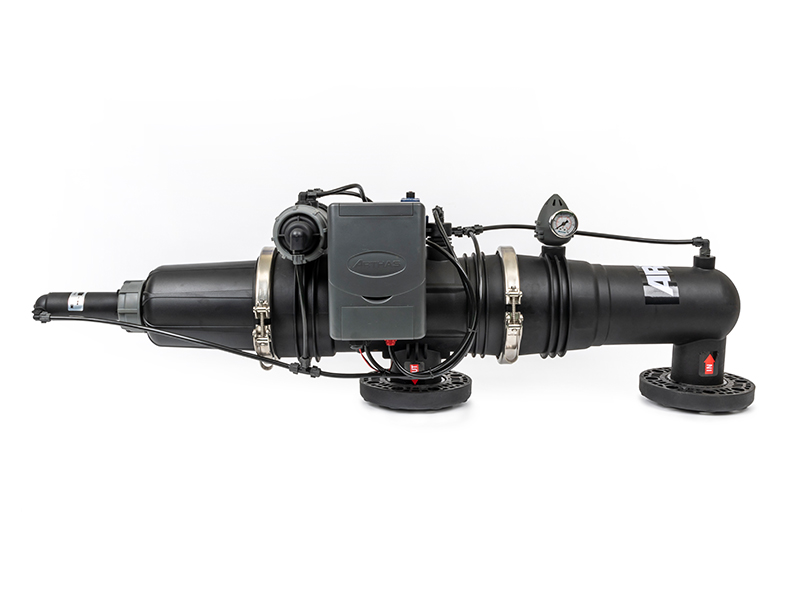
To evaluate the durability and suitability of a system, prospective buyers must understand its anatomy. Each component plays a vital role in the overall reliability of the unit under harsh field conditions.
The housing is the robust pressure vessel containing the filtration process. It is commonly constructed from carbon steel with protective epoxy coatings, or stainless steel such as 304 or 316L for corrosive environments. The screen itself acts as the beating heart of the system. High-quality screens, like those found in the F90ASC series, are fabricated from sintered stainless steel wire mesh. Bonding multiple layers of wire cloth together provides high structural strength and prevents particles from lodging deep within the pores.
The internal cleaning apparatus dictates the efficiency of the backwash. Older models utilize mechanical brushes to physically scrape debris. However, suction scanners are the modern industry standard. Suction scanners are highly preferred because they do not press debris into the screen pores. Instead, they lift it away using reverse flow. This makes suction technology vastly superior for handling sticky organic matter, algae, and soft particulates.
The control panel acts as the brain of the automatic screen filter. It houses the Programmable Logic Controller or a dedicated microprocessor. The panel receives real-time data from the pressure switch and actuates the solenoids that control the flush valve and drive motor. Furthermore, modern controllers feature timer redundancies. This ensures a flush cycle occurs after a set number of hours even if the pressure threshold has not been met, effectively preventing biological growth.
This is a heavy-duty, fast-acting diaphragm or hydraulic valve responsible for discharging the concentrated wastewater out of the system. Because it constantly handles abrasive particles like sand and scale, it must be constructed from highly durable, wear-resistant materials. This prevents leaks during normal filtration mode.
A common point of confusion for engineers and facility managers is choosing between screen technology and disc technology. Both are automated, yet they handle fundamentally different types of water challenges based on their physical filtration methods.
A self-cleaning disc filter utilizes a stack of tightly compressed, color-coded synthetic discs. Each disc features microscopic diagonal grooves etched into its surface. When stacked and compressed, these grooves intersect to create a deep, three-dimensional maze. Water must navigate this complex path, trapping debris deep within the disc stack. This process is known as depth filtration. During backwashing, the discs decompress and spin rapidly, flushing the trapped debris away.
Screen filters utilize surface filtration. They are the optimal choice for water sources containing rigid, inorganic materials such as sand, silt, gravel, and pipe scale. Specifically, they are highly efficient at processing massive flow rates with a relatively small physical footprint. If you are drawing water from a deep well or a municipal line where the primary concern is hard particulate matter, a wire mesh screen filter is the most efficient choice.
Conversely, disc filters are superior when dealing with heavy organic loads. Water drawn from open canals, lakes, or rivers is highly prone to algae blooms. Because organic matter is soft and malleable, high water pressure can sometimes force stringy algae or slime through the two-dimensional pores of a screen filter. The three-dimensional depth of a self cleaning disc filter traps these soft organics effectively, preventing them from extruding into the clean water stream.
| Feature | Self Cleaning Screen Filter | Self Cleaning Disc Filter |
|---|---|---|
| Filtration Mechanism | Surface Filtration Two-Dimensional | Depth Filtration Three-Dimensional |
| Best Contaminant Match | Inorganic Sand, Silt, Scale | Organic Algae, Slime, Biomass |
| Physical Footprint | Generally smaller, compact | Larger, often requires multiple pods |
| Resistance to Extrusion | Lower Soft organics may push through | High Deep grooves trap soft matter |
Recent environmental mandates and global water scarcity have accelerated a massive industry shift. Facilities are rapidly phasing out static strainers in favor of self-regulating technologies. Current data suggests that plants integrating automated filtration comply more easily with strict water discharge limits. Furthermore, they experience a substantial drop in operational overhead, perfectly aligning with modern sustainability goals.
The most significant operational advantage is the total elimination of downtime. In industrial manufacturing or continuous agricultural irrigation, stopping water flow to clean a filter halts production entirely. Because the suction scanner cleans the screen while the main outlet remains open, facilities maintain a stable, continuous supply of filtered water.
Manual filtration requires dedicated man-hours for monitoring, disassembly, cleaning, and reassembly. By automating this process, maintenance personnel are freed to focus on high-value tasks. Eliminating the need to manually unbolt heavy pressure vessels reduces the risk of workplace injuries and the potential for improper reassembly that leads to leaks.
Particulate matter is highly abrasive. When sand passes through a system, it wears down pump mechanical seals, scores the inside of expensive control valves, and permanently clogs micro-nozzles. Maintaining a strict micron barrier acts as a physical insurance policy. It drastically extends the Mean Time Between Failures for downstream machinery.
Contrary to outdated misconceptions, automated backwashing is exceptionally water-efficient. The cleaning cycle is brief and highly localized. Modern systems typically consume less than 2% of the total filtered water volume during a backwash. By keeping the filter screen clean, the system prevents severe pressure drops. This means system pumps do not have to consume excess electricity to push water through a clogged filter cake.
The versatility of these systems allows them to be deployed across a wide spectrum of demanding environments. Understanding where they are commonly used can help validate their application for your specific site needs.
In commercial agriculture, protecting intricate irrigation infrastructure is paramount. A reliable automated filter is routinely installed at the main pump station. It shields drip tape, micro-sprinklers, and pivot nozzles from river, canal, or well water debris. Preventing emitter clogging ensures uniform water and fertilizer distribution across the field, directly impacting crop yield and quality.
Industrial facilities utilize vast amounts of water for processing and thermal management. In a dusty cooling tower environment, these filters are standard for side-stream filtration. They remove airborne dust and scale that enter the cooling loop. They are also heavily utilized to protect plate-and-frame heat exchangers, where even minor particulate fouling can drastically reduce thermal transfer efficiency and spike energy costs.
Municipalities deploy these filters as crucial pre-filtration stages. They are frequently installed ahead of delicate membrane technologies like Ultrafiltration or Reverse Osmosis systems. By removing larger particulates first, they prevent the expensive membranes from physically tearing or prematurely fouling. This extends the life of the municipal plant's most costly assets.
While these systems drastically reduce daily labor, they are not entirely maintenance-free. Adhering to a strict, proactive maintenance protocol ensures longevity and prevents unexpected mechanical failures.
Facility operators should conduct visual and operational inspections on a monthly basis. This includes checking the external housing and flush valve for any signs of weeping water. Operators should manually trigger a backwash cycle via the controller. Verify that the flush valve opens with a distinct rush of water, the suction scanner rotates smoothly without grinding noises, and the exhaust water runs clear by the end of the 15-second cycle. Checking the sensor lines for tiny air bubbles or debris blockages is also highly recommended.
Once a year, or at the end of a heavy irrigation season, the system requires a deep manual inspection. The unit must be depressurized and opened. Pull the stainless steel screen out and inspect it closely for tears, warping, or severe mineral scaling. Mineral scaling that the automatic vacuum cannot remove requires a mild acid bath. Additionally, inspect all rubber O-rings, gaskets, and hydraulic piston seals. Replace them if they show signs of dry rot or flattening.
A frequent troubleshooting scenario involves a filter that enters a continuous, never-ending backwash loop. This usually points to one of three culprits. First, a torn screen allowing debris to bypass and foul the sensor lines. Second, a miscalibrated pressure switch sending a false trigger to the controller. Third, a sticky flush valve that fails to close completely, preventing the system from re-pressurizing. Systematically isolating these three components will resolve the vast majority of operational faults.
Selecting the correct filter requires precise engineering calculations. Installing a unit that is improperly specified will result in poor performance, continuous flushing, and immense frustration.
The filter must be sized according to the maximum expected flow rate of the system, not merely the existing pipe diameter. Pushing a high flow rate through an undersized filter will result in an excessive baseline pressure drop. This causes the system to backwash constantly. Conversely, an oversized filter might not generate enough internal pressure velocity during a backwash to operate the suction scanner effectively.
The micron rating dictates the size of the screen's pores. Standard options range from 50 microns being very fine to 3000 microns being coarse. The golden rule of thumb is to select a micron rating that is one-tenth the size of the smallest downstream orifice you are trying to protect. Choosing a screen that is unnecessarily fine for the application will result in rapid clogging and excessive wastewater generation.
Thoroughly evaluate the Total Suspended Solids in your water source. If the water has an extremely high solid load—such as heavily silted river water following a spring storm—a single screen filter might be overwhelmed. Under such conditions, a coarse pre-filter or a hydrocyclone sand separator should be installed upstream to knock out heavy solids before they ever reach the automated screen.
Automatic backwashing relies heavily on existing system pressure to expel the debris and drive the internal cleaning mechanisms. Most standard systems require a strict minimum dynamic operating pressure of 30 to 40 psi at the filter inlet during the flush cycle. If your system operates at a lower pressure, you will need to specify an externally powered electric drive motor or install a pressure-sustaining valve downstream to ensure adequate cleaning energy is maintained.
Are you ready to eliminate manual filter cleaning and protect your critical infrastructure? Selecting the correct configuration requires precise flow and pressure calculations. Explore high-performance solutions like the F90ASC series at Arka Irrigation. Contact our engineering team today to get a customized sizing quote tailored to your exact site requirements and ensure your operations run at peak efficiency.
No. Modern systems are highly engineered for efficiency. They typically use less than 2% of the total water volume for the cleaning cycle. Because the flush sequence only lasts 10 to 15 seconds, the water loss is negligible compared to the continuous flow of clean water provided.
Most standard units require a small amount of power, either AC or DC, to operate the smart controller and the solenoids that trigger the valves. However, for remote agricultural locations without grid access, there are fully hydraulic models available that operate solely on the kinetic energy of the water pressure.
While a screen can catch some rigid algae clusters, heavy organic loads are notoriously difficult for surface filtration. Soft algae can sometimes extrude through the metal mesh under high pressure. If your water source has high biological content, it is often better handled by a depth filtration method, such as a disc filter or a media tank.
To create enough suction to clean the screen effectively and drive the internal scanner, most systems require a minimum of 30 to 40 psi during the actual flush cycle. Operating below this threshold will result in incomplete cleaning and eventual system failure.
The entire cleaning sequence is remarkably fast. Most industrial units complete the flush in 10 to 15 seconds. This brief duration ensures minimal water loss while maintaining full downstream flow for your facility.
Low pressure compromises the vacuum effect at the suction scanner nozzles. If the inlet pressure falls below the required threshold, the scanner cannot effectively lift the filter cake off the wire mesh. In such scenarios, engineers must install a pressure-sustaining valve downstream to guarantee adequate cleaning energy.


