
Views: 0 Author: Site Editor Publish Time: 2026-11-02 Origin: Site


Clogged drip emitters can devastate crop yields. Many growers face this exact frustrating scenario: you turn on the system during a critical growth phase, only to discover that debris in the water supply has choked the flow. This sudden blockage leads to uneven watering, stressed plants, and severely damaged irrigation equipment. Fortunately, installing a robust screen irrigation filter prevents these costly mechanical failures by acting as a reliable physical barrier. In this comprehensive engineering guide, you will learn the exact nuances of mesh sizes and discover the best filtration strategies for different water sources. Implementing these standards ensures your agricultural setup runs flawlessly season after season.
A physical filtration system serves as the primary line of defense for any agricultural or landscape water distribution network. A screen filter operates by forcing raw water through a porous barrier. Manufacturers typically construct this barrier from woven stainless steel, molded synthetic polymers, or reinforced nylon. As the water pushes through this element, particulate matter larger than the microscopic apertures of the screen is trapped securely inside the filter housing.
This mechanical separation is absolutely vital for system longevity. It prevents abrasive grit from scoring sensitive valve diaphragms. It also stops organic debris from lodging within the narrow flow paths of modern irrigation emitters. Without this protective barrier, irrigation systems inevitably experience localized pressure drops, poor water distribution, and premature component degradation. Ultimately, the effectiveness of this defense depends entirely on selecting the correct aperture size to match the specific particulate load of your water source.
Understanding the terminology of filtration measurement is critical for proper hydraulic design. Industry professionals primarily rely on two metrics to define filtration levels: Mesh and Micron. Specifically, Mesh refers to the exact number of openings per linear inch of the screen material. Consequently, a higher mesh count means there are more wires tightly packed into that single inch. This results in significantly smaller gaps between the wires. In contrast, a Micron—or micrometer—is a direct unit of length measuring one-millionth of a meter. This represents the actual physical size of the hole.
The relationship between these two terms is inversely proportional. As the mesh count increases, the micron size decreases. To ensure your system functions without interruption, the micron size of the filter must always be smaller than the smallest orifice in your irrigation network.
Recent hydrological data indicates a severe shift in agricultural water quality driven by changing environmental conditions. Prolonged droughts are forcing growers across major farming regions to pump from much lower aquifer levels. This practice draws up unprecedented concentrations of abrasive sand and fine silt compared to previous decades. Concurrently, warmer surface temperatures are triggering aggressive algal blooms in ponds and reservoirs much earlier in the growing season.
This evolving environmental reality is forcing a distinct migration away from traditional passive filtration methods. Modern agricultural operations are increasingly investing in dynamic, climate-resilient solutions. The market trend clearly favors advanced self-cleaning technologies and hydrocyclonic separators. These upgraded systems allow growers to maintain optimal hydraulic flow rates and protect precision emitters without incurring the prohibitive labor costs associated with manually scrubbing clogged screens every few hours.
The chemical and physical composition of water varies dramatically depending on its origin. Applying a universal filtration standard often leads to chronic clogging if the mesh is too fine for dirty water. Conversely, it causes catastrophic system damage if the mesh is too coarse.
Groundwater extracted through boreholes or deep wells is generally free from organic matter and algae. However, it frequently carries high loads of inorganic particulates. These include fine sand, abrasive silt, and mineral scale. These inorganic materials possess a high specific gravity and cause severe abrasion to pump impellers and plastic emitter nozzles over time. For standard well water, utilizing a mesh size between 120 and 150—equivalent to 125 to 100 microns—is typically recommended to effectively capture fine sand before it invades the distribution lines.
Furthermore, if your well draws from a particularly sandy aquifer, a standalone screen may become overwhelmed rapidly. In such demanding scenarios, engineers strongly advise installing a hydrocyclone sand separator upstream. The centrifugal action of the hydrocyclone removes up to 90 percent of heavy sand particles. This leaves the screen filter to effortlessly manage only the residual fine silt.
Surface water is highly dynamic and presents the most complex filtration challenges for growers. It teems with biological contaminants such as algae, moss, decaying leaves, fish waste, and suspended organic colloids. Unlike rigid grains of sand, organic matter is soft, slimy, and highly compressible. Under high system pressure, algae can actually be extruded directly through standard screen meshes. This allows the sludge to bypass the filter entirely and coagulate later within the drip lines.
Surface water typically requires 120 to 200 mesh filtration depending on the emitter type. However, standard static screens are often inadequate for these heavy organic loads. When drawing from a pond or canal, media filters or disc filters are often deployed as the primary filtration stage. Their three-dimensional depth captures compressible organics far better than a two-dimensional screen. If a screen must be used as the primary unit, upgrading to an automated model is essential to manage the rapid accumulation of organic slime.
Municipal water supplies are pre-treated and pressurized. This means they are generally free from large debris and organic fouling agents. Even so, the aging distribution infrastructure itself can introduce unexpected contaminants. Old municipal pipes frequently shed rust flakes, calcium carbonate scale, and Teflon tape residue. Because the particulate load is generally low and consists of rigid materials, an 80 to 120 mesh screen is usually sufficient. This provides robust protection for most residential and light-commercial sprinkler heads without causing unnecessary pressure restrictions.
Filtration requirements are dictated just as much by your chosen delivery method as they are by the water source. The internal geometry of the emitter ultimately determines its susceptibility to clogging.
Drip tape, pressure-compensating emitters, and micro-sprayers utilize highly engineered microscopic flow paths to regulate water output precisely. These turbulent flow channels drop water pressure efficiently. Unfortunately, they also create incredibly narrow choke points. If a tiny particle enters this channel, it can bridge the gap. This traps subsequent particles until the emitter is permanently sealed shut.
Because these orifices are frequently smaller than 0.5 millimeters, standard filtration is wholly insufficient. Drip irrigation systems mandate the use of fine filtration, strictly requiring 120 to 150 mesh screens. Failure to adhere to this strict standard inevitably results in systemic emitter failure and the costly replacement of entire drip lines.
In contrast, impact sprinklers, gear-driven rotors, and standard pop-up spray heads feature significantly larger nozzles and much less complex internal waterways. They are designed to project high volumes of water over large distances. This allows them to safely pass larger particulate matter without jamming. For these robust systems, overly fine filtration can actually be detrimental. It creates unnecessary pressure drops and requires frequent cleaning without providing tangible benefits. An 80 to 100 mesh screen offers the optimal balance here, protecting the internal stator mechanisms while maintaining strong hydraulic flow.
As agricultural and commercial irrigation scales upward, the physical labor associated with cleaning static filters becomes a measurable and frustrating operational cost. To combat this, manufacturers have developed advanced housing geometries and internal mechanisms designed to extend maintenance intervals and drastically improve hydraulic efficiency.
| Filter Technology | Primary Mechanism | Best Water Source | Maintenance Level |
|---|---|---|---|
| T-Type Static Screen | Passive physical barrier | Municipal, Clean Well Water | High manual labor |
| Spiral Clean Screen | Centrifugal vortex deflection | Sandy Wells, Rivers | Medium manual flush |
| Semi-Automatic | Internal mechanical brushing | Ponds, Lakes, Heavy Organics | Low labor, quick purge |
The T-type screen filter represents the reliable industry standard for low-to-medium volume systems. This makes it best suited for standard residential, light agricultural, and municipal water setups. Named for its perpendicular housing shape, water enters the inlet, passes through the cylindrical screen from the inside out, and exits through the outlet.
The primary advantage of this design is its structural simplicity and cost-effectiveness. It contains no moving parts, making it highly durable. The housing is engineered for quick manual access. An operator can simply unscrew the canister, remove the stainless steel or nylon mesh cylinder, rinse it with a hose, and reassemble the unit in minutes. While highly effective for relatively clean water, it does require the system to be completely depressurized and manually opened for every single cleaning cycle.
When drawing water from sandy wells or sediment-heavy turbulent rivers, standard passive filters clog at an maddening rate. A modern spiral clean screen filter addresses this mechanical limitation by utilizing applied fluid dynamics to actively manage debris. For instance, advanced 3-inch models feature a specialized directional baffle. This angled nozzle alters the flow of incoming water, forcing it into a high-velocity centrifugal vortex capable of handling high flow rates efficiently.
This rapid spinning action creates a cyclone effect against the inner walls of the filter housing. Heavy particles such as sand and rust are pushed outward and downward by centrifugal force. This keeps them safely suspended away from the delicate screen element. These particles settle into a collection basin at the bottom, which can be easily purged via a flush valve. By preventing abrasive debris from resting against the mesh, this design significantly extends the operational time between physical cleanings.
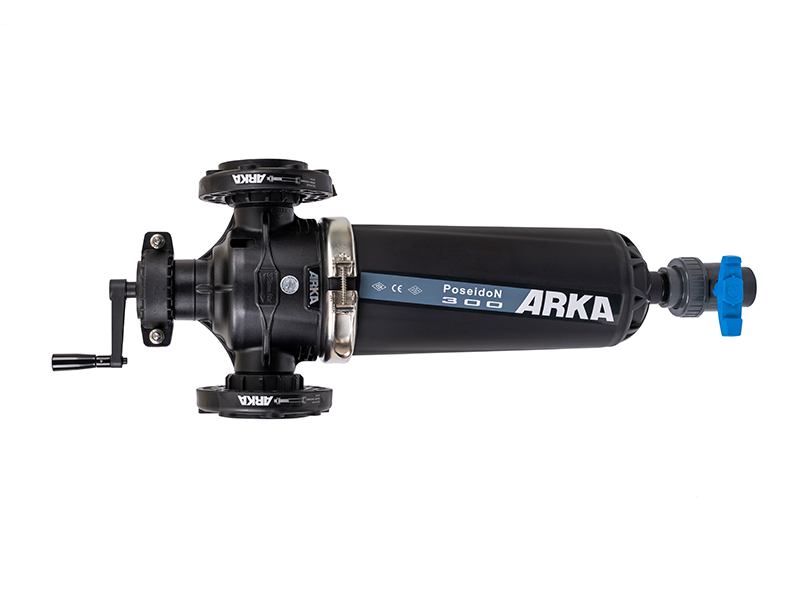
For large-scale agricultural operations or systems utilizing surface water rich in algae, manual cleaning is often logistically impossible. A semi automatic screen filter brilliantly bridges the gap between basic manual units and highly expensive fully automated filtration arrays.
These sophisticated units feature an internal mechanical cleaning apparatus, typically a rotating brush assembly or a series of vacuum suction scanners. Rather than shutting down the pump and dismantling the housing, the operator simply opens a purge valve at the bottom of the filter and rotates an external handle. This action spins the internal brushes directly against the screen. It scrubs away stubborn algae and debris, which is immediately flushed out of the waste port by the system's own water pressure. This seamless process takes mere seconds, does not require system depressurization, and saves massive amounts of manual labor over the course of a demanding irrigation season.
Procuring the correct filter technology is only the first step. Improper installation will compromise the functionality of your entire irrigation manifold. Hydraulic positioning is absolutely critical to achieving the manufacturer's stated efficiency.
Strategic placement dictates that the filter must be installed downstream from the primary water pump and the backflow prevention device. This specific positioning ensures the filter is not subjected to the violent direct cavitation of the pump. Simultaneously, it protects the municipal supply from potential cross-contamination. Crucially, the filter must also be installed upstream from the pressure regulator and the zone control valves. Zone valves contain sensitive rubber diaphragms and tiny solenoid ports that are easily compromised by grit. By placing the filter before these components, the entire control manifold remains protected.
Equally important is the physical orientation of the housing. Filters should be installed horizontally or vertically depending on the manufacturer's exact specifications. However, the flush port must always be oriented downwards. This utilizes gravity to assist in the natural evacuation of heavy sediment during the flushing process. Installing a filter upside down traps debris in the upper housing, rendering the flush valve completely useless and accelerating screen degradation.
Even the most advanced filtration systems require periodic maintenance to function correctly. Neglecting filter maintenance inevitably leads to severe pressure loss, uneven crop watering, and eventual pump failure due to deadheading.
Relying solely on a visual inspection schedule is often inefficient. Instead, growers should rely on hydraulic indicators. The most accurate method for determining filter status is monitoring pressure gauge differentials. Install pressure gauges immediately before and after the filter to track performance. If the downstream pressure drops by 5 to 10 PSI compared to the upstream pressure, the mesh is obstructed and requires immediate attention. Additionally, if drip lines are failing to emit water at their rated volume, a clogged filter is almost always the culprit.
When physical cleaning is required, strict adherence to proper protocols prevents accidental damage to the filter element. Always begin by shutting off the water supply and opening the flush valve. This relieves internal pressure before attempting to unscrew the housing. Once removed, rinse the mesh cylinder with a hose from the outside in. Because water naturally flows from the inside out during normal operation, rinsing in the opposite direction efficiently pushes trapped particles back out of the pores.
For stubborn organic matter, gently use a soft-bristled nylon brush. Never use harsh wire brushes on stainless steel or plastic mesh. Stiff wire bristles create micro-abrasions and can easily tear the delicate mesh. This allows debris to bypass the filter entirely upon reinstallation. If the mesh is coated in hard white calcium deposits from mineral-heavy well water, soaking the screen in a mild acidic solution like household vinegar for thirty minutes will dissolve the scale safely.
Matching your mesh size to your specific water type is a crucial engineering step that ensures the long-term success of your irrigation system. Investing in the proper filtration technology pays off rapidly. It saves countless hours of manual labor and prevents catastrophic equipment failures during peak watering seasons. Take the time to evaluate your current water source carefully today. Upgrade your filtration system to achieve optimal crop results and protect your infrastructure.
Ready to eliminate clogged emitters and streamline your farm's water management? Explore the high-performance filtration solutions at ARKA Irrigation. From robust T-type housings to advanced 3-inch spiral clean semi-automatic models, ARKA provides the exact technology you need to keep your water flowing clean and your crops thriving. Visit ARKA Irrigation today to find the perfect match for your agricultural needs.
Typically, a 100 to 120 mesh screen is ideal for garden hoses used for residential drip lines or standard watering wands. This specific size effectively captures the most common municipal water particulates, such as pipe rust and calcium scale, without causing a noticeable drop in standard household water pressure.
While you certainly can, heavy algae will clog a standard passive screen very quickly. This requires constant and frustrating manual cleaning. For heavy organic matter, it is objectively better to use a sand media filter or a disc filter. At a minimum, you should utilize a semi-automatic model to make the frequent flushing process manageable without dismantling the system.
If your filter is clogging every single day and causing a severe pressure drop in your system despite regular cleaning, your mesh is likely too fine for your specific water source. In this scenario, you either need to step down to a slightly coarser mesh—for example, moving from 150 mesh to 120 mesh—or install a dedicated coarse pre-filter upstream to handle the bulk of the larger debris.
Yes, without a doubt. Stainless steel is significantly more durable, can handle much higher hydraulic pressure without warping, and is far easier to scrub clean without risking accidental tearing. While nylon mesh is cheaper upfront, stainless steel remains the preferred and cost-effective choice for long-term professional irrigation setups.
Cleaning frequency depends entirely on your water source and filter type. A static screen on a clean municipal line might only need cleaning once a month. However, drawing from a sandy well or an algae-rich pond might require daily flushing. This is why monitoring the pressure differential across the filter is the most reliable way to know exactly when maintenance is due.
A brand new or freshly cleaned screen filter should typically register a pressure drop of no more than 1 to 3 PSI across the housing, depending on the flow rate. Once this differential reaches 5 to 10 PSI, it indicates that debris is restricting the flow, and a flushing or cleaning cycle must be initiated immediately.


