
Views: 0 Author: Site Editor Publish Time: 2026-10-30 Origin: Site


Are clogged emitters ruining your crop yields? Imagine walking your fields during a critical heatwave. You suddenly discover severe dry patches because microscopic debris compromised your drip lines. Dirty water costs commercial farms thousands of dollars annually. You lose revenue, waste labor, and ruin hardware.
Unfiltered water carries sand, silt, and algae. These elements silently destroy expensive equipment. Implementing proper farm filtration acts as the ultimate insurance policy. It prevents these devastating and costly system failures before they occur.
In this comprehensive guide, we will help you navigate the complex market of irrigation hardware. By understanding your specific environmental variables, you can confidently compare options. You will learn how to choose the ideal purification setup to safeguard your harvest.
In modern agriculture, precision irrigation systems deliver exact amounts of hydration and nutrients directly to the root zone. This precision relies entirely on the unimpeded flow of the supply line. The orifices in modern drip tape and micro-sprinklers are incredibly small. They often range from 0.5mm to 2mm in diameter. Without a robust defense mechanism, these microscopic pathways become highly susceptible to immediate blockages.
The consequences of poor water quality extend far beyond a simple drop in pressure. Unfiltered fluid introduces sand, silt, algae, and organic debris into the mainline. This triggers a cascade of operational failures. Clogged nozzles create severe dry spots across the acreage. Plants become drought-stressed, and yields plummet. Blockages also cause pressure spikes within the lateral lines. These hydraulic spikes frequently result in ruptured hoses and blown fittings that demand emergency repairs.
Filtration also plays a mandatory role in fertigation. Unfiltered particulates react chemically with dissolved liquid fertilizers. This chemical reaction creates solid precipitates that permanently cement emitters shut. By establishing a strict purification strategy, farm owners stabilize system pressure and ensure uniform crop hydration. You minimize maintenance downtime and significantly extend the operational lifespan of your entire infrastructure.
Looking at recent agricultural trends, the demand for advanced water purification is accelerating rapidly. Global water scarcity continues to intensify. Regulatory bodies are placing stricter limits on agricultural water extraction. Consequently, farms are transitioning from traditional flood irrigation to highly efficient micro-irrigation and drip systems to conserve resources. These low-volume systems are hyper-sensitive to particulate matter. As a result, the market is seeing a massive shift away from basic, low-tier strainers. Farm owners are increasingly adopting professional-grade automated and semi-automated technologies. Premium filtration is no longer viewed as an optional accessory. It is a mandatory component for climate-resilient, commercial farming.
Navigating the hardware market requires a solid understanding of mechanical differences. Below is a detailed breakdown of the primary categories utilized in commercial farming operations today.
Operating on the principle of surface filtration, water is forced through a cylindrical mesh. Manufacturers typically construct this mesh from woven stainless steel or highly durable synthetic plastics. As the liquid passes through the microscopic pores, rigid particulates like sand, gravel, and pipe scale are physically trapped on the inner surface of the barrier.
From an engineering perspective, these units handle high-velocity flows effectively. They are highly efficient for groundwater and well applications where primary contaminants are inorganic and granular. For many agricultural setups, integrating a high-quality screen filter provides the most cost-effective and structurally reliable starting point.
Unlike standard mesh, this technology utilizes depth filtration. The internal element consists of hundreds of tightly stacked, color-coded plastic rings. Each disc is etched with microscopic diagonal grooves. When compressed together, these intersecting grooves create a complex, three-dimensional matrix of trapping points.
As water navigates this tortuous path, the matrix captures both hard particulates and soft organic matter. Algae, moss, and biological sludge are trapped throughout the entire depth of the stack. Consequently, a disc filter is the industry standard for surface sources like ponds and open reservoirs. They hold a massive volume of organic debris before requiring a manual flush.
These systems consist of large carbon-steel or fiberglass tanks filled with crushed silica sand or basalt. Water enters the top of the vessel and slowly percolates through the media bed. The sharp edges of the crushed rock trap massive amounts of organic matter, heavy algae, and clay.
They offer the highest capacity available and are essential for farms utilizing heavily contaminated surface water. However, they require a significant upfront capital investment and occupy a large physical footprint.
Centrifugal separators harness fluid dynamics to separate contaminants rather than using a physical barrier. Water enters a conical chamber at a sharp angle, creating a high-velocity vortex. The resulting centrifugal force throws heavy inorganic particles to the outer walls. The grit then slides down into a collection chamber.
Engineers exclusively deploy hydrocyclones as pre-filters for well water suffering from heavy sand loads. They effectively remove up to 90 percent of heavy grit before the water reaches the primary purification station.
To simplify your engineering decisions, review this direct comparison of the most common filtration technologies used in commercial agriculture.
| Filter Type | Best Water Source | Target Contaminants | Maintenance Level | Initial Cost |
|---|---|---|---|---|
| Standard Screen | Wells, Boreholes | Sand, Gravel, Pipe Scale | Moderate to High | Low |
| Stacked Disc | Ponds, Rivers, Lakes | Algae, Moss, Organic Sludge | Moderate | Medium |
| Semi-Automatic Screen | Wells, Municipal Lines | Sand, Silt, Mixed Debris | Very Low | Medium to High |
| Sand Media | Wastewater, Heavy Canals | Heavy Organics, Clay | Low | Very High |
For many mid-sized farming operations, manually dismantling and scrubbing equipment daily becomes a severe drain on labor resources. Fully automated self-cleaning arrays are highly effective. Yet, they require electrical infrastructure, complex controllers, and a massive capital outlay. This distinct gap in the market has led to the widespread adoption of the hybrid approach.
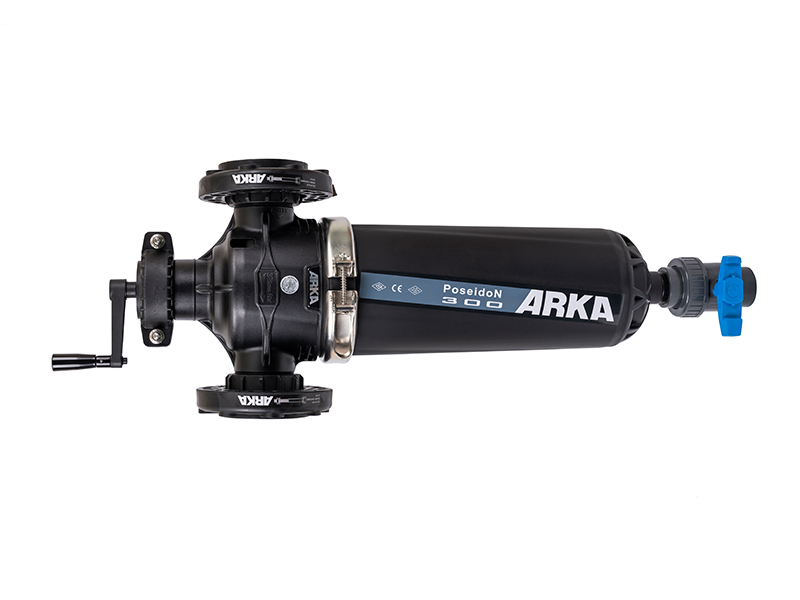
A semi automatic screen filter bridges the divide. It allows the operator to clean the internal element without depressurizing the system or opening the housing. For instance, advanced 3-Inch Spiral Clean models feature a manual crank handle paired with a specialized flush valve. When the pressure gauge indicates a dirty element, the farm worker simply opens the discharge valve and turns the handle. This physical action activates internal suction scanners or rotating brushes. They sweep the debris off the mesh and expel it out of the flush port in seconds.
The primary advantage for farm owners is the drastic reduction in labor time. A tedious teardown process that previously took fifteen minutes can now be completed in just fifteen seconds. It also prevents the operator from being exposed to the fluid. This is a crucial safety factor if the lines are actively running caustic fertilizers. Upgrading makes immediate financial sense the moment manual flushing interferes with daily agricultural operations.
Selecting the correct hardware requires more than simply choosing the most recognizable brand off a supplier's shelf. Farm owners must meticulously evaluate their specific operational parameters. Failing to match the unit to your constraints will result in pressure drops, frequent clogging, and compromised crop health.
The origin of your supply dictates the type and volume of particulate matter entering your network. Water drawn from underground aquifers typically contains inorganic, hard particulates. Because there is no sunlight underground, biological growth is rarely an issue. Standard mesh handles this perfectly. Open water sources are exposed to sunlight and environmental runoff. They carry heavy organic loads, including algae and decomposing matter. These stringy materials will quickly blind a standard mesh, necessitating depth filtration alternatives.
Every unit has a maximum designed flow rate. If you force a higher volume of water through a housing than it is rated for, you create severe friction loss. This pressure drop deprives the furthest emitters in your field of the energy necessary to function correctly.
Oversizing unnecessarily increases your capital expenditure. Calculate the total flow requirement of your largest irrigation zone. Select equipment that accommodates that flow with a minimal pressure differential. Ideally, aim for a drop of less than 3 to 5 PSI when the unit is completely clean.
Filtration capacity is measured in either mesh or microns. Mesh refers to the number of holes per linear inch. Micron measures the actual physical size of the openings. As the mesh number increases, the micron size decreases, resulting in finer purification.
To adequately protect your investment, the micron rating must be smaller than the orifice size of your specific emitters. A 120-mesh rating is the universal standard for most agricultural drip tape. Conversely, a coarse 40-mesh is often sufficient for high-volume impact sprinklers.
When navigating the market, buyers frequently encounter vast price disparities. It is incredibly tempting to minimize upfront capital by purchasing inexpensive alternatives. Empirical field data consistently demonstrates that budget-tier hardware leads to a significantly higher total cost of ownership.
Inexpensive housings often rely on lower-grade polymers. They lack essential UV stabilization and structural fiberglass reinforcement. Out in the field, this equipment is subjected to harsh ultraviolet radiation, extreme temperature fluctuations, and aggressive hydraulic water hammers. Low-grade plastics become brittle over time. They are highly prone to micro-cracking or catastrophic ruptures. Moreover, cheap internal screens are often poorly welded. They tear easily under the stress of heavy debris loads.
When a screen tears, the unit goes into bypass mode. Contaminants flood the downstream lines immediately. The cost of replacing thousands of feet of ruined drip tape far exceeds the money initially saved on a budget housing.
To accurately assess value, you must look beyond the initial sticker price. A reliable system constructed from reinforced polyamides or marine-grade stainless steel withstands years of rigorous agricultural use. Factor in the hidden expenses of cheap gear. Consider the man-hours spent manually dismantling jammed components. Account for the devastating financial impact of a ten percent reduction in crop yield due to poor water distribution. By investing in professional-grade equipment, you mitigate the risk of catastrophic failure and ensure uniform fertigation.
Even the most advanced hardware requires proactive, disciplined maintenance. Implementing a standardized upkeep schedule prevents unexpected breakdowns during peak growing seasons.
The most scientific way to determine when a cleaning cycle is required is by monitoring the pressure differential. This involves installing two pressure gauges. Place one on the inlet side and one on the outlet side. When the internal element is clean, the pressure difference should be minimal. As debris accumulates, flow is restricted, causing the outlet pressure to drop.
Industry standard practice dictates that you should flush the system when the differential reaches 5 to 7 PSI. Waiting until the gap exceeds 10 PSI risks forcing dirt deep into the matrix. It can also permanently warp the internal element.
During the active season, conduct monthly visual inspections of the entire unit. Carefully examine O-rings and rubber seals for signs of dry rot or flattening. A compromised seal will cause external leaks and a loss of mainline pressure.
For operations located in freezing climates, proper winterization is absolutely critical. Water expands as it freezes. Trapped moisture will easily shatter even the thickest reinforced polymer tanks. Shut off the main supply, open all drain ports, and remove the lower housing. Store the internal elements indoors to protect them from extreme cold until spring planting resumes.
Choosing the right filtration system is a vital engineering decision. It directly protects your crops and preserves your operational budget. By carefully assessing your specific water source, flow rate, and contamination levels, you can implement a solution that prevents costly system clogs.
Before making a purchase, evaluate your farm's labor capacity. Manual units are cost-effective upfront, but semi-automatic options significantly reduce daily maintenance tasks. They free up your workforce for more critical agricultural duties.
Ready to safeguard your harvest with professional-grade hardware? Explore the robust, high-efficiency solutions available at Arka Irrigation. Match your exact field requirements with our durable agricultural equipment and ensure maximum farm efficiency season after season.
Typically, a 120 to 150-mesh rating is highly recommended for drip systems. Drip emitters feature microscopic pathways that can easily become blocked by fine silt or sand. Utilizing a 120-mesh barrier ensures that any particles large enough to cause a blockage are safely trapped before they can enter the lateral lines.
The frequency of cleaning depends entirely on your water source and the volume passing through the network. With highly clean well water, manual cleaning once a month may suffice. However, if you are pulling from a pond with high algae content, cleaning could be required daily. To take the guesswork out of this process, always rely on a pressure differential gauge.
While mechanically possible, it is rarely recommended by irrigation professionals. Pond water contains high concentrations of algae, moss, and organic sludge. These soft materials will quickly flatten out and blind the surface of a standard mesh. For surface water, depth filtration methods are much more effective at trapping organic matter without immediately clogging.
A manual unit requires the operator to completely shut off the supply, depressurize the lines, manually unscrew the housing, remove the element, and physically wash it. A semi-automatic model streamlines this tedious process. It allows the operator to clean the internal mesh by simply turning a crank or opening a flush valve while the system remains pressurized.
Yes, secondary filtration is still strictly required. While municipal water is treated, it must travel through miles of underground piping before reaching your property. During this journey, the fluid can easily pick up pipe scale, rust flakes, and mineral buildup. If these hard particulates enter your layout, they can lodge themselves into sensitive micro-sprinklers.
When the internal element is brand new and completely clean, the pressure drop should be between 2 and 5 PSI. As the unit operates and traps debris, this number will rise. You should initiate a flushing cycle when the pressure differential reaches 5 to 7 PSI above the clean baseline. Allowing the drop to exceed 10 PSI can damage the internal components.
Fertigation introduces concentrated liquid chemicals into your water supply. Unfiltered dirt and organic matter can react with these fertilizers, creating solid precipitates that permanently block emitters. If you inject fertilizers, you must install a highly reliable, fine-mesh filter downstream of the injection point to catch any chemical precipitates before they reach your crops.


