
Views: 0 Author: Site Editor Publish Time: 2026-11-03 Origin: Site


Are clogged drip emitters ruining your crop yields? Imagine walking your fields during a critical growth stage. You look closely at the soil, only to discover dry patches caused by blocked irrigation lines. Poor water quality inevitably leads to uneven watering and costly farm downtime. Fortunately, a reliable filtration setup easily solves this widespread agricultural headache.
In this comprehensive guide, we will explore the mechanics, benefits, and limitations of physical water filtration. Specifically, we will help you evaluate your specific water source and make the most informed, cost-effective choice to protect your farming or landscaping operation.
A physical mesh filter acts as the first line of defense in agricultural water networks. Its primary job is straightforward. It intercepts suspended solid particulates from the water supply long before they can reach sensitive distribution components. By capturing these contaminants, the device prevents the clogging of delicate micro-sprinklers, spray nozzles, and drip tapes. This guarantees uniform hydration across your entire field.
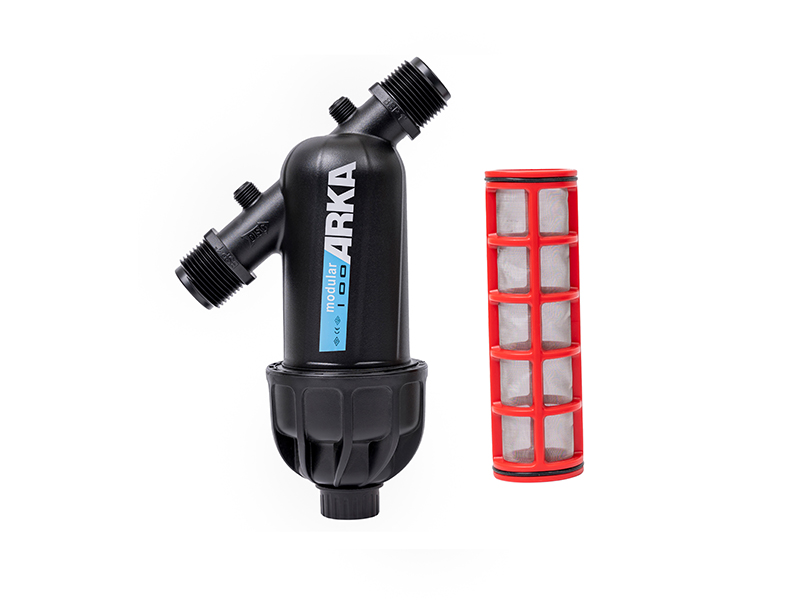
The engineering behind this equipment is simple yet remarkably efficient. Take standard agricultural models like the F25YS-N 3/4 Inch unit as a prime example. The unit consists of a robust outer housing manufactured from UV-resistant polymers. Inside sits a central cylindrical mesh core. When pressurized water enters the housing, fluid dynamics force it to flow through the microscopic pores of the woven mesh. Clean water successfully continues down the mainline. Meanwhile, abrasive debris, sand, and scale larger than the pore size become physically trapped inside the cylinder. Over time, this accumulated dirt settles at the bottom, waiting for an operator to flush it out.
Irrigation filters are categorized primarily by their structural geometry and how they integrate into your existing manifold.
When evaluating agricultural technologies, decision-makers must weigh tangible operational benefits against capital expenditure. This specific filtration method remains a dominant choice globally due to several distinct engineering and economic advantages.
These units excel at surface filtration. They are the optimal choice for intercepting hard, inorganic particulates. If your irrigation water is sourced from a deep well or a municipal supply, the primary contaminants are likely fine sand, gravel, pipe scale, and rust. The rigid mesh effectively blocks these solid particles without allowing them to embed deeply into the filter material. This ensures consistent protection for downstream emitters.
From a capital expenditure perspective, manual setups require a significantly lower initial investment compared to complex sand media tanks, centrifugal separators, or automated disc arrays. The simplicity of their design translates to lower manufacturing costs. For budget-conscious farming operations or small-to-medium landscaping projects, this affordability allows for the installation of essential protection without overextending financial resources.
Furthermore, every component added to an irrigation mainline creates friction. This leads to a drop in water pressure. A major technical advantage here is the minimal interference with fluid dynamics. Because the mesh is relatively thin and offers a high ratio of open area to solid material, water passes through it with very little friction. This low pressure drop means that irrigation pumps do not have to work as hard to maintain the required flow rates. Ultimately, this results in measurable savings in electrical or diesel pumping costs over a growing season.
Operational simplicity is crucial for farm managers who cannot afford extended downtime. Installation typically requires basic plumbing connections, and routine maintenance is highly intuitive. An operator can easily depressurize the line, unscrew the housing lid, and extract the internal core. This allows for immediate visual inspection of the debris type, helping farmers diagnose potential issues with their well or pump. Cleaning simply involves rinsing the mesh with a standard hose before reinserting it.
To make an informed purchasing decision, it is equally important to understand technical limitations. No single filtration technology is universally perfect for all water conditions. You must assess your environment honestly.
The most significant limitation is poor performance when dealing with organic loads. Water sourced from open reservoirs, ponds, or canals often contains algae, moss, slime, and other soft biological materials. Because this system utilizes two-dimensional surface filtration, organic matter can rapidly smear across the mesh. This effectively blinds the pores and stops water flow. Even worse, under high system pressure, soft organics can actually extrude through the rigid mesh. They bypass the barrier entirely and clog the delicate drip emitters downstream.
The system relies entirely on the structural integrity of its mesh. If a manual unit is neglected and not cleaned regularly, trapped debris will form a thick cake. This blockage causes a severe pressure differential. The pressure before the unit becomes much higher than the pressure after it. If this differential exceeds the manufacturer specifications, the immense force can cause the stainless steel or nylon mesh to rupture. Once compromised, all accumulated debris will instantly flush into the irrigation lines, potentially destroying hundreds of meters of drip tape.
Standard manual models require direct human intervention. If the water source is heavily laden with sand or particulates, clogging occurs rapidly. In severe cases, manual flushing might be required daily or even multiple times a day. For large-scale agricultural operations, this frequent maintenance translates into high labor costs. Constant monitoring can detract from other critical farming activities.
A common dilemma for irrigation designers is choosing between mesh technologies and depth filtration. Understanding the mechanical differences between these two options is critical for matching the equipment to your specific water source.
Unlike the two-dimensional mesh barrier, a disc filter utilizes three-dimensional depth filtration. It consists of hundreds of stacked, color-coded plastic rings. Each ring features microscopic diagonal grooves etched into its surface. When tightly compressed together inside the housing, these intersecting grooves create a complex maze. Water must navigate this tortuous path to pass through. Meanwhile, debris is trapped not just on the surface, but deep within the stacked rings.
To facilitate a clear decision-making process, we have outlined the core differences below.
| Feature | Screen Filtration | Disc Filtration |
|---|---|---|
| Filtration Mechanism | 2D Surface Filtration. Acts as a single physical barrier. | 3D Depth Filtration. Traps debris within intersecting grooves. |
| Best For Water Source | Well water, municipal water, or sources with hard inorganic particles. | Surface water, ponds, canals, or sources with organic matter. |
| Handling Organics | Poor. Algae smears across the mesh or squeezes through under pressure. | Excellent. The deep grooves trap soft organics without allowing extrusion. |
| Cleaning Process | Generally faster to clean manually. Debris rinses off the smooth mesh easily. | Holds more dirt, but manual cleaning requires loosening the rings and spraying them thoroughly. |
| Upfront Cost | Typically lower. Highly economical for standard applications. | Generally higher due to the complex manufacturing of the grooved components. |
In summary, if you are pumping sandy water from a borehole, a mesh barrier is your most efficient choice. In contrast, if you are drawing water from an algae-rich pond, depth filtration will provide far superior protection.
As agricultural operations scale up, the labor associated with maintaining equipment becomes a critical operational factor. Buyers must decide whether a manual system is sufficient or if an automated solution is justified.
Manual units are highly appropriate for specific scenarios. Small to medium-sized farms, greenhouses, and landscape irrigation layouts often function perfectly with manual intervention. If your water source is relatively clean, clogging will be minimal. In these cases, a routine manual flush once a week or once a month is entirely manageable. The low initial cost and lack of electrical components make standard manual models a highly reliable, low-maintenance asset for smaller operations.
Recent market analyses regarding agricultural water management reveal a significant industry shift. As global water scarcity intensifies and farm labor costs continue to rise, there is a pronounced trend toward automated, smart filtration setups. The broader agricultural sector is rapidly moving toward precision farming. Modern growers increasingly demand data-driven irrigation systems integrated with IoT pressure sensors. This evolution optimizes water conservation by reducing backflush waste. It also drastically cuts down on maintenance hours. While manual filters remain the reliable backbone for smallholders, commercial operations now view self-cleaning technologies not as a luxury, but as a baseline requirement for sustainable yield management.
For large-scale commercial agriculture dealing with highly contaminated river water, upgrading to an automatic screen filter offers a substantial return on investment. These advanced systems utilize differential pressure switches. When debris builds up, the pressure drops on the downstream side. Once this pressure differential reaches a pre-set threshold, the system controller automatically triggers a self-cleaning backflush cycle. A hydraulic valve opens, and a suction scanner or specialized nozzle rotates inside the cylinder. It vacuums the debris and expels it through a flush valve. All of this happens without interrupting the main water flow to the crops.
While the capital expenditure for an automated system is significantly higher, the financial return is undeniable. You realize this ROI through drastic reductions in manual labor, the elimination of human error, and the prevention of catastrophic crop stress caused by uneven watering.
Selecting the correct equipment is not a process of guesswork. It requires a systematic evaluation of your agricultural environment, hydraulic parameters, and water quality. Making an informed decision ensures that your screen filter system operates at peak efficiency. This protects downstream components like valves, pipes, and delicate drip emitters from catastrophic blockages.
Here is a comprehensive, step-by-step technical guide to help you specify the exact unit required for your operation.
The most critical specification is the filtration degree. This is typically measured in either mesh or microns. Understanding the inverse relationship between these two units is essential for proper sizing.
Choosing a size that is too coarse will allow damaging debris to enter your drip lines. Conversely, choosing a size that is unnecessarily fine will result in rapid clogging. This requires constant manual cleaning or triggers automatic systems to backflush excessively, wasting water and energy.
| Irrigation Application | Recommended Mesh Size | Equivalent Micron Rating | Typical Debris Targeted |
|---|---|---|---|
| Drip Tape and Micro-Drip | 120 to 150 Mesh | 130 to 100 Microns | Fine sand, silt, pipe scale |
| Micro-Sprinklers and Jets | 80 to 120 Mesh | 200 to 130 Microns | Medium sand, small gravel |
| Impact Sprinklers | 40 to 80 Mesh | 400 to 200 Microns | Coarse sand, large particulates |
| Large Agricultural Rotors | 20 to 40 Mesh | 800 to 400 Microns | Pebbles, large organic fragments |
A common engineering mistake in irrigation design is selecting a unit based solely on the existing pipe diameter. For example, purchasing a 2-inch model simply because the mainline is 2 inches. While connection size matters for installation, the primary metric for selection must be the maximum flow rate capacity. This is measured in gallons per minute or liters per hour.
Every unit has a maximum designed flow rate. Forcing water through at a velocity higher than its rated capacity creates a severe head loss. This friction loss forces your pumps to work harder, significantly increasing electrical or diesel costs. Furthermore, high-velocity water can force pliable debris through the mesh or cause the stainless steel to warp and tear under the pressure differential.
Always calculate your system peak flow rate. Select a capacity that exceeds this number by at least 15 to 20 percent. Oversizing the housing provides a larger total surface area. A larger surface area distributes the water pressure more evenly, holds more debris before requiring a cleaning cycle, and maintains a lower, more stable pressure drop across the irrigation zone.
The origin of your water dictates the physical characteristics of the contaminants you must manage. Physical barriers excel in specific environments but have documented limitations in others.
The durability of your unit depends heavily on the materials used in its construction. Buyers must evaluate both the housing material and the internal core based on their specific environmental conditions.
Even the most precisely engineered equipment requires periodic maintenance to function correctly. Neglecting upkeep inevitably leads to severe pressure losses, ruptured cores, and the subsequent contamination of the entire downstream network. Implementing a strict, standardized protocol ensures longevity and protects crop yields.
The frequency of manual cleaning should not be based on guesswork. It should be dictated by pressure differential readings. By installing two pressure gauges—one immediately upstream and one immediately downstream—operators can monitor the exact condition of the internal core.
When perfectly clean, the pressure difference between the two gauges should be minimal. As debris accumulates, water struggles to pass through, causing the downstream pressure to drop. A widely accepted industry standard is to initiate a cleaning cycle when the pressure differential reaches 5 to 7 psi. Allowing the differential to exceed 10 psi drastically increases the risk of blowout.
Standardized Manual Cleaning Protocol:
For agricultural operations located in regions that experience freezing temperatures, winterization is a non-negotiable maintenance requirement. Water expands by approximately 9 percent when it freezes into ice. If water is left inside a sealed housing during a winter freeze, the resulting hydraulic expansion will easily crack heavy-duty plastic housings and crush internal stainless steel cores.
At the end of the irrigation season, completely drain the main water lines. Open the flush valve at the bottom to release all standing water. Remove the housing cover and extract the element. Perform a thorough end-of-season deep clean, removing all traces of organic matter and mineral scale. Store the cleaned element indoors in a dry, dark environment to protect plastic components from unnecessary off-season UV degradation.
A reliable physical filtration barrier effectively protects your crops. This cost-effective tool blocks abrasive sand, stops clogging, and ensures your delicate emitters deliver precise hydration. However, it is essential to remember that this setup often struggles with heavy pond algae, making water source evaluation a critical first step.
You must match the mesh size to your specific emitters and always evaluate your system flow rate before purchasing equipment. Proper sizing prevents dangerous pressure drops and ensures steady, reliable watering throughout the season. Upgrade your farm with dependable filtration technology today to protect your valuable yields. To find the exact match for your flow rates and pipe sizes, explore the professional-grade solutions at ARKA Irrigation. Investing in the right protection now will save you significant money on maintenance and replacement parts over time.
For standard drip irrigation and thin-walled drip tape, a 120 to 150 mesh is highly recommended. This equates to roughly 130 to 100 microns. Drip emitters have microscopic labyrinth flow paths that are highly susceptible to clogging. Utilizing a fine mesh ensures that any particle large enough to block an emitter is safely trapped inside the housing before it can reach the field.
These units are generally not recommended as the primary filtration method for heavy algae. While they will catch large, solid clumps of organic matter, the hydraulic pressure of the water will often cause soft algae and biological slime to smear across the surface, blinding it rapidly. High pressure can also force soft algae through the rigid holes. If you are pumping from a pond or canal, depth filtration is vastly superior for capturing and holding organic matter.
There is no universal time-based schedule. Cleaning frequency depends entirely on your specific water quality and daily flow volume. For relatively clean well water, flushing once a month may be perfectly adequate. However, for dirtier water sources, you may need to clean it weekly or even daily. The most accurate method is to install pressure gauges before and after the unit. You should clean it whenever the pressure differential reaches 5 to 7 psi.
Yes, particularly for mid-to-large-scale commercial farming operations or systems utilizing highly contaminated water sources. While the initial capital expenditure is significantly higher than a manual setup, an automated system utilizes pressure differential sensors to trigger self-cleaning backflush cycles without interrupting the main water flow. This eliminates daily labor costs associated with manual cleaning, prevents crop stress caused by pressure drops, and virtually eliminates the risk of human error leading to blowouts.
A properly sized, clean mesh unit will typically cause a minimal pressure drop of 1 to 3 psi. Because the mesh is thin and offers a high open-area ratio, water flows through with very little friction. However, as debris accumulates on the mesh, this friction increases. If the pressure differential exceeds 7 psi, it is time to clean the unit to prevent excessive strain on your irrigation pump.
Absolutely. Installing a physical barrier downstream from your fertigation injector is a standard industry best practice. It catches any undissolved fertilizer granules or mineral precipitates before they can enter your irrigation mainline. Just ensure the housing material is made of high-grade, chemical-resistant plastics like glass-reinforced nylon to withstand the corrosive nature of agricultural fertilizers.


