
Views: 0 Author: Site Editor Publish Time: 2026-11-02 Origin: Site


Picture this scenario. You are halfway through the peak growing season, and suddenly, entire rows of crops begin showing signs of severe water stress. What is the culprit? Clogged drip emitters are choking off their lifeline. Dirty, sediment-heavy water can destroy intricate irrigation systems with alarming speed. While a screen filter serves as a robust barrier against this debris, improperly placing it within your network renders even the most expensive equipment practically useless.
Implementing an effective filtration strategy requires far more than simply purchasing high-quality agricultural hardware. The physical location of your filtration units within the pipeline network fundamentally dictates their operational efficiency, maintenance frequency, and overall lifespan. In this comprehensive guide, we will explore exact placement strategies, compare housing designs, and provide actionable maintenance protocols to optimize your setup today.
Incorrect placement can lead to catastrophic system failures. Conversely, strategic positioning ensures long-term hydraulic stability. From an engineering and agronomic perspective, deciding exactly where to cut your pipes is one of the most critical decisions for your infrastructure.
Water pumps act as the beating heart of any agricultural setup, representing a massive capital investment. When drawing water from open sources such as murky ponds, rushing rivers, or shallow sandy wells, the intake water inevitably carries abrasive suspended solids. If particles like silt and small rocks bypass your defenses and enter the pump housing, they act like coarse sandpaper against the rapidly spinning impellers.
Positioning a heavy-duty inline filter near the water source or immediately at the pump intake establishes a critical first line of defense. By intercepting large particulate matter before it ever reaches the internal mechanisms, you drastically reduce mechanical wear and tear. Consequently, this strategic placement prevents premature impeller degradation, sustains the intended flow rate of the pump, and helps operators avoid financially devastating emergency replacements during peak watering seasons.
Modern precision agriculture relies heavily on micro-components. Drip tapes, micro-sprinklers, and pressure-compensating emitters feature microscopic, labyrinth-like flow paths meticulously designed to deliver exact volumes of water. Because these orifices are incredibly narrow, even minor accumulations of fine sand, biological slime, or mineral scale can trigger complete blockages.
When positioned correctly upstream of the field distribution lines, a well-sized filter guarantees that only purified water reaches these sensitive components. This localized protection prevents dry spots in the field, thereby ensuring uniform water distribution. Furthermore, uniform irrigation directly correlates to consistent crop yield, reducing plant stress and optimizing the efficiency of expensive liquid fertilizers.
Every single fitting or component added to a pipeline introduces friction, resulting in a natural pressure drop known in fluid dynamics as Delta P. A screen filter inherently creates some resistance as water is forced through its microscopic mesh. However, clumsy placement severely exacerbates this hydraulic bottleneck.
For instance, installing a physically undersized filter on a high-velocity mainline forces a massive volume of water through an inadequate surface area. This creates an extreme restriction. As a result, the water pump must work significantly harder to push water through the barrier, leading to wasted electrical or diesel energy and potential motor burnout. Proper placement demands matching the flow capacity of the filter to the specific pipeline zone, ensuring that pressure loss remains well within acceptable manufacturer limits.
Recent analyses of agricultural water management trends reveal a massive industry shift toward low-pressure, high-efficiency micro-irrigation systems. As severe droughts and water scarcity force farmers to abandon traditional flood irrigation, the reliance on precision drip tapes has skyrocketed. Industry experts note that this transition has completely transformed how engineers view filter placement.
Historically, a single massive sand separator at the pump was considered sufficient. Today, agronomic trends emphasize point-of-use filtration. Modern system designs increasingly mandate secondary and tertiary inline screens situated as close to the emission devices as physically possible. This decentralized approach accommodates the use of reclaimed or highly turbid surface waters. It ensures that even as water quality degrades globally, crop yields remain stable through hyper-targeted filtration placement.
Understanding the architecture of your water delivery system is the foundational step in determining where to integrate your filtration units. A robust, commercial-grade agricultural setup rarely relies on a single point of failure. Instead, it employs a multi-tiered filtration strategy.
Primary filtration handles the heaviest, most abrasive debris loads. It is typically installed immediately after the main pump discharge, though sometimes placed at the intake depending on the specific pump architecture. This volatile location requires a rugged farm irrigation filter designed specifically to process high flow rates and massive volumes of organic matter.
Equipment placed here often utilizes heavy-gauge stainless steel screens or wedge wire technology to absorb the impact of large debris drawn from reservoirs. The overarching goal is to protect the mainlines and large control valves from catastrophic blockages. Because this primary tier handles raw untreated water, it requires the most vigilant monitoring.
Acting as a vital backup to the primary system, secondary filtration provides localized protection for specific irrigation blocks. These units are typically installed on the sub-mains, directly upstream of electric solenoid valves or manual gate valves.
Irrigation valves rely on highly sensitive rubber diaphragms and tiny internal pilot ports to actuate. If a stray pebble or a clump of algae manages to bypass the primary station and lodges in a valve port, the valve may become physically stuck in the open position. This scenario often results in severe field flooding. Placing a filter right before the valve manifold isolates any rogue debris, safeguarding the mechanical integrity of your zone controls.
For ultra-precision agriculture, tertiary filtration is deployed at the very start of individual lateral lines or drip zones. These are usually smaller, lower-flow units engineered to catch residual micro-particles or chemical pipe scale that may have materialized inside the sub-mains after passing the secondary filter.
This placement offers the ultimate localized defense. If a tractor accidentally breaks a sub-main pipe, introducing soil into the system downstream of the primary filters, this tertiary unit acts as the final safeguard before the dirt reaches and ruins the delicate drip tape.
Once you have mapped out the optimal locations across your network, you must select the appropriate housing design. The physical geometry of the housing dictates its hydraulic performance, spatial footprint, and ease of maintenance. To help engineers and farm managers make data-driven decisions, review the core comparison below.
| Feature | T-Type Screen Filter | Y-Type Screen Filter |
|---|---|---|
| Internal Geometry | Perpendicular to main water flow | Diagonal to main water flow |
| Filtration Surface Area | Massive capacity for heavy debris | Moderate capacity for lighter loads |
| Best Application Scenario | High-flow mainlines, commercial agriculture | Confined valve boxes, secondary zones |
| Maintenance Frequency | Lower needs fewer flushing cycles | Higher requires more frequent checks |
This design features a housing where the internal cylinder sits perfectly perpendicular to the main water flow, creating a distinct T shape. This configuration allows for an expansive internal cavity and a significantly longer screen element compared to other shapes.
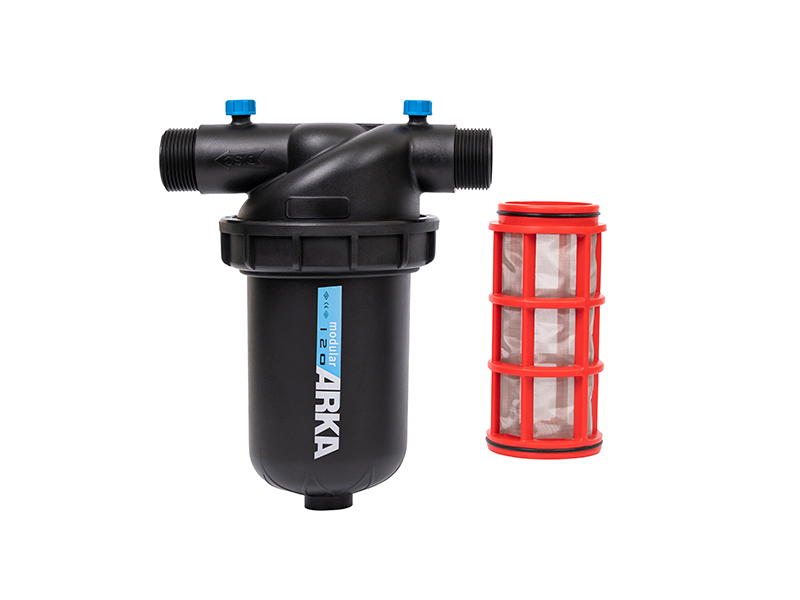
The primary advantage here is the massive filtration surface area. A larger screen means the unit can trap a substantially higher volume of debris before the pressure differential reaches critical danger levels. Specifically, the perpendicular orientation allows for excellent fluid dynamics in large-diameter pipes. For instance, integrating a commercial-grade T-type screen filter like the F40TSX 1-to-2-inch plastic series provides a rugged 120-mesh barrier capable of handling intense agricultural flow rates. These units are engineered from durable polymers to resist chemical corrosion while providing the surface area necessary to sustain long, uninterrupted irrigation cycles. They are the undeniable industry standard for primary field filtration.
In contrast, this housing is engineered with the internal element positioned diagonally to the main axis of the pipeline. This creates a compact, streamlined profile resembling the letter Y.
Because the mesh sits at an angle, water is directed smoothly through the housing with minimal turbulence. While the overall surface area is generally smaller than its T-shaped counterpart, a Y-type screen filter is highly efficient at handling moderate debris loads in confined spaces. They are exceptional for tight valve boxes and secondary filtration zones where bulky housings simply will not fit. Furthermore, the angled flush port aligns perfectly with gravity when installed vertically, making them highly versatile for complex manifolds.
A poorly executed installation can cause the housing to leak, crack under intense pressure, or fail to capture particulates entirely. Follow these practical engineering steps to ensure a hydraulically sound setup.
Before touching a PVC saw or threading tool, verify that the entire pipeline network is completely depressurized and the main water source is locked out. Safety is paramount when manipulating high-pressure agricultural lines.
Next, confirm your sizing. The inlet and outlet ports should ideally match the exact diameter of your pipeline. If your pipe is larger or smaller, you must acquire the appropriate PVC or high-density polyethylene reducing bushings. Never attempt to force mismatched threads together. Dry-fit all components to ensure adequate physical clearance, leaving enough room for your hands to comfortably unscrew and remove the cartridge for future maintenance.
This is arguably the most critical phase of the installation process. Every unit is engineered to process water in one specific direction, typically from the inside of the cylinder to the outside, or vice versa.
Locate the directional arrow prominently molded or printed on the exterior of the housing. You must install the unit so that this arrow points in the exact same direction as the water flow. Installing it backward is a notoriously common and expensive mistake. Reversed flow pushes debris against the wrong side of the mesh, rendering the flush valve useless, and the inverted hydraulic pressure can physically crush the stainless steel element.
Most agricultural units utilize standard male or female pipe threads. To ensure a watertight seal without fracturing the equipment, proper thread sealing techniques are mandatory.
Apply four to six wraps of high-quality Teflon tape to all male threads. Wrap the tape clockwise so it does not unravel when screwed into the female port. Avoid using liquid pipe dope on plastic housings, as certain chemical solvents can degrade the polymer over time. Hand-tighten the fittings until snug, then use a strap wrench to apply one final gentle quarter-turn.
Even with the most precise installation, your system remains highly vulnerable during its initial startup phase. The period immediately following construction introduces unique risks that require strict adherence to initial flushing protocols.
During the assembly of pipelines, foreign materials inevitably enter the network. These materials include PVC shavings from sawing, excess chemical cement, soil introduced during trenching, and metallic dust from galvanized fittings. If the system is pressurized and immediately directed into the lateral lines without a preliminary flush, this concentrated mass of construction debris will instantly overwhelm your newly installed screens.
More critically, if this debris reaches the lateral lines, it will permanently occlude the microscopic labyrinths of your drip emitters. Implementing the first flush rule ensures that the mainlines and internal housings are entirely purged of anthropogenic debris, establishing a clean baseline for standard operation.
Executing a manual flush requires a sequential approach to ensure operator safety. The process relies on fluid dynamics to dislodge accumulated particulates.
First, ensure the irrigation pump is active and operating at its standard baseline pressure. Flushing a depressurized system is completely ineffective. Next, close the main isolation valve located immediately downstream. This forces the entire volume of incoming water to remain within the housing, maximizing internal turbulence. Gradually open the manual ball valve located at the base of the housing. Direct the expelled water onto a high-visibility surface and observe the effluent. Continue this process for fifteen to sixty seconds until the water runs crystal clear, then slowly close the flush valve to re-pressurize the housing.
Relying on visual inspections or rigid calendar schedules is an inefficient approach to water management. Because water quality fluctuates based on environmental factors, operators must utilize empirical data to determine when intervention is necessary.
The most reliable diagnostic tool is the measurement of differential pressure. This requires installing two calibrated pressure gauges: one positioned on the inlet port and one on the outlet port.
When the screen is brand new, both gauges should read nearly identical pressures. As organic matter and silicates coat the inner surface, water struggles to pass through. This restriction forces the pump to work harder, resulting in higher pressure at the inlet and lower pressure at the outlet. As a strict agronomic standard, when the pressure differential reaches seven to ten PSI, a manual flush is immediately required. Operating beyond this threshold risks structural collapse of the cartridge.
If your system requires continuous exhausting cleaning, or if emitters are clogging despite regular maintenance, your current mesh size is likely improperly specified. The mesh rating refers to the number of openings per linear inch. A higher number indicates finer filtration.
For example, 120 to 150 mesh is absolutely mandatory for delicate drip tape. Conversely, 80 mesh is suitable for large impact sprinklers that easily pass larger particles. If you utilize an 80-mesh screen for a drip system drawing from a pond, you will experience rapid emitter failure and must upgrade to 120-mesh immediately. Conversely, using a 150-mesh screen on a system that only requires 80-mesh traps unnecessarily microscopic particles, leading to frustrating rapid blinding of the screen.
For sprawling commercial operations or systems drawing from heavily contaminated surface water, manual cleaning quickly becomes a labor liability. If pressure gauges dictate daily cleaning, upgrading to an automated flushing system is a highly lucrative investment.
These smart systems utilize electronic differential pressure switches. When the controller senses that the pressure drop has reached the setpoint, it automatically triggers a hydraulic solenoid valve. This briefly opens the flush port to the atmosphere, activating a specialized suction scanner that vacuums debris from the screen without requiring the main irrigation flow to be shut down.
Proper placement of your filtration hardware is the undeniable backbone of a reliable, high-yielding agricultural setup. Strategic positioning ensures system longevity, drastically minimizes pressure loss, and protects sensitive micro-emitters from devastating clogs.
Whether you opt for a high-capacity T-shape or a space-saving Y-shape, always verify the flow direction during assembly. Strictly adhere to the first flush rule before making your final field connections. By actively monitoring pressure differentials and selecting the precise mesh size for your specific crops, you transform a vulnerable water network into an efficient, self-sustaining asset. Take the time to evaluate your water source and pipeline architecture today to optimize your filtration strategy for the seasons ahead.
Ready to upgrade your agricultural water management? Visit Arka Irrigation to explore our complete line of robust filtration solutions, including the high-performance F40TSX T-Type Plastic Screen Filters, and find the exact specifications to protect your valuable crop investments today.
Yes, vertical installation is functionally acceptable and often necessary in confined agricultural pump houses or complex manifold setups. Y-shaped housings are particularly well-suited for vertical orientations. However, a strict engineering rule applies: the unit must be installed with the flush valve pointing downward toward the ground. This orientation allows gravity to assist in the concentration and subsequent expulsion of heavy particulates during the flushing process.
The distinction lies primarily in the physical mechanism of particle capture. A screen utilizes a two-dimensional, single-layer barrier such as woven stainless steel to intercept debris on its surface, making it highly effective for capturing hard inorganic particulates like sand and pipe scale. Conversely, a disc filter utilizes three-dimensional, depth-filtration mechanics via tightly stacked, grooved plastic rings. Disc variants excel at trapping soft deformable organic matter such as algae and biological slime because the deep grooves prevent the organic matter from being extruded through the barrier under high pressure.
Optimal placement requires a tiered, multi-stage strategy rather than a single point of interception. For comprehensive protection, the primary heavy-duty unit must be placed immediately downstream of the main water pump to protect the mainline infrastructure from large destructive debris. However, secondary localized units should also be installed immediately upstream of individual zone control valves or at the specific connection points of lateral drip lines to catch residual micro-particulates.
There is no universal chronological schedule for maintenance. It is entirely dependent on real-time fluid dynamics and your specific water quality. If you draw from a highly turbid surface pond susceptible to algal blooms, it may require flushing multiple times per day. If utilizing a deep cased aquifer, monthly cleaning may suffice. The only objective method to determine cleaning frequency is by monitoring the differential pressure across the housing and initiating a flush whenever the pressure drop reaches seven PSI.
For standard precision drip tapes and micro-emitters, a 120-mesh to 150-mesh screen is considered the absolute industry standard. This translates to filtering out particles larger than 100 to 130 microns. Using a coarser mesh allows fine silt to enter and permanently block the microscopic flow paths inside the emitters.
When a filter is brand new or freshly cleaned, the acceptable pressure drop across the housing should be minimal, typically between one to three PSI. If you record a pressure drop higher than this on a clean filter, it strongly indicates that the unit is physically undersized for your pump flow rate, and you need to upgrade to a larger housing to prevent severe hydraulic restriction.


