
Views: 0 Author: Site Editor Publish Time: 2026-11-03 Origin: Site


Imagine opening a mainline valve only to discover your field is bone dry because clogged emitters have ruined another irrigation cycle. Landscapers and agricultural professionals often face a grim reality. Drawing raw water from open canals means battling a relentless influx of heavy silt, aggressive algae, and floating organic debris. When unfiltered canal water enters your lines, it swiftly blocks delicate irrigation components. It accelerates pump impeller wear. Ultimately, it devastates costly crops.
As a frontline defense, a robust screen filter system offers a highly efficient physical barrier capable of handling severe particulate loads without compromising water delivery. In this comprehensive guide, we will explore how these mechanical mechanisms perform under harsh conditions, detail the various configurations available, and help you select the exact setup required to safeguard your agricultural or landscaping investments.
Recent agricultural engineering data highlights a critical shift in raw water management. Rising global temperatures have triggered increasingly aggressive algae blooms in open canals. Furthermore, erratic rainfall patterns frequently lead to sudden, massive spikes in suspended sediment. Relying on outdated or undersized filtration is no longer commercially viable. Modern engineering now demands high-efficiency, precision-molded filtration systems that minimize pressure loss while maximizing uptime. Upgrading to advanced polymers and optimized mesh geometries is rapidly becoming the industry standard for operational survival.
Open canal water presents a highly dynamic and unpredictable filtration challenge. Unlike stable municipal water or deep well sources, canal water is directly exposed to harsh environmental elements, unregulated agricultural runoff, and shifting weather patterns. Consequently, the water quality fluctuates dramatically based on seasonal transitions, sudden heavy rainfall events, and upstream industrial or farming activities.
The primary contaminants found in dirty canal water typically fall into three distinct categories. First, suspended inorganic solids such as abrasive silt, dense clay, and fine silica sand are picked up as water aggressively moves across the canal bed. Second, organic matter like algae, decaying leaves, twigs, and aquatic weed fragments multiply rapidly in sunlit, nutrient-rich open waters. Finally, agricultural runoff introduces complex chemical mixtures of fertilizers bound to biological debris. Treating this chaotic water profile requires a robust physical barrier capable of handling sudden, extreme spikes in particulate load without causing immediate system failure.
Operating an irrigation or industrial water network without adequate filtration inevitably leads to cascading mechanical failures. When dirty canal water bypasses a proper treatment stage, suspended solids travel directly into sensitive downstream equipment.
In agricultural settings, sand and silt quickly clog the microscopic labyrinths of drip irrigation tapes and micro-sprinkler heads. This blockage results in uneven water distribution. Localized field droughts follow. Ultimately, crop yields plummet. Abrasive particulates also act like liquid sandpaper, causing accelerated wear and tear on pump impellers, brass valves, and rubber seals. The financial impact is highly measurable. Operators face surging labor costs for manual unclogging, frequent replacement of destroyed irrigation components, and devastating operational downtime during critical, time-sensitive watering windows.
At its core, screen filtration operates on the straightforward principle of surface interception. As dirty canal water enters the pressurized filter housing, it is forced to pass through a rigid, precisely woven mesh screen. These screens are typically constructed from high-grade, corrosion-resistant stainless steel or durable synthetic polymers.
This mesh acts as an absolute physical barrier. Water molecules and dissolved nutrients pass through the microscopic pores effortlessly, while particulate matter larger than the specific pore size is trapped directly on the inner surface of the screen cylinder. As debris accumulates, it forms a dense filter cake. While this cake can ironically help trap even finer particles, it simultaneously restricts water flow. This leads to an increasing pressure differential between the inlet and outlet. This mechanical interception reliably protects sensitive downstream emitters, ensuring they only receive water carrying particles small enough to pass safely through their internal flow paths.
Understanding the mathematical relationship between mesh size and micron rating is essential for evaluating filtration performance. The mesh number refers to the exact number of woven openings per linear inch of the screen. Therefore, a higher mesh number indicates more, but significantly smaller, openings. Conversely, a micron is a metric unit of length measuring the actual physical size of the opening. A smaller micron rating translates to much finer filtration.
To effectively treat canal water, engineers must match the micron rating to the specific tolerance of their downstream equipment. Below is a standard reference table detailing common agricultural filtration degrees.
| Mesh Size | Micron Rating | Typical Canal Water Application |
|---|---|---|
| 40 Mesh | 400 Microns | Pre-filtration for heavy debris, large impact sprinklers. |
| 80 Mesh | 200 Microns | Standard agricultural sprinklers, moderate sand removal. |
| 120 Mesh | 130 Microns | Micro-sprinklers, standard greenhouse drip irrigation lines. |
| 150 Mesh | 100 Microns | Precision drip tape, environments with heavy algae presence. |
| 200 Mesh | 75 Microns | Ultra-fine filtration, foggers, and delicate misting systems. |
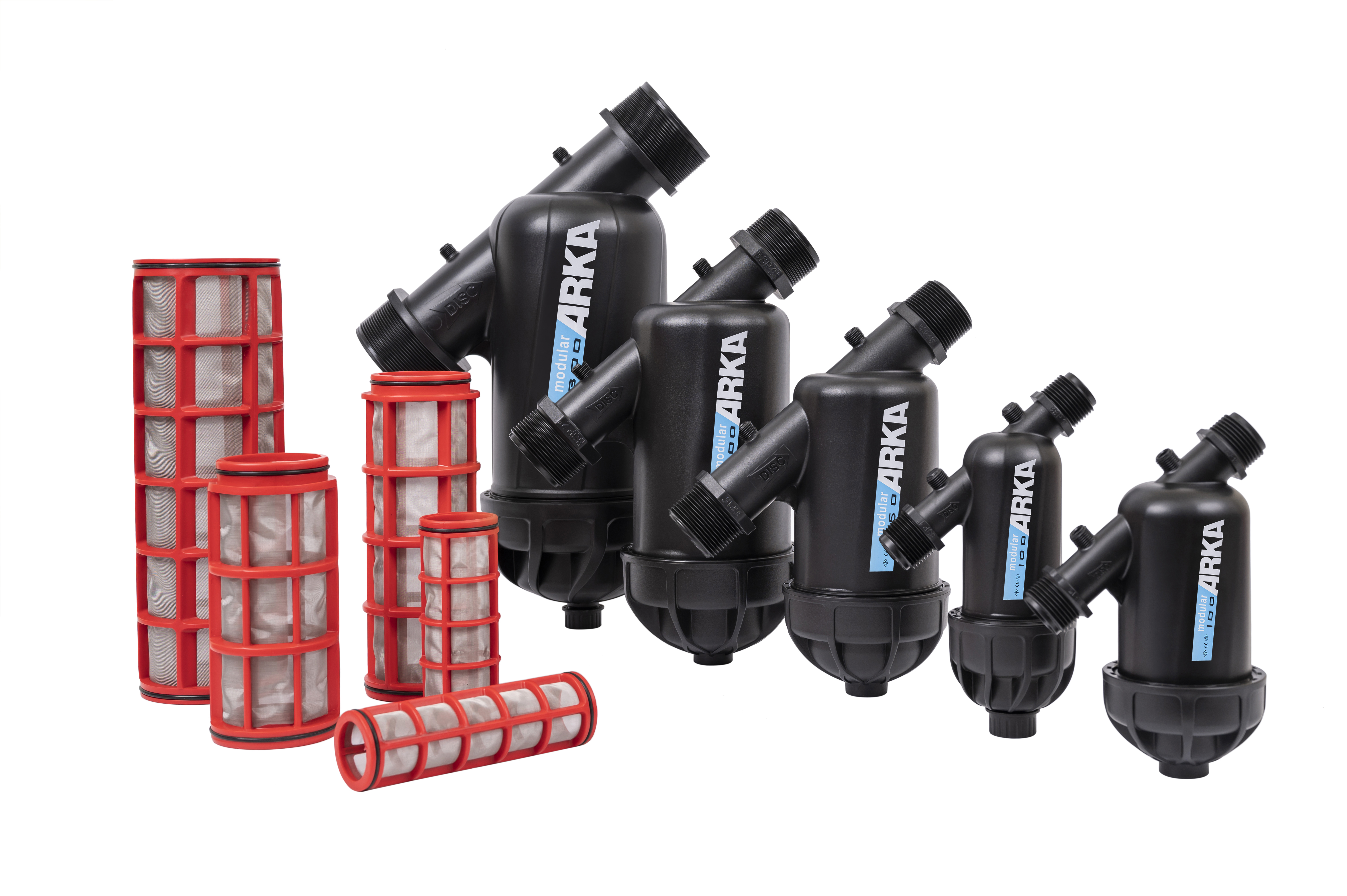
When evaluating operational performance, a unit's ability to manage suspended inorganic solids like sand and silt is the primary metric. Stainless steel screens excel in these aggressive environments due to their inherent resistance to the abrasive nature of silica sand. As turbulent water flows through the housing, heavy sand particles are stopped instantly at the metal barrier.
However, in canal water burdened with extreme sand loads, a standalone screen may become rapidly overwhelmed, requiring frustratingly constant flushing cycles. In such empirical scenarios, best engineering practices dictate installing a centrifugal sand separator upstream. This separator utilizes centrifugal force to spin out up to 90 percent of heavy solids before they ever reach the mesh, leaving the screen to manage only the remaining fine silt. This dual-stage approach dramatically optimizes the overall performance and lifespan of the entire pumping system.
Organic matter poses a distinctly different mechanical challenge than inorganic sand. Algae, a notoriously common contaminant in sunlit, stagnant canals, is soft, sticky, and highly malleable. Under high pump pressure, gelatinous clumps of algae can be extruded or squeezed directly through the pores of a mesh. Alternatively, they can quickly plaster themselves across the entire surface, causing a rapid failure phenomenon known as blinding.
Treatment performance against algae depends heavily on the total open area of the screen combined with the water flow velocity. If the flow rate is too aggressive for the screen surface area, algae will blind the mesh in a matter of minutes. To combat this, systems drawing high-algae canal water must be deliberately oversized. Providing a larger screen surface area distributes the organic load more thinly. This slows the velocity per pore and often necessitates automated brushing mechanisms to maintain continuous, uninterrupted operation.
Recent industry analysis on agricultural water treatment indicates a significant shift toward smart irrigation management. As facility managers abandon manual guesswork, the current operational trend heavily favors integrating continuous differential pressure monitoring.
The most objective indicator of a filter's health is this pressure drop, measured precisely across the inlet and outlet of the unit. When the mesh is pristine, the pressure loss is minimal, typically 1 to 3 PSI. As dirt accumulates, the open area shrinks, forcing the same volume of water through fewer holes. This bottleneck violently increases the pressure drop. If this metric exceeds the manufacturer recommended threshold, flow efficiency plummets, forcing the pump to work harder and consume excessive electricity. Ignoring extreme differential pressure can physically tear the stainless steel mesh. Therefore, modern performance evaluation requires continuous, data-driven observation to trigger timely maintenance before catastrophic failure occurs.
For secondary filtration zones or smaller agricultural offshoots, the Y-type screen filter remains an undisputed industry standard. Named for its distinctive Y-shaped molded body, this unit directs incoming water through a cylindrical mesh cartridge positioned at a strategic angle to the main flow path.
The primary advantage of this configuration is its straightforward, highly cost-effective design. Premium models manufactured from reinforced engineering plastics offer exceptional durability against agricultural chemicals and UV exposure. They introduce minimal friction loss when clean and boast a structurally robust casing. Moreover, maintenance is exceptionally accessible. An operator can simply unscrew the cap at the bottom of the housing, extract the screen cartridge, and manually rinse away canal debris with a hose. This makes it an ideal, pragmatic choice for field stations that do not experience heavy, continuous organic loads.
When an irrigation network draws its water directly from a primary canal intake, standard-sized housings create immediate, crippling bottlenecks. Primary pump stations demand a large flow screen filter to successfully process hundreds of gallons per minute without inducing severe pressure drops.
These massive, industrial-scale units feature vastly expanded screen surface areas. High-capacity models are specifically engineered to handle flow rates reaching 20 to 25 cubic meters per hour while maintaining precise 120 mesh filtration. By drastically increasing the available filtration area, the velocity of the water passing through any single microscopic pore is significantly reduced. This slower, controlled velocity prevents soft organics from being forcefully extruded through the mesh and greatly extends the operational time between cleaning cycles. For heavy-duty canal water extraction, specifying a high-capacity unit is a fundamental engineering requirement to maintain hydraulic equilibrium across the entire farm.
The method chosen to clean accumulated dirt directly impacts labor overhead and daily operational efficiency. Canal water extraction systems can be equipped with three distinct operational mechanisms.
Manual systems require the physical depressurization and opening of the housing to remove and wash the screen. They are best suited for low debris loads, small acreage, and secondary filtration zones where labor is readily available. Semi-automatic systems allow the operator to turn a mechanical crank or open a flush valve to clean the screen using internal brushes or nozzles, all without opening the housing. Fully automatic systems utilize electronic sensors to trigger self-cleaning cycles using vacuum scanners or rotating brushes without ever interrupting the main water flow. This is the gold standard for high debris canal water, large commercial mainlines, and remote pump stations.
When discussing raw water extraction, the conversation often leans heavily toward massive agricultural operations. However, residential and commercial properties situated adjacent to open canals frequently tap into this free resource to drastically reduce municipal water bills. While the scale of the operation decreases, the fundamental hydraulic challenges of high turbidity, suspended solids, and biological contaminants remain absolutely identical.
Using untreated canal water for property landscaping introduces immediate risks to aesthetic infrastructure. A sudden summer rainstorm can increase the canal silt load exponentially in a matter of hours. For property managers and homeowners, integrating a reliable garden filtration setup is the critical first step in safely converting raw, murky canal intake into usable, clean irrigation water that will not destroy lawn sprinklers.
Modern landscape designs heavily favor intricate drip irrigation and micro-sprinklers due to their superior water efficiency and targeted root-zone delivery. Specifically, the emitters on these aesthetic systems feature microscopic flow paths, often as narrow as half a millimeter in diameter. Even a minor accumulation of canal silt or a single strand of algae can permanently blind these emitters, leading to localized plant death and expensive replacements.
To mitigate this costly damage, a compact inline screen filter is typically installed immediately after the residential intake pump. For most landscape drip lines, a filtration degree of 120 mesh is the accepted industry standard. This specific sizing offers the perfect operational balance. It is fine enough to intercept the grit that causes blockages, yet porous enough to allow sufficient residential water flow without suffocating the pump. By implementing this targeted defense, landscapers can safely utilize cost-effective canal water while maintaining precise hydraulic performance.
When engineering a solution for dirty canal water, professionals frequently compare screen technology against disc filtration. While both are widely utilized, they operate on fundamentally different physics.
Screen units rely entirely on surface filtration. Contaminants larger than the pore size are trapped strictly on the flat surface of the mesh. This straightforward design makes them exceptionally efficient at stopping hard, rigid particles like sand, gravel, and pipe scale. In contrast, disc filters utilize depth filtration. They consist of hundreds of stacked, grooved plastic rings tightly compressed together. As water navigates the microscopic intersections of these grooves, debris is trapped throughout the three-dimensional depth of the stack. This makes disc filters superior at capturing soft, deformable organic matter, such as heavy algae slime.
However, disc filters are notoriously more complex to clean manually and require significantly higher pressure to backwash effectively. For standard canal water featuring a balanced mix of sand and moderate organics, surface screens remain the more cost-effective and maintenance-friendly choice.
Sand media filters represent the heavy-duty, industrial tier of depth filtration. In these systems, water percolates through massive steel tanks filled with deep beds of crushed silica sand or basalt, which traps immense quantities of organic matter and ultra-fine suspended solids.
While sand media tanks offer unparalleled clarity for canals suffering from severe, year-round algae blooms, they come with debilitating logistical drawbacks. They demand a massive physical footprint, require substantial capital investment, and consume vast amounts of clean water during lengthy backwash cycles. Conversely, a standard screen setup is highly compact, requires minimal backwash water, and operates efficiently on much lower pressure gradients. For the vast majority of users who do not face extreme sludge-like organic loads, screen filtration provides the most pragmatic and economically viable particulate removal solution.
The operational lifespan and efficiency of any water treatment equipment are directly correlated with the strictness of its maintenance regimen. Canal water, armed with its abrasive sand and sticky biological matter, can rapidly degrade neglected hardware. Establishing a routine cleaning schedule is non-negotiable.
For manual systems, operators should vigilantly monitor the pressure differential. A pressure drop exceeding 5 to 7 PSI indicates that the mesh is becoming blinded and requires immediate flushing. To safely clean a manual unit, the operator must first shut off the primary pump and close isolation valves to depressurize the line. After draining residual water, the internal cylinder is extracted. It is crucial to rinse the mesh from the outside in, which is the reverse direction of normal flow, using a high-pressure hose to properly dislodge wedged particles. For stubborn calcification or baked-on algae, soaking the element in a mild acidic solution, followed by gentle brushing with a soft-bristle nylon brush, is highly effective.
Canal water frequently transports sharp, high-velocity silica sand that acts as a destructive abrasive. Over time, this constant friction can cause micro-abrasions or outright snap the microscopic wires of a stainless steel weave.
During every routine cleaning cycle, operators must visually inspect the cylinder against a strong, direct light source. Even a single ruptured pore or a slight separation of the mesh from its structural plastic ribs compromises the entire treatment process. A torn barrier offers zero protection, allowing damaging particulates to freely bypass the filter and trigger catastrophic downstream clogging. If any deformation, tearing, or wire separation is detected, the cartridge must be discarded and replaced immediately.
For agricultural and landscaping systems located in regions that experience freezing winter temperatures, proper off-season winterization is vital to protect your investment. Water left inside a sealed housing will expand violently as it freezes, easily shattering heavy-duty plastic bodies or permanently warping metal components.
At the conclusion of the irrigation season, the entire assembly must be completely drained. The internal element should be removed, thoroughly cleaned with chemicals to prevent trapped organic matter from rotting or calcifying over the winter, and stored in a dry, temperature-controlled environment. Additionally, operators should inspect all rubber O-rings and sealing gaskets. Applying a thin layer of silicone-based lubricant to these seals before winter storage prevents them from drying out, cracking, or losing their elasticity. This guarantees a watertight, leak-proof seal when the system is finally recommissioned in the spring.
Selecting an inadequately sized unit guarantees operational failure and endless frustration. The procurement process must be driven by strict empirical data regarding your specific water source and hydraulic demands.
First, evaluate the flow rate. The filter maximum flow capacity must comfortably exceed your pump maximum output by at least 20 percent. Forcing too much water through an undersized housing exponentially increases friction loss and accelerates clogging. Second, determine the precise filtration degree. The mesh size must be dictated by the most sensitive component in your layout. Drip tapes require fine 120 mesh to 150 mesh, while large impact sprinklers may only need a coarse 40 mesh to 80 mesh. Choosing a mesh finer than necessary will not improve plant health, it will only result in excessively frequent maintenance cycles. Finally, consider the housing material. High-density engineered plastics offer excellent corrosion resistance against injected liquid fertilizers, while carbon steel housings are strictly required for high-pressure mainlines exceeding standard limits.
Treating dirty canal water does not have to be a daily operational nightmare. By implementing a properly sized, strategically selected physical barrier, you can easily tame high turbidity and organic loads. Investing in high-quality filtration infrastructure prevents catastrophic equipment failure and costly mid-season downtime.
Procuring hardware from established manufacturers ensures you have access to accurate performance data, reliable warranties, and readily available replacement parts. We highly recommend exploring the comprehensive range of robust filtration solutions at ARKA Irrigation. Whether a high-capacity mainline unit is handling heavy agricultural demands, or a compact inline setup is ensuring safe residential irrigation, ARKA provides the precision-engineered hardware that stands as your ultimate defense. Assess your current water quality metrics today, and upgrade your filtration setup to secure the future of your irrigation network.
Yes, a properly sized mesh can effectively trap clumps of algae. However, because algae is soft, gelatinous, and sticky, it can rapidly blind the microscopic pores of a standard screen under high pump pressure. For canals suffering from severe, persistent algae blooms, utilizing a fully automatic self-cleaning unit, or installing a depth-based disc filter as a pre-treatment stage, is highly recommended to prevent the need for constant manual scrubbing.
This specific angled geometry is perfectly optimized for low to medium flow rates. It is an excellent, cost-effective choice for secondary filtration further down the irrigation mainline, isolated agricultural zones, and residential landscaping setups. Operators heavily favor this design because the internal element can be accessed, extracted, and manually cleaned within minutes without ever having to dismantle the surrounding pipe infrastructure.
The required cleaning frequency is entirely dependent on the real-time dirt load of your specific canal. During seasonal transitions, heavy rainstorms, or high summer algae blooms, manual filters may require daily or even twice-daily cleaning. The most accurate, empirical method to determine cleaning intervals is to monitor the pressure gauges. A pressure drop of 5 to 7 PSI across the housing indicates it is time to flush the system.
A large capacity unit is engineered with a significantly larger internal surface area and expanded inlet and outlet ports. This expanded internal geometry allows a massive volume of water to pass through the mesh without causing a restrictive, energy-wasting pressure drop. They are absolutely essential at primary pump stations drawing directly from the canal to prevent system-wide bottlenecks.
Drip irrigation emitters feature microscopic, intricate pathways that are highly susceptible to clogging from fine canal silt and micro-organics. To ensure long-term reliability and uniform water distribution, a finer filtration degree is mandatory. A 120-mesh to 150-mesh screen is the universal industry standard for protecting drip tapes and delicate micro-sprinklers from devastating particulate blockages.
Most high-quality polymer screen filters are engineered to withstand operating pressures between 8 bar and 10 bar, which translates to roughly 115 to 145 PSI. However, pressure ratings depend heavily on the housing material and wall thickness. Always verify the manufacturer specifications before installing a unit on a high-pressure mainline.
The clearest indicator of an oversized pump or an undersized filter is a rapid, extreme pressure drop across the housing immediately after cleaning. If the differential pressure exceeds 10 PSI while the mesh is completely clean, the water velocity is too high. This hydraulic imbalance will quickly tear the stainless steel mesh and cause severe cavitation in your pumping system.


