
Views: 0 Author: Site Editor Publish Time: 2026-10-29 Origin: Site


Few things are more frustrating for a farm manager than watching crops wither because clogged drip emitters restricted the water flow. When untreated dirty water enters your main lines, it causes uneven watering and triggers costly operational downtime. Ultimately, this threatens your entire bottom line. Setting up a reliable defense mechanism solves this headache before it ever starts.
In this comprehensive guide, we break down the different technologies available on the market today. By understanding the distinct mechanical principles behind each option, you will be equipped to choose the exact hardware your infrastructure needs to run efficiently. This proactive approach saves you both time and intensive manual labor in the long run.
Recent industry shifts toward precision agriculture and worsening global water scarcity mean growers are relying heavily on ultra-efficient micro-irrigation. Modern emitters demand exact volumetric precision rather than rugged durability against debris. Consequently, untreated water is no longer a viable option.
Implementing a robust irrigation filtration protocol is a fundamental requirement for any successful agricultural or commercial water management strategy. The primary function of this equipment is to act as the ultimate physical barrier against contaminants that threaten your watering infrastructure.
Preventing Emitter Clogging
Micro-irrigation setups feature extremely narrow flow paths. Even microscopic debris like fine sand, silt, or organic algae blooms can easily accumulate and create stubborn blockages. Once an emitter clogs, the plant it serves immediately suffers from drought stress. A high-quality unit intercepts these particles long before they enter the distribution lines, guaranteeing consistent fluid delivery.
Extending Equipment Lifespan
Water drawn from wells, rivers, or municipal lines frequently carries abrasive inorganic materials. When these jagged particulates travel through your network at high velocities, they act like liquid sandpaper. Over time, this constant abrasion degrades pump impellers, damages delicate solenoid valves, and weakens pipe walls. Removing these abrasive elements at the source significantly extends the functional lifespan of your expensive hardware components.
Improving Water Distribution Uniformity
In agricultural engineering, Distribution Uniformity measures how evenly hydration is applied across a field. A clean and unobstructed network ensures that every single plant receives the precise volume of moisture and fertigation nutrients it requires. High uniformity translates directly to maximized crop yields and uniform plant growth.
Cost Savings and ROI
From a purchasing perspective, this hardware should be viewed as a risk-mitigation investment rather than a sunk cost. The capital spent upfront is substantially less than the cumulative expenses of replacing ruined drip tapes or compensating for lost crop yields due to sudden mechanical failures during peak summer heat.
There is no universal solution in fluid dynamics. The optimal choice depends entirely on your specific environmental conditions and hydraulic requirements. Below is a detailed technical breakdown of the four most common configurations available today.
These are the most widely utilized devices in the industry due to their straightforward design and reliable daily performance.
These units offer a more advanced three-dimensional approach. They perfectly bridge the gap between simple surface meshes and complex media tanks.
For operations drawing from challenging open-water environments, these represent the heavy-duty standard of the agricultural industry.
It is important to note that centrifugal separators are technically pre-filters and do not contain a physical barrier.
To make an informed purchasing decision, it is crucial to compare these technologies side-by-side based on objective engineering criteria.
| Feature or Specification | Screen Filter | Disc Filter | Sand Media Filter |
|---|---|---|---|
| Primary Target Contaminant | Inorganic debris like sand and scale | Mixed fine sand and light organics | Heavy organic algae and silt |
| Filtration Depth | Surface level only | Three-dimensional depth matrix | Deep bed percolation |
| Ideal Water Source | Municipal lines and clean wells | Reservoirs and ponds | Lakes, rivers, and canals |
| Debris Holding Capacity | Low to Moderate | Moderate to High | Very High |
| Maintenance Level | Low if water is clean | Moderate with easy backwash | High requiring automated backwash |
Objective Use Case Scenarios:
Selecting the optimal hardware is a critical pillar of climate-resilient agricultural engineering. Follow this practical framework to determine your exact needs.
The origin of your supply is the single most important variable. Groundwater typically lacks organic matter like algae but frequently contains high concentrations of inorganic particulates. This makes surface meshes and separators ideal. Conversely, open surface water is exposed to sunlight and biological activity. This necessitates the depth provided by plastic rings or crushed silica to handle sticky organic matter.
Hardware must be precisely sized to match the hydraulic demands of your zones. Sizing is a delicate balance of fluid dynamics. If you install an undersized unit, the fluid velocity passing through the restricted area will be too high. This forces debris deep into the pores, making it nearly impossible to clean, while causing a massive pressure drop. Always match the optimal flow range to your pump output and ideally leave a 15 percent buffer.
Precision is quantified using two distinct measurement scales. Mesh refers to the number of openings per linear inch of a screen. A higher number means smaller holes. Micron is a direct measurement of particle size, where a lower number indicates finer purification.
In specialized agricultural forums, there is often confusion regarding ultra-fine specifications. Filtering down to 5 microns will strip out beneficial suspended nutrients and clog almost instantly in an outdoor environment. Unless you are running a highly sensitive hydroponic fogger, stick to the standard 120 to 150 mesh range for standard drip lines.
The final authority on your needs is the manufacturer of your drip tape or micro-sprinklers. Every water-emitting device has a specific orifice size and a corresponding minimum requirement to prevent blockages. Always let the most sensitive component in your zone dictate the grade of the entire network.
Once you determine the correct grade and capacity, the next critical decision involves the operational mechanism. This decision fundamentally impacts your ongoing labor costs.
These are static devices that require human intervention. When the internal element becomes restricted, an operator must manually shut off the supply, depressurize the housing, extract the element, and physically wash it down. They are highly cost-effective and perfectly suited for residential landscapes or commercial operations utilizing exceptionally clean municipal sources.
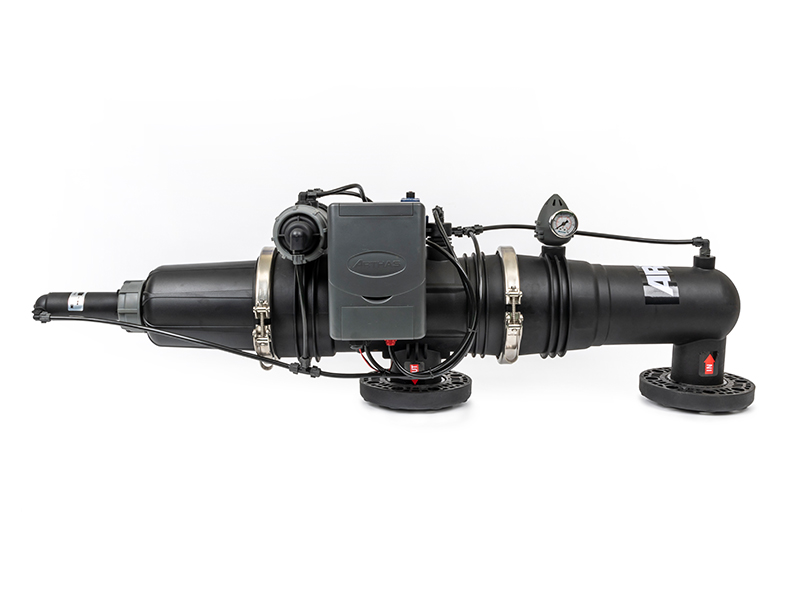
For commercial agriculture and expansive municipal landscapes, an automatic screen filter is a transformative operational upgrade. Take industrial-grade models like the F90ASC 3-inch Auto Backflush Self-Cleaning Filter as a prime example. These advanced units feature a durable wire mesh filter screen and clean themselves without requiring human intervention or shutting down the main flow.
They rely on a pressure differential switch. As debris builds up, the outlet pressure drops. Once the difference reaches a pre-set threshold, the electronic controller triggers a flush cycle. A specialized internal cleaning mechanism rotates across the mesh to vacuum the debris and discharge it. While the initial capital expenditure is higher, the return on investment is rapid. It eliminates the recurring labor costs associated with daily scrubbing and prevents catastrophic yield losses.
Even the most advanced hardware requires a baseline of routine oversight to function at peak efficiency. Implementing a standardized protocol prevents premature degradation.
Routine Inspections and Pressure Gauges
The operational health of any unit is told by its gauges. You should install liquid-filled gauges on both the inlet and outlet manifolds. The difference between these two readings is the pressure differential. Monitoring this metric weekly is the most objective way to know exactly when a manual unit requires scrubbing or if an automated one is functioning correctly.
Cleaning Techniques
When maintaining elements, physical care is paramount. Never use stiff wire brushes, which can warp stainless steel weaves or scratch plastic grooves. Use soft-bristled nylon brushes and a moderate spray. If you are dealing with hard water and mineral scale, soaking the element in a mild acidic solution safely dissolves the calcification. For organic biological slime, a mild chlorine soak is highly effective.
Winterization
In regions that experience freezing temperatures, proper winterization prevents equipment from shattering. Water expanding into ice inside a sealed housing will easily crack high-density plastic or warp steel casings. Always open the flush valves, drain all standing fluid, and ideally remove the internal elements to store them indoors during the off-season.
Choosing the right hardware protects your expensive equipment and ensures consistent fluid delivery for healthy crops. Always match the technology to your specific source, and rigorously check your flow rates and emitter specifications before making a purchase. Good purification stops clogs, saves money on manual labor, and prevents costly repairs during the critical growing season.
If you are ready to upgrade your agricultural water management infrastructure, investing in premium hardware from the start is the smartest decision you can make. Assess your current setup today and explore the industrial-grade solutions available at ARKA Irrigation to find the exact specifications your project demands.
For standard agricultural drip tapes and micro-sprinklers, a filtration level of 100 to 130 microns is generally required. This corresponds to a 120 to 150 mesh screen. Going finer than this is usually unnecessary and will lead to rapid clogging, while going coarser risks allowing debris that can permanently block your emitters.
You must determine the total gallons per minute required by the largest irrigation zone in your system. Once you have that number, select a unit that lists your required flow rate comfortably within its optimal operating range. It is best practice to size the equipment with a 15 to 20 percent buffer to prevent excessive pressure drops as debris accumulates.
Generally, a 120 to 150-mesh screen or disc unit is ideal for drip applications. This specific grade effectively prevents fine inorganic particles and moderate debris from entering the micro-tubing, ensuring that the tiny orifices of pressure-compensating emitters do not become permanently blocked during operation.
Maintenance frequency depends entirely on your water quality and the type of hardware installed. Manual units drawing from open ponds may require weekly or even daily attention during algae blooms. The most accurate way to determine cleaning frequency is by monitoring the gauges. Clean the unit when the pressure differential reaches roughly 7 to 10 PSI. If manual scrubbing becomes a daily burden, upgrading to automated self-cleaning technology is highly recommended.
Yes. While municipal city water undergoes extensive treatment and is safe for human consumption, it is transported through miles of aging underground infrastructure. Along this journey, it frequently picks up pipe scale, rust flakes, Teflon tape fragments, and other microscopic debris. These seemingly minor contaminants can easily accumulate and clog the micro-emitters used in modern networks.
You technically can, but it is usually unnecessary, highly inefficient, and overly expensive for that specific application. Media tanks are designed specifically to trap sticky biological matter found in surface environments. Well water primarily contains inorganic debris like heavy sand and silt. A centrifugal separator followed by a standard mesh unit is a much more effective and economical choice for sandy wells.


