
Views: 0 Author: Site Editor Publish Time: 2026-10-16 Origin: Site


Imagine waking up to find half your lawn parched and yellow. Your irrigation system runs on schedule every single morning, yet dry patches persist. Sputtering sprinkler heads and sudden drops in water pressure frustrate homeowners and landscape professionals alike. More often than not, the culprit remains entirely invisible to the naked eye. Debris, fine sand, and biological matter in your supply line act as silent killers. They gradually ruin distribution efficiency and destroy expensive manifold components.
Implementing a reliable water filtration setup serves as your ultimate safeguard against these microscopic threats. In this engineering guide, you will learn exactly how to navigate the equipment selection process. We will decode sizing metrics, explore different physical architectures, and help you pinpoint the exact mesh rating required to keep your landscape lush and your dynamic pressure perfectly consistent.
Key Takeaways
Understanding the internal mechanics of modern irrigation setups reveals why pristine water is a strict operational requirement. When evaluating the longevity of an outdoor plumbing manifold, the absence of a proper intercepting mechanism is frequently the primary cause of premature component failure.
Recent industry shifts toward water conservation have fundamentally changed landscape engineering. Municipalities now heavily regulate outdoor water usage. This pushes contractors to adopt smart, low-volume micro-irrigation setups. In these high-efficiency systems, even a minor drop in distribution uniformity is unacceptable. Consequently, precise filtration is no longer just an optional upgrade. It is a strict baseline requirement for regulatory compliance and system longevity.
Irrigation components are manufactured with microscopic tolerances. Standard pop-up spray nozzles and rotary heads contain intricate internal gear drives and tiny emission pathways. Even minuscule grains of sand measuring between 50 and 500 microns can easily jam a rotor's internal gears. This grit distorts spray patterns and prevents rubber diaphragm valves from closing completely.
To illustrate, a zone valve will fail to close if a single piece of scale lodges in its rubber seal. This results in continuous leaking. It wastes thousands of gallons of water and causes severe property damage over time. Implementing a robust screen filter acts as your crucial first line of defense. By intercepting particulates before they reach delicate downstream emitters, you ensure that distribution uniformity remains consistently high. This effectively eliminates the localized dry spots that plague unprotected setups.
A widespread misconception in landscape design is that adding any type of inline restriction will inherently ruin your water pressure. In reality, a properly specified and well-maintained unit preserves pressure. The slow buildup of dirt in pipes and nozzles is what actually destroys it.
This dynamic relates directly to the fluid engineering concept of friction loss. As water travels through a PVC pipe, it naturally encounters resistance. If sediment accumulates inside fittings or the sprinkler heads themselves, the internal diameter of the water pathway shrinks. The water must fight harder to push through the restricted space. This leads to a massive drop in dynamic pressure at the emitter. A clean filtering mechanism prevents this systemic debris buildup. It guarantees that the pressure generated at the source reaches your lawn exactly as designed.
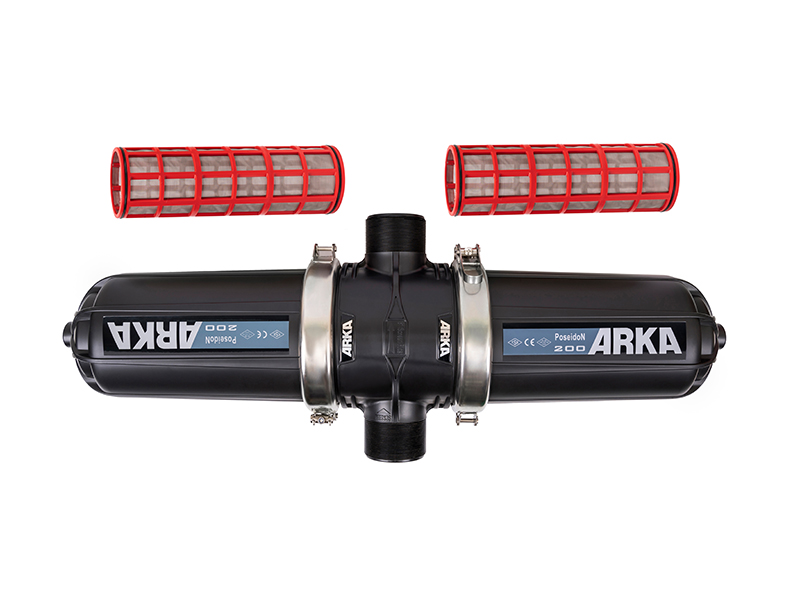
Selecting the correct technology is a foundational engineering decision. Different environmental conditions and debris profiles require specific architectures to perform efficiently without demanding constant manual maintenance.
| Filter Type | Best Suited For | Maintenance Level | Typical Application |
|---|---|---|---|
| Woven Screen | Hard, inorganic debris like sand, rust, and pipe scale. | Low to Medium | Municipal city water and standard residential wells. |
| Compressed Disc | Soft, organic matter like algae, slime, and decaying leaves. | Medium | Surface water from ponds, lakes, and open ditches. |
| Centrifugal Separator | Extremely heavy loads of coarse, abrasive sand. | Very Low | Agricultural wells with severe sediment issues. |
The most widely adopted technology for both residential and commercial irrigation is the traditional woven cylinder. This device features a durable outer housing molded from heavy-duty polymer or machined from stainless steel. It contains a removable cylindrical cartridge. The internal element is typically constructed from a woven stainless steel mesh or a durable polyester net.
These units are highly effective at capturing hard, abrasive particulates. If your source contains suspended sand, gravel, or rust flakes, the rigid nature of the element physically blocks these particles from passing through. They are highly cost-effective, easy to disassemble, and simple to clean with a soft brush.
While woven netting excels at stopping hard debris, it frequently struggles with soft biological matter. Disc architectures elegantly solve this problem utilizing a completely different physical structure. Instead of a single flat layer, a disc unit contains a stack of tightly compressed, color-coded plastic rings. Each ring is etched with microscopic diagonal grooves.
When compressed tightly together, these intersecting grooves create a three-dimensional, deep-filtration matrix. If organic debris like pond algae or biological slime enters the chamber, it becomes trapped deep within the rings. This prevents the slime from smearing across a flat surface and blinding the unit. This specific depth-filtration characteristic makes disc units the superior, non-negotiable choice for surface water extraction.
For extreme environments—particularly agricultural wells that pump remarkably heavy loads of coarse sand—a standard mesh unit will clog too rapidly to be practical. In these demanding scenarios, a centrifugal sand separator is installed as an aggressive pre-treatment stage.
These specialized devices possess no moving parts and no internal screens. They harness the physical velocity of the incoming water to generate a high-speed vortex. The resulting centrifugal force throws the heavier sand particles outward against the chamber wall. The sand spirals down into a collection basin, while the purified water seamlessly exits through the top.
One of the most confusing aspects of purchasing equipment is deciphering the sizing terminology. Selecting the wrong size can either allow damaging debris to pass straight through to your valves, or cause the unit to clog so frequently that it becomes a massive maintenance burden.
Internal elements are universally rated using two different measurement standards: Mesh and Micron. Understanding the inverse relationship between the two is vital for proper specification.
Simply put: a higher mesh number equals a lower micron number, translating to finer particulate capture.
Matching the mesh filter to your specific landscape emitters is critical for balancing system performance and maintenance intervals.
Rotors and Impact Sprinklers: These large-volume emitters feature relatively large nozzle orifices capable of passing small grains of sand without issue. A 40 to 80 mesh rating is ideal here. It catches the large stones that could jam the gear drive while allowing harmless microscopic silt to pass.
Standard Spray Heads: Traditional pop-up spray heads operate with much tighter tolerances. An 80 to 120 mesh rating is highly recommended to prevent the fine nozzles from clogging and distorting the intended spray pattern.
Drip Irrigation: Drip emitters utilize microscopic, maze-like labyrinth pathways designed to release water at a slow trickle. They are incredibly susceptible to permanent clogging. A minimum of a 120 to 150 mesh rating is strictly required to protect a drip layout from rapid failure.
The origin of your water dictates the exact volume and type of debris you will encounter. Designing a resilient plumbing manifold requires source-specific equipment.
Municipal water is chemically pre-treated and generally very clean. It must, however, travel through miles of aging underground infrastructure before reaching your property line. During this long journey, the water frequently picks up pipe scale, calcium deposits, rust flakes from degrading iron mains, or dirt from recent municipal pipe repairs. For standard city water, an 80-mesh element is usually more than sufficient to protect your manifold valves without causing unnecessary friction loss.
Private residential and agricultural wells are notorious for pumping inorganic particulates. Depending on the depth of the well shaft and the surrounding local geology, you may encounter anything from ultra-fine silt to coarse, abrasive sand. Because this is hard, damaging debris, integrating a heavy-duty stainless steel sprinkler filtration setup is the optimal choice. Stainless steel withstands the abrasive scouring nature of sand far better than standard polyester materials.
Drawing water from surface sources introduces heavy, unpredictable organic loads. Seasonal algae blooms, fish waste, and decaying autumn leaves will rapidly blind a standard woven screen. The organic matter smears across the surface and stops water flow entirely within minutes. For surface water extraction, robust depth filtration utilizing a compressed disc unit is strictly recommended to handle the biological burden.
Selecting the correct physical size and flow capacity for your equipment is arguably the most critical engineering decision in the purchasing process. A common, yet catastrophic, misconception among homeowners is that the housing size should simply match the diameter of the PVC pipe. While pipe diameter is a minor factor, the true metric that dictates proper sizing is the volumetric flow rate.
Equipment is universally rated by maximum flow capacity, measured in Gallons Per Minute or cubic meters per hour. To avoid choking your water flow, you must determine the peak demand of your system's largest zone.
You calculate this by identifying the specific landscape zone that uses the most water. Add up the consumption ratings of all the individual nozzles on that line. If a zone contains six large rotor heads, and the manufacturer specifies that each head consumes 3 Gallons Per Minute at 40 PSI, the total flow rate for that zone is 18 Gallons Per Minute. Your unit must process this peak volume effortlessly.
Fluid dynamics dictate that forcing water through a restrictive space aggressively increases its velocity while simultaneously decreasing its pressure. To mitigate this within your plumbing manifold, industry professionals consistently utilize the 20 percent rule.
You should select a unit with a maximum flow capacity that is at least 20 percent higher than your system’s highest requirement. If your maximum zone requires 20 Gallons Per Minute, you need a unit rated for at least 24 Gallons Per Minute. Undersizing forces water aggressively against the internal element. This causes a severe drop in dynamic pressure at the sprinkler heads and accelerates physical degradation.
For instance, commercial-grade options like the Arka F90HS 3-inch H-Type Plastic Irrigation Screen Filter are engineered specifically for high-demand zones. Built from durable reinforced plastic, these specific units handle substantial flow rates while maintaining a 10 bar maximum working pressure. They offer versatile 120-mesh or 130-micron cartridge options. This ensures that even at peak volumetric flow, dynamic pressure remains completely stable across the manifold.
Once you determine the correct mesh size and flow capacity, evaluating the structural features of the housing will dictate its long-term durability and ease of maintenance.
The accumulation of debris inside the lower basin requires regular removal. Standard, entry-level models require you to completely shut off the supply line, unscrew the heavy canister, and manually rinse the internal element by hand.
Units equipped with a dedicated flush valve offer a vastly more efficient alternative. A manual flush valve allows you to simply open a small ball valve while the system remains fully pressurized. The rushing water forcefully ejects the trapped debris out of the bottom port. This cleans the chamber in seconds without requiring any disassembly. For highly contaminated sources, battery-operated automatic flush valves can be programmed to purge the manifold daily.
The structural material of the housing dictates its resilience against environmental factors, UV degradation, and sudden water hammer spikes.
For the vast majority of residential and light commercial applications, housings made from heavy-duty, UV-resistant reinforced polymers are highly effective. They resist chemical corrosion from injected fertilizers beautifully. Conversely, stainless steel housings are engineered for extreme industrial environments. While significantly more expensive, stainless steel completely eliminates the risk of the housing cracking under high-stress static loads.
Every housing unit is manufactured with a strict maximum working pressure rating, typically expressed in PSI or bar. It is absolutely imperative to check your source's static pressure before finalizing your purchase of a durable irrigation screen filter.
High-quality residential units are generally rated for up to 120 or 150 PSI. If your static pressure exceeds the manufacturer's maximum rating, the plastic housing is at a severe risk of fracturing. Always ensure your unit is rated comfortably above your maximum potential static pressure.
Purchasing top-tier equipment is only half the equation. Precise installation and diligent, routine maintenance guarantee consistent flow over the lifespan of your landscape.
The sequence of components in your plumbing manifold is critical for system protection and legal plumbing compliance. As a strict industry best practice, the unit must be installed after the backflow prevention device and the water pump, but before the electronic zone control valves.
Installing it upstream of the zone valves ensures that the sensitive internal diaphragms and solenoids within those valves are completely shielded from abrasive sand. Ensure the unit is installed in a highly accessible location. A spacious, dedicated underground valve box works best. Leave enough physical clearance below the unit to accommodate a bucket for routine flushing.
Even a perfectly sized, premium unit will eventually cause a pressure drop if the element becomes heavily occluded over time. A noticeable reduction in the spray distance of your lawn heads is the primary indicator that the housing requires immediate cleaning.
To safely clean the unit, first turn off the main isolation valve. Next, manually open one of the zone valves for a few seconds to relieve the static pressure built up inside the pipes. Attempting to unscrew a pressurized housing can cause physical injury or strip the plastic threads. Carefully unscrew the lower canister and extract the internal cylinder. Use a soft-bristled toothbrush and a garden hose to gently wash the debris away from the outside in. Never use a wire brush. It will instantly destroy the delicate netting. Finally, inspect the rubber O-ring, apply a dab of silicone grease if it appears dry, and reassemble the unit hand-tight.
Choosing the right equipment ensures your dynamic pressure remains consistent season after season. By carefully matching the architecture to your specific water source, sizing it correctly for your peak flow rate, and selecting the optimal mesh density, you eliminate the guesswork from landscape maintenance. Upgrading your setup with a commercial-grade unit prevents ruined zone valves and eliminates the cost of replacing dead turf. Assess your system's peak flow rate today. Visit Arka Irrigation to explore top-rated, high-efficiency filtration solutions tailored to your specific landscape needs.
A properly sized, clean unit will only cause a negligible pressure drop, typically between 1 and 3 PSI. This minimal friction loss does not negatively impact system performance. An undersized or heavily clogged unit, however, will significantly restrict water flow. This leads to a severe reduction in dynamic pressure at the sprinkler heads.
A screen unit utilizes a woven cylinder of stainless steel or polyester mesh to physically catch hard, inorganic debris like sand, pipe scale, and dirt. A disc architecture uses a stack of tightly compressed, grooved plastic rings to trap soft, organic matter like algae and slime within its depth. This makes the disc style vastly superior for lake or pond extraction.
Maintenance frequency depends entirely on your source and environmental conditions. Systems connected to clean municipal city water typically require a quick inspection just once a season. Setups drawing from sandy agricultural wells, ponds, or open ditches might require you to flush and clean the internal element every few weeks to maintain optimal flow.
Yes, a 120-mesh rating provides excellent, fine particulate capture and is highly recommended for protecting standard pop-up spray heads and sensitive micro-drip lines. If your landscape exclusively utilizes large, high-volume rotor sprinklers, an 80-mesh element is often sufficient and will require much less frequent cleaning.
The most obvious visual indicator of a clogged element is a sudden, noticeable reduction in the spray distance of your sprinkler heads. You may also notice certain sprinkler heads failing to pop up entirely due to low dynamic pressure. If your irrigation pump sounds like it is straining or running hotter than usual, it is likely fighting against a severely restricted, dirty element.
Yes. Even though municipal city water is chemically treated and generally clean, it travels through miles of aging underground pipes before reaching your home. During this transit, the water frequently picks up pipe scale, rust flakes, and dirt from municipal repairs. A basic 80-mesh inline unit is highly recommended to protect your expensive zone valves from this hard, abrasive debris.


