
Views: 0 Author: Site Editor Publish Time: 2026-10-15 Origin: Site


Drip irrigation delivers water and nutrients directly to crop root zones with incredible efficiency. However, this precision technology faces a relentless enemy. When microscopic flow passages become blocked, plants suffer immediate drought stress. Crop yields plummet. Maintenance budgets skyrocket. Whether a system draws from agricultural wells, murky retention ponds, or aging municipal supplies, organic matter and debris can quickly ruin an unprotected network. This is precisely where a high-quality disc filter acts as the ultimate defense mechanism. This guide explores how these robust systems operate, compares them against traditional screen options, and provides practical field insights on selecting the ideal setup.
Recent agricultural engineering trends reveal a massive shift toward ultra-low-flow irrigation. Driven by global water scarcity and stricter environmental regulations, modern farms are deploying emitters that push less than half a liter per hour. These highly advanced, tiny labyrinths demand flawless water quality. Consequently, standard surface screening is no longer sufficient. Industry data shows a rapid adoption of depth filtration across commercial agriculture, as growers recognize that preventing microscopic blockages is far cheaper than replacing miles of ruined drip tape.
To fully grasp the necessity of robust water purification, we must first examine the specific mechanisms that cause micro-irrigation systems to fail. Drip emitters feature microscopic, labyrinth-like flow paths designed to meticulously regulate water output. Unfortunately, these precise passages are highly vulnerable to blockages from various waterborne contaminants.
When suspended inorganic solids breach the irrigation network, physical clogging is the inevitable result. Picture a mid-summer watering cycle drawing from a shallow, aging well. The sudden influx of fine sand, clay, and pipe rust can easily overwhelm a basic mesh. As these particles exceed the micron rating of the emitter internal labyrinth, they lodge tightly within the flow path. Over time, smaller particles accumulate behind the initial blockage, creating a solid plug that completely halts water emission.
Biological fouling is arguably the most complex and frustrating challenge in modern micro-irrigation. Surface water sources, such as open canals and retention ponds, serve as perfect breeding grounds for algae and aquatic bacteria. When this organic matter enters the warm, nutrient-rich environment of a black polyethylene drip line, it thrives. Bacteria excrete extracellular polymers, forming a sticky, slimy biofilm along the inner walls of the tubing. This slime not only restricts flow but acts like glue. It traps smaller inorganic particles and severely compounds the clogging effect.
The primary objective of any drip system is achieving high distribution uniformity. When emitters clog, the entire zone experiences a severe loss of uniformity. Plants at the beginning of a lateral line may become waterlogged, while those at the tail end suffer severe drought stress. The financial impact is highly measurable. Growers face uneven crop maturation, diminished harvest yields, wasted fertigation chemicals, and exorbitant labor costs required to manually walk the fields and replace damaged drip tape.
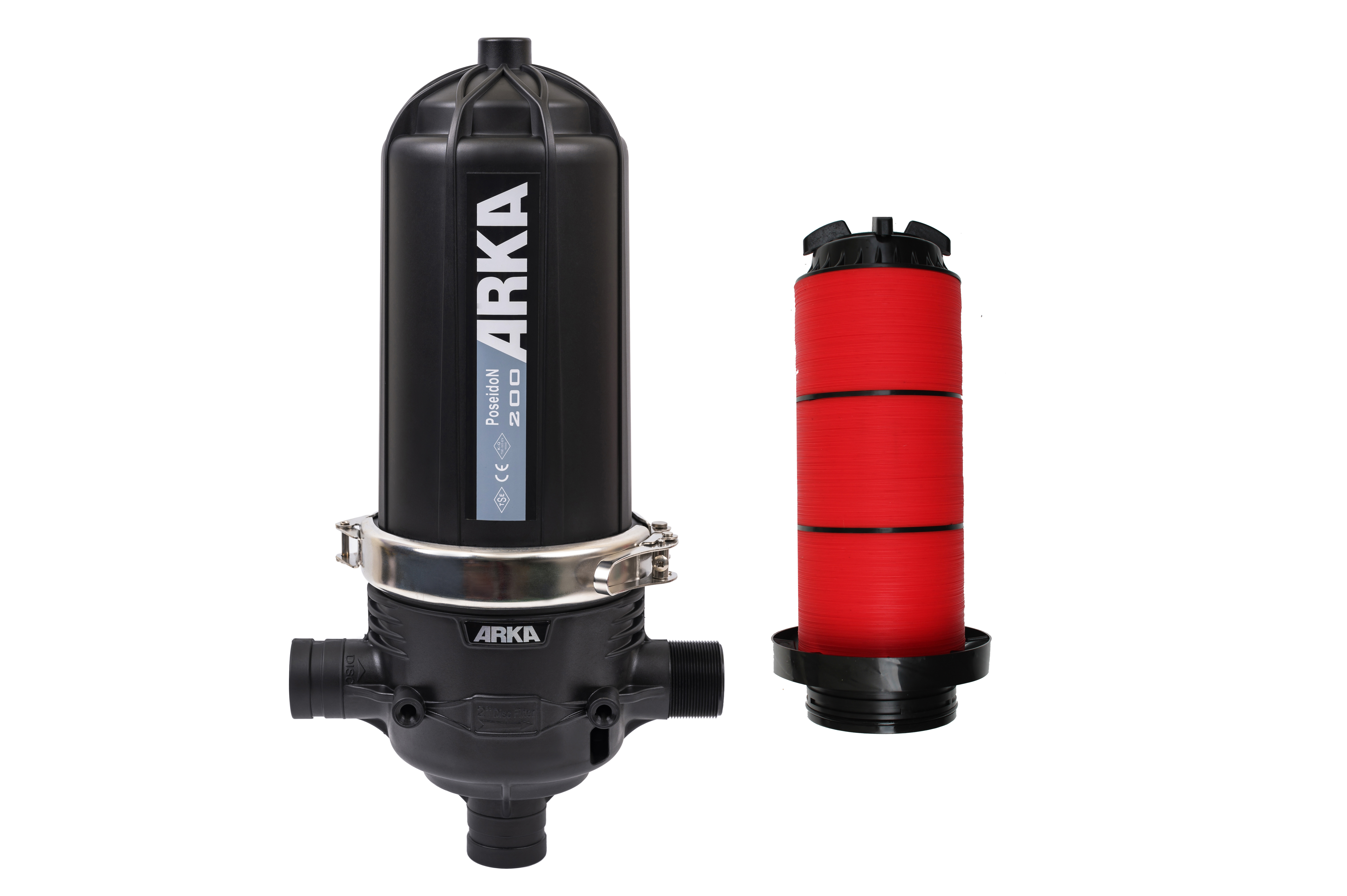
Moving beyond simple surface screening, this technology represents a highly engineered approach to water purification. It is specifically designed to address the unique vulnerabilities of micro-irrigation networks.
The physical structure of these units is both simple and highly effective. They consist of three primary components. First is a rugged outer housing. Second is a rigid central spine. Third is the filter element itself. From an engineering standpoint, a premium irrigation disc filter housing is typically injection-molded from high-density, UV-resistant polyamides. This allows standard industrial models to withstand extreme hydrostatic pressures up to 10 bar in harsh field conditions. Inside, the central spine holds a densely packed stack of synthetic, color-coded rings. A tightening mechanism compresses these rings tightly together during the active filtration cycle.
Traditional screen filters operate on a basic two-dimensional surface filtration principle. Water simply passes through a single layer of woven wire or nylon mesh. If a soft organic particle is pushed hard enough by water pressure, it can easily deform and squeeze right through the holes. By contrast, depth filtration utilizes a thick, three-dimensional porous matrix. Water does not just cross a single plane. It must navigate a tortuous, microscopic maze to reach the hollow center spine. This depth ensures that contaminants have multiple opportunities to be trapped, drastically improving the capture rate of malleable organic matter.
The efficacy of this method relies entirely on precise geometric engineering and fluid dynamics. It is a purely mechanical process, requiring no consumable media like sand or activated carbon.
Each individual plastic ring is manufactured with microscopic, diagonal grooves radiating from the outer edge to the inner rim. When stacked onto the central spine, the grooves of one ring intersect with the grooves of the adjacent ring in the opposite direction. Under mechanical compression, these intersecting grooves form a complex network of microscopic choke points. The specific depth and angle of these grooves dictate the exact micron rating of the filter element.
The actual purification process occurs in multiple stages across the depth of the stacked matrix. As dirty water is forced from the outside of the stack toward the center, large inorganic chunks are immediately blocked at the outer edge. Meanwhile, finer silt and soft biological matter, such as algae, enter the grooves but quickly become wedged deep within the intersecting channels. Because the organic matter must navigate multiple sharp turns, it loses momentum and remains securely locked within the plastic grooves.
During operation, the hydraulic pressure of the incoming water plays a critical role. It compresses the stack tightly, guaranteeing there is absolutely no bypass of unfiltered water. As debris inevitably accumulates within the grooves, the resistance to flow naturally increases. This creates a measurable pressure differential between the inlet and the outlet of the housing. Field engineers use this specific metric to determine exactly when the unit requires maintenance.
Selecting the correct filtration technology requires an objective analysis of your specific water source. While both styles serve the same ultimate purpose, their operational mechanics make them suitable for distinctly different agricultural environments.
| Feature | Screen Filter | Disc Filter |
|---|---|---|
| Filtration Architecture | 2D Surface Mesh | 3D Depth Matrix |
| Best Water Source | Clean well water, municipal supply | Rivers, canals, retention ponds |
| Organic Matter Handling | Poor. Algae extrudes through mesh | Excellent. Algae locks within grooves |
| Durability | Mesh can tear under high pressure | Solid polymer rings resist tearing |
| Cleaning Method | Manual brushing or flushing | Decompression and high-speed spinning |
Screen filters remain highly effective when dealing with relatively clean water sources or purely inorganic contaminants. If your irrigation network draws from a deep, clean aquifer or a municipal supply where the primary threat is coarse sand or pipe scale, a standard screen offers a cost-effective solution. They are straightforward to clean when dealing with hard, non-sticky debris.
When surface water comes into play, depth filtration is the scientifically superior choice. Algae and bacterial slime are incredibly malleable. When a screen begins to clog with pond scum, the rising water pressure simply extrudes the soft material through the mesh, sending it straight into your drip tape. The three-dimensional matrix of stacked grooves physically prevents this extrusion. The intersecting channels lock the organic matter within the depth of the stack, ensuring biological contaminants cannot bypass the element even under high pressure spikes.
For commercial farming operations and large-scale landscaping, manual maintenance creates unacceptable labor bottlenecks. Upgrading to an automatic disc filter resolves this issue entirely. These advanced systems integrate proven depth filtration with hydraulic valves and an electronic controller.
Instead of relying on a human operator to monitor gauges, a differential pressure switch continuously tracks the flow resistance. When debris accumulation causes the pressure drop to reach a predetermined threshold, the system autonomously triggers a self-cleaning sequence.
The self-cleaning cycle is a marvel of fluid engineering that takes mere seconds to complete. First, the automated controller signals a hydraulic valve to reverse position, closing off the dirty water inlet and opening a drainage port. Second, the mechanical pressure holding the stack together is released, allowing the individual rings to decompress and separate slightly. Third, clean water from parallel pods is forced backward through the hollow spine. High-pressure nozzles spray this water outward, causing the loose rings to spin rapidly. This combination of high-velocity jets and centrifugal force aggressively ejects all trapped sand, silt, and organic slime out through the drain manifold. Finally, the stack recompresses, and standard operation resumes.
The primary return on investment for an automated system is immediate labor reduction. Manual cleaning requires personnel to shut down pumps, physically wrench open housings, and scrub elements. Automation ensures the media is cleaned exactly when needed. This prevents the network from ever operating under compromised flow conditions and frees agricultural workers to focus on higher-value agronomic tasks.
Selecting the appropriate drip irrigation filter is not a one-size-fits-all endeavor. The effectiveness of the system depends entirely on matching the hardware specifications to the hydraulic requirements of your network.
Filtration precision is measured in microns or mesh size. Mesh indicates how many openings exist per linear inch, while the micron rating measures the actual physical size of the opening. Premium manufacturers utilize an industry-standard color-coding system to denote these grades. For example, a red element signifies 120 mesh or 130 microns. This is the absolute baseline standard required for protecting standard thin-wall drip tape. Black elements offer 140 mesh or 115 microns for highly sensitive pressure-compensating emitters. Always consult your emitter technical data sheet before making a final selection.
A frequent engineering error in the field is undersizing the housing relative to the maximum flow rate of the system. Forcing excessive water volume through a unit that is too small drastically increases the flow velocity. High-velocity water acts like a ram, driving pliable organic matter so deep into the grooves that the element becomes nearly impossible to clean. Furthermore, it creates a severe pressure drop that overworks your irrigation pump. Always size your filtration capacity at least twenty percent higher than your calculated peak zone demand. For instance, a robust 2-inch industrial model is typically rated to handle flow rates up to 25 cubic meters per hour efficiently.
Even the most advanced technology requires adherence to standard operating procedures to ensure multi-year reliability. Establishing a proactive maintenance routine prevents irreversible fouling and protects your infrastructure investment.
For non-automated setups, regular physical inspection is mandatory. Many small-scale growers rely on a Y type disc filter due to its accessible, easy-to-open design. When the pressure differential reaches 5 to 7 psi above the clean baseline, it is time to act. First, depressurize the irrigation line completely. Never open a housing under pressure. Unscrew the cover, extract the internal spine, and loosen the tightening nut to decompress the stack. Wash the loosened rings thoroughly under a high-pressure hose, spraying at an angle to make them spin. For stubborn dirt, use a soft bristle brush, but strictly avoid wire brushes that will permanently scratch and ruin the precise plastic grooves.
Over time, physical scrubbing simply will not cut through microscopic mineral scaling or baked-on biological biofilms. If you notice the pressure differential remaining stubbornly high even after a rigorous manual wash, a chemical soak is your next line of defense. For hard water calcium or magnesium scaling, submerge the decompressed stack in a mild acid solution, such as ten percent phosphoric acid, until the bubbling stops. For severe biological algae slime, soak the rings in a dilute chlorine solution to oxidize the organic matter. Always wear appropriate personal protective equipment and never mix acid and chlorine treatments together.
A high-quality micro-irrigation network represents a significant financial investment, and it requires robust protection. Without it, the inevitable intrusion of dirt, sand, and algae will quickly cause catastrophic blockages. By utilizing advanced three-dimensional depth filtration architecture, growers can effectively stop this issue at the source. Maintaining perfect water uniformity becomes a streamlined process, saving both immediate time and long-term labor costs. Protect your crops and infrastructure today by exploring premium manual and automated filtration solutions from ARKA. By matching the right industrial-grade hardware to your specific water source, you ensure your farm operates at peak efficiency season after season.
Screen filters use a single layer of stainless steel or plastic mesh, which is ideal for capturing hard, inorganic matter like sand. Conversely, depth filtration uses a stack of tightly compressed, grooved rings. This deep, maze-like structure is vastly superior for trapping soft organic matter, such as algae, which would otherwise squeeze right through a standard single-layer screen under pressure.
The required cleaning frequency depends entirely on your specific water quality and flow volume. For manual systems, you should clean the element when the pressure differential reaches 5 to 7 psi above your clean baseline. If you are drawing water from a highly turbid pond, this could be a daily requirement. Automated systems monitor this pressure drop continuously and handle the cleaning cycle on their own without human intervention.
Most standard agricultural drip irrigation emitters and thin-wall tapes require a 120-mesh filtration degree, which equates to 130 microns, to prevent their tiny internal labyrinths from clogging. This is typically represented by red-colored rings. However, you should always verify the specific minimum filtration requirements provided on the technical data sheet by the manufacturer of your specific emitters.
Yes. In fact, they are highly recommended by agronomists for water sources contaminated with heavy algae loads. The depth of the intersecting grooves captures the soft, slimy organic material efficiently and securely. It prevents the slime from extruding through to the delicate lateral lines, which is a very common failure point when attempting to use traditional surface screens in pond water applications.
When a brand-new or freshly cleaned filtration unit is operating at its designed flow rate, the initial pressure drop should typically range between 2 and 4 psi. If your clean baseline pressure drop is significantly higher than this, it strongly indicates that the housing is undersized for your irrigation pump output and flow velocity.
You should consider upgrading to an automated manifold if your maintenance crew is manually cleaning the elements more than once a week, or if you frequently experience unexpected pressure drops that disrupt your watering schedule. Commercial operations drawing from open surface water sources like rivers or ponds almost always require automation due to rapid, unpredictable algae blooms.


