
Views: 0 Author: Site Editor Publish Time: 2026-10-21 Origin: Site


Are clogged water filters draining your facility budget? Manual scrubbing wastes countless hours. Unexpected system shutdowns halt production entirely. For facility managers and industrial operators, dealing with poor water quality often feels like an endless battle against equipment failure. In this comprehensive guide, we will explore how upgrading to automated filtration technology ends this costly downtime. It transforms a daily maintenance headache into a seamless operation.
Recent market analyses highlight a massive transformation in industrial and agricultural water management. Driven by stricter environmental regulations on wastewater discharge and a persistent shortage of skilled maintenance labor, facilities are rapidly pivoting away from legacy static filtration. Modern operations now prioritize low-water-waste technologies. They demand systems that guarantee continuous production. Relying on cheap but labor-intensive manual filters is no longer a viable business strategy. The focus has shifted to autonomous systems capable of handling unpredictable water sources without human oversight.
Water filtration is a critical utility. However, traditional systems that rely on manual cleaning introduce significant operational drains. These hidden costs quietly erode your bottom line. Understanding these inefficiencies is the crucial first step toward optimizing your facility.
Traditional screen and cartridge filters demand constant human oversight. Picture a heavy rainstorm stirring up river sediment. When water quality suddenly drops, maintenance staff must abandon their primary tasks. They physically intervene. This means shutting off the main water supply and bleeding dangerous system pressure. Then comes the struggle with heavy bolted filter housings. Staff spend valuable time knee-deep in mud on wet mechanical room floors. They manually hose down screens and scrub off stubborn algae. Across a standard operating month, these messy tasks consume dozens of labor hours. That time should be focused on preventative maintenance.
Furthermore, the true financial penalty extends far beyond hourly wages. System downtime is the silent killer of profitability. Every single minute a water system is shut down for filter cleaning, operations cease. In agricultural settings, interrupted micro-irrigation schedules lead to uneven crop watering. This stresses plants and reduces yields. In industrial environments, halting cooling tower circulation causes critical machinery to overheat. Entire production lines are forced to pause. These compounding delays create a severe bottleneck.
Manual handling inherently increases the risk of equipment damage. Traditional stainless steel mesh screens are surprisingly fragile. Repeated manual brushing and high-pressure hosing warp the delicate mesh. Once compromised, oversized debris easily bypasses the filter. This wreaks havoc on sensitive downstream equipment. Consequently, operators find themselves caught in a cycle of frequently purchasing replacement screens. It adds a frustrating recurring expense to the operational budget.
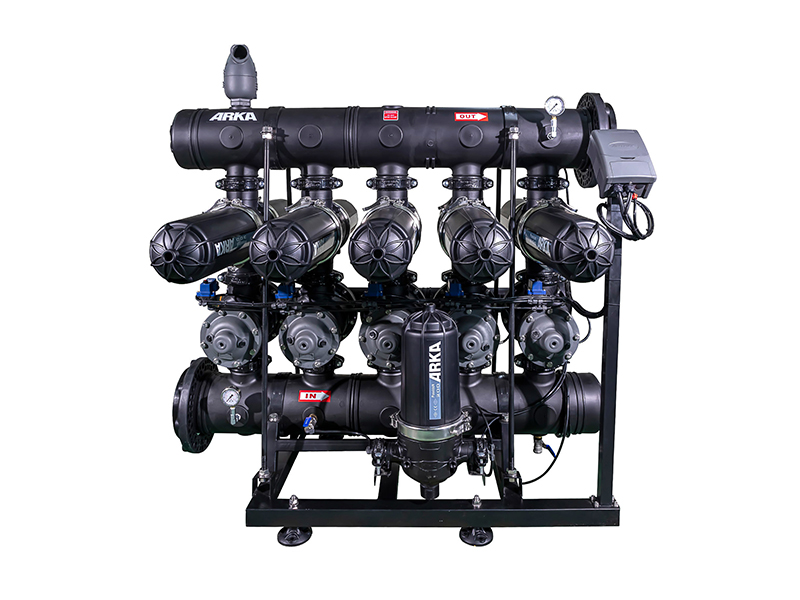
To resolve these glaring inefficiencies, engineers developed a more robust autonomous solution. This technology provides high-capacity particle retention. It executes self-cleaning cycles without a human ever needing to touch a wrench.
At the core of an advanced disc filter system is a specialized filtration element. It is composed of hundreds of synthetic color-coded rings. Each individual disc features microscopic diagonally cut grooves on both sides. When stacked together around a central spine and tightly compressed, the intersecting grooves create a complex matrix. Water is forced to navigate this tight labyrinth. It effectively traps suspended solids, sand, and sticky organic matter deep within the stack itself.
The fundamental advantage of disc technology lies in its unique filtration geometry. Traditional screen filters rely solely on surface filtration. It is a simple two-dimensional plane where debris just blocks the holes. Once that single surface layer is covered, the filter blinds and flow stops entirely. By contrast, disc filters utilize true depth filtration. Because the grooves overlap throughout the entire depth of the compressed disc stack, the system holds a significantly higher volume of dirt. This means fewer interruptions and far more consistent water pressure.
The ability to completely eliminate manual labor relies on a precise physics-driven sequence. The operational cycle is entirely automated.
The system is equipped with a highly sensitive differential pressure switch. It continuously monitors water pressure at both the inlet and outlet. As debris naturally accumulates within the disc stack, water flow is restricted. The outlet pressure drops. Once this pressure differential reaches a pre-determined threshold, typically around 0.5 bar, the smart controller automatically triggers the backwash cycle. Operators can also program the cycle based on a timed interval.
Specifically, when the cleaning sequence initiates, the controller sends a signal to a specialized backwash valve. This critical component instantly shifts its internal position. It isolates the dirty filter pod from the raw inlet water supply and simultaneously opens a drain port. In a multi-pod setup, this valve cleverly redirects pressurized filtered water from adjacent operational pods backward into the dirty unit. Your primary water line continues to receive filtered water without a single second of system downtime.
The actual physical cleaning of the discs is a marvel of fluid dynamics. When the flow is reversed, the hydraulic pressure compressing the disc stack is released. The discs instantly decompress and separate slightly along the spine. Reversed clean water is then forced through specialized directional nozzles. This high-pressure jet hits the loosened discs, causing them to spin rapidly. The combination of disc separation, high-velocity water jets, and intense centrifugal force physically ejects all trapped debris. This heavy-duty cleaning process takes only 15 to 20 seconds.
Once the brief timer concludes, the valve seamlessly shifts back. The drain port closes shut. Inlet water pressure is reintroduced, instantly recompressing the spinning discs back into a solid tight cylinder. High-efficiency filtration resumes immediately.
To truly understand why this specific technology reduces maintenance time so effectively, we must compare it against common industrial alternatives.
| Feature | Automatic Disc Filter | Automatic Screen Filter | Sand Media Filter |
|---|---|---|---|
| Filtration Type | 3D Depth Filtration | 2D Surface Filtration | 3D Depth Filtration |
| Organic Matter Handling | Excellent. Spins off sticky algae. | Poor. Smears and blinds mesh. | Good. But requires massive water to clean. |
| Backwash Water Waste | Very Low. 15 to 20 seconds per pod. | Medium. Depends on cleaning mechanism. | Very High. Hundreds of gallons per cycle. |
| Maintenance Labor | Zero manual scrubbing required. | Frequent manual intervention for sticky debris. | Labor-intensive media replacement required. |
While automatic screen filters serve a purpose, they notoriously struggle in environments burdened with high organic loads. Algae and biological slime extrude right through the mesh. They smear aggressively across the surface during the cleaning cycle. When internal suction scanners fail to remove this sticky residue, the filter rapidly blinds again. Ultimately, this forces maintenance crews to dismantle the housing and manually scrub the screens anyway.
In contrast, sand media filters provide excellent depth filtration. However, they present massive operational challenges. They require a gigantic physical footprint. More importantly, backwashing a sand filter is an agonizingly slow process. It consumes vast quantities of water just to properly fluidize the heavy sand bed. Over time, the sand media degrades and bacteria colonize the bed. This inevitably leads to highly expensive sand changes where crews must shovel out tons of wet foul-smelling media.
Disc technology brilliantly bridges the gap between these two legacy systems. It offers the robust depth filtration of a sand filter while maintaining the sleek compact footprint of a screen filter. Because the discs physically separate and spin during backwashing, they clean thoroughly and quickly.
Theoretical maintenance savings are only valuable if they translate to tangible results in the field.
Modern agriculture relies heavily on micro-irrigation to conserve water. However, farmers frequently draw irrigation water from challenging sources like muddy rivers and open canals. This water is heavily laden with suspended solids and heavy organic matter. When traditional screen filters are deployed here, field workers must physically scrub the elements multiple times a week. By integrating a self cleaning disc filter, agricultural operations handle wildly fluctuating water quality automatically. The system cleans itself in seconds and immediately resumes irrigation. This guarantees that delicate microscopic drip emitters remain clear.
In industrial manufacturing, cooling towers act as massive air scrubbers. They constantly pull in airborne dust that settles into the cooling water. If this debris is not continuously filtered, it leads to severe scale buildup and catastrophic damage to expensive heat exchangers. Shutting down an industrial cooling system to manually clean a clogged filter halts production lines. Automated multi-pod systems are deployed in these harsh environments specifically for their zero-downtime capabilities.
For purchasing managers, upgrading water filtration infrastructure must be justified through a clear Return on Investment.
The most immediate financial benefit is the drastic reduction in labor costs. Consider a facility where a maintenance worker spends four hours a week isolating lines and scrubbing filters. That equates to thousands of dollars annually in direct labor costs. Automated systems eliminate this recurring expense entirely. The equipment pays for itself through labor savings alone within the first few years.
Traditional backwashing methods are notoriously inefficient. A standard commercial sand filter requires pumping water at high velocity for several minutes. Specifically, the automated disc backwash cycle is a highly engineered low-volume process. Centrifugal force does the heavy lifting. The entire cleaning cycle for a single pod takes less than twenty seconds. This massive reduction in fluid waste directly lowers municipal water bills.
Manual cleaning introduces the constant risk of human error. Scrubbing a delicate screen with a stiff brush easily warps the mesh. The synthetic rings used in automated disc systems are engineered from highly durable corrosion-resistant polymers. They clean themselves through water pressure rather than physical abrasion. They experience minimal wear and tear, operating flawlessly for many years.
Selecting the correct filtration equipment requires careful consideration of your specific hydraulic conditions. A poorly sized system will backwash too frequently.
The foundation of choosing the correct system lies in understanding your required flow rate. You must account for peak flow demands rather than just average operating conditions. One primary advantage of this technology is its modularity. Systems like the F405H series are constructed using multiple individual filter pods connected to common manifolds. For example, a five-unit or eight-unit setup can handle massive industrial volumes. Should the facility expand, additional pods can simply be added to the existing manifold.
Filtration precision is dictated by the micron rating. To make maintenance simple, the industry utilizes a standardized color-coding system for the discs. When configuring an automatic disc filter, you must precisely match the micron rating to your downstream equipment. Common sizes range from twenty to one hundred and thirty microns. Choosing a rating that is too fine for a highly contaminated source results in excessive backwash cycles. Conversely, a rating that is too coarse allows damaging debris to pass through.
Upgrading your facility filtration infrastructure is a smart operational investment. By entirely eliminating manual scrubbing and preventing costly system downtime, this technology transforms water filtration into a streamlined automated process. You will save money on skilled labor, drastically reduce water waste, and protect expensive downstream equipment.
Ready to eliminate filter maintenance and protect your critical equipment? Evaluate your specific flow rates and water quality challenges today. Visit Arka Irrigation to explore industry-leading filtration solutions tailored for your agricultural or industrial applications.
Unlike traditional disposable cartridges or fragile stainless steel screens, synthetic polymer discs are exceptionally durable. Because they are cleaned via hydraulic pressure and centrifugal force, they experience minimal mechanical wear. Under normal operating conditions, a stack of discs can last for many years.
No, it does not. In a multi-pod configuration, only one filter pod enters the cleaning cycle at a time. The remaining active pods continue to filter the incoming water. A portion of this freshly filtered water is redirected to clean the dirty pod.
Yes. Traditional two-dimensional screen filters struggle with organic matter because algae quickly smears across the surface. Disc filtration utilizes three-dimensional depth. The overlapping grooves trap organic matter throughout the entire depth.
Water consumption is remarkably low compared to traditional sand media filters. The cycle is completed very quickly, often in fifteen to twenty seconds per pod.
Modern filtration systems utilize industrial-grade pneumatic or hydraulic valves designed for exceptional longevity. In the rare event of a failure, the modular nature of the system prevents a total operational shutdown. The affected pod can be isolated manually.
Thanks to their modular design, there is virtually no upper limit to the flow rate. By manifolding multiple high-capacity pods together, systems can be engineered to handle thousands of gallons per minute. This makes them suitable for massive agricultural irrigation blocks and heavy industrial cooling towers.
Water heavily laden with suspended solids or organic matter will cause the pressure differential to rise faster. This triggers more frequent cleaning cycles. Smart controllers automatically adjust to these fluctuations, ensuring continuous clean water output without manual timer adjustments.


