
Views: 0 Author: Site Editor Publish Time: 2026-10-20 Origin: Site


Are clogged drip emitters ruining your crop yields? Picture waking up to find an entire row of expensive crops wilting. A microscopic blockage choked off their water supply. Poor water quality quickly damages costly irrigation setups. This leads to uneven harvests, frustrating downtime, and inflated maintenance budgets.
Installing proper disc filtration solves this insidious issue at the source. In this comprehensive guide, we will walk you through the exact steps to choose the perfect equipment for your farm or landscape. We will explore everything from evaluating fluid dynamics and sizing requirements to the latest automated self-cleaning technologies. This ensures you make an informed and profitable purchasing decision.
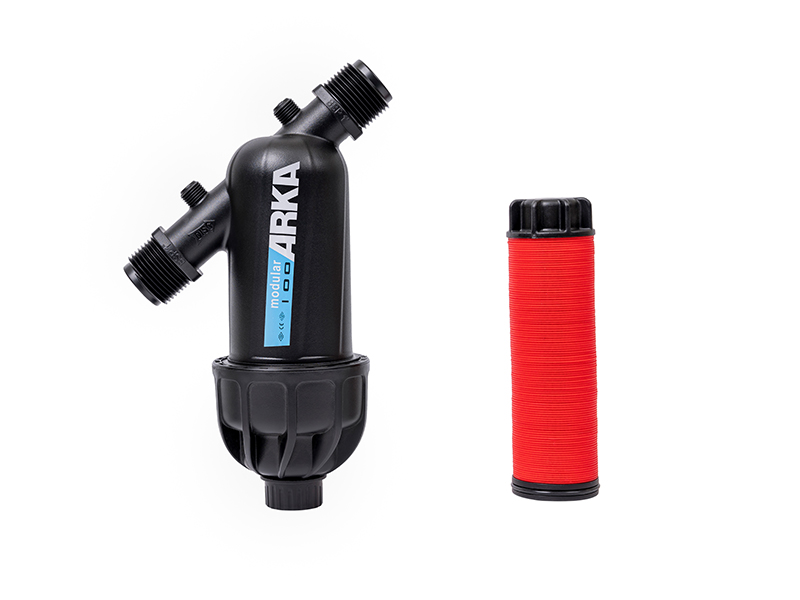
To truly understand the necessity of this technology in modern agriculture, look inside the housing. The core element consists of a robust stack of tightly compressed, color-coded synthetic rings. Each individual ring features microscopic grooves radiating outward from the center. When these rings are compressed together, their intersecting grooves create a complex, three-dimensional matrix.
Unlike conventional surface methods that merely trap particles on a single flat plane, this technology utilizes depth filtration. As fluid flows through the compressed stack, particles are captured not just on the outer edge, but deep within the intersecting channels. Specifically, this three-dimensional structure allows the unit to hold a significantly larger volume of debris before requiring a flush. It actively prevents microscopic sediments from forcing their way through the barrier under high pump pressure.
A frequent debate among agricultural engineers revolves around choosing between disc and screen configurations. Screen filters are generally adequate for intercepting hard, inorganic particles like coarse sand. However, they frequently fail when confronted with organic materials such as algae, moss, or biological slime. Under standard line pressure, soft organic matter easily extrudes right through a two-dimensional wire mesh. In contrast, the depth of a grooved stack traps soft, deformable debris exceptionally well. This makes it the undisputed industry standard for open-source water extraction.
Before purchasing any equipment, conducting a thorough evaluation of your water source is paramount. The chemical and biological makeup of your water directly dictates the necessary filtration grade, the required surface area, and your long-term maintenance schedule.
Surface reservoirs are continuously exposed to sunlight and environmental runoff. Consequently, they harbor high concentrations of organic matter, biological contaminants, and seasonal algae blooms. Because algae and biological slimes are highly malleable, they demand robust depth filtration. Field engineers typically advise oversizing the filtration surface area when drawing from these sources. This buffer easily accommodates sudden spikes in organic loading during sweltering summer months.
While generally free of organic matter, groundwater frequently carries heavy loads of inorganic particulate matter. This includes fine sand, silt, and dissolved minerals. A grooved stack is highly effective at capturing silt. However, a massive influx of sand can prematurely pack the ridges. In such scenarios, an established best practice is to pair the primary unit with a hydrocyclone sand separator. This centrifugal device pre-filters the heavy inorganics. It allows the downstream equipment to polish the remaining fine particulates without blinding early.
Looking at broader agricultural trends, there is a massive global shift toward utilizing marginal water sources. Driven by increasing climate volatility and regional water scarcity, farmers are rapidly adapting to reclaimed municipal wastewater. While this reclaimed water undergoes extensive primary treatment, it often retains residual suspended solids and biological nutrients. These nutrients rapidly promote bacterial growth inside irrigation lines. Treating these alternative sources requires high-precision filtration to ensure strict compliance with agricultural safety standards. Without it, sensitive micro-emitters will suffer devastating clogs.
The physical geometry of the housing significantly impacts fluid dynamics, pressure loss, and how seamlessly the unit integrates into your existing manifold. The two most prominent configurations in the field are the angled and the straight-through designs. Making the right choice here dictates the hydraulic efficiency of your entire irrigation block.
| Design Configuration | Flow Dynamics & Capacity | Ideal Installation Scenario |
|---|---|---|
| Y-Type Design | Low to medium flow rates up to 5 cubic meters per hour | Compact spaces, smaller independent farm plots, and greenhouse setups |
| H-Type / T-Type Design | High capacity with minimal directional friction loss | Large commercial manifolds requiring parallel unit banking |
A Y-type disc filter features a distinct body where the internal element intersects the main water flow at an angle. This creates a recognizable Y shape. For instance, a standard 3/4-inch unit typically handles flow rates around 5 cubic meters per hour with a maximum operating pressure of 8 to 10 bar.
Because the angled design forces water to change direction slightly, it is highly suitable for smaller flow rates and compact installation spaces. It is frequently utilized by independent farmers managing localized greenhouse setups. Furthermore, this configuration is generally easier to open and service by hand. This makes it a highly practical choice for networks that do not require complex, multi-unit banking.
Conversely, an H-type disc filter aligns the internal element perpendicularly to a straight-line water flow. This streamlined orientation minimizes directional changes in the fluid path.
Reducing directional changes subsequently reduces friction and pressure loss across the housing. These designs are specifically engineered for larger, complex manifolds and high-capacity commercial setups. Because they handle aggressive flow dynamics efficiently and offer a highly organized footprint when banking multiple units together, they remain the preferred choice for large-scale agricultural operations.
Budget constraints, labor availability, and baseline water quality will ultimately dictate your investment. You must decide whether a manual or automated setup is the most logical choice for your farm.
Think about the labor involved in manual cleaning. A farmhand spends hours under the scorching sun isolating valves, manually extracting internal spines, and scrubbing down calcified plastics. While manual units boast a lower initial capital investment and require no electrical components, they are incredibly labor-intensive. If an operator fails to clean the unit on time, the resulting pressure drop will severely impact watering uniformity. Therefore, manual options are strictly recommended for small plots, pristine water sources, or as secondary backup safeguards.
Upgrading to an automatic disc filter completely transforms farm water management. These intelligent units operate independently. They utilize a pressure differential switch to continuously monitor system health. When organic debris accumulates, the downstream pressure naturally drops. Once the difference between the inlet and outlet reaches a predetermined threshold, typically around 7 to 10 psi, the controller instantly triggers a self-cleaning cycle.
The mechanical heart of this automation is the backwash valve. During a flush cycle, this specialized component reverses the flow of clean water back into the housing. The reversed flow powerfully decompresses the tightly packed stack. High-pressure jets then spin the rings rapidly. This intense centrifugal action flushes all trapped debris out through a dedicated drainage port in mere seconds. While the initial cost is higher, the rapid return on investment is realized through eliminated daily labor costs, precise water conservation, and optimized crop health.
Selecting the appropriate dimensions for your equipment is arguably the most critical technical step in the purchasing process. An undersized unit will suffer from excessive pressure drops and chronic clogging. An oversized unit wastes capital and may fail to generate enough backwash pressure to clean itself effectively.
The processing capacity of your setup must perfectly align with the maximum output of your primary pump. Flow rates are typically measured in Gallons Per Minute or cubic meters per hour. As a foundational engineering rule, your filter maximum flow capacity should exceed the pump output by at least 15 to 20 percent. This built-in buffer elegantly compensates for the natural head loss that occurs as sediment accumulates between flushing cycles.
The filtration grade dictates the exact size of the particles that will be intercepted. This is measured in either microns for pore size or mesh for openings per linear inch. Choosing the correct grade is absolutely non-negotiable. It must be fine enough to protect your specific emitters but coarse enough to prevent unnecessary blinding.
To simplify selection, the industry utilizes a universal color-coding system:
System pressure is a foundational metric that cannot be ignored. You must account for the Maximum Operating Pressure to ensure the polymer housing will not rupture under unexpected pump surges. Premium units easily handle up to 10 bar. Equally critical is the Minimum Backwash Pressure. Automated self-cleaning mechanisms require a specific baseline pressure, usually around 35 to 45 psi, to successfully separate the stack and spin the elements. If your baseline pressure falls below this threshold, the cleaning cycle will fail.
Agricultural environments are notoriously unforgiving. Equipment is routinely exposed to blistering ultraviolet radiation, wild temperature fluctuations, and highly corrosive chemicals used during fertigation. Consequently, the construction materials directly dictate the lifespan of your investment.
The external body must withstand constant internal hydrostatic stress alongside external environmental weathering. Premium commercial-grade units often utilize fiberglass-reinforced polyamide. This advanced Nylon material offers exceptional tensile strength and superior resistance to UV degradation. Alternatively, high-density polypropylene is widely used for its outstanding chemical resistance. This makes it an excellent choice for operations that frequently inject harsh acidic fertilizers directly into the water supply.
The internal rings are injection-molded from highly durable, chemically inert synthetic polymers like high-density polyethylene. These plastics are specifically chosen for their dimensional stability. The microscopic grooves must never warp or deform under intense pressure. Furthermore, they must safely withstand aggressive end-of-season chemical treatments, such as chlorine or phosphoric acid flushes, without becoming brittle.
When transitioning to the procurement phase, evaluating the manufacturer is just as vital as scrutinizing the product specifications. A reputable supplier should readily provide transparent technical data sheets, ISO manufacturing certifications, comprehensive warranties, and accessible customer support for long-term troubleshooting.
For farm managers and agricultural engineers seeking a highly efficient, scalable solution, it is highly recommended to explore a specialized disc filter system. These commercial-grade units are meticulously engineered with robust housing materials, precise micron ratings, and reliable self-cleaning capabilities. They are tailored to protect modern, high-efficiency irrigation networks. Investing in well-engineered, modular equipment ensures consistent water delivery and drastically minimizes the risk of unexpected downtime during critical growing seasons.
Even the most sophisticated filtration technology requires a structured, proactive maintenance protocol to function at peak efficiency. Neglecting routine care inevitably leads to increased energy consumption from pumps working against high head loss. This ultimately compromises crop health due to uneven water distribution.
If you operate a manual setup, routine physical cleaning is unavoidable. While the frequency depends entirely on your water source, a standard protocol involves depressurizing the main line. You then extract the internal spine and loosen the tightening nut to decompress the stack. Rinse the decompressed rings thoroughly with a high-pressure hose. If you notice white, chalky calcification or slimy iron bacteria buildup, soak the uncompressed stack in a bucket containing a mild 10 percent citric acid solution for a few hours before rinsing and reassembling.
For automated setups, physical labor is eliminated, but mechanical inspection becomes paramount. Monthly checks should include inspecting the hydraulic command tubes for micro-leaks or UV cracking. Listen closely to the solenoids during a manual test cycle to ensure they actuate crisply. Most importantly, calibrate the pressure differential switch periodically to ensure it has not drifted from its designated setpoint.
In regions subject to freezing temperatures, improper winterization will completely destroy a filtration manifold. Because water expands when it freezes, trapped moisture will easily shatter even the strongest reinforced polyamide housings. At the close of the irrigation season, open all drainage valves, extract the internal elements, and store them indoors. Use an air compressor to meticulously blow out any residual moisture from the hydraulic command tubes and the main housing body.
Choosing the correct filtration equipment is not just an operational expense. It is a critical insurance policy for your crops and your entire irrigation infrastructure. By carefully matching the technology to your specific water source, accurately calculating your flow and pressure requirements, and committing to proper maintenance, you ensure that your system runs flawlessly season after season.
Whether you opt for a compact manual unit for a greenhouse or a fully automated self-cleaning manifold for a sprawling commercial farm, the right choice guarantees optimized water distribution and healthier yields. Take the time to evaluate your water quality today. Upgrade your agricultural setup with a reliable, high-performance filtration solution from Arka Irrigation to protect your harvest.
The primary difference lies in the filtration mechanism. Screen filters utilize a single layer of stainless steel or plastic mesh to trap debris on a two-dimensional surface. This makes them highly effective for hard, inorganic particles like sand. In contrast, disc technology utilizes a stack of grooved rings compressed together, creating a three-dimensional depth filtration matrix. This structure allows them to trap soft, organic matter like algae and biological slime deep within the stack without instantly blinding the surface.
The cleaning frequency is entirely dependent on the contamination level of your water source. However, as a best practice, you should perform a manual cleaning whenever the pressure differential reaches 7 to 10 psi. If you do not have pressure gauges installed, incorporate a visual inspection and manual rinse into your routine weekly maintenance schedule.
Yes, absolutely. High-quality agricultural units are manufactured from chemical-resistant polymers such as polypropylene and fiberglass-reinforced nylon. These robust materials are specifically designed to withstand prolonged exposure to liquid fertilizers, herbicides, and the harsh acids routinely used in fertigation and line-flushing protocols. Always ensure the unit is installed downstream of the fertilizer injector to catch any undissolved particles.
Drip tape and subsurface drip irrigation systems feature microscopic labyrinth emitters that are highly susceptible to clogging. To adequately protect these sensitive systems, industry guidelines strongly recommend using a 130-micron or 120 mesh filtration grade. In the standardized color-coding system, this corresponds to the red stack. Using a coarser grade will inevitably lead to rapid emitter failure.
Continuous or excessively frequent flushing usually indicates one of three issues. First, the pressure differential switch may be calibrated incorrectly or set too low. This triggers a cycle at the slightest pressure fluctuation. Second, the internal reversing valve may be malfunctioning or stuck open due to trapped debris. Finally, your water source may simply be too dirty for the current setup to handle alone. This necessitates the installation of a pre-filtration stage, such as a hydrocyclone sand separator, to reduce the primary debris load.
A significant pressure drop across a clogged filter means less water pressure reaches your field. This directly causes uneven water distribution. Plants closer to the pump may receive adequate water, while those at the end of the drip lines suffer from severe underwatering. Maintaining a clean filtration matrix ensures uniform hydraulic pressure across the entire irrigation block.
No mechanical filtration system can remove dissolved minerals from water. Disc technology is designed exclusively to capture suspended solid particulates. If your water source contains high levels of dissolved iron or calcium, these minerals will pass through the rings and precipitate inside your drip lines. Treating dissolved minerals requires chemical water treatment, such as acid injection or oxidation, prior to mechanical filtration.


