
Views: 0 Author: Site Editor Publish Time: 2026-08-10 Origin: Site


Fluid management design often fails at a critical juncture: specifying filtration equipment based solely on flow rate while ignoring the complex realities of source water quality. Relying on flow capacity without analyzing the particulate load is a direct path to system failure. Deploying the wrong filtration technology for specific water profiles leads to rapid differential pressure buildup, excessive backwash cycles, accelerated equipment wear, and ultimately, downstream system failure.
To correctly specify, size, and implement a disc filter system, you must evaluate specific water quality parameters. Organic load, total suspended solids (TSS), and chemical composition dictate how a filter performs in the field. Understanding these variables ensures you select a system that protects downstream components without creating an operational bottleneck.
Contaminant Type Drives Filter Choice: Disc filters utilize depth filtration, making them vastly superior to screen filters for water sources with high organic matter (algae, biological slime), whereas specific inorganic profiles may require different approaches.
Automation is Dictated by TSS Load: High variability in Total Suspended Solids (TSS) necessitates an automatic disc filtration system to prevent manual maintenance bottlenecks and operational downtime.
Oil and Grease Limitations: Disc filters are highly sensitive to oils and greases, which bind the grooved discs and neutralize backwash efficiency, requiring specific pre-treatment.
Flow Rate vs. Head Loss Trade-offs: Proper selection requires balancing the desired micron rating against acceptable head loss and flow capacity to ensure long-term system viability.
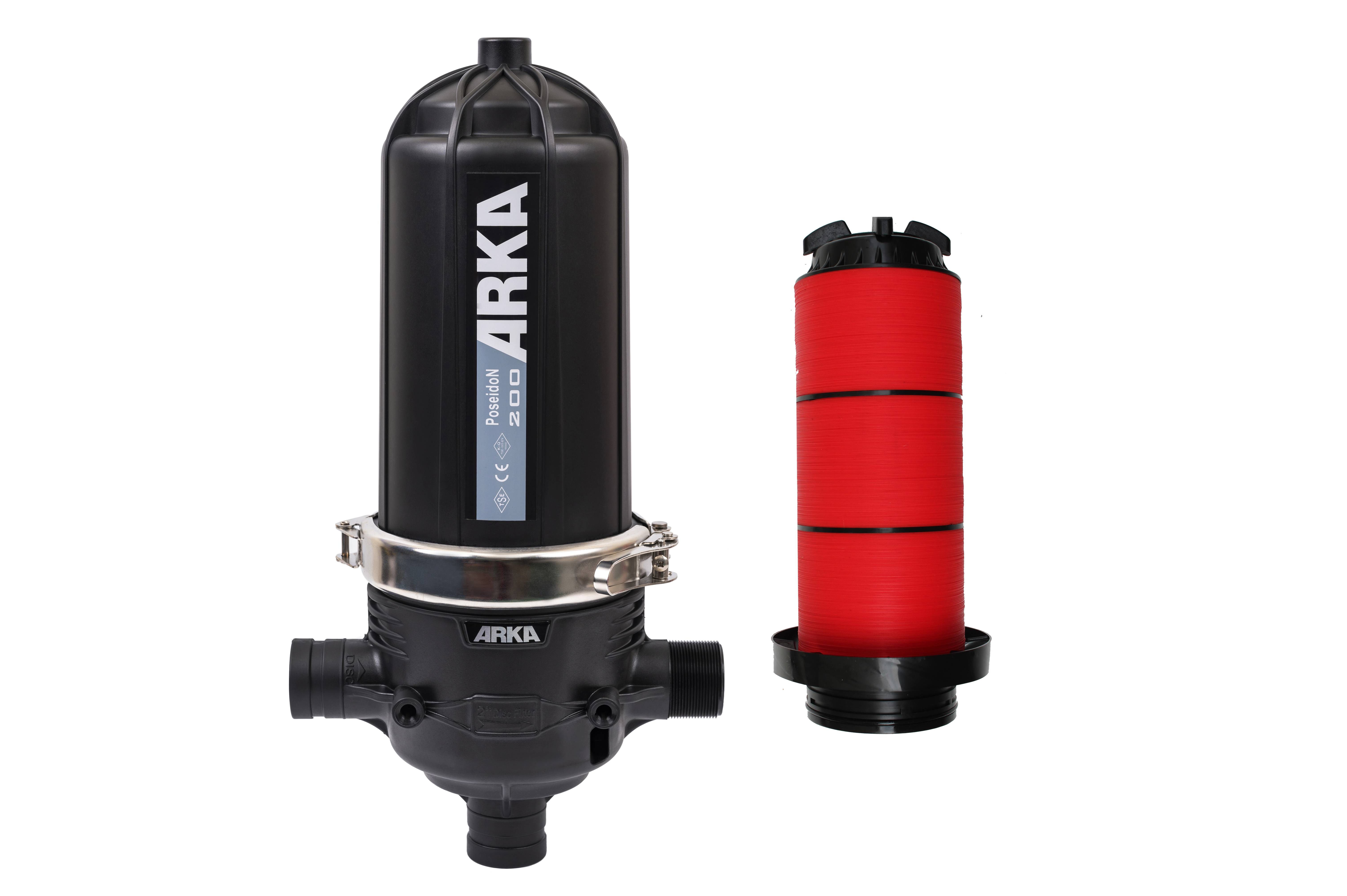
The fundamental mechanics of a disc filter rely on stacks of color-coded, grooved synthetic rings compressed together. This compression forms a three-dimensional filtration matrix, achieving what is known as depth filtration. As water flows from the outside in, particles are trapped within the intersecting grooves. This design allows the filter to handle a massive volume of particulate matter before requiring a cleaning cycle.
Depth filtration contrasts sharply with surface filtration. While a screen filter catches debris only on its surface, the intersecting grooves of a disc stack trap particles throughout the entire depth of the matrix. This provides a significantly higher dirt-holding capacity, especially for soft, deformable contaminants like algae that would otherwise squeeze through a standard wire mesh under pressure.
Groove geometry and micro-channel design play crucial roles in performance. Emerging engineering innovations, such as fractal flow channels, help reduce clean pressure drop (head loss) and maximize the total filtration surface area. These design elements ensure the filter can handle higher flow rates efficiently while maintaining strict micron retention.
A filtration setup is only effective when the micron rating and disc geometry match the specific particulate profile of the source water. Establishing this baseline success criteria is mandatory. If the disc geometry cannot handle the specific type of debris present, the system will fail regardless of its flow capacity. You have to match the physical characteristics of the disc to the physical characteristics of the suspended solids.
The concentration of suspended solids, measured in ppm or mg/L, and their physical size dictate the required filtration grade. You must understand the particle size distribution to select the correct micron rating. A high concentration of fine particles requires a tighter micron rating, which inherently increases head loss across the manifold.
Undersizing the filter area for high-TSS water carries significant risk. It leads to rapid clogging and excessive backflushing. When a system backwashes too frequently, it wastes water and disrupts the downstream flow, negating the purpose of the filtration system. Field data shows that undersized systems can spend up to 40% of their operational time in backwash mode if TSS spikes are not accounted for during the design phase.
Organic matter, such as algae, moss, and biological slime, behaves uniquely during filtration. These soft contaminants easily extrude through the rigid mesh of screen filters under pressure. However, they are effectively captured by the depth matrix of a disc filter, making it the superior choice for biologically active water drawn from open reservoirs or canals.
Inorganic matter includes sand, silt, and scale. While disc filters handle inorganics well, exceptionally high sand loads present a challenge. In situations with heavy crystalline sand, integrating a hydrocyclone separator as pre-filtration is highly recommended to prevent rapid loading of the disc stack.
Contaminant Type | Characteristics | Filtration Recommendation |
|---|---|---|
Algae & Biological Slime | Soft, deformable, sticky | Depth filtration (Disc Filter) |
Fine Silt & Clay | Small particle size, high turbidity | Disc Filter with tight micron rating |
Heavy Sand | Hard, abrasive, fast-settling | Hydrocyclone followed by Disc or Screen Filter |
The chemical realities of the water source, including pH and hardness, directly impact filter longevity. Hard water causes scaling on the discs over time. This mineral buildup requires periodic acid washing to restore the original groove geometry and maintain filtration efficiency. Ignoring scale buildup will eventually fuse the discs together.
Substandard water takes a mechanical toll on the system. Angular mineral particles cause abrasive wear on grooved channels, while chemical erosion and scaling deform disc geometry. This degradation permanently reduces filtration efficiency and necessitates premature disc replacement. Routine inspections are required to monitor the physical condition of the synthetic rings.
A critical limitation of disc filters is their extreme sensitivity to oil and grease. Lipids fill the microscopic gaps between discs, rendering self-cleaning mechanisms entirely ineffective. Once coated in oil, the discs cannot decompress and spin clean, permanently reducing filtration efficiency and requiring manual chemical cleaning. Never deploy these units downstream of unmitigated industrial runoff.
Surface water sources like rivers, lakes, and reservoirs typically carry high organic loads. In these applications, disc filters are the authoritative choice. Their depth filtration matrix traps algae and biological slime that would quickly blind a standard screen filter, ensuring consistent downstream flow. Screen filters simply cannot handle the biological load without constant manual intervention.
Filter choices map directly to flow rate scaling. Disc filters are engineered to accommodate high flow rates with stable head loss. Screen filters, conversely, are generally better suited for low-to-medium flow rates dealing with simple, inorganic particle profiles. When designing a manifold for thousands of gallons per minute, disc modules offer a more compact and reliable footprint.
The relationship between filter type and flow dynamics is critical. Disc filters maintain stable head loss at higher flow rates because their depth matrix distributes the contaminant load over a larger three-dimensional area, rather than accumulating it on a single two-dimensional plane. This prevents sudden pressure spikes that can damage downstream piping.
Pressure requirements for effective backwashing differ between systems. Disc filters require a specific minimum pressure to decompress the disc stack for cleaning. If the system cannot provide this minimum pressure during the backwash cycle, the discs will not separate, and the trapped debris will remain lodged in the grooves. Always verify the minimum backwash pressure requirements with the manufacturer.
Reading manufacturer flow-rate vs. head-loss curves is the first step in sizing. These curves show the expected pressure drop across a clean filter at various flow rates. However, these are baseline metrics and must be adjusted based on actual water conditions. A clean water curve does not represent field conditions with heavy silt.
Water quality degrades these curves in real-world applications. For example, a 130-micron disc filter will experience faster head loss when dealing with sticky organics compared to crystalline sand. You must factor in the nature of the contaminants when calculating the required filter surface area. Apply a safety factor of at least 20% to the filter area when dealing with surface water.
Selecting micron ratings, typically ranging from 20 to 400 microns, requires a strict decision framework based on the protection requirements of downstream equipment. You must identify the most sensitive component—whether it is drip emitters, heat exchangers, or RO membranes—and select a micron rating that prevents particles large enough to cause damage or clogging from passing through.
Identify the smallest orifice in the downstream system (e.g., a drip emitter pathway).
Divide that orifice size by 7 to determine the absolute maximum allowable particle size.
Select a micron rating that is smaller than the calculated maximum particle size.
Verify that the selected micron rating does not create unacceptable head loss at the design flow rate.
You must define the threshold where manual cleaning becomes operationally unviable. An automatic disc filter becomes necessary when dealing with water sources exhibiting highly variable or consistently high TSS loads. If manual cleaning is required more than once a week, automation is usually justified to prevent labor overruns and system downtime.
The operational sequence of a self cleaning disc filter relies on precise automation. A differential pressure sensor monitors the system. When the pressure drop reaches a set point, it triggers the cycle. Flow is reversed, the disc stack decompresses, and high-velocity water spins the discs to expel trapped debris out the exhaust valve. This process takes seconds and restores the filter to a clean state without interrupting the main flow.
Comparing the initial CAPEX of an automatic disc filtration system against OPEX savings is crucial. While the upfront cost is higher, the savings in manual labor, reduced operational downtime, and extended lifespan of downstream components quickly offset the initial investment in high-TSS environments. Manual filters in dirty water applications are a false economy.
Agricultural water sources present specific challenges. An irrigation disc filter must protect micro-sprinklers and drip tape from biological growth and silt common in well and canal water. The depth filtration handles the algae from open canals efficiently, preventing emitter plugging and ensuring uniform crop watering. Without this protection, crop yields suffer due to uneven water distribution.
In industrial settings like cooling towers and effluent reuse, disc filters manage trace chemicals and suspended solids. However, there is a strict requirement to keep oil and grease out of the system. Industrial wastewater often requires robust pre-treatment to remove lipids before the water reaches the disc filtration stage. Failure to remove oils will destroy the disc stacks within weeks.
Out-of-spec water requires robust mitigation strategies. Integrating coarse strainers, sand separators, or settling tanks before the disc filter is necessary to handle extreme particulate spikes. This pre-filtration protects the primary disc system from being overwhelmed by sudden influxes of heavy debris during storm events or canal dredging.
You must address the environmental and facility footprint of backwash water. Calculate the volume of reject water generated by an automatic system based on expected backwash frequency. Plan for proper drainage, treatment, or recovery of this reject water to maintain environmental compliance and operational efficiency. Reject water routing must be finalized before pouring the concrete pad for the filter station.
Conduct a comprehensive laboratory water quality analysis to determine TSS, organic load, and chemical composition.
Calculate the required micron rating based on the most sensitive downstream component to ensure adequate protection.
Select between manual and automatic systems by evaluating the TSS load against your available maintenance labor hours.
Consult with a filtration engineer to model head loss and backwash frequency using your specific water profile data.
A: Disc filters use depth filtration, which is ideal for capturing soft organics and algae. Screen filters use surface filtration, making them better suited for hard, inorganic particles like sand.
A: The system uses a differential pressure (DP) switch that measures the pressure drop across the filter. When the debris buildup causes the pressure drop to reach a specific threshold, it triggers a backwash cycle.
A: No. Disc filters should never be used for oil and grease. These substances bind the discs together, preventing them from decompressing, which stops the self-cleaning backwash from functioning.
A: Standard industry guidelines typically recommend 100 to 130 microns for standard drip irrigation systems. The exact rating depends on the specific orifice size of your emitters.
A: Yes. High turbidity (TSS) causes the filter to load faster, increasing head loss and requiring more frequent backwashing. This frequent cleaning cycle lowers the overall net flow rate of the system.


