
Views: 0 Author: Site Editor Publish Time: 2026-10-23 Origin: Site


You walk into your high-tunnel on a scorching July afternoon. An entire row of premium crops is wilting under the heat. The pump is running. The valves are open. Yet, water simply refuses to reach the roots. The culprit? A microscopic clump of algae and sediment bypassed a cheap mesh screen. It permanently jammed your drip emitters. For agricultural professionals, clogged lines spell disaster. Inconsistent water flow ruins yields, and replacing damaged equipment drains your budget.
Fortunately, investing in a high-quality window adapting filter eden system serves as the ultimate safeguard for your water supply. Modern agricultural water management has evolved significantly. Gone are the days of guessing when your lines need clearing. By choosing the right setup, growers drastically improve crop health. You ensure uniform nutrient delivery. You also extend the lifespan of your entire watering infrastructure. This comprehensive guide breaks down exactly how to size, select, and maintain the perfect setup for your specific environmental needs.
A window adapting filter eden system is an advanced water purification housing equipped with a clear or adaptable viewport. This engineering innovation allows operators to visually inspect the internal element status. You do not have to depressurize the line or dismantle the entire unit. It removes the guesswork from maintenance. You see exactly how much debris has accumulated in real-time.
Recent global agricultural reports highlight a massive shift in irrigation technology. As climate volatility intensifies and water scarcity plagues major agricultural hubs, commercial operations are abandoning traditional reactive maintenance. The industry trend heavily favors predictive, visually verifiable systems. Older opaque housings required constant manual dismantling. This wasted labor and precious water. Today, precision agriculture demands real-time monitoring. An adapting window design streamlines this workflow perfectly. It aligns with the modern push toward resource conservation and maximum operational efficiency.
Protecting your operational investment starts at the source. Dirt, algae blooms, and fine sand wreak havoc on delicate micro-sprinklers. Even municipal water supplies carry pipe scale and mineral deposits that accumulate over time. This variability makes a robust greenhouse irrigation filter absolutely non-negotiable.
Well water often contains fine silt. Surface water from ponds or rivers is typically loaded with biological contaminants like algae and slime. Without a dedicated barrier, these impurities travel straight to your emitters. Beyond simply protecting plastic tubing, this fundamentally impacts plant health. Partial clogs lead to uneven nutrient distribution. Plants at the beginning of a line become waterlogged. Those at the end suffer from drought stress. The inevitable result is uneven growth, poor yields, and heightened disease susceptibility.
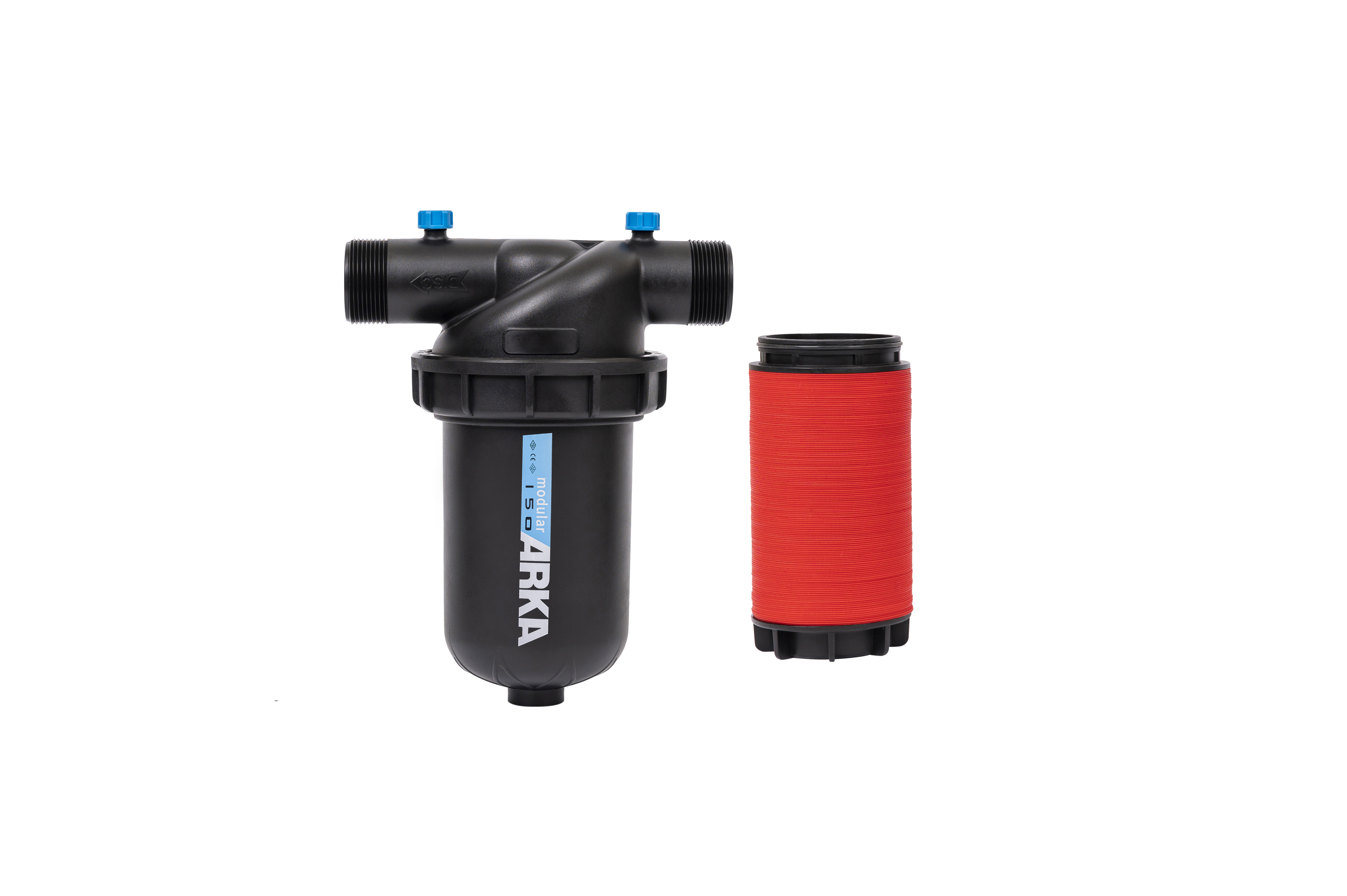
When evaluating purification methods, engineers often debate screen versus disc technologies. Screen filters operate via surface filtration. They force water through a stainless steel or nylon mesh. This traps particles larger than the holes on the surface. While excellent for inorganic materials like hard sand, screens have a major flaw. Soft organic matter like algae easily extrudes through the mesh under high pressure.
Conversely, disc technology operates on an entirely different principle. It utilizes tightly compressed stacks of color-coded, grooved plastic rings. When water passes from the outside of the stack to the inside, it must navigate a complex microscopic maze created by intersecting grooves. This provides true depth filtration. Particles are trapped throughout the entire depth of the compressed rings.
| Feature Comparison | Standard Screen Filter | Advanced Disc Filter |
|---|---|---|
| Filtration Mechanism | Surface filtration only | Three-dimensional depth filtration |
| Handling Organic Matter | Poor. Algae extrudes through mesh | Excellent. Traps slime within grooves |
| Maintenance Frequency | High. Requires frequent manual scrubbing | Low. High capacity delays cleaning cycles |
| Ideal Application | Clean well water, hard inorganic sand | Pond water, liquid fertilizers, heavy organics |
Stepping up from standard models, the TX disc filter represents the pinnacle of current filtration engineering. Designed for high-capacity flow and extreme durability, this specific architecture handles heavy debris loads without compromising system pressure.
Looking at real-world engineering parameters, a premium 1.5-inch TX unit typically delivers a maximum flow rate of 15 cubic meters per hour. This translates to roughly 66 Gallons Per Minute. Built for industrial demands, these housings withstand working pressures up to 10 bar or 150 psi. They commonly feature a 120-mesh rating, meaning they filter down to 130 microns. This precise sizing is the gold standard for protecting delicate greenhouse drip lines.
Furthermore, its centrifugal action sets it apart. As water enters the housing, a specialized deflector creates a high-speed helix. This vortex flings larger, heavier debris outward against the walls and away from the central rings. By keeping the bulk of the dirt off the main element, it significantly delays the need for manual cleaning.
To build a fail-proof setup, you must evaluate several engineering criteria. Abstract advice will not protect your crops. Use these strict technical standards to guide your purchase.
Matching the micron rating to your specific emitters is critical. A standard engineering rule of thumb is to filter down to one-tenth the size of your smallest emitter orifice. For most modern drip tape, a 120-mesh rating is the industry standard. Going too fine causes unnecessary clogging. Going too coarse ruins your lines.
Never size your equipment based solely on pipe diameter. You must calculate your system peak flow rate. Forcing too much water through an undersized unit creates a massive pressure drop. This starves your crops of water and damages the internal spine.
Evaluate what you are pumping. Stagnant ponds with heavy organic loads demand robust depth filtration. In these high-debris scenarios, standard manual setups require daily cleaning. You must prioritize advanced vortex technology to manage the biological load effectively.
Greenhouses are harsh, unforgiving environments. Ensure the housing is constructed from industrial-grade plastics like glass-reinforced nylon. The material must withstand extreme summer heat, corrosive liquid fertilizers, and constant UV exposure without becoming brittle.
Translating system needs into exact hardware specifications requires precise math. Follow this straightforward formula to guarantee optimal performance.
Start by consulting the manufacturer specifications for your specific drip tape or foggers. The documentation explicitly states the required mesh size necessary to prevent labyrinth channels from clogging.
Add up the output of all watering zones that run simultaneously. If you have 1000 emitters that each output 1 gallon per hour, your absolute minimum flow requirement is 1000 Gallons Per Hour.
A common mistake is buying a unit rated exactly for your peak flow. As debris builds up, the effective flow rate drops. Always oversize your irrigation filtration system by at least 20 percent. This buffer accounts for pressure loss as the element gets dirty. It ensures your plants receive adequate water right before a cleaning cycle is due.
Match the inlet and outlet ports to your existing mainline infrastructure. Selecting the correct threaded connections minimizes the need for restrictive adapters and keeps water velocity smooth.
Proper installation dictates long-term performance. Always verify the direction of flow before gluing any fittings. Look for the arrows molded into the plastic housing. Specifically, install pressure gauges immediately before and after the unit. A pressure differential, meaning a drop in PSI between the inlet and outlet, is the most accurate technical indicator that it is time to clean.
When routine maintenance is required, the process requires care. First, visually confirm the buildup through the adapting window. Next, completely depressurize the line. Unscrew the main housing and extract the spine. Loosen the tension nut holding the rings together. Physically fan out the stacked discs and rinse them thoroughly with a high-pressure hose to dislodge trapped organic sludge.
For those in colder climates, winterization is crucial. Water left inside the housing expands as it freezes. This easily cracks even the toughest glass-reinforced nylon. Always open the flush valves and drain the entire system completely before the first hard freeze.
Maintaining a reliable, clean water supply is the bedrock of any successful agricultural operation. By moving away from outdated opaque housings and embracing a window adapting filter eden system, growers reclaim lost time. You reduce labor costs and prevent the devastating effects of clogged lines. The ability to visually monitor water quality transforms maintenance from a reactive chore into a proactive strategy.
Ultimately, choosing high-quality depth-filtration technology saves money, time, and water. It protects your expensive pumps. It ensures that every single plant receives the exact amount of hydration and nutrients needed to thrive.
Do not wait for a catastrophic clog to ruin your harvest. Assess your current water quality, calculate your peak flow rates, and upgrade your setup today. For premium, industrial-grade solutions, explore the high-performance options available at ARKA Irrigation. Choose the right 1.5-Inch TX Disc Filter or other advanced models tailored to your specific flow requirements directly from their official catalog to ensure a bountiful, stress-free growing season year after year.
It allows growers to visually inspect the internal element without shutting down the system or opening the housing. This saves time and prevents premature clogs.
A standard screen filter only traps debris on its surface. A TX model uses stacked, grooved rings to trap debris throughout its depth. This makes it vastly superior for organic matter like algae. Additionally, it utilizes centrifugal action to push large debris away from the core element.
Most standard drip systems require a 120-mesh or 130-micron barrier to function properly. You should always verify the exact requirements with your specific emitter manufacturer.
This depends entirely on your water source and flow volume. With a window adapting design, you clean it visually when debris builds up. Technically, you should clean it when the pressure differential between the inlet and outlet gauges exceeds 5 to 7 PSI.
Yes, these systems are highly versatile. They provide excellent purification for both recirculating hydroponic nutrient solutions and traditional soil-based watering setups. They adapt easily to the specific debris profiles of each environment.
The most reliable method is checking the pressure gauges installed before and after the unit. A significant pressure drop across the unit indicates a clog. Visual inspection through an adapting window also provides immediate confirmation without halting operations.
Mesh size refers to the number of holes per linear inch. A 120-mesh unit has larger openings compared to a 150-mesh unit. While 150 mesh traps finer particles, it also clogs faster if the water source has heavy debris. Choosing between them depends on the specific tolerance of your drip emitters.


