
Views: 0 Author: Site Editor Publish Time: 2026-10-31 Origin: Site


You fire up an expensive micro-irrigation setup, only to discover half the emitters permanently choked by river silt. This is a daily reality for many facility operators and commercial growers. Dirty water relentlessly damages expensive industrial equipment and residential plumbing, leading to frustrating downtime and massive repair bills.
Choosing the correct filtration barrier solves this fundamental engineering problem. Proper sizing prevents costly system failures almost immediately by stopping abrasive particulates dead in their tracks. In this comprehensive breakdown, you will learn exactly what to specify for your project. We will dive deep into mesh sizes, material science, and the top hardware choices to keep your fluid management architecture running flawlessly.
A highly engineered, semi-permeable physical barrier purposefully designed to separate suspended solids from a liquid stream. Manufactured from precisely woven metal wires or intricately molded synthetic polymers, this mesh allows microscopic water molecules to pass through its open pores while capturing particulate matter that exceeds the pore diameter. Selecting the appropriate mesh is the foundational step in designing any fluid processing system. This single decision directly impacts water purity, baseline flow rate, and the overall longevity of downstream components like booster pumps, sensitive control valves, and delicate drip emitters.
The primary mechanism behind a mesh screen filter is known in the industry as surface filtration. Unlike depth filters that trap particles within a complex internal labyrinth of sand or carbon, a surface filter captures debris directly on its two-dimensional face.
As fluid rapidly enters the housing chamber, hydrostatic pressure forces the liquid through the microscopic openings of the barrier. Particles larger than the mesh pores are physically blocked, accumulating on the surface of the screen. Over time, this natural accumulation creates a filter cake. This cake actually increases filtration efficiency by trapping even finer particles. However, this buildup simultaneously increases the pressure differential across the unit, meaning the system requires significantly more energy to push water through. Regular monitoring of this pressure drop is exactly how facility operators determine when the hardware requires flushing or manual scrubbing.
These crucial components are utilized across a broad spectrum of industries, each presenting highly specific particulate challenges:
Selecting the correct physical size of your barrier is arguably the most critical decision in system design. Guessing the required size often leads to operational failures. Choosing a gauge that is too coarse allows damaging debris to bypass the system entirely. Opting for one that is too fine results in rapid clogging, system stalling, and unacceptable pressure drops.
In the fluid management industry, the term Mesh refers to the exact number of openings per linear inch of the screen material. For instance, if you draw a precise one-inch line across the surface of the metal and count 120 distinct openings, that material is officially classified as a 120-mesh screen.
Because the one-inch distance is a fixed measurement, as the number of openings increases, the size of each individual opening must inherently decrease. Therefore, the standard rule of thumb is quite simple. The higher the mesh number, the finer the filtration.
While the mesh count tallies the openings, a Micron measures the actual physical size of the pore opening itself, and consequently, the size of the particle it will successfully intercept. One micron is equal to one-millionth of a meter. To put this microscopic scale into perspective, a single strand of human hair is approximately 70 to 100 microns in diameter. The naked human eye cannot resolve individual particles smaller than 40 microns without artificial magnification.
The rule of thumb for microns is the exact inverse of the mesh standard. The lower the micron rating, the finer the filtration.
Global manufacturers often use both terms interchangeably depending on regional industry standards. Understanding how to seamlessly convert between U.S. Mesh and Microns is vital for procurement. Below is a standardized conversion table to assist in precise equipment sizing, alongside the typical debris targeted at each specific tier.
| U.S. Mesh Size | Micron Rating | Millimeters (mm) | Typical Target Debris / Application |
|---|---|---|---|
| 20 Mesh | 841 Microns | 0.841 mm | Coarse sand, large pipe scale, fine pebbles. |
| 40 Mesh | 400 Microns | 0.400 mm | Beach sand, visible organic debris, large rust. |
| 80 Mesh | 177 Microns | 0.177 mm | Fine sand, standard well water sediment. |
| 120 Mesh | 125 Microns | 0.125 mm | Very fine sand, silt, standard drip irrigation protection. |
| 155 Mesh | 100 Microns | 0.100 mm | Fine silt, pollen, micro-irrigation systems. |
| 200 Mesh | 74 Microns | 0.074 mm | Fine algae, clay particles, industrial pre-filtration. |
If a laboratory water analysis indicates that your agricultural well is pumping fine sand measuring around 150 microns, you must select a barrier with a pore size smaller than the debris. In this specific scenario, a 120-mesh unit would effectively block the abrasive sand while maintaining an optimal, uninterrupted flow rate.
The physical dimensions of the pores only solve half of the filtration equation. The actual construction material dictates the chemical resistance, structural integrity, and overall lifecycle of the unit. The fluid temperature, pH level, and the sheer abrasiveness of the suspended solids must all be rigorously evaluated when selecting a material.
Recent market analyses indicate a massive pivot in industrial and agricultural fluid management. Driven by tightening environmental discharge regulations and severe water scarcity, commercial facilities are rapidly abandoning single-use synthetic cartridges. Instead, operators are investing heavily in automated, self-cleaning systems utilizing highly durable, reusable metallic elements. Advancements in metallurgical engineering have introduced specialized anti-fouling coatings that significantly extend the lifespan of these reusable components, drastically reducing long-term operational costs and maintenance downtime.
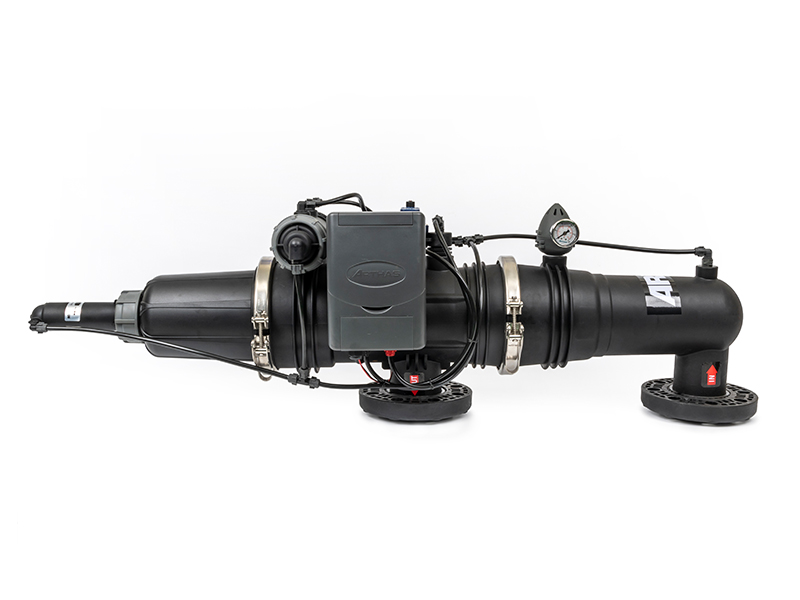
A stainless steel wire mesh filter remains the undisputed industry standard for raw durability and high-pressure tolerance. Typically woven from premium 304 or 316-grade stainless steel alloys, these robust components offer exceptional mechanical strength. For instance, modern 4-inch auto backflush self-cleaning units utilize these rigid screens to process high volumes while automatically purging debris based on pressure differentials.
They boast high resistance to physical abrasion, making them ideal for capturing sharp, jagged sand. They also deliver excellent temperature tolerance for hot water or volatile industrial fluids. Their rigid metallic structure prevents pore distortion under heavy hydraulic pressure spikes. Grade 316 stainless steel is specifically recommended if the water source contains elevated levels of corrosive chlorides or salts, as it features added molybdenum for superior pitting resistance.
Nylon and engineered plastics are widely deployed in agricultural and residential markets. Instead of woven metal wires, these screens often feature precisely molded plastic ribs supporting a fine, synthetic nylon mesh.
These units are highly cost-effective, incredibly lightweight, and completely immune to standard oxidation and rust. Nylon provides excellent chemical resistance to many harsh agricultural compounds, making it ideal for fertigation systems where liquid fertilizers are injected directly into the main water line. While they cannot withstand the extreme boiling temperatures or severe abrasive forces that stainless steel effortlessly handles, they offer highly reliable performance for ambient-temperature fluid processing.
For highly volatile environments that rapidly degrade both standard metals and basic plastics, fiberglass and specialty composite materials are deployed.
These advanced composites offer exceptional tensile strength combined with high-grade corrosion resistance. Specifically, these materials do not degrade when exposed to highly acidic or alkaline water sources. They are the go-to choice for specialized industrial fluid filtration, highly corrosive wastewater treatment plants, or maritime applications where prolonged exposure to harsh environmental variables is expected.
Selecting the optimal hardware is an engineering decision that directly impacts the efficiency and longevity of your entire fluid management network. To make an evidence-based decision rather than relying on guesswork, follow this systematic approach based on empirical data from your specific site.
The first variable in your selection process is the physical and chemical composition of your source. Different environments introduce distinct types of suspended solids.
Every screen filter introduces a physical restriction in your plumbing line, resulting in a measurable pressure drop measured in PSI or Bar. This is technically referred to as differential pressure.
If you select a pore size that is far too fine for your required Gallons Per Minute, the high water velocity will force debris deep into the mesh pores. This causes rapid clogging and an unacceptable drop in downstream pressure. Conversely, if the mesh is too coarse, the flow rate remains high, but critical, damaging debris easily bypasses the barrier. To maintain system equilibrium, calculate your maximum required flow rate and select a housing with a surface area large enough to process that volume without exceeding a 3 to 5 PSI pressure drop when fully clean.
The physical dimensions of your internal cartridge must perfectly match the outer housing to prevent bypass. Bypass is a disastrous scenario where water forces its way around the edges of the seals rather than passing through the barrier itself. For residential applications, standard sizes like 10 x 4.5-inch whole-house inserts are ubiquitous. For industrial and agricultural setups, the physical length and diameter of the internal cylinder dictate the total active filtration area. Ultimately, a larger surface area significantly extends the time required between tedious maintenance cycles.
When scaling up operations to commercial agriculture, municipal landscaping, or heavy industrial cooling systems, standard residential inline filters simply lack the structural integrity and surface area required to handle massive debris loads. In these demanding environments, specialized structural designs become absolutely necessary to maintain continuous, uninterrupted flow.
The TX-type screen filter represents a significant engineering advancement in high-volume fluid management. Characterized by its distinct T-shape or modified Y-shape architectural body, this hardware is specifically engineered to handle extreme flow rates while maximizing the internal space available for heavy debris accumulation.
The structural geometry of the TX-type is not merely aesthetic. It is deliberately engineered to optimize fluid hydrodynamics. The configuration allows incoming water to enter the chamber, distribute evenly across a massive internal cylindrical screen, and exit with minimal turbulence.
By utilizing an oversized internal cartridge, the unit significantly increases the total open area of the mesh. This effectively reduces the velocity of the water passing through the pores, which in turn minimizes pressure drops and delays the onset of blinding. These units typically feature robust housings constructed from heavy-duty, UV-resistant polymers or coated metals designed to withstand high static and dynamic pump pressures. Most models also integrate a dedicated flush valve at the base. By opening this valve while the system remains pressurized, operators can rapidly purge accumulated sediment from the bottom of the chamber without disassembling the housing.
In agricultural settings, particularly with precision micro-irrigation and drip tape systems, emitter orifices feature microscopic labyrinth channels designed to meticulously regulate water flow. A single grain of sand or a tiny clump of algae can permanently block these emitters, leading to uneven crop hydration, localized dry spots, and significant yield losses.
The TX-type unit provides the rigorous, high-capacity protection required to safeguard these sensitive downstream components. Its unique ability to process high volumes while maintaining consistent pressure makes it a mandatory specification for commercial growers seeking reliable, low-maintenance hardware. By trapping inorganic debris directly at the source, these units prevent catastrophic system failures and drastically reduce the exorbitant labor costs associated with manually replacing clogged irrigation lines in the field.
Beyond heavy-duty agricultural mainlines, choosing the precise barrier is equally critical when optimizing specialized off-grid setups or upgrading localized residential plumbing networks. Upgrading a water architecture frequently involves layering different filtration methods to achieve optimal fluid clarity.
Gravity-fed water systems operate under extremely low hydrostatic head pressure. Because there is no electrical pump violently forcing water through the barrier, selecting the correct pore size is a delicate balancing act.
If the pre-filter is too fine, the natural surface tension of the water combined with the lack of driving pressure can cause vapor lock or complete flow stagnation. The ideal, practical solution is to deploy a coarser primary barrier typically between 60 and 100 mesh. This strategic layer successfully intercepts leaves, large insects, and coarse sediment. This protects the expensive, ultra-fine micro-filters including delicate ceramic or hollow-fiber membranes downstream from premature fouling.
In residential plumbing architectures, compact inline units utilize fine stainless steel or synthetic meshes to protect high-value household appliances. Installed directly onto the incoming municipal or well water supply lines leading to washing machines, tankless water heaters, and refrigerator ice makers, these filters act as a cheap insurance policy against destructive pipe scale.
A standard 100-mesh inline unit is highly effective at capturing the abrasive particulates that silently degrade appliance seals and internal solenoid valves over time. Unlike massive whole-house systems, these are designed for lower flow rates and focus entirely on targeted, point-of-use particulate interception. Because the housings are typically transparent, homeowners can easily visually monitor debris buildup and flush the system in seconds.
Even the most precisely engineered hardware requires consistent, proactive maintenance to function at its rated capacity. Ignoring basic maintenance protocols inevitably leads to severe pressure drops, structural deformation of the internal elements, and eventual catastrophic system failure.
Routine cleaning is absolutely critical for surface filtration systems. Unlike disposable paper or spun-polypropylene cartridges, metallic elements are designed for long-term reuse. To clean the unit without damaging the delicate woven structure, follow these standardized steps:
While premium stainless steel components can easily last for years, they are not infinite. Facility operators and homeowners alike should immediately replace the internal insert when they observe any of the following warning signs:
A screen filter uses a single, thin layer of woven wire or synthetic material to trap debris purely on its two-dimensional surface. This makes them highly effective and remarkably easy to clean when dealing with inorganic, rigid matter like abrasive sand or pipe scale. A disc filter utilizes a dense stack of tightly compressed, grooved plastic discs. This creates a three-dimensional depth filtration matrix, which is vastly superior for trapping soft, squishy organic matter like algae that would otherwise quickly smear and blind a flat screen.
Well water is predominantly burdened with inorganic sediment, fine sand, and mineral grit. For general residential or agricultural well water protection, a 100-mesh to 120-mesh unit is the industry standard. This specific size is fine enough to capture the abrasive particles that destroy expensive pumps and valves, but coarse enough to prevent rapid, frustrating clogging and severe pressure drops.
Yes, absolutely. One of the primary economic advantages of a stainless steel unit is its long-term reusability. Unlike disposable spun-bonded or pleated paper cartridges that end up in landfills, stainless steel components can be removed, gently scrubbed with a soft nylon brush, back-flushed, and even soaked in mild descaling acids such as standard white vinegar to remove hard mineral buildup. With proper, routine care, a high-quality metallic unit can last for several years before requiring replacement.
The most definitive and scientific indicator of a clogged unit is a measurable drop in downstream water pressure. In professional commercial setups, installing pressure gauges immediately before and after the housing allows operators to monitor the differential pressure. When the pressure difference reaches 5 to 7 PSI, it is time to flush or manually clean the element. In smaller residential setups without dedicated gauges, a noticeable, sudden reduction in water flow at your indoor faucets or outdoor sprinkler heads is the primary, undeniable warning sign.
Calculating pressure drop requires installing two pressure gauges: one on the inlet side of the filter housing and one on the outlet side. While the system is running at normal flow capacity, subtract the outlet pressure reading from the inlet pressure reading. The resulting number is your pressure drop or Delta-P. Monitoring this metric daily allows operators to schedule precise backflushing cycles before sediment buildup compromises downstream flow.
Agricultural drip tape features extremely fine emitter labyrinths that clog easily. To adequately protect these sensitive components, engineers mandate a minimum of 120-mesh filtration, with 150-mesh or 130-micron being the preferred standard for high-density setups. Utilizing anything coarser risks allowing microscopic silt to enter the lines, which will accumulate at the ends of the lateral runs and permanently block the emitters.
Stop letting abrasive sediment destroy your valuable equipment. Upgrading your fluid management architecture requires precision hardware designed for your specific flow rates and debris profiles. Visit ARKA Irrigation to explore high-performance solutions like the TX-type and 4-inch Auto Backflush systems, and secure the exact filtration barrier your operation demands today.


