
Views: 0 Author: Site Editor Publish Time: 2026-10-21 Origin: Site


Are clogged drip emitters ruining your crop yields? Walking out to your fields during a critical growth stage only to find dry patches scattered across the soil is incredibly frustrating. Gritty sand or sun-baked algae has choked your micro-sprinklers. Dirty water costs farmers time and money daily. Reliable filtration is the undisputed heart of any functional irrigation setup.
As an irrigation engineer, I see this scenario constantly. A disc irrigation filter offers a highly efficient, versatile solution for trapping stubborn organic and inorganic debris. Traditional screens simply cannot handle these complex loads. By understanding the unique mechanical advantages of this technology, you can protect your downstream equipment and maximize your agricultural return on investment.
In this comprehensive guide, we will break down exactly how to align your filtration hardware with your specific water reality.
To make an informed purchasing decision, you must understand the mechanical principles separating disc filtration from standard mesh screens. Engineers design these units specifically to handle complex contaminant loads. Basic filters quickly become overwhelmed by these loads, leading to frequent maintenance shutdowns.
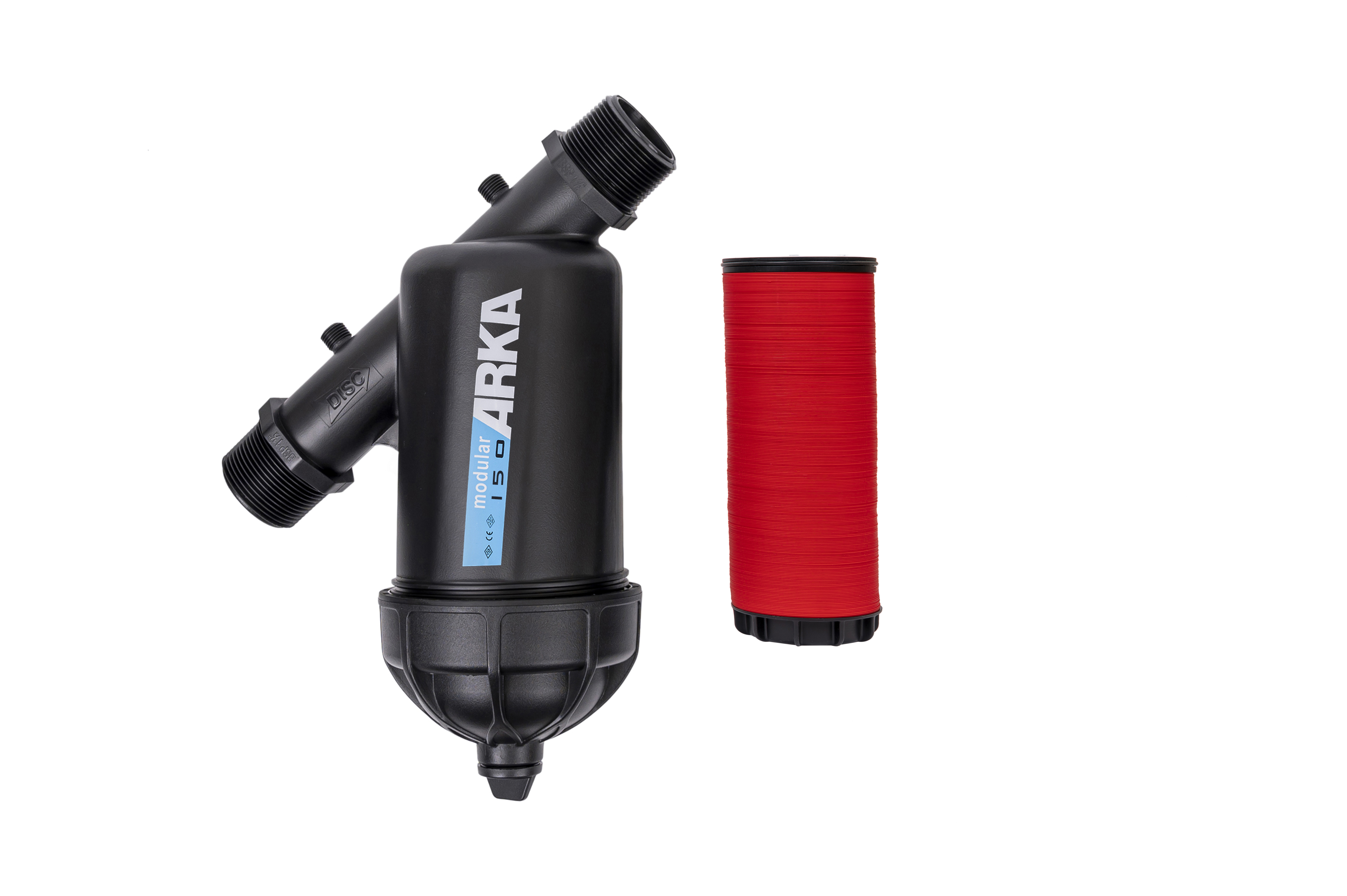
At its core, a disc filter consists of a robust outer housing unit containing a specialized filtration cartridge. This cartridge is not a flat mesh. Instead, it is a stack of tightly compressed, color-coded plastic rings known as discs. Each individual disc features a series of microscopic, diagonally cut grooves radiating from the outer edge toward the inner edge.
A central spine stacks and compresses these discs together. Their opposing grooves intersect to create a complex, three-dimensional filtration network. Industry professionals call this depth filtration. A standard screen filter only traps debris on a single two-dimensional surface. Furthermore, depth filtration forces water through multiple layers of winding pathways. Consequently, the filter captures and holds a significantly larger volume of suspended solids before requiring a cleaning cycle.
The operational process of these units combines centrifugal force with mechanical depth filtration to achieve superior water clarity.
Water Entry and Centrifugal Action: Raw water enters the filter housing and is directed through a directional baffle or helix element. This creates a strong spinning effect inside the chamber. The resulting centrifugal force pushes heavier particles, such as coarse sand and small pebbles, away from the disc stack and down toward the bottom of the housing. This crucial first step prevents premature clogging of the actual filter element.
Depth Filtration: The partially separated water is then forced inward through the tightly compressed stack of grooved discs. As the water navigates the microscopic, intersecting pathways, fine inorganic particles and soft organic matter become wedged securely within the grooves.
Clean Water Exit: Once the water reaches the hollow center of the disc stack, it is fully filtered. The clean water flows out through the central port and continues into the main irrigation line. This safeguards your sensitive micro-sprinklers and drip tape.
Recent agricultural data highlights a massive shift toward alternative water sources. Global water scarcity is intensifying alongside unpredictable climate patterns. Modern farming operations increasingly rely on reclaimed municipal wastewater and surface runoff ponds to meet their irrigation needs. This macro-trend has significantly accelerated the adoption of advanced depth filtration globally.
Precision agriculture relies on highly sensitive, low-flow drip emitters. As this becomes the global standard, the demand for robust, self-cleaning disc technologies now outpaces traditional screen filters. Upgrading your filtration is no longer optional. It is a fundamental requirement for climate-resilient agriculture. Modern growers understand that investing in high-tier filtration prevents catastrophic crop failure during peak summer months.
The most common mistake agricultural engineers and landscapers make is purchasing a filter based solely on pipe size. They entirely ignore the biological and chemical profile of the water source. Different water sources carry vastly different contaminant loads. Applying the correct decision-tree logic to your specific environmental reality is paramount.
Groundwater is typically free of biological contaminants like algae. However, it is often heavily laden with inorganic matter. This includes fine sand, silt, clay particles, and occasionally oxidized minerals such as iron and manganese.
For standard well water applications, a high-quality manual unit with a 120-mesh to 150-mesh rating is usually highly effective. Disc filters excel in well water scenarios. Their three-dimensional grooves can capture fine, needle-like sand particles that frequently slip straight through the square holes of cheap screen filters. If your well produces exceptionally heavy sand loads, installing a hydrocyclone sand separator upstream is a smart operational move. This handles the bulk of the heavy particulate matter before it reaches your primary filter.
Surface water presents one of the most challenging filtration scenarios for any grower. It is characterized by high levels of organic matter. This includes algae, moss, leaves, fish waste, and seasonal environmental debris.
Disc technology is considered the gold standard for surface water. Organic matter like algae is soft and malleable. When subjected to high water pressure, algae will simply deform and be sliced right through a standard two-dimensional screen. This eventually clogs downstream emitters. The deep, intersecting grooves of a disc filter trap this soft organic matter securely. For larger agricultural plots drawing from ponds or rivers, integrating a multi-unit disc filter system is strongly recommended. Organic loads can fluctuate wildly depending on summer temperatures and weather events.
Municipal water has already undergone rigorous treatment at a local facility. The biological load and suspended solids are virtually zero. However, as this water travels through miles of aging city infrastructure, it can easily pick up pipe scale, rust flakes, and occasional mineral deposits.
Because the contaminant load is low and predictable, a smaller, lower-maintenance manual filter is perfect for residential landscaping, commercial greenhouse drip systems, or urban vertical farms. A standard inline unit will easily capture any rogue pipe scale or rust. This protects sensitive drip tape without requiring frequent maintenance interventions.
Reclaimed water and treated sewage used for agricultural irrigation carry a high biological oxygen demand alongside high suspended solids. They also feature highly unpredictable debris profiles. The water may also contain corrosive chemical residuals from the treatment process.
This application demands heavy-duty infrastructure. You must select filters with corrosion-resistant polymer housings and chemical-resistant internal components. Furthermore, because the biological load is constant and heavy, automated backwashing systems are non-negotiable. Depth filtration plays a massive role in efficient sewage treatment for agricultural reuse. It ensures that reclaimed water meets the strict particulate standards required for modern micro-irrigation systems.
Beyond the filtration mechanism itself, the physical geometry of the filter housing dictates how it will integrate into your existing plumbing manifold. The shape of the housing affects fluid dynamics, pressure loss, and how easily maintenance personnel can access the internal components. Understanding these structural differences helps buyers and installers optimize their physical space.
Engineered with the filter element positioned at an acute angle relative to the main water line, the Y-type disc filter forms a distinctive shape.
The primary advantage of this design is its exceptional hydraulic efficiency. The water does not have to make a sharp 90-degree turn to enter the filtration chamber. Consequently, the system experiences a significantly lower pressure drop across the housing. It is highly streamlined. This makes it ideal for straightforward, inline mainline installations where vertical clearance might be limited. Specifically, this design is best suited for smaller agricultural setups, residential landscape irrigation, and environments where preserving baseline water pressure is a critical operational priority.
In contrast, the T-type disc filter features a housing where the filtration cartridge sits completely perpendicular to the flow of the main water line.
These housings generally accommodate larger, longer filtration cartridges. This provides a greater total surface area for debris accumulation. The most significant advantage is maintenance ergonomics. When a field technician needs to manually clean the filter, they can simply unscrew the top cap and pull the cartridge straight out vertically or horizontally. This orientation minimizes the amount of residual water that spills out during extraction, keeping the workspace cleaner. T-type designs are the preferred choice for larger agricultural manifolds, commercial greenhouses, and high-debris systems requiring frequent manual cleaning.
The decision between a manual unit and an automated system ultimately comes down to a calculation of upfront capital expenditure versus long-term operational labor costs. Both utilize the exact same depth filtration technology, but their management requirements differ drastically.
A manual filter requires physical human intervention to restore its filtration capacity. Picture a field worker having to shut off the isolation valves, manually unscrew a tight housing lid, and remove the mud-caked cartridge. They must then loosen the central spine and wash the discs thoroughly with a pressurized hose.
While this option is highly cost-effective upfront, it is only truly practical for small-to-medium farms where labor is readily available. It is also suitable for systems utilizing highly clean water sources like municipal water or deep wells. If your water source only dictates a cleaning schedule of once a month, a manual filter is a financially sound investment. Conversely, if you rely on a surface pond that experiences seasonal algae blooms, the daily labor required to clean a manual filter will quickly negate any initial cost savings.
To eliminate the headache of constant manual labor, an automatic disc filter utilizes an intelligent, self-regulating backflush cycle.
The system is equipped with a differential pressure switch that continuously monitors the water pressure both upstream and downstream of the filter. As debris accumulates in the disc grooves, the downstream pressure naturally drops. Once the pressure differential reaches a pre-set threshold, typically around 5 to 7 PSI, the system controller triggers a backflush cycle.
During this brief phase, a specialized valve reverses the flow of clean water back into the filter. Simultaneously, hydraulic pressure releases the central spine holding the discs together. This allows them to decompress and separate slightly. The reversed high-pressure water is forced through nozzles that spin the loose discs rapidly. This aggressive centrifugal spinning dislodges all trapped organic and inorganic debris, flushing it out through a dedicated drainage valve. The entire process takes only 10 to 20 seconds, and normal filtration resumes immediately.
While the initial investment for an automated array is higher, the return on investment is undeniable. It ensures optimal system pressure and continuous flow around the clock without the need for a full-time maintenance employee.
Selecting the correct structural design and automation level is only part of the equation. To satisfy the rigorous demands of an agricultural engineering project, the filter must be precisely sized according to flow dynamics and emitter specifications. Ignoring these technical metrics will inevitably lead to severe pressure drops, compromised water distribution uniformity, and premature equipment failure.
Irrigation filters are strictly rated by their maximum flow rate capacity, typically measured in cubic meters per hour or gallons per minute. A widespread misconception among buyers is that matching the filter inlet port size to the existing pipe diameter is sufficient for sizing. This is a critical error.
For example, a 2-inch pipe can carry varying volumes of water depending on the pump horsepower and the system velocity. If your system pushes 120 gallons per minute through a 2-inch line, but you install a 2-inch filter rated for only 80 gallons per minute, you will create a severe hydraulic bottleneck. The golden rule of irrigation filtration is to size the filter based on the peak flow rate of your system, not just the pipe size. High-performance models, like a compact 1 to 2-inch disc filter, are engineered to handle flow rates up to 25 cubic meters per hour while maintaining structural integrity under 10 bar of pressure. It is always safer to oversize your filter capacity. Undersizing forces water through the discs at excessive velocities, embedding debris so deeply that even automatic backflushing cannot dislodge it.
The filtration grade determines the physical size of the particles the filter will trap. This is measured in either mesh, representing the number of holes per linear inch, or microns, representing the actual metric size of the opening. In the disc filter industry, manufacturers utilize a standardized color-coding system for the discs to quickly identify their filtration grade.
You must match the micron rating to the specific requirements of your irrigation emitters. Drip tape features microscopic labyrinth emitters and requires highly stringent filtration, usually 130 microns or finer. On the other hand, large micro-sprinklers or impact sprinklers have larger orifices and can operate efficiently with coarser filtration around 200 microns.
| Disc Color | Mesh Rating | Micron Rating | Best Suited Emitter Type |
|---|---|---|---|
| Blue | 40 - 80 Mesh | 400 - 200 Microns | Large impact sprinklers, landscape rotors |
| Red | 120 Mesh | 130 Microns | Standard drip emitters, heavy sand removal |
| Yellow | 150 Mesh | 100 Microns | Thin-wall drip tape, precision greenhouse drip |
| Green | 200 Mesh | 55 Microns | Foggers, ultra-fine misting systems |
Even the most precisely engineered filtration equipment will fail if installed incorrectly or neglected. Implementing strict installation and maintenance protocols ensures the longevity of the housing and the internal discs.
Directional Flow Verification: Disc housings are strictly directional. Always locate the flow arrow stamped on the exterior of the housing and ensure it points toward the irrigation field. Installing the unit backward will collapse the disc stack and prevent water from passing through.
Pressure Gauge Implementation: You cannot visually inspect water pressure. Install a high-quality, liquid-filled pressure gauge immediately before the filter inlet and another immediately after the outlet. Monitoring the differential between these two gauges is the only accurate way to know when a manual filter requires cleaning.
Isolation Valves: Install heavy-duty ball valves or butterfly valves on both sides of the filter. This allows technicians to isolate the unit for maintenance without draining the entire mainline or shutting down the central pump station.
When performing manual maintenance, adherence to a standardized process prevents damage to the equipment. Always depressurize the system completely before opening the housing. Remove the disc cartridge and loosen the compression nut on the spine. Fan the discs out loosely. Do not remove them from the spine entirely. Use a high-pressure nozzle to spray the discs from the outside in, rotating the cartridge until all organic matter is removed.
Over time, well water high in calcium, iron, or manganese will cause hard mineral scaling on the discs. A standard hose cannot remove this scale. If the discs feel rigid or discolored, soak the entire loosened cartridge in a mild acidic solution, such as a 10 percent hydrochloric acid solution or standard household vinegar, for two to three hours. Rinse thoroughly with clean water before reinstalling.
Finally, the most common cause of housing leaks is a pinched, dry, or missing O-ring. Always inspect the rubber O-ring seated in the housing lid during every cleaning cycle. Apply a thin layer of silicone-based lubricant to ensure a watertight seal and prevent the rubber from degrading.
A proper disc filter is a foundational investment that protects the integrity of your entire irrigation network. By moving away from flat screen filters and embracing depth filtration, you safeguard your crops against the devastating effects of clogged emitters.
Choosing the correct structural design prevents frustrating installation bottlenecks. Furthermore, taking the time to honestly evaluate your specific water source will dictate whether a manual unit or a fully automated backflushing system is required to keep your farm running smoothly. Always calculate your peak flow rate and match your micron rating to your emitters to establish a filtration foundation that guarantees consistent crop health and operational efficiency.
Ready to upgrade your irrigation infrastructure? Explore the full range of high-performance, precision-engineered solutions at ARKA Irrigation. Match your specific agricultural needs with our advanced filtration technology to ensure maximum yield and system longevity.
A disc filter is vastly superior for algae management. Algae is soft and malleable. High water pressure can easily slice it and squeeze it through the flat, two-dimensional holes of a standard screen filter. The deep, three-dimensional intersecting grooves of a disc filter trap organic matter effectively, preventing it from reaching your emitters.
The cleaning frequency depends entirely on the biological and particulate load of your water source. For clean municipal water, inspecting and cleaning once a month is usually sufficient. For surface water like ponds or rivers, you may need to clean it daily or weekly. Always monitor your pressure gauges and initiate a cleaning cycle when the pressure drop exceeds 5 to 7 PSI.
Generally, you cannot retrofit a standard manual housing to become fully automatic. Manual housings lack the specific internal hydraulic pathways, pneumatic spines, and drainage ports required for automated backflushing. If you require automation, you must purchase a dedicated automatic system equipped with backflush valves, pressure differential sensors, and a central controller.
Manufacturers utilize a color-coding system to visually indicate the filtration grade, which is measured in microns or mesh size. While there can be minor variations between brands, the global agricultural standard typically uses Red to indicate 120 mesh and Yellow to indicate 150 mesh. Always consult the technical specification sheet to confirm the exact rating.
A clean disc filter should ideally present a pressure drop of 1 to 3 PSI, depending on the flow rate. As debris accumulates, this differential will increase. Field engineers generally recommend initiating a cleaning cycle when the pressure drop reaches 5 to 7 PSI. Allowing the differential to exceed 10 PSI can force debris deep into the disc grooves, making it incredibly difficult to clean.
No, disc filters are designed exclusively for suspended solids and physical particulate matter. They cannot filter out dissolved minerals, chemicals, or salts. If your water source contains high levels of dissolved iron that oxidizes upon contact with air, the oxidized iron particles can be caught by the filter, but the dissolved iron will pass straight through.


