
Views: 0 Author: Site Editor Publish Time: 2026-10-27 Origin: Site


Picture a scorching mid-July afternoon. You walk your rows only to find a vast section of drought-stressed crops. What caused this sudden failure? A tiny 0.5mm emitter orifice plugged solid with bacterial slime. Clogged emitters remain the most frustrating and expensive headache in precision agriculture today. A single localized blockage ruins designated flow rates. It leads to uneven watering, compromised fertigation, and ultimately, lost revenue.
Historically, static screens served as the first line of defense. But manually cleaning them drains labor resources. Your crew stops work, disassembles housings, and scrubs mesh layers while thirsty crops wait. To eliminate this bottleneck, automated disc technology steps in. It maintains optimal flow and shifts maintenance from reactive firefighting to proactive control. Let us explore the mechanics behind these self-cleaning units, compare their value against manual alternatives, and look at practical sizing strategies for your farm.
Precision irrigation relies on micro-emitters engineered to deliver water at exact flow rates. Ironically, the very design making these emitters highly efficient also renders them highly susceptible to clogging. Tiny flow paths and microscopic orifices demand pristine water. Recognizing the specific nature of waterborne contaminants is the critical first step in designing a reliable filtration architecture.
Recent global agricultural reports highlight a stark reality regarding water management. As extreme weather events increase and freshwater aquifers deplete, growers are heavily pivoting to marginal water sources. Reclaimed wastewater, agricultural runoff, and algae-rich surface ponds are now the norm. This shift demands hyper-resilient purification architectures. The industry is rapidly abandoning static screens in favor of automated depth filtration to secure crop yields against unpredictable water quality. Industry analyses confirm that physical and biological clogging remains the primary cause of premature system failure globally.
Irrigation water carries a diverse payload of particulate matter. This holds true whether the water is sourced from municipal lines, deep aquifers, or open reservoirs. These contaminants generally fall into three distinct categories.
Physical Debris: This group includes inorganic suspended solids like sand, silt, and clay. Well water frequently pulls up fine sand. Surface water from rivers carries heavy silt loads, particularly after heavy rainfall. Immediate physical blockages occur when these rigid particles exceed the diameter of the emitter labyrinth path.
Biological Threats: Open ponds and reservoirs act as massive breeding incubators for organic matter. Algae, bacteria, and aquatic microorganisms thrive in sunlit, nutrient-dense environments. Once drawn into the lateral lines, bacterial slime forms a sticky biofilm on the inner walls. This slime acts as a biological glue. It traps other fine particles and rapidly seals off the emitters.
Chemical Precipitation: Groundwater often contains elevated levels of dissolved minerals like calcium, magnesium, and iron. These minerals precipitate out of solution when hard water undergoes sudden temperature shifts, pH changes, or reacts with injected fertilizers. Calcium carbonate scale and iron sulfide build up gradually. They form a hard crust that chokes the flow path over time.
The financial hemorrhage caused by a clogged system extends far beyond buying replacement drip tape. Modern emitters possess orifices ranging from just 0.5mm to 1.5mm. Even a partial restriction of twenty percent disrupts the flow rate. This causes a severe drop in the Distribution Uniformity of the system.
Consequently, crops receive erratic watering. Plants near the manifold might become waterlogged. Meanwhile, plants at the far end of the lateral line suffer severe drought stress. This inconsistency directly correlates to stunted crop yields and degraded market quality. Factor in the exorbitant labor costs of paying a crew to walk acres of fields, identify blocked emitters, and splice in new tape sections. The necessity of a proactive filtration strategy becomes undeniable.
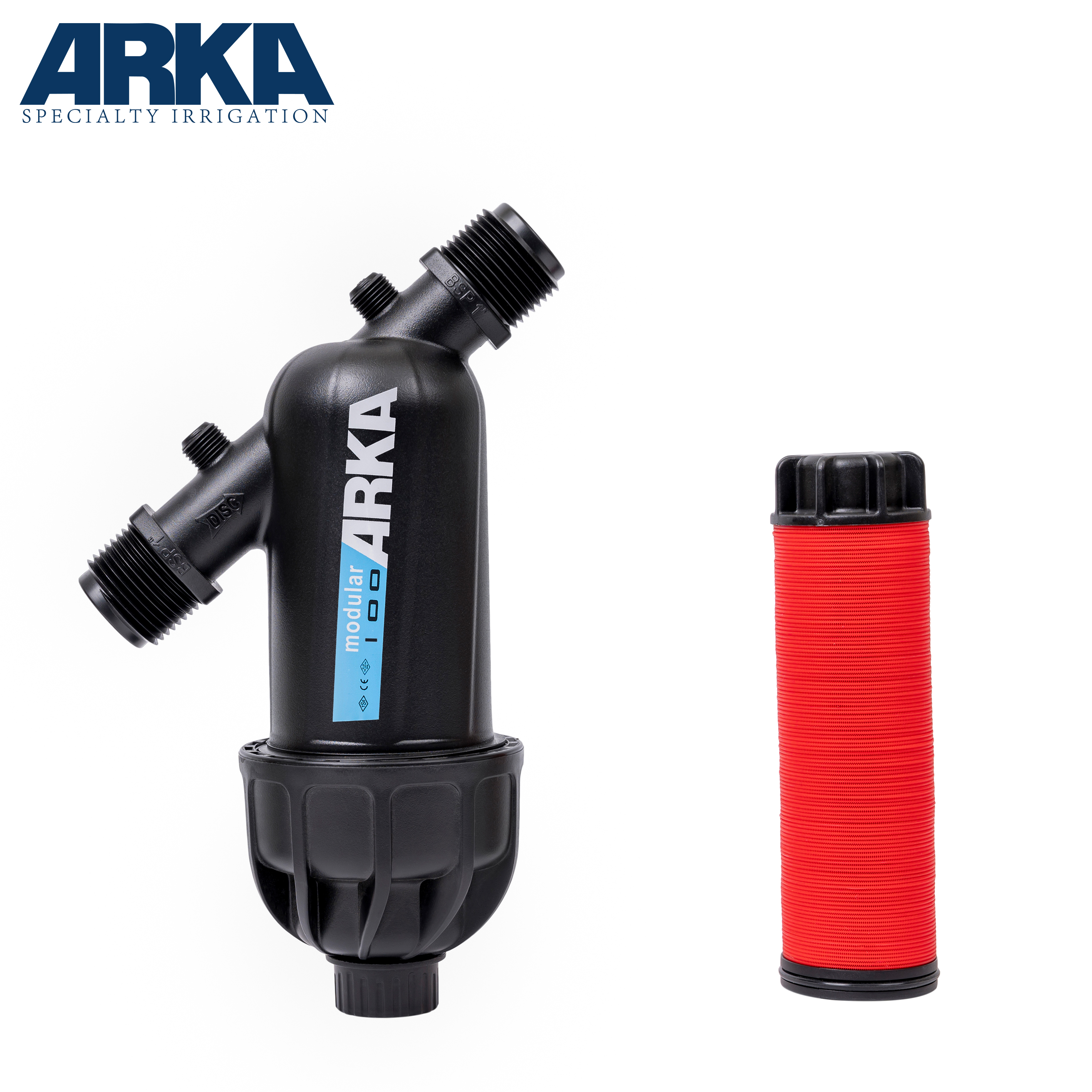
Engineers developed disc filtration technology to combat the complex contaminants found in agricultural water sources. Today, an automated drip irrigation filter utilizing this method represents the current industry benchmark for high-efficiency water purification.
A core of hundreds of synthetic, ring-shaped discs sits at the heart of the unit. These discs are tightly stacked around a central telescopic spine. Manufacturers mold them from rugged, chemical-resistant polymers like polypropylene or nylon. Both sides of each disc feature a series of precisely engineered diagonal grooves.
Hydraulic pressure tightly compresses these discs together. Their intersecting grooves instantly form a dense, three-dimensional network of microscopic flow paths. The specific size and angle of these grooves dictate the exact micron rating. Industry-standard color coding denotes this capacity. Red discs usually indicate a 130-micron or 120-mesh filtration level. This specific grade perfectly aligns with the strict requirements of standard micro-emitters.
Dirty water forces its way into the housing and moves from the outside of the compressed stack toward the hollow center. The water navigates the tortuous, labyrinth-like path. Solid particulates become wedged tightly within the groove intersections.
To fully grasp why disc technology dominates precision agriculture, we must look at the distinct differences between surface and depth filtration.
| Feature | Surface Screen Filter | Depth Disc Filter |
|---|---|---|
| Filtration Method | Single two-dimensional layer | Three-dimensional multi-layer matrix |
| Organic Matter Handling | Poor. Algae extrudes through mesh. | Excellent. Traps soft slime within deep grooves. |
| Maintenance Frequency | High. Blinds rapidly under heavy loads. | Low. Holds massive debris volume before triggering flush. |
| Best Application | Clean well water with hard sand. | Surface water, reservoirs, and wastewater. |
Traditional screen filters rely entirely on surface filtration. They use a single layer of woven metal or plastic mesh. Screens stop hard inorganic particles like coarse sand effectively. However, they fail miserably against organic matter. Soft algae and bacterial slime easily deform under water pressure and squeeze right through the mesh. They also flatten out against the screen, rapidly blinding the surface and causing a catastrophic pressure drop.
In contrast, disc technology provides robust depth filtration. Debris is not merely trapped on the outer edge. It is captured throughout the entire depth of the compressed stack. This allows the filter to retain a massively larger volume of soft organic matter before requiring a cleaning cycle.
The defining advantage of an automated setup is its ability to purge itself of accumulated debris without human intervention. This feat relies on a beautifully engineered hydraulic and electronic sequence known as backwashing.
A Differential Pressure switch wired to the central controller acts as the brain of the operation. This sensor continuously monitors the hydraulic pressure at two distinct locations. It reads the inlet pressure upstream of the discs and the outlet pressure downstream.
Water flows with minimal resistance when the disc stack is clean. Flow becomes restricted as organic matter and silt pack into the grooves. This causes the outlet pressure to drop. The controller registers the choke point once this pressure gap reaches a precise threshold, usually hovering between 0.5 to 0.7 bar. It instantly triggers the backwash cycle. Modern controllers also incorporate a timer override to guarantee a flush at regular intervals.
The self-cleaning execution is violent, rapid, and highly efficient. It typically lasts a mere fifteen to twenty seconds per pod. The controller isolates and cleans one unit at a time in multi-pod manifolds. This guarantees that filtered water continues flowing to the crops seamlessly.
First, the controller signals a three-way hydraulic valve at the base of the pod. The valve shifts to shut off the incoming dirty water and open a dedicated drainage exhaust port. The hydraulic pressure compressing the disc stack relieves simultaneously. The central spine extends, allowing the tightly packed discs to separate and decompress.
Next, clean filtered water from adjacent active pods forces its way backward into the hollow center of the decompressed stack. This high-pressure water shoots outward through specialized tangential nozzles located on the spine. The sheer velocity of these jets causes the loose discs to spin wildly.
The combination of reversed flow and aggressive centrifugal force violently ejects all trapped slime, algae, and sand. The contaminated flush water exits through the open exhaust port. Finally, the three-way valve shifts back. The discs slam shut under re-compression, and normal depth filtration resumes instantly.
Selecting the appropriate filtration mechanism is a critical architectural decision. It impacts both initial capital expenditure and long-term operational costs. You must evaluate the operational friction associated with manual configurations to determine if automation is justified.
A manual Y-type disc filter serves as a highly effective, budget-friendly solution for decentralized irrigation zones, hobby farms, or systems drawing from exceptionally clean municipal lines. This unit utilizes the exact same depth filtration technology while maintaining a relatively compact footprint.
However, the glaring limitation of the manual configuration is its total reliance on human intervention. A technician must physically walk to the manifold when the discs inevitably blind with debris. They must shut down the main water supply, unscrew the heavy housing, extract the spine, and scrub the discs with a high-pressure hose. Environments battling heavy algae blooms might require this grueling process daily. The resulting labor costs and frequent irrigation downtime quickly erode profit margins.
Transitioning to an automated system fundamentally shifts farm management. You move from reactive firefighting to proactive, continuous operation. The true return on investment lies in outright eliminating maintenance labor and eradicating human error. Forgetting to clean a manual filter for just a few days can starve crops of water and permanently cavitate a costly pump.
The initial procurement cost of automated valves and controllers is undeniably higher. Yet, commercial operations typically recover this premium within one to two growing seasons. The financial payback is realized through thousands of dollars in saved labor, significantly extended drip tape longevity, and optimized crop yields driven by flawless water distribution.
Appropriate sizing is paramount when specifying purification equipment. A unit that is too small experiences rapid choking and excessive pressure loss. An oversized manifold may lack the requisite backwash velocity to spin the discs effectively. Sizing is dictated primarily by your maximum flow rate and the biological load of the source water.
Engineers measure filtration capacity in cubic meters per hour or gallons per minute. You calculate the total flow requirement of your largest single irrigation zone to properly size a setup. Standard practice dictates adding a twenty percent safety margin to this baseline. This accommodates unexpected pressure fluctuations or sudden spikes in algae blooms during peak summer months.
Furthermore, the micron rating impacts volumetric capacity. Finer 130-micron grooves create inherently more resistance than coarser 200-micron grooves. You must align this carefully with the emitter manufacturer specifications.
The 2-inch self cleaning disc filter has firmly established itself as the gold standard in the commercial agricultural sector. It is perfect for mid-to-large-scale operations, orchards, and sprawling greenhouses. The two-inch designation refers to the inlet and outlet port diameters.
Looking at standard engineering data, a robust two-inch module processes roughly twenty to thirty cubic meters per hour. It operates safely up to ten bar of pressure. When your mainline demands massive flow rates, you simply install multiple two-inch units in parallel along a central manifold. This modular approach is brilliantly efficient. Clean water from the active pods diverts to flush the single pod undergoing cleaning, ensuring the field never experiences a drop in water delivery.
A massive multi-pod automated system is often over-engineered for residential landscaping, boutique vineyards, or small greenhouse applications. A compact garden drip filter is highly appropriate in these scenarios. These units offer the same depth filtration in a much smaller package. Many growers opt for semi-automatic models. A simple turn of a manual lever reverses the flow and spins the discs. This bridges the gap between tedious manual disassembly and expensive electronic automation.
Procuring top-tier equipment is only the first step. Flawless installation is critical to ensure the system functions according to its technical specifications. Incorrect placement or inadequate hydraulic conditions render even the most sophisticated automated setup completely ineffective.
The sequence of components along an irrigation manifold dictates the overall health of the network. The cardinal rule is to install the filtration unit downstream from the primary water pump. This ensures the housing operates under stable, positive pressure.
Placement requires strategic consideration when utilizing fertigation. Place the filter upstream of the injector if the fertilizer is entirely water-soluble. This protects the sensitive dosing equipment from raw river debris. Conversely, install a secondary purification unit downstream of the injector if you use organic or suspension-based fertilizers. This captures any un-dissolved chemical precipitates before they enter the field.
Insufficient backwash pressure is the single most common cause of failure in self-cleaning systems. The system requires a specific burst of kinetic energy during the cleaning cycle to decompress the stack and spin the discs fast enough to eject sticky organic matter.
Most commercial systems demand a minimum dynamic pressure of 2.5 to 3.0 bar at the flush valve to execute a successful purge. The discs will only partially clean if the source pump cannot sustain this pressure when the exhaust valve opens. This leads to a vicious cycle of continuous backwashing, wasted water, and eventual system failure. Always install analog pressure gauges immediately before the inlet and after the outlet. These gauges provide vital visual confirmation of the pressure differential.
Winterization is absolutely non-negotiable in regions subjected to freezing temperatures. Water left inside the rigid plastic housing will expand upon freezing and shatter the reinforced casings. You must completely drain the manifold at the conclusion of the irrigation season. Extract the disc spines and store them in a climate-controlled environment.
Microscopic layers of biological biofilm or chemical scale can permanently bond to the plastic grooves over multiple seasons. Standard backwashing cannot remove this. An annual chemical bath restores the discs to factory condition. Soak the disassembled discs in a ten percent bleach solution for two hours to dissolve organic bonds. Submerge the discs in a ten percent phosphoric acid solution for chemical scaling. Always flush the discs vigorously with fresh water after chemical treatments.
Safeguarding your irrigation infrastructure is an absolute necessity in modern agriculture. An automated disc system provides the ultimate, uncompromising defense against the diverse contaminants threatening your crop yields.
This technology efficiently prevents severe emitter clogging by leveraging three-dimensional depth filtration and pressure-triggered backwashing. It simultaneously eliminates the grueling labor associated with manual scrubbing. The initial capital expenditure exceeds that of standard static screens, but the long-term operational savings heavily justify the investment. You gain extended equipment life, zero downtime, and flawless fertigation uniformity.
Do not let preventable blockages dictate your harvest. Assess your specific water quality and volumetric flow rates today. Upgrade your filtration strategy with reliable equipment from Arka Irrigation to secure the future of your fields.
Yes. Disc technology traps dense inorganic matter like sand highly effectively. However, relying solely on discs for well water with extreme sand loads causes the unit to backwash constantly. It is an engineering best practice to install a centrifugal sand separator as a pre-filter in these scenarios. The separator removes the heavy sand, leaving the discs to capture the remaining fine particulates.
A screen filter utilizes a single layer of stainless steel or plastic mesh. It works fine for hard particles, but soft organic matter like algae easily extrudes through the mesh. A disc filter utilizes tightly stacked, grooved rings to trap debris across multiple layers. This tortuous path makes it far superior for handling organic matter and surface water sources.
No, grid alternating current is not strictly required. Industrial controllers often use 24V AC power, but most modern agricultural filtration systems are designed for remote field operation. They utilize low-voltage DC latching solenoids powered by standard batteries or small solar panels. This makes them completely independent of the electrical grid.
Manufacturers build the discs from highly durable, chemical-resistant polymers. A set of discs easily lasts between five to ten years under standard operating conditions. You must properly winterize them and subject them to annual acid or chlorine baths to prevent permanent scaling to achieve this lifespan.
All filtration devices introduce friction and cause a slight pressure drop as water passes through them. However, an automated system cleans itself proactively as soon as debris buildup causes a specific pressure differential. It maintains a much more consistent and stable downstream water pressure compared to manual alternatives.
Water consumption during a backwash cycle is remarkably low. A standard two-inch pod typically flushes for fifteen to twenty seconds, consuming approximately ten to fifteen gallons of water per cycle. This highly efficient use of water makes automated disc technology ideal for regions facing severe water scarcity.
Disc filtration can handle iron, but it requires careful management. Soluble iron passes through the filter, but iron that has oxidized and precipitated out of solution will be trapped by the discs. You will need to perform routine acid baths more frequently to dissolve the iron sulfide crusts that form on the plastic grooves.


