
Views: 0 Author: Site Editor Publish Time: 2026-10-25 Origin: Site


Space is always a luxury in modern pump rooms and industrial skids. Traditional sand media tanks eat up vast amounts of valuable floor room. Manual screen filters demand constant maintenance schedules that rapidly drain operational budgets. Addressing these spatial and operational constraints requires a fundamental shift in separation technology. An automatic disc filter featuring a 58mm internal dimension directly solves this problem. This specific geometry offers a highly efficient, self-cleaning solution engineered precisely for restricted environments.
In this comprehensive guide, we will analyze the exact dimensions and fluid dynamics of this technology. We will break down various housing configurations to help you specify the optimal equipment for your next fluid management project.
For project planners validating technical requirements, understanding the physical mechanics of disc filtration is the very first step toward proper system sizing. Basic surface screens merely block debris at a single layer. These advanced units provide a unique combination of surface and depth filtration. This dual-action approach makes them highly resilient against highly variable water qualities.
The core mechanics rely on a series of flat synthetic rings stacked tightly together on a central spine. Each disc features microscopic, diagonally cut grooves radiating from the center to the outer edge. When these color-coded components are compressed together by a mechanical spring or hydraulic pressure, the intersecting grooves create a complex three-dimensional filtration matrix.
As raw water flows from the outside of the stack to the inside, suspended solids and sand particles become trapped within this deep matrix. This mechanism is exceptionally effective at capturing soft, deformable organic matter like algae or biological slime. Such materials would typically extrude right through a standard wire mesh. The color coding corresponds to specific micron ratings, allowing operators to standardize filtration grades across a facility.
In technical specifications, the term 58mm typically refers to the internal diameter of the cartridge assembly. This specific measurement represents an optimal engineering sweet spot in fluid dynamics.
The 58mm dimension is large enough to support a robust flow rate and minimize internal head loss. Simultaneously, it remains small enough to keep the external housing extremely compact. Consequently, engineers can specify multiple pods in a single parallel manifold. This modular approach achieves massive cumulative flow rates without requiring the vast floor space demanded by traditional sand media tanks.
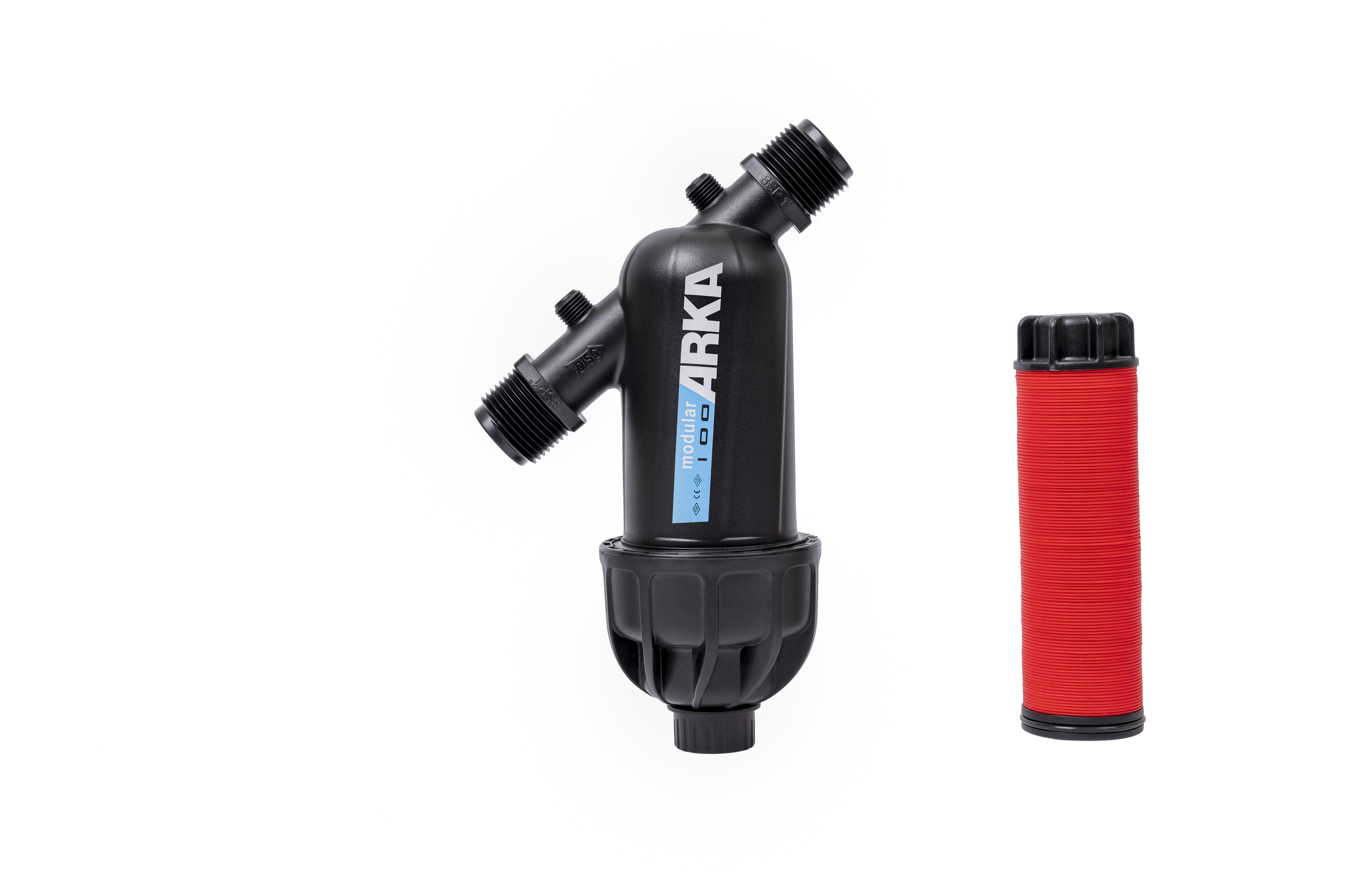
Looking at recent industrial and agricultural developments, there is a massive global shift toward decentralized modular water treatment. Rapid urbanization and the need for quick-deployment agricultural setups are pushing engineers away from massive concrete infrastructure. The industry is moving decisively toward skid-mounted and containerized solutions.
In these micro-environments, every single square inch matters. Spatial efficiency dictates the entire system design. The 58mm dimension aligns perfectly with this trend. It allows technicians to achieve high-capacity water purification inside standard 20-foot shipping containers or cramped utility sheds. By utilizing this compact footprint, facilities can upgrade their filtration capabilities without expanding their physical building footprint.
Selecting the correct housing configuration is critical for minimizing pressure drop. It ensures the new system fits seamlessly within your existing piping infrastructure. The two most prominent body styles utilized in commercial engineering are the TX-type and the Y-type.
This configuration is characterized by its inline geometry. The fluid inlet and outlet are aligned on the exact same horizontal axis, while the internal cartridge sits perpendicular to the flow. This geometric design offers a perfectly balanced pressure distribution across the housing.
Furthermore, it allows for exceptionally easy maintenance access. Operators can remove the top cap to extract the internal cartridge without ever disturbing the main pipeline connections. For facilities looking to optimize their straight-line setups, integrating a high-quality TX-type disc filter ensures minimal deviation in pipeline routing. This layout is widely specified in industrial skids where lateral space is constrained but vertical clearance is readily available.
In contrast, the alternative design features a housing where the cartridge is positioned at a 45-degree angle relative to the main flow axis. The primary advantage here is superior hydrodynamics.
Because the fluid does not have to make a sharp 90-degree turn to enter the separation chamber, the internal head loss is measurably lower. The Y-type disc filter is highly suitable for installations positioned near corners or on angled manifolds. The downward angle of the body actively facilitates the natural settling of heavier particles toward the drain port. This gravitational assist makes the flushing process even more efficient.
| Engineering Feature | TX-Type Configuration | Y-Type Configuration |
|---|---|---|
| Internal Flow Path | 90-degree perpendicular turn | 45-degree angled entry |
| Hydraulic Head Loss | Moderate | Exceptionally Low |
| Optimal Installation | Straight inline manifolds | Corners and ground-level setups |
| Maintenance Access | Vertical cap removal | Angled cartridge extraction |
Material selection carries just as much weight as physical dimensions. Carbon steel and stainless steel have historically dominated the market. However, advanced engineering polymers have now become the undisputed standard for modern micro-irrigation and harsh industrial systems.
Agricultural and industrial water sources frequently transport highly corrosive elements. Precision farming systems regularly inject liquid fertilizers and acids directly into the irrigation stream. Industrial equipment often processes brackish well water or aggressive chemical wastewater.
Constructed from high-grade engineering polymers like glass-reinforced polyamide, a modern plastic disc filter offers absolute immunity to rust and galvanic corrosion. Metal housings require specialized epoxy coatings to survive saline environments. Reinforced plastics maintain their structural integrity indefinitely regardless of the fluid pH level.
The density of reinforced polyamide is merely a fraction of cast iron. This lightweight characteristic translates to measurable logistical benefits on the job site. A metal housing of equivalent capacity often requires forklifts to maneuver into position. In stark contrast, a plastic 58mm pod can typically be lifted and bolted into place by a single technician. This drastically lowers the mechanical stress on supporting piping infrastructure.
For facility managers, transitioning from manual scrubbing to automated systems represents a massive operational upgrade. The core advantage lies in a highly efficient self-cleaning mechanism. It minimizes human intervention and drastically lowers flush water volumes.
The automatic backwash sequence is a precisely engineered hydraulic event. It is primarily governed by a Differential Pressure switch. Under standard operating conditions, particulate debris accumulates within the grooves and restricts fluid flow. This causes a measurable drop in pressure between the inlet and the outlet.
When the differential pressure reaches a specific threshold, typically set between 0.5 bar and 0.7 bar, the controller sends an electrical signal. The three-way valve shifts to close off the raw inlet and open the drainage port. The hydraulic pressure keeping the stack compressed is released. Clean fluid from adjoining pods is forced into the spine in the reverse direction. High-velocity jets spray outward, causing the loosened rings to spin rapidly. This centrifugal force dislodges trapped biological matter in just 15 to 25 seconds.
The versatility of the 58mm footprint makes it an optimal choice across demanding sectors. Physical space is often limited, yet high flow rates and reliable particle retention remain non-negotiable.
Protecting delicate emitters is paramount in modern agriculture. Emitters feature microscopic labyrinths that dictate flow. Even minor accumulations of clay or algae cause irreversible clogging and depress crop yields.
Serving as an exceptionally reliable drip irrigation filter, this technology outshines standard screens. The grooved discs provide depth filtration to trap flexible organic materials. Installed at the main pump station, these compact units ensure agricultural water meets stringent cleanliness standards.
Beyond agriculture, these units are heavily utilized in municipal environments. Artificial lakes and golf course irrigation networks frequently suffer from high biological loading. The compact systems can be easily hidden in underground vaults to maintain water clarity.
Furthermore, large-scale water treatment factories utilizing Reverse Osmosis membranes require strict pre-treatment. Membranes are highly sensitive to raw particulates. The automated disc system acts as a robust primary barrier to reliably reduce the Silt Density Index and extend the lifespan of costly membrane elements.
Transitioning to a compact automated system requires precise engineering calculations. Proper setup dictates the long-term hydraulic stability of the entire fluid network.
When integrating equipment into a modular skid, spatial planning is critical. You cannot size a unit based solely on the pipe diameter. You must calculate the maximum expected flow rate against the required filtration grade. High biological loads generally dictate a lower flow velocity through the matrix to prevent forcing organic matter through the grooves.
When connecting multiple units in parallel, ensure adequate physical clearance remains between the pods. Technicians need room to access the command tubes and remove the outer housing. The system must maintain a minimum dynamic pressure of 2.5 bar at the backwash inlet. If the main pump cannot sustain this during the flushing cycle, a pressure-sustaining valve must be installed.
Although the system cleans itself, establishing a routine inspection schedule prevents catastrophic failures. Once a year, open the housing to visually inspect the internal stack. In environments with hard water, calcium scaling may occur. The entire stack can be removed and soaked in a mild acid solution to dissolve mineral buildup. Technicians should also inspect the micro-tubing for leaks and blow out the lines with compressed air before winter freezing.
The automatic disc filter 58mm fundamentally optimizes compact installations. By packing a massive filtration surface area into a minimal physical footprint, it delivers reliable fluid purification for the tightest pump houses. Utilizing durable engineering plastics prevents corrosion and ensures long-term operational stability.
Whether your pipeline geometry demands a TX-type or a Y-type configuration, upgrading to this self-cleaning technology eliminates manual scrubbing and protects highly sensitive downstream equipment. To achieve optimal hydraulic performance for your specific application, explore professional irrigation and industrial filters designed for your exact project requirements.
These systems utilize a standardized color-coding system to indicate their filtration grade. Common options include 20 microns for advanced industrial pre-treatment, 50 microns for fine landscape water, 100 microns for standard agricultural irrigation, 130 microns for general water transfer, and 200 microns for coarse pre-filtration. Selecting the correct rating requires balancing fluid purity against the acceptable frequency of backwash cycles.
The primary engineering difference lies in the filtration methodology. A standard screen provides surface filtration to block hard inorganic materials like quartz sand. It struggles heavily with organic matter. Stacked discs provide depth filtration. The intersecting grooves create a complex matrix vastly superior at capturing flexible biological materials like algae. It traps them deep within the grooves rather than just on the surface.
Yes, this specific configuration is exceptionally common and highly recommended in agricultural settings. The angled hydrodynamic design provides a smoother flow path resulting in a lower pressure drop across the housing. This efficiency is critical in micro-irrigation networks where conserving pump energy and maintaining consistent emitter pressure is vital.
The network must maintain a minimum dynamic pressure usually around 2.5 to 3.0 bar during the actual backwash cycle. This pressure is absolutely necessary to overcome the tension of the internal spring, separate the stacked rings, and generate enough high-velocity centrifugal force to spin them. If the facility pressure drops below this threshold during flushing, the unit will not clean properly.
A continuous backwash loop is usually caused by a clogged command tube, a faulty Differential Pressure switch, or inadequate backwash pressure failing to clean the discs fully. Check the switch calibration and ensure your dynamic pressure stays above 2.5 bar during the flush. If the discs remain dirty after a cycle, the system will immediately read a pressure drop and trigger another flush.
Flow capacity depends heavily on water quality and the selected micron rating. For relatively clean water utilizing a 130-micron matrix, a single 1-inch or 2-inch pod can typically handle between 5 to 20 cubic meters per hour. Always consult the manufacturer head loss charts for precise sizing based on your specific biological load.


