
Views: 0 Author: Site Editor Publish Time: 2026-10-17 Origin: Site


Walk into any failing agricultural site, and you will likely find clogged emitters. Many farm managers immediately blame the water quality. The real culprit is usually a mismatch between the water source, the emitters, and the filtration equipment. A proper irrigation filter is not just an optional accessory. It is the absolute heart of your fluid management strategy. Getting this right prevents catastrophic pressure drops and saves thousands in premature equipment replacement.
In the field, engineering mistakes compound quickly. When you pump raw river water through a basic mesh screen into fine drip tape, disaster strikes almost immediately. Soft organic matter like algae simply extrudes through the mesh under pressure. These contaminants bypass the screen and travel straight into the distribution lines. The emitters choke. Consequently, pump pressure spikes, wasting massive amounts of electrical energy. You end up replacing expensive drip lines seasons before their engineered lifespan ends. Understanding the exact nature of your fluid dynamics is the only way to protect your infrastructure.
Every drop of water carries unique physical and chemical challenges. Surface water drawn from lakes, rivers, or open canals teems with organic matter. You will fight algae, seasonal debris, and suspended biological solids. Groundwater drawn from deep wells might look crystal clear, but it often contains fine sand, silt, or heavy mineral scale. Municipal water is pre-treated but can still carry pipe rust and installation debris.
Specifically, surface water demands depth filtration to trap soft, malleable organics before they deform and slip through. In contrast, groundwater requires centrifugal separation or precise surface filtration to catch hard, rigid particulates. Treating both sources with the same equipment guarantees failure.
The delivery mechanism dictates your required filtration precision. Center pivot sprinklers feature large nozzle orifices. They can easily tolerate minor impurities without clogging. Micro-sprinklers are significantly less forgiving and require cleaner water to maintain their spray patterns. Drip systems are the most vulnerable technology on the market.
The labyrinth channels inside modern drip tapes are incredibly narrow by design. Effective drip irrigation filtration demands a micron rating significantly smaller than the emitter pathway. If your emitter labyrinth is 130 microns wide, your setup must reliably catch particles at 100 microns or smaller. Leaving zero margin for error results in blocked flow and dead crops.
Selecting the right technology requires matching the mechanics of the filter to the physical state of the debris. Here is a practical breakdown for field application.
| Technology Type | Ideal Water Source | Target Impurities | Maintenance Requirement |
|---|---|---|---|
| Screen | Clean Groundwater / Municipal | Hard sand, pipe scale, rigid debris | Low to Medium |
| Disc | Surface Water / Mixed Sources | Algae, soft organics, fine sand | Medium |
| Sand Media | Heavy Surface Water / Wastewater | High organic loads, heavy slime | High |
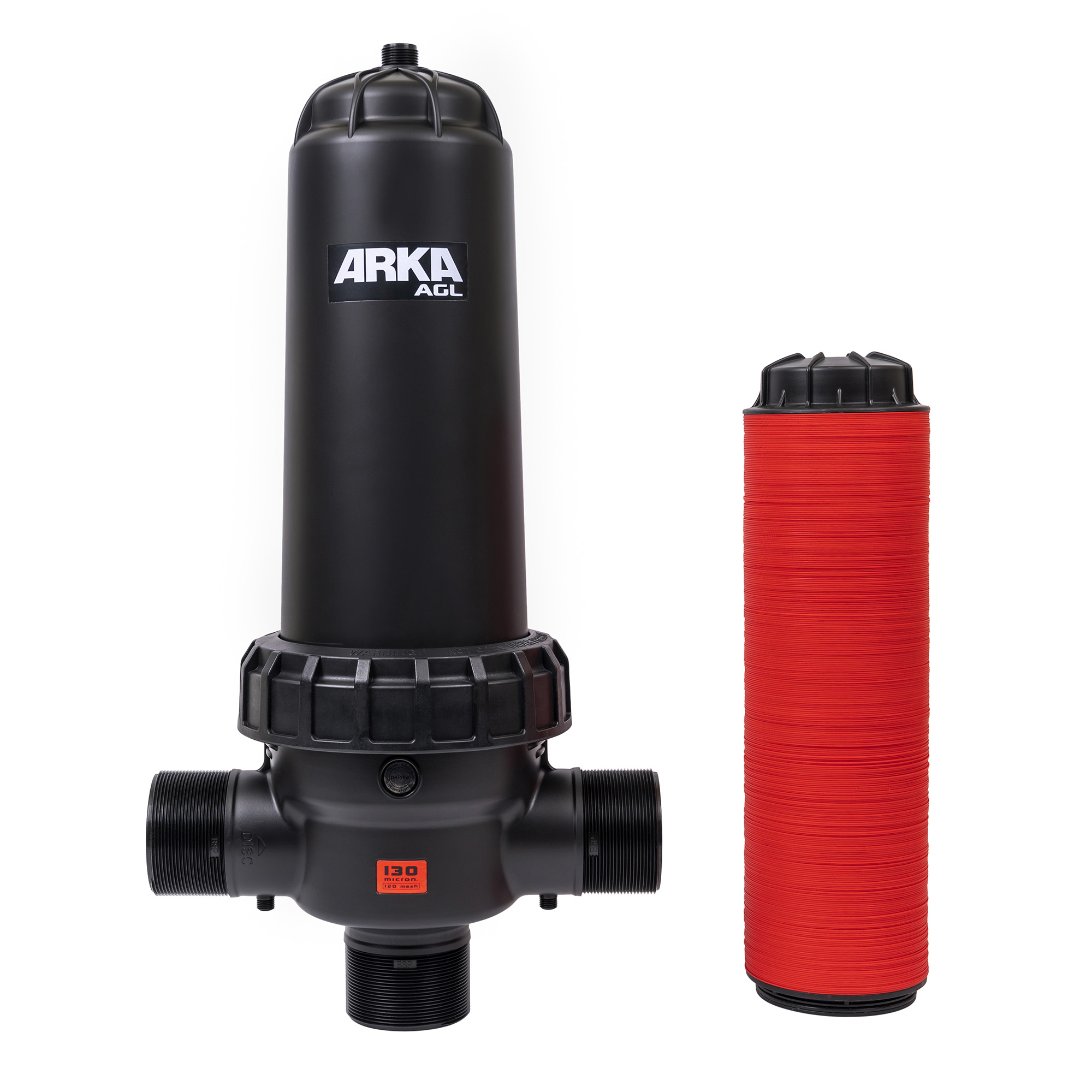
Let us look at practical field applications to see how modern engineering solves complex water issues. The 3-Inch AGL disc filter demonstrates the exact specifications needed for robust commercial farming. This specific unit handles a maximum flow rate of 50 cubic meters per hour. It features a highly durable working pressure of 10 bar.
The core advantage lies in its internal geometry. Grooved plastic discs stack tightly together to create a three-dimensional filtration matrix. When pressurized water flows through, the varying groove depths trap both hard sand and soft biological matter simultaneously. This dual-action depth capability makes it highly effective for variable agricultural water sources, providing a buffer against sudden changes in water quality.
Climate volatility is rapidly forcing a shift in agricultural engineering. Water scarcity means commercial growers can no longer rely on pristine aquifers. Farmers are increasingly utilizing lower-quality alternative sources, including reclaimed municipal wastewater and brackish runoff. This macro trend drives a massive demand for highly adaptive, heavy-duty filtration.
Standard single-layer screens are quickly becoming obsolete in large-scale commercial farming. The industry is moving aggressively toward automated, self-cleaning depth filtration systems. Modern agricultural setups must maintain consistent flow rates and pressure levels despite wildly fluctuating incoming water quality. Engineers are now designing systems with built-in redundancy to handle sudden algae blooms caused by rising global temperatures.
Translating theory into a purchasing decision requires a strict operational checklist. First, conduct a comprehensive water test during your worst-case seasonal conditions. Second, check the exact micron requirements provided by your emitter manufacturer. Third, calculate your peak system flow rate and add a twenty percent safety margin.
Furthermore, you must evaluate your physical footprint and available maintenance resources. If farm labor is scarce, invest heavily in automatic backwashing units. If you deal with heavy organic loads from open reservoirs, prioritize depth filtration over surface filtration. A reliable screen filter works perfectly for clean well water, but a grooved disc system provides far better insurance against biological fouling.
Most standard drip tapes require 120 mesh to 130 micron filtration. Always verify the manufacturer specifications. High-flow emitters might tolerate 100 mesh, while ultra-low-flow tapes demand 150 mesh or finer to prevent labyrinth blockages.
Cleaning frequency depends entirely on raw water quality and system sizing. Manual units might require daily flushing during peak summer algae seasons. Automated systems backwash based on pressure differential, typically triggering a cleaning cycle when the pressure drop across the unit reaches 0.5 bar.
Using a standard mesh screen for pond water is highly discouraged. Pond water contains high levels of soft biological matter. Algae will quickly extrude through the mesh under pump pressure, leading to severe downstream clogging. Depth filtration is mandatory for open water sources.
Stop letting poor water quality dictate your crop yield and maintenance budget. Upgrading your filtration setup reduces pump wear, saves countless labor hours, and dramatically extends the life of your distribution lines. Evaluate your current pressure drops and maintenance logs today. If your crew is constantly walking the field to unclog emitters, your system is already failing.
It is time to implement professional-grade solutions engineered specifically for tough agricultural environments. Analyze your water source, check your emitter specs, and secure the right equipment. Find the exact match for your specific flow rates and water challenges at ARKA Irrigation to protect your infrastructure and maximize your harvest.


