
Views: 0 Author: Site Editor Publish Time: 2026-10-14 Origin: Site


Picture this. You are walking your fields during peak growing season, only to discover localized dry patches. Miles away from the pump station, microscopic debris has bypassed an inadequate screen. It has permanently clogged your micro-sprinklers. Clogged emitters do more than just ruin crop yields. They waste daily resources, cause uneven fertigation, and inflate labor costs as workers scramble to replace damaged lines.
Modern agricultural water sources demand a highly robust defense mechanism. This holds true whether you draw from turbid surface rivers, algae-rich open ponds, deep wells, or treated effluents. Poor water quality cannot be an excuse for system failure.
This is where grooved-ring technology steps in. In this comprehensive guide, you will learn exactly how this unique purification mechanism works. We will explore why it outperforms traditional methods under harsh biological loads. Finally, we will detail how to select the exact specifications needed to protect your farm infrastructure.
Farm operators must first understand the physical fluid dynamics behind their equipment to make informed capital expenditure decisions.
At the core of the housing lies a tightly compressed stack of synthetic, ring-shaped discs. Think of a tall stack of heavy-duty poker chips manufactured from durable, agricultural-grade plastics. The flat surface of each individual ring features microscopic, diagonally etched grooves.
When these rings are stacked and clamped together via a central spine and spring mechanism, the intersecting grooves create a complex, three-dimensional network of microscopic passageways. The physical size of these intersecting channels dictates the filtration grade. Manufacturers universally identify this through a color-coding system. For instance, a high-quality disc filter often utilizes red rings to indicate a 130-micron or 120-mesh rating. This rigid engineering guarantees that particles larger than the designated micron threshold simply cannot pass through the matrix.
Filtration systems generally fall into two distinct categories. Surface filtration acts similar to a window screen, while depth filtration functions more like a sponge. The brilliance of the grooved ring stack is its ability to effectively utilize both methods.
Pressurized water is forced from the outside perimeter of the stack toward the hollow inner core during a standard irrigation shift. As turbid water hits the exterior, larger debris such as twigs or large sand grains is instantly trapped on the outer surface. However, smaller suspended solids and malleable organic matter bypass the exterior. They are then forced to navigate the tortuous, winding grooves between the compressed rings.
These finer contaminants become wedged deep within the stack. This three-dimensional trapping matrix prevents soft, deformable materials from squeezing through the barrier. That squeezing effect is a notorious failure point in single-layer mesh systems.
Farming environments present uniquely harsh challenges that municipal water treatment facilities rarely face. The physical properties of synthetic depth matrices align perfectly with the chaotic realities of modern agriculture.
Farms frequently rely on surface water drawn from canals or open reservoirs exposed to sunlight. These sources carry immense biological loads, including algae blooms, slime, and decaying plant matter. When a slimy mass of algae hits a standard flat stainless-steel screen, hydraulic pressure causes it to flatten out. It smears across the surface like paste. This rapidly blinds the mesh and causes a severe, immediate pressure drop.
Because the grooved stacks utilize a deep labyrinth of channels, organic materials are distributed throughout the entire volume of the rings. They do not accumulate strictly on a single flat plane. This structural advantage allows the system to absorb heavy biological spikes without tearing or instantly choking the water flow.
Micro-irrigation networks are incredibly sensitive. The orifices on modern pressure-compensating drip emitters are microscopic. Even a minor accumulation of silt or biological slime can permanently block water emission. This leads to localized drought stress and stunted plant growth.
Installing a highly reliable drip irrigation filter is a mandatory insurance policy for these systems. The synthetic rings are rigid and tightly compressed. Therefore, the pore size does not stretch or distort under pressure fluctuations. If a field zone is equipped with a 130-micron stack, the physical geometry guarantees absolute particle sizing. This protects the massive financial investment buried in the field.
The internal volume created by thousands of intersecting grooves gives these stacks a significantly higher dirt-holding capacity compared to flat screens of an identical surface area. By capturing contaminants throughout the depth of the matrix, the unit can retain a massive mass of suspended solids before the pressure differential triggers a cleaning cycle. For the grower, this translates directly to longer, uninterrupted watering shifts.
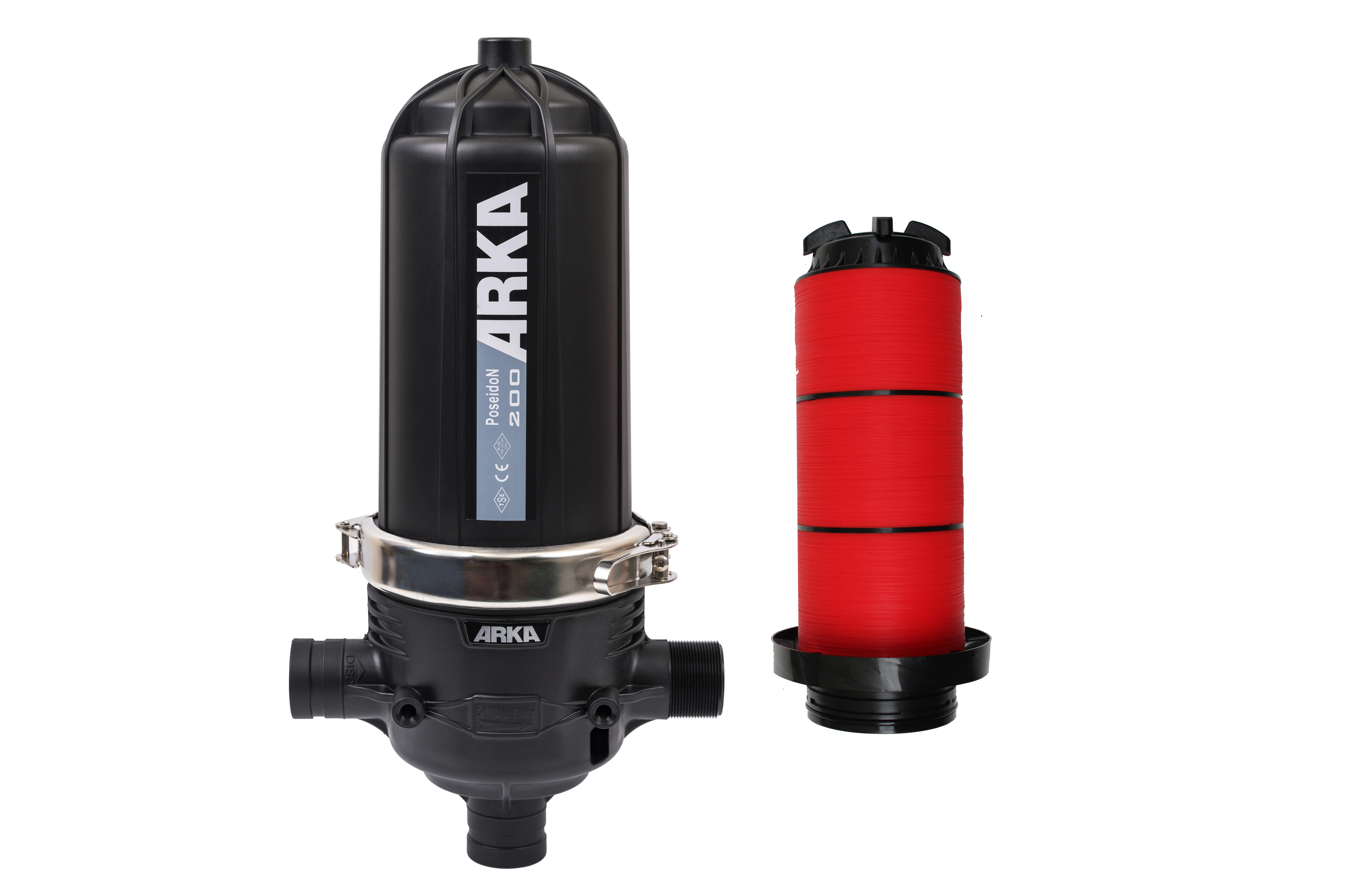
Agronomic requirements vary drastically depending on the acreage, crop type, and water source. Consequently, engineers have developed several distinct configurations to scale from small hoop houses to massive commercial orchards.
Sending a farmhand to manually scrub equipment every few hours is economically unviable for medium to large-scale commercial acreage. An automatic disc filter solves this labor bottleneck. It utilizes a pressure differential switch linked to a central controller.
As the matrix accumulates debris, water pressure on the downstream side naturally drops. Once the difference between the inlet and outlet reaches a pre-set threshold, typically 5 to 7 psi, the controller initiates a self-cleaning backwash cycle. The hydraulic compression on the stack is released, allowing the individual rings to separate slightly. High-pressure clean water is then blasted from the inside out, causing the rings to spin rapidly. This centrifugal force violently ejects the trapped debris out through a flush valve. The entire sequence takes seconds and requires zero human intervention.
For smaller agricultural plots, nurseries, or as secondary backup security at the head of individual field blocks, a Y type disc filter offers a highly practical, cost-effective solution. A standard 2-inch T-type or Y-type housing can comfortably handle flow rates up to 20 or 25 cubic meters per hour. Installed directly into existing PVC or poly pipework, these compact units deliver high-performance filtration without a massive footprint.
While these are manual units, their ergonomic design allows for rapid maintenance. An operator can quickly depressurize the line, unscrew the outer cap, extract the internal spine, and hose down the loosened rings. They provide premium depth filtration without the massive capital expenditure of an automated manifold.
Engineers utilize modular scalability when an operation requires thousands of gallons per minute. Individual automatic housings are installed in parallel along a massive central manifold. This design offers sequential backwashing. When the system triggers a cleaning cycle, only one pod backwashes at a time. It utilizes the clean water produced by the adjacent active pods. As a result, the primary flow to the crops is never disrupted.
Engineers typically evaluate three primary technologies when designing pump station headworks. Understanding the objective differences is crucial for preventing costly design flaws.
| Feature | Grooved Ring Matrix | Screen Filters | Sand Media Tanks |
|---|---|---|---|
| Filtration Type | Surface and Depth combined | Surface only | Depth only |
| Organic Matter Handling | Excellent. Resists blinding and extrusion. | Poor. Algae flattens and squeezes through. | Outstanding for extreme biological loads. |
| Backwash Water Usage | Very Low. Fast centrifugal spin cycle. | Low to Moderate. | Very High. Requires prolonged flushing. |
| Footprint & Weight | Compact and lightweight plastic housings. | Compact. | Massive. Requires heavy steel or fiberglass tanks. |
| Maintenance Cost | Low. Rings rarely need replacement. | Low. Screens can tear and need swapping. | High. Sand degrades and requires costly replacement. |
Screens utilize a woven stainless steel or plastic mesh to capture debris on a single plane. They generally carry a lower upfront capital cost and perform exceptionally well in clean well-water applications where the primary contaminant is strictly coarse inorganic sand. However, the deep grooved matrix excels in surface water. It prevents the extrusion of soft organic particles, a scenario where algae simply squeezes through the square holes of a flat screen under high pressure.
In contrast, sand media systems utilize massive carbon steel or fiberglass tanks filled with crushed silica or basalt. They possess the absolute highest dirt-holding capacity and remain the standard for extreme biological loads. Yet, modern synthetic depth matrices require a fraction of the physical footprint. They also require significantly less water and pressure to perform a backwash. The synthetic rings never need to be replaced, unlike sand media which degrades, channels, and requires costly, labor-intensive replacement every few years.
Allocating capital to proper headwork infrastructure is not merely about equipment acquisition. It is a strategic move to protect broader agricultural investments and slash variable operating expenses.
Recent analyses of the agricultural engineering sector reveal a massive shift in how commercial farms approach water treatment. Driven by climate volatility, tightening groundwater regulations, and prolonged droughts, agronomists are moving rapidly away from high-waste backwash systems. Market data shows a definitive trend toward replacing aging sand media tanks with advanced synthetic depth matrices. The core motivation is sustainability. Traditional sand media wastes thousands of gallons during flushing. Modern farms simply cannot afford that water loss while trying to protect increasingly delicate micro-irrigation emitters.
Water conservation is a critical operational metric in drought-prone regions. Automated systems are engineered to use minimal water during the flushing phase. Because the rings separate and spin freely, trapped debris is released instantly. This requires only a short burst of water compared to the prolonged flushing needed to clean a heavy sand bed.
Furthermore, a clean matrix maintains a consistently low pressure drop. When traditional screens are constantly half-clogged, irrigation pumps must work significantly harder to push water through the restriction. By maintaining clean pathways, automated systems directly reduce electricity or diesel consumption at the pump station.
Agricultural environments are unforgiving. Premium housings are constructed from high-grade, reinforced polyamides and UV-resistant plastics. This entirely eliminates the risk of rust and corrosion associated with carbon steel manifolds. Moreover, modern farming relies heavily on fertigation. The synthetic materials used in these stacks are highly resistant to harsh agricultural chemicals. This ensures internal components do not degrade when exposed to acidic or caustic nutrient solutions.
Selecting the correct unit requires an empirical analysis of your specific farm parameters. Guessing flow rates or micron sizes often leads to catastrophic system failure. Here is a practical engineer checklist for sizing your equipment.
The raw quality of your source water dictates the required dirt-holding capacity. Deep well water generally carries inorganic sand, which is easily managed by smaller inline units. Conversely, water drawn from an open pond exposed to sunlight will contain aggressive algae blooms, zooplankton, and suspended clay. This necessitates a modular automated system designed for heavy biological loads.
The filtration grade must be precisely matched to the emission devices out in the field. The golden rule in irrigation engineering is that the filter opening should be exactly one-tenth the size of the smallest emitter orifice on the farm. Ensure you select the correct color-coded ring stack, such as yellow for 100-micron or red for 130-micron, to guarantee absolute protection for your specific drip tape or sprinklers.
Housings are sized based on volumetric flow, typically measured in cubic meters per hour. Do not guess this number. Consult your main irrigation pump performance curve. For example, a standard 2-inch inlet housing might handle up to 25 cubic meters per hour. If your system pushes 50 cubic meters per hour, forcing it through a 2-inch housing will cause excessive velocity and massive pressure loss. In that scenario, you must step up to a 3-inch or 4-inch housing, or run multiple units in parallel.
Even the most advanced, durable agricultural equipment requires adherence to basic maintenance protocols. This ensures longevity throughout a grueling growing season.
Routine pressure monitoring is your best diagnostic tool for inline manual units. When the pressure gauges installed before and after the housing indicate a drop of 5 to 7 psi, it is time to intervene.
First, shut down the pump and safely depressurize the mainline. Unscrew the outer casing and extract the inner spine. Loosen the compression nut at the top until the rings feel loose and can separate. Wash the loosened stack thoroughly with a high-pressure nozzle to blast debris out of the diagonal grooves. Finally, re-tighten the nut securely and reassemble the housing, ensuring the O-ring is seated flush.
Proper winterization is vital in climates subject to hard freezes. Any water left trapped inside a sealed plastic housing will expand as it turns to ice. This will easily crack the heavy-duty casing. Open all drain valves to completely evacuate standing water at the end of the harvest season.
Additionally, calcium or magnesium scale may slowly build up on the plastic rings over the months if your farm utilizes hard well water. Performing an end-of-season acid wash will dissolve mineral deposits. Soaking the loosened rings in a diluted, agriculturally safe acid solution restores the microscopic grooves to their original factory specifications before winter storage.
Protecting your crop yield and your financial investment in irrigation infrastructure starts directly at the water source. Allowing debris to enter your mainline is a recipe for uneven growth, wasted water, and inflated maintenance budgets.
You might manage a small greenhouse requiring a simple inline unit. Or, you might oversee hundreds of acres necessitating a massive, self-cleaning automated bank. Either way, grooved-ring technology offers a proven, highly efficient barrier. By combining the best attributes of surface and depth filtration, these systems provide the ultimate defense against both abrasive sand and slimy organic matter.
Stop letting poor water quality dictate your harvest. Upgrade your headworks with a professional-grade irrigation disc filter. Visit Arka-Irrigation today to view our complete product catalog, analyze specific flow parameters, and find the exact configuration engineered for your farm unique demands.
Yes. While it is highly celebrated for its ability to handle organic matter and algae, the tightly compressed grooved matrix is also exceptionally effective at trapping inorganic particles like coarse sand, silt, and grit before they can travel down the pipeline and abrade your emitters.
The cleaning frequency depends entirely on the turbidity and biological load of your specific water source. Dirty canal water may require daily attention, whereas clean well water might only require monthly checks. Rely on your pressure gauges. A differential drop of 5 to 7 psi across the unit is the universal indicator that it is time to flush the rings.
A standard screen utilizes a single, flat layer of woven mesh for surface filtration. Under hydraulic pressure, soft organic matter like algae can easily squeeze through those square holes. The grooved rings create a deep, three-dimensional labyrinth for depth filtration. This traps soft biological matter securely, making it the superior choice for protecting highly sensitive drip tapes.
When properly sized and completely clean, a high-quality unit should register a very minimal pressure drop, typically between 1 and 2 psi. As the grooves fill with debris, this differential will steadily climb. You should initiate a cleaning cycle before the pressure drop exceeds 7 psi to prevent flow restriction.
Unlike sand media which degrades over time, or stainless screens that can tear, agricultural-grade polyamide rings are incredibly durable. With proper winterization and routine acid washing to remove hard water scale, a stack of rings can easily last 5 to 10 years in harsh field conditions without requiring replacement.
Not necessarily. The actual backwash mechanism utilizes the hydraulic pressure of the water itself to spin and clean the rings. The system controller and solenoids do require power, but this is typically a very low DC voltage requirement. It can easily be powered by a small battery pack or a standalone solar panel right at the pump station.


