
Views: 0 Author: Site Editor Publish Time: 2026-11-16 Origin: Site


Water management dictates the ultimate success or failure of modern agricultural operations. As global water resources become increasingly constrained and farming infrastructures scale in complexity, the demand for absolute precision in irrigation has never been higher. If an irrigation system struggles with uneven water pressure, poor fluid regulation will inevitably lead to wasted resources, inflated pumping costs, and severely diminished crop yields.
At the very heart of these advanced irrigation infrastructures lies a critical engineering component: the hydraulic control valve. Within farm networks, this is a highly specialized mechanical device designed to direct, regulate, and stabilize water flow and pressure across varying topographies and extensive distribution lines. Choosing appropriate equipment goes far beyond merely connecting pipes of the same diameter. It directly determines the longevity of the entire infrastructure and the true efficiency of your resource conservation efforts. Selecting the correct Hydraulic Control Valve Types ensures water is delivered at the exact pressure and volume required. This strategic choice prevents catastrophic system blowouts while perfectly matching valve functionality to your unique field topography.
Recent agricultural engineering data reveals a massive industry-wide pivot toward automated, climate-responsive irrigation systems. Driven by worsening drought conditions, shifting climate patterns, and increasingly stringent water usage regulations, farm operators are rapidly abandoning traditional manual setups. The current landscape is moving heavily toward cloud-connected irrigation networks. In these modern setups, real-time soil moisture data and localized weather forecasts dictate valve actuation automatically. Consequently, electrically actuated hydraulic valves are no longer viewed as a luxury. They are a baseline requirement for maintaining competitive crop yields. Modern farms require equipment that can seamlessly integrate with supervisory control systems, ensuring every drop of water is utilized with maximum efficiency.
To design an efficient irrigation network, a technician must first grasp the fundamental role of hydraulic valves in maintaining flow and pressure stability. These devices act as the silent workhorses of modern agricultural infrastructure. Unlike manual gate or ball valves, hydraulic control valves are automatic, pilot-operated mechanisms. Their primary function is to dynamically respond to immediate changes in the network, such as fluctuating pump outputs or varying field elevations, to maintain a stable, predetermined hydraulic condition.
The engineering driving these components is elegantly simple yet highly effective. They utilize the existing fluid pressure within the pipeline to drive their own opening and closing actions. A flexible rubber diaphragm or a piston separates the internal cavity into distinct control chambers. By routing line pressure into the upper control chamber via a smaller pilot circuit, the mechanism is forced closed against the main flow. Conversely, venting that upper chamber allows the incoming line pressure to push the diaphragm up, allowing water to pass through unobstructed.
Furthermore, agricultural networks demand highly specific farm-duty construction compared to standard industrial variants. Farm water routinely contains suspended solids, sand, algae, and aggressive liquid fertilizers. Imagine a sprawling almond orchard drawing from a sediment-heavy reservoir; standard municipal valves would clog and fail within days. Therefore, agricultural designs prioritize wide flow passages, robust self-cleaning pilot filters, and materials highly resistant to UV radiation and chemical corrosion.
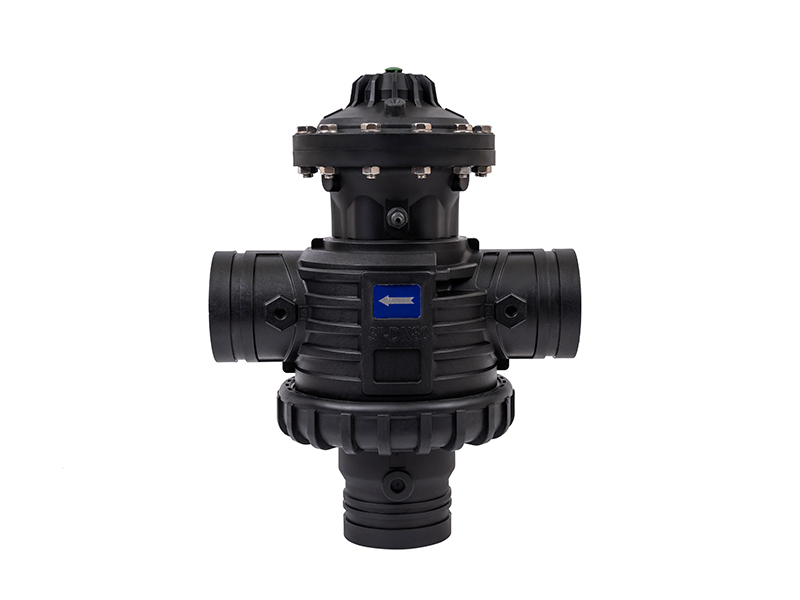
Inconsistent water pressure remains the leading cause of premature irrigation system failure. In extensive agricultural networks, water is frequently pumped at high pressures to travel long distances or overcome steep topographical elevations. However, this intense kinetic energy is highly detrimental to localized distribution equipment. A Pressure Reducing valve acts as a vital mechanical safeguard. It automatically drops high inlet pressure to a constant, lower downstream setpoint, completely independent of upstream fluctuations or varying flow rates.
Specifically, the pilot mechanism continuously senses the downstream pressure. If the pressure attempts to spike above the established threshold, the pilot directs more water into the main control chamber. This action throttles the diaphragm slightly closed to dissipate the excess energy. This functionality is absolutely critical for drip irrigation setups. Delicate emitters and thin-walled drip tapes will often burst if exposed to sudden pressure surges. By installing these reducing units at the head of each field zone, farm managers guarantee uniform water distribution. This uniformity prevents dry patches and minimizes the energy waste caused by over-pumping, ensuring the first plant and the last plant in the row receive the exact same volume of moisture.
While reducing units focus heavily on downstream protection, maintaining upstream conditions is equally paramount for system health. Large-scale farming often involves complex, multi-zone networks. A Sustaining valve ensures that the pressure in the mainline never drops below a predetermined minimum threshold, regardless of the downstream demand.
When a massive new irrigation zone opens, it naturally causes a sudden rush of water. This creates a severe pressure drop across the entire network. Such a drop can force pumps to operate off their efficiency curve, potentially leading to destructive cavitation and motor burnout. It also means that other active zones might be starved of water. Sustaining units prioritize essential mainline pressure. When placed near the pump station or at major pipeline branches, they restrict flow to the new zone until the mainline pressure is fully established. Once the minimum pressure is met, the unit gradually opens. Without this precise balancing act, an irrigation network loses its hydraulic integrity, leading to wildly inconsistent moisture profiles across the crop rows.
The transition from manual farming to precision agriculture relies heavily on the integration of electrical control with hydraulic performance. A Solenoid control valve serves as the critical bridge between digital farm controllers and physical water release. A solenoid is a small electromagnetic device integrated directly into the pilot circuit. When an electrical signal is received from a centralized automated timer, the magnetic field moves a small internal plunger, instantly triggering the main diaphragm to open or close.
The primary commercial benefit here is a dramatic reduction in manual labor and operational friction. Instead of deploying crews to drive muddy perimeter roads to adjust manifolds manually, operators can manage entire water distribution cycles from a smartphone or centralized hub. This facilitates smart irrigation strategies, allowing applications during the night to drastically reduce evaporation and maximize root absorption.
While most irrigation infrastructure is designed for gradual, metered regulation, certain scenarios demand the movement of massive amounts of water in mere seconds. A Deluge valve is engineered specifically for these high-flow, rapid-response applications. Remaining completely closed until triggered by a specific hydraulic, pneumatic, or electrical signal, it then opens fully and instantly without hesitation.
In the agricultural sector, these units serve highly specialized functions. They are frequently deployed in agricultural fire suppression systems to protect valuable storage facilities, chemical silos, or dense orchard perimeters. In addition, they are utilized for high-flow batch irrigation or advanced frost protection systems. When temperatures drop suddenly, these fast-acting mechanisms can instantly flood an orchard, utilizing the latent heat of freezing water to protect delicate fruit buds from frost damage. Because they handle sudden high-volume shifts, their internal architecture features an unobstructed, straight-through flow path that minimizes head loss. They are built robustly to avoid the mechanical fatigue that would quickly destroy a standard manual gate valve.
Selecting the right equipment is not merely about matching pipe diameters; it is about precise performance matching and material science. Farm engineers must evaluate several empirical factors to ensure long-term reliability. Use this structured framework to guide your on-site decision-making process:
| Selection Factor | Technical Consideration | Agricultural Impact |
|---|---|---|
| Material Compatibility | High-quality plastic, Glass-filled nylon, or Coated Ductile Iron. | Must resist corrosion from aggressive liquid fertilizers. High-quality plastic and metal multi-dual backwash valves offer excellent longevity. Nylon is highly chemical-resistant, while coated ductile iron provides high tensile strength for massive mainlines. |
| Flow Rate & Sizing | Match the flow coefficient rather than just line size. | Matching valve size to your specific pump capacity prevents excessive pressure drop and eliminates the risk of cavitation, which physically erodes the internal body over time. |
| Filtration Integration | Compatibility with disc filters and backwash systems. | Farm water requires heavy filtration. Valves must work seamlessly with primary disc filters to ensure grit does not enter the sensitive pilot circuitry. |
| Field Maintenance | Top-entry design, easily accessible pilot systems. | Prioritize models allowing quick in-field servicing. Technicians must be able to clean pilots or replace diaphragms without requiring full system excavation. |
Properly assessing these specifications prevents costly mid-season downtime. Always verify the maximum pressure ratings before installation to ensure the selected hardware can handle potential surge events in your specific supply line.
The physical installation and strategic placement of these components dictate the overall success of the irrigation lifecycle. Designing a layout that incorporates multiple functions requires a deep understanding of fluid dynamics. You should install control manifolds at the head of each main zone to allow for modular control and easy troubleshooting.
Picture a manifold setup at the edge of a dusty field. A seasoned engineer will always include manual isolation gate valves upstream of the main automatic unit. This practical detail allows technicians to isolate the area and swap a torn diaphragm without needing to drain a mile of mainline pipe. System redundancy is crucial. Check valves and air release valves must be installed in tandem. Air release mechanisms prevent air pockets from becoming trapped in the higher elevations of the pipe network. Trapped air causes severe flow restriction and dangerously exacerbates water hammer.
Common installation mistakes include ignoring backflow prevention or failing to install proper filtration. Even the most robust farm-duty valve will fail if grit and debris enter the tiny orifices of the pilot circuit, leading to a mechanism stuck in the open or closed position. Ensure your irrigation design accounts for water quality by using effective primary filtration before the water ever reaches your control manifold.
Investing in the right hydraulic equipment is fundamental to the long-term sustainability and profitability of your agricultural operations. These components directly determine the hydraulic health of your entire network. Whether you require precise pressure reduction to protect fragile drip tapes or advanced remote automation to slash labor costs, the correct hardware acts as the backbone of your fluid management strategy.
By selecting durable, field-tested components, you minimize operational risk, prevent future infrastructure failures, and maximize crop yield. Always consider your specific field topography, pump curves, and water quality when designing your layout. For farm operators and engineers looking to upgrade their fluid management systems, exploring the comprehensive range of premium hydraulic solutions at Arka Irrigation ensures you find the exact match for your field requirements, guaranteeing your infrastructure remains efficient, resilient, and highly scalable for years to come.
A: Seasonal inspections are highly recommended to check for debris buildup and seal integrity. You should perform a thorough visual and operational inspection before the start of the heavy irrigation season. This includes flushing the pilot lines, checking the rubber diaphragm for wear or micro-tears, and ensuring electrical wires are free from corrosion or rodent damage. Regular proactive maintenance prevents unexpected mid-season failures.
A: A standard solenoid valve is typically designed exclusively for simple on and off control. It either allows full flow or stops it completely. To regulate pressure, you must pair the electrical solenoid with a pilot-operated hydraulic control valve. This creates a combined unit that can be turned on remotely via electricity but relies on mechanical hydraulic principles to reduce or sustain pressure dynamically while water is flowing.
A: Debris, silt, or sand contamination entering the pilot system is by far the most frequent cause of failure. The pilot circuit relies on very small pathways to route water pressure. If these pathways clog, the main diaphragm cannot actuate. This is exactly why proper primary filtration is essential for all control manifolds, and why premium farm-duty units often feature built-in self-cleaning pilot filters.
A: Yes, they are absolutely essential for it. Pressure reducing configurations are crucial for maintaining the low, consistent pressure required for drip lines to function properly. Drip tape operates at very low pressures, often under 15 PSI. Without proper regulation, standard mainline pump pressure would cause the thin-walled drip lines to rupture instantly across the field.
A: Water hammer is a destructive pressure surge caused by the rapid stopping or sudden changing of water flow direction in a pipe. Hydraulic control valves are designed with adjustable closing speeds. By tuning the pilot circuit restrictors, the valve is forced to shut slowly over several seconds. This effectively dissipates the kinetic energy of the moving water and prevents the destructive shockwave from shattering PVC pipes and fittings.
A: Sizing should always be based on the required flow rate and acceptable pressure drop, rather than simply matching the existing pipe diameter. Engineers use the flow coefficient value to determine the correct size. Installing a valve that is too large can lead to poor regulation and hunting, while a valve that is too small will cause excessive friction loss and increase pumping energy costs.
A: Yes, provided they are constructed from the correct chemical-resistant materials. When injecting fertilizers into the irrigation water, you must select valves made from high-quality plastics or glass-filled nylon. These materials resist the corrosive nature of agricultural chemicals far better than standard cast iron, ensuring the internal components do not degrade over time.


