
Views: 0 Author: Site Editor Publish Time: 2026-11-14 Origin: Site


Have you ever walked your agricultural fields and noticed blown-out pipe fittings? Or perhaps you have seen wildly uneven watering patterns and stubbornly clogged micro-emitters. The hidden culprit is often trapped air. Every time your irrigation pump turns off, water naturally drains out to the lowest points. Ambient air rushes in to fill the newly created void. When the system powers back on, that trapped gas is violently pushed through the pipelines ahead of the water column.
Installing a highly calibrated Drip Irrigation Air Release Valve is the ultimate engineering solution to shield your infrastructure from these hydraulic shocks. However, a critical technical question remains. Which aperture size is the exact right choice for your specific setup? Choosing an incompatible opening leads to inadequate venting, dangerous pressure surges, or frustrating continuous leaks. In this comprehensive guide, we break down exactly how to match the right aperture to your system. We will explore the functional differences between large and small openings and explain how proper sizing guarantees optimal field performance.
Recent global agricultural trends reveal a massive shift toward ultra-precision irrigation. With water scarcity driving tighter agronomic regulations, farm managers are abandoning outdated, one-size-fits-all hydraulic designs. Modern micro-irrigation demands absolute pressure stability. Industry data clearly shows that optimizing pipeline air management can reduce pump energy consumption by up to fifteen percent while significantly extending the lifespan of underground infrastructure.
Key Engineering Takeaways
Air infiltration is an unavoidable physical reality. Every cyclical watering network experiences it. The primary entry point occurs during system shutdown. As water evacuates the pipelines due to gravity, a vacuum effect is created. This draws atmospheric air into the pipes through any available opening. Deep well pumps also frequently draw in highly aerated water.
Picture a blazing summer afternoon where cool groundwater suddenly meets sun-baked black polyethylene tubing. As the fluid warms, dissolved gases expand and separate from the liquid. They gradually accumulate at high elevations to form a persistent, flow-restricting Air Pocket.
The presence of trapped gas does not merely disrupt water flow. It actively destroys your equipment from the inside out. When irrigation pumps abruptly shut off, the rapidly receding water column acts like a giant syringe. It creates a severe negative pressure zone. Without a mechanism to let clean air back into the pipes, this vacuum forcefully sucks wet, contaminated soil and organic debris right back into the delicate labyrinth channels of your drip emitters.
By eliminating this vacuum effect, a properly specified venting valve ensures long-term Emitter Safety. Consequently, it drastically reduces the need for expensive, labor-intensive line flushing.
Kinetic valves are engineered to handle massive volumes of air displacement. Their primary function takes place during the initial system fill and the final system drain. As the pump surges to life, the large opening remains wide open. It expels the bulk atmosphere resting in the empty pipes ahead of the water. Once fluid reaches the internal chamber, a float is thrust upward, sealing the unit tightly. These heavy-duty components are best suited for mainlines, sub-mains, and large-scale agricultural headers.
Kinetic variants handle the chaotic startup and shutdown phases. However, they remain locked shut while the system is highly pressurized. To address ongoing gas accumulation, the automatic valve features a highly calibrated Small Orifice designed to continuously bleed off trapped micro-bubbles. As these bubbles gather during active operation, the internal float drops just enough to expose a tiny pinhole. This vents the gas without causing a drastic drop in overall pipeline pressure.
For most modern commercial landscape and farming applications, the combination valve serves as the ultimate solution. Housed within a single robust unit, these devices feature both a large kinetic opening and a small automatic pinhole. They seamlessly manage massive air discharge during startup, provide continuous micro-venting during pressurized operation, and offer instantaneous vacuum relief the moment the pump shuts down.
| Valve Type | Primary Function | Operational Phase | Best Application |
|---|---|---|---|
| Kinetic (Large Orifice) | Bulk air discharge and vacuum relief | System startup and shutdown | Mainlines, large headers, steep slopes |
| Automatic (Small Orifice) | Continuous micro-bubble venting | Active pressurized operation | High-pressure zones, precision drip tapes |
| Combination (Dual Orifice) | Complete air management and vacuum relief | All phases | Commercial orchards, greenhouses, sub-mains |
Today's agricultural engineers are rapidly moving away from outdated approaches. Instead, the industry heavily favors precisely calibrated orifice sizes that perfectly match specific hydraulic conditions. This maximizes water conservation and significantly reduces pump energy consumption.
The foundational metric for sizing your equipment is the maximum flow rate of your network. This is typically measured in Gallons Per Minute or Liters Per Hour. A reliable engineering rule dictates that the valve should be capable of venting an air volume equal to the rapid water flow filling the pipe.
For delicate Low Flow setups, such as localized greenhouse drip tapes running at 10 to 30 GPM, an overly large orifice can cause a violent water hammer when it snaps shut. A precisely sized automatic opening ensures a gentle, controlled bleed. This protects delicate emitter diaphragms from hydraulic shock.
Standard agronomic guidelines rely heavily on the diameter of the pipeline where the device will be installed. The physical connection size generally correlates with its internal venting capacity. Specifically, for standard half-inch to 1-inch drip lines, a 1-inch male threaded valve provides excellent capacity.
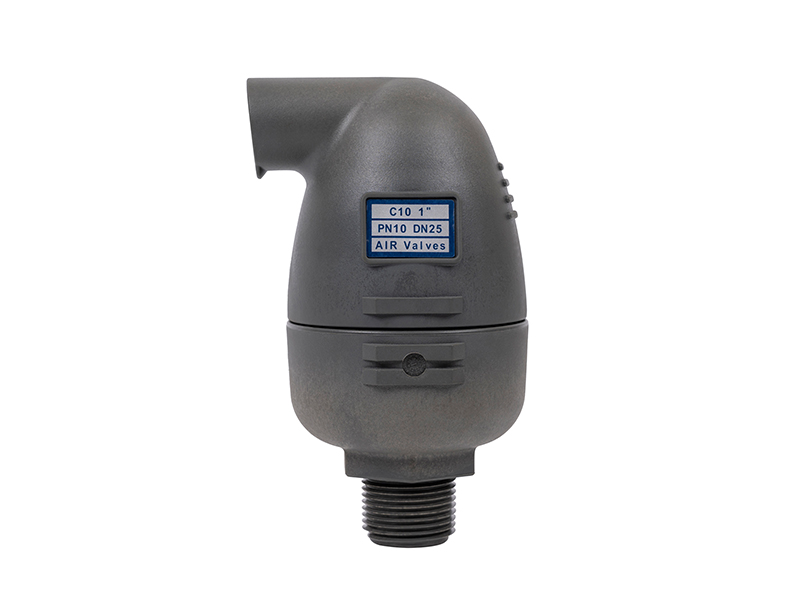
Take the ARKA C10 1-Inch Plastic Air Valve as a prime engineering example. Featuring a standard 1-inch BSP or NPT connection, it is perfectly scaled for sub-mains and large zonal headers. It handles the increased bulk air volume seamlessly without bottlenecking the system during rapid startup.
Operating pressure is a crucial, yet frequently overlooked, variable. High-pressure networks require highly specialized internal aerodynamic designs. If a standard, low-tier valve is placed on a high-pressure line, the sheer velocity of the incoming air can literally pin the float mechanism shut before any gas escapes. This phenomenon is known as premature closure.
Premium manufacturers design specific aerodynamic floats that resist being blown shut. Commercial-grade valves operating efficiently between 0.1 and 10 bar ensure the internal passage remains open until the water actually arrives.
Precision agriculture relies entirely on consistent technology to deliver exact nutrient and moisture levels directly to the root zone. Pressure-compensating emitters require exact, unwavering pressure to ensure uniform dripping across an entire orchard. If a pocket of gas forms, it acts as a compressible spring inside the pipe. This causes the water pressure to bounce erratically.
By allowing disruptive micro-bubbles to escape silently, the automatic pinhole maintains a steady hydraulic state. This ensures the furthest plants receive the exact same hydration as those closest to the water source.
A frequent concern for buyers evaluating new equipment is the fear of purchasing a valve that constantly leaks water. In inferior products, the sealing mechanism fails to close properly once the gas is vented. To combat this, high-quality automatic valves utilize precision-molded elastomeric rolling seals.
Once the water level rises, mechanical leverage presses this seal tightly against the aperture. This completely prevents spitting and ensures absolute zero water waste during active irrigation.
Because gas is significantly lighter than liquid, it naturally travels to and stubbornly accumulates at the highest elevations in any pipeline network. Installing venting devices at these topographical peaks is absolutely non-negotiable. If a pipe runs up a hillside and back down into a valley, the apex of that hill will invariably trap a massive blockage. Placing a combination unit exactly at the crest ensures that all accumulating gas is continuously expelled.
When a watering cycle initiates, the incoming fluid acts like a piston. It pushes the resting atmosphere forcefully forward. If there is no dedicated exit at the end of the line, this gas is agonizingly forced out through the tiny micro-pores of the drip tapes. This causes severe whistling and delayed watering times. Placing a venting mechanism at the furthest point of the lateral run flushes out the initial blockage instantly. It brings vital moisture to the last plant in the row significantly faster.
Seamless system integration is critical for commercial farm setups. Placing air management devices immediately downstream of main pumps prevents the initial surge of aerated well water from traveling deep into the field network. Furthermore, installing these units near sand media or disc filters is highly recommended. Trapped bubbles can easily blind the filter screens. This reduces their effective surface area and triggers premature, wasteful backwashing cycles.
Imagine walking your field and finding a muddy puddle forming around your brand-new valve. Continuous weeping is the most common operational complaint. This is almost always caused by particulate debris getting lodged between the float seal and the exhaust port. Sand grains, algae buildup, or mineral scale are usual suspects.
It can also stem from insufficient overall system pressure failing to push the float up firmly. To resolve this, simply turn off the main pressure, unscrew the top cap, remove the internal float, and flush the chamber thoroughly with clean water.
If you still hear violent hammering in your pipes, your device is failing to vent. The internal passage size may be far too small for the massive volume generated by your pump. This creates a severe bottleneck. Alternatively, the operating pressure of the incoming water might be too rapid, creating an aerodynamic lock that pins the float shut. Upgrading to a larger combination unit with a specialized aerodynamic float usually resolves this immediately.
If muddy agricultural runoff is still being sucked into your drip lines despite having a valve installed, the vacuum relief function is fundamentally failing. This indicates that the large kinetic opening is either entirely absent or severely undersized for the rapid drainage rate of your sloping terrain. Upgrading to a larger kinetic component at the highest topographical point will break the vacuum instantly.
Agricultural environments are notoriously harsh on plastic components. Valves are constantly exposed to blistering UV radiation, freezing overnight temperatures, and highly corrosive liquid fertilizers injected directly into the lines. Avoid cheap PVC plastics that become brittle and shatter over time.
Instead, prioritize heavy-duty, industrial-grade materials. UV-stabilized polypropylene and glass-reinforced Polyamide easily withstand environmental stress cracking. They offer exceptional longevity under extreme field conditions.
The internal float is the true engine of the device. Look closely for designs that feature a lightweight, aerodynamic profile. Inferior, bulky floats can be easily caught by the high-velocity airstream during startup and blown shut prematurely. Advanced floats are carefully engineered to allow massive bypass without lifting. They only rise to seal the chamber when actual liquid enters the housing.
Selecting the correct orifice size for your air management system is the absolute backbone of a healthy, highly efficient watering network. Whether you are managing a sprawling agricultural orchard or a precision climate-controlled greenhouse, understanding the destructive dynamics of trapped gases and the vacuum effect is vital.
Match a highly sensitive automatic opening to continuous low-volume needs, and utilize larger kinetic functions for chaotic system startups. This guarantees complete equipment protection and significantly prolongs the life of your entire irrigation network. Take the time to carefully evaluate your flow rate, pipe diameter, and field topography.
Ready to upgrade your irrigation infrastructure and eliminate water hammer for good? Visit ARKA Irrigation today to explore a full range of commercial-grade air release valves engineered for absolute precision and long-term reliability.
Sizing an air release valve depends primarily on the maximum water flow rate and the diameter of the pipeline. As a general engineering rule, the valve must be capable of exhausting air at the same volumetric rate that water fills the pipe. For standard 1/2-inch to 1-inch drip lines, a 1-inch threaded valve is typically sufficient, while larger sub-mains require 2-inch combination valves to handle bulk air discharge.
Air release valves must be installed at the highest topographical points of the irrigation layout where air naturally accumulates. Additionally, they should be placed at the end of lateral lines to flush out air during startup, and immediately downstream of pumps and filtration stations to prevent aerated water from entering the field network.
If the opening is too small, it will not vent gas fast enough during the critical system startup phase. This restriction leads to trapped pockets, which subsequently cause severe pressure spikes known as water hammer. These violent hydraulic shocks can blow off pipe fittings, rupture delicate drip tapes, and cause extensive damage to your underground infrastructure.
Yes, absolutely. Even in small, low-pressure residential garden systems, an air and vacuum relief valve is highly recommended. Installing one at the highest topographical point ensures your drippers are protected by preventing muddy soil and dirty puddle water from being sucked backwards into the micro-emitters the moment your garden timer turns the water supply off.
An air release valve is specifically designed to push trapped gas out of a pressurized pipeline to maintain smooth water flow. Conversely, a vacuum relief valve allows ambient atmospheric air into the pipeline when the pump shuts off, preventing a destructive vacuum that collapses pipes and sucks in dirt. Modern combination valves perform both of these vital functions simultaneously.
Most high-quality agricultural valves are designed for incredibly easy in-field maintenance. Simply turn off the main water pressure, unscrew the top cap, and carefully remove the internal float mechanism. Wash the internal pinhole and the rubber elastomeric seals with clean water to remove any sand, algae, or hard mineral buildup, then reassemble the unit.
Yes, it is often the exact solution needed. If a pocket of gas is trapped inside the lateral line, it acts as a physical, compressible hydraulic blockage, completely stopping water from reaching the end of the row. A properly sized valve vents this trapped gas automatically, allowing the water column to flow freely and ensuring every single plant receives uniform hydration.


