
Views: 0 Author: Site Editor Publish Time: 2026-10-21 Origin: Site


Are clogged pipes draining your operational budget? Poor water quality halts production fast. Heavy organic loads can rapidly destroy sensitive equipment. How do you solve this? Implementing robust filtration is the answer. In this guide, we explore how these systems work from an engineering perspective. We will examine their agricultural and industrial uses. More importantly, we provide the technical insights needed to optimize your water management infrastructure.
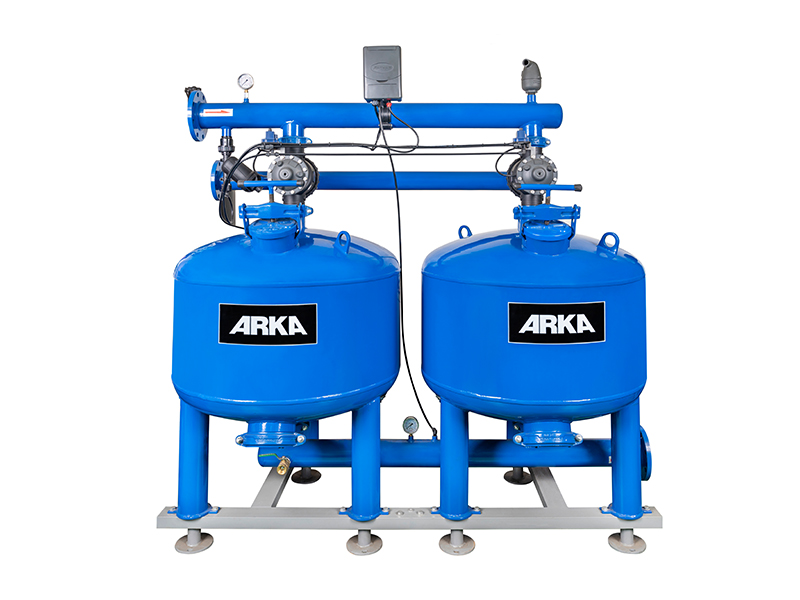
To evaluate any filtration setup, you must first grasp its core mechanics. A sand media filter acts as a heavy-duty pressure vessel. These are typically constructed from epoxy-coated carbon steel or durable fiberglass. Inside, the tank is filled with a specific grade of crushed silica sand. As raw water is pumped into the top, it distributes evenly over the media bed.
The real advantage here is depth filtration. Surface filters rely on a single thin plane to block particles. Depth filtration utilizes the entire three-dimensional volume of the sand bed. As water percolates downward, it takes a tortuous path. Suspended solids and particulate debris become trapped within the jagged edges of the silica sand at various depths.
This mechanism provides a massive dirt-holding capacity. Clean water then passes through specialized underdrain laterals and flows out to your main line. By distributing the particulate load throughout the entire bed, these systems operate significantly longer between cleaning cycles. They excel even under highly contaminated conditions.
Modern agriculture relies heavily on micro-irrigation systems to maximize crop yields. However, emitters possess microscopic orifices. Imagine drawing water from a sun-baked agricultural pond in mid-July. The algae bloom is thick. This biological load will blind a standard surface screen in minutes. When pulling surface water from rivers or canals, the risk of catastrophic clogging skyrockets.
An irrigation sand filter serves as the mandatory first line of defense. Open water sources breed algae, slime, and moss. When organic matter hits a standard screen filter, hydraulic pressure simply extrudes the soft debris right through the pores. Downstream blockages happen almost instantly.
Sand media excels exactly where surface filters fail. The sharp edges of crushed silica grab soft biological contaminants. They cannot deform and pass through. For large-scale vineyards and nut orchards, depth filtration is an absolute operational necessity. It ensures uniform fertigation and protects your revenue.
Before diving into specific industrial uses, we must look at current market dynamics. Global industry trends show a massive shift toward sustainable water reclamation. With water scarcity intensifying, discharge regulations are tightening globally. Agricultural conglomerates and heavy manufacturing facilities are abandoning disposable, low-capacity filters. The market is pivoting aggressively toward high-capacity depth filtration.
Why is this happening? Facilities urgently need to recycle process water efficiently. They must lower the Silt Density Index for membrane protection and minimize harsh chemical biocides. This makes sand filtration a cornerstone of modern eco-conscious engineering. Beyond agriculture, heavy industry faces critical water management challenges. In these demanding environments, a reliable water treatment filter is essential. It maintains equipment efficiency and meets strict environmental compliance.
Cooling tower water filtration is a prime example. Cooling towers act as massive air scrubbers. They pull in airborne dust and industrial particulates. Combined with a warm environment, rapid biological growth is inevitable. A side-stream sand filter continuously filters a portion of the circulating water. This prevents scale buildup on critical heat exchangers and drastically reduces the need for expensive chemical treatments. Furthermore, sand beds reliably pre-filter raw water for Reverse Osmosis systems, protecting delicate membranes from irreversible fouling.
Manual filter configurations work, but manual cleaning is labor-intensive and prone to human error. Upgrading to an automatic sand filter is the standard approach for continuous flow.
The core advantage lies in dynamic cycle management. As trapped debris fills the void spaces within the sand bed, water flow is restricted. Pressure inside the tank rises. Automated setups monitor this using a Differential Pressure switch. Take industrial-grade systems like the 1000mm dual-tank configurations as a benchmark. When the pressure differential reaches a pre-set threshold of around 7 to 10 PSI, the controller triggers the backwash sequence.
The system actuates a series of solenoid valves. It isolates one filter tank at a time. Clean water from the adjacent active tank is redirected to flow in reverse. This reverse flow fluidizes the sand bed, expanding it by 20 to 30 percent. Trapped dirt is violently dislodged and flushed out through a dedicated exhaust port. Because the system cleans one tank at a time, your facility receives an uninterrupted supply of filtered water.
Facility managers often debate between sand, screen, and disc filtration technologies. Making the right choice requires an objective look at filtration efficiency and Total Cost of Ownership.
| Feature | Sand Media Filter | Screen Filter | Disc Filter |
|---|---|---|---|
| Filtration Mechanism | Depth Filtration | Surface Filtration | Hybrid Surface and Depth |
| Target Contaminants | Heavy organics, algae, slime, silt | Rigid inorganics, sand, scale | Mixed organics and inorganics |
| Dirt Holding Capacity | Extremely High | Low | Moderate |
| Maintenance Frequency | Low via Automated backwash | High in organic water | Moderate to High |
| Long-term Operational Cost | Lowest for high-load applications | Low only for clean well water | Moderate |
Soft organics deform and extrude through the fixed pores of surface filters. They become effectively entangled within a deep media bed. Screen filters are highly efficient for rigid particles like well sand. However, introduce heavy organic loads, and the screen blinds rapidly. Disc filters offer a hybrid approach but still fall short of the biological holding capacity of a dedicated sand system.
Procuring the correct filter is not a guessing game. An undersized system experiences excessive pressure drops. An oversized system wastes capital and lacks the backwash velocity needed to clean the media.
First, assess your water source. Evaluate the Total Suspended Solids measured in parts per million. Identify the ratio of organic biological matter to inorganic mineral matter. Heavy algae blooms require a larger filtration surface area. Next, calculate your flow rates. Match the filter capacity to your peak demand. For example, a standard 40-inch dual-tank system can typically handle flow rates up to 90 cubic meters per hour depending on water quality.
You must match this demand against the optimal flux rate. Forcing water through the sand bed too quickly causes channeling. System engineers target a filtration velocity of 15 to 25 gallons per minute per square foot of media surface area. Always select a multi-tank pod if your operation cannot afford downtime during backwash cycles.
Automation reduces manual labor, but routine maintenance remains essential. Neglecting upkeep leads to media fouling and pressure failures.
Implement weekly visual inspections for your backwash sand filter. Monitor the pressure differential across the filter bank. Verify that the automatic sequence triggers correctly. Inspect hydraulic valves for leaks. Observe the exhaust water; it should run dark initially and transition to clear.
In agricultural settings exposed to freezing temperatures, winterization is critical. Completely shut down and drain the system. Open all drainage ports and manually actuate valves to remove trapped water. Water left inside a steel vessel will expand and rupture the tank walls.
Finally, remember that sand media does not last forever. Continuous filtration and violent backwashing cause abrasion. The sharp edges of crushed silica become smooth like river rocks. Inspect the media annually. Replace it completely every 3 to 5 years to restore peak efficiency.
Reliable filtration is the backbone of profitable operations. Whether pulling irrigation water from an algae-filled reservoir or protecting an industrial cooling tower, depth filtration offers unmatched reliability. It removes heavy organic debris, protects sensitive equipment, and reduces costly downtime.
Stop letting poor water quality drain your budget. Evaluate your flow rates, assess your water source, and upgrade to an automated system engineered for your specific needs. Ready to optimize your water management infrastructure? Explore the high-performance filtration solutions at ARKA Irrigation to find the exact system that fits your agricultural or industrial demands.
The micron rating depends heavily on the specific grade and type of media utilized in the vessel. Standard crushed silica sand typically achieves filtration down to the 15 to 25-micron range. This level of filtration is highly effective for protecting irrigation emitters and serving as pre-treatment for industrial processes. If finer filtration is required, multi-media configurations utilizing garnet and anthracite can filter particles down to 10 microns or less.
Backwash frequency is entirely dependent on the quality of the raw water and the current organic load. In highly contaminated surface water during peak summer months, a system may trigger a backwash cycle several times a day. Conversely, if the water source is relatively clean, it may only backwash once a week. Automation ensures this is handled dynamically. A pressure differential switch constantly monitors the system and initiates the cleaning cycle only when the media bed is sufficiently loaded with debris.
Yes, sand filters can process well water, but they may not always be the most cost-effective choice for this specific application. Well water typically contains hard, inorganic particulate matter like sand and silt, but lacks biological organics. For strictly inorganic loads, a hydrocyclone followed by a standard screen filter is often more efficient and requires a smaller footprint. Depth filtration provides the highest return on investment when dealing with surface water containing algae and soft organic matter.
Modern automated systems are engineered for high efficiency to minimize water waste. Typically, the backwash process consumes only one to two percent of the total volume of filtered water. Furthermore, this water is often not entirely lost. In many industrial and agricultural setups, this nutrient-rich or solid-heavy wastewater is redirected to settling ponds, sludge thickeners, or separate recovery systems where the water can be reclaimed or safely discharged according to local environmental regulations.
When properly maintained, commercial-grade systems offer exceptional longevity. The primary pressure vessels, usually constructed from thick carbon steel with protective epoxy coatings or stainless steel, can last 15 to 20 years or more. To maximize this lifespan, operators must ensure routine upkeep of the anti-corrosion coatings and prevent winter freeze damage. The internal consumable media degrades through physical abrasion and should be replaced every 3 to 5 years to maintain optimal performance.
Channeling occurs when water carves direct paths through the media bed, bypassing the filtration process entirely. You will notice a sudden drop in differential pressure and a visible decline in output water quality. Inspecting the sand bed physically will reveal deep craters or uneven media distribution across the surface. This is usually caused by excessive flow rates or an undersized filtration system.
Crushed silica sand is the industry standard due to its sharp angular edges and cost-effectiveness. Crushed glass media is an emerging alternative. It is lighter, requires slightly less backwash water, and resists biofilm buildup. However, silica sand remains the most widely deployed option for heavy-duty agricultural and industrial applications due to its proven long-term durability and massive dirt-holding capacity.


