
Views: 0 Author: Site Editor Publish Time: 2026-10-12 Origin: Site


Maintaining a crystal-clear swimming pool often feels like a demanding full-time job. You constantly battle cloudy, uninviting water. Navigating the overwhelming variety of purification setups on the market only adds to the frustration. Many property owners struggle to decide between various systems. Even within specific categories, selecting the optimal media remains a daunting task.
Fortunately, you do not need to overcomplicate your maintenance routine. In this comprehensive guide, we explore why #20 silica sand remains the time-tested, industry-standard champion for both above-ground and in-ground setups. What exactly is this material? How does it compare to alternative options? Is it the perfect fit for your specific aquatic environment? Let us dive into the engineering facts to help you make an informed decision.
When purchasing supplies for your equipment pad, you will frequently encounter the term Number 20. Rather than a random marketing label, this is a highly specific industrial grading standard. The number refers to the precise sieve size utilized during the manufacturing process. To achieve this specific grade, raw quartz is sifted through a calibrated mesh screen. This ensures the individual grains measure strictly between 0.45 mm and 0.55 mm in diameter.
This uniform sizing is absolutely critical. It provides the exact mechanical balance needed to trap microscopic dirt while still allowing your pump to push water through the filtration media at an efficient and safe rate. The composition of this material is almost entirely pure quartz. If you examine a single grain under a microscope, you will not see a smooth, aesthetically pleasing round pebble. Instead, you observe a jagged, rough, and highly asymmetrical structure.
These sharp microscopic edges are the true secret to its mechanical effectiveness. As water passes over the grains, those rough edges physically snag and hold onto organic matter, skin oils, environmental dust, and certain bacteria. A common and highly destructive mistake some property owners make is substituting proper silica with standard play sand or construction sand. Play sand is mechanically tumbled to remove its sharp edges. This makes it safe for children but entirely useless for trapping fine dirt. Furthermore, construction sands lack uniform sizing and frequently contain organic impurities, clay, and iron. Introducing these improper materials into your system inevitably leads to severe clumping, restricted hydraulic flow, and potentially permanent damage to your internal components.
Recent market data highlights a fascinating shift in the water purification sector. Over the past decade, alternative media like crushed glass heavily dominated marketing campaigns. However, rising raw material costs and inflation have dramatically shifted consumer and commercial behavior. Facility managers and homeowners alike are returning to traditional silica. It delivers an unbeatable intersection of cost-efficiency and reliable performance. Furthermore, the rapid expansion of smart irrigation and municipal water treatment has driven a massive demand for standardized, predictable media that integrates seamlessly with automated sensor grids.
Understanding internal hydrodynamics helps clarify why this specific grade of quartz is so incredibly effective. The entire purification process relies on a combination of high hydraulic pressure and mechanical entrapment. When your pump is actively running, unfiltered water is drawn from the skimmer and pushed forcefully into the top dome of the tank.
A baffle located at the top disperses this incoming water evenly over the flat, undisturbed bed of silica. As the pump continues to generate downward pressure, the water is forced through the tightly packed grains. During this downward journey, a phenomenon known as the channeling effect occurs. The microscopic spaces between the 0.45mm and 0.55mm grains create complex, winding pathways.
As water navigates these tight channels, particles ranging from 20 to 40 microns are physically trapped against the rough edges of the silica. To put this micron rating into a real-world perspective, a single strand of human hair is approximately 70 microns in diameter. The naked human eye can only detect particles larger than 40 microns. Consequently, this quartz is highly capable of capturing both visible debris and microscopic contaminants that cause cloudy water.
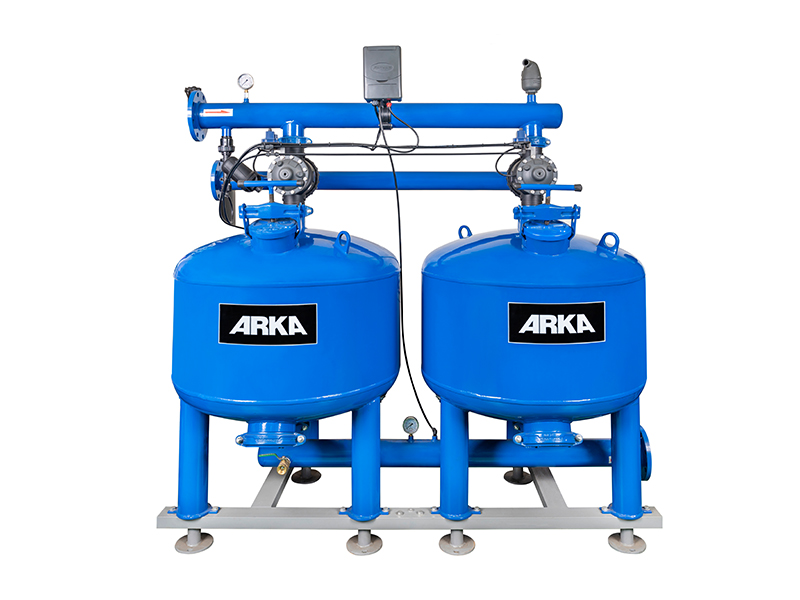
When engineering a robust setup, matching the media to the vessel is critical. Take the advanced F40-2-1000mm automatic systems designed for heavy-duty applications. A sand media filter of this caliber, often measuring 1000mm in diameter, relies entirely on the precise specific gravity of #20 silica. It manages high-volume flow rates without flushing the media out during self-cleaning cycles. Once the purified water reaches the bottom of the tank, it enters the laterals. The precision slots in these bottom tubes are engineered strictly smaller than 0.45mm. This brilliant design allows the newly cleaned water to pass through and return to the system, while the heavy grains remain safely contained inside the vessel.
For consumers currently evaluating their final purchasing options, it is vital to objectively compare #20 silica against alternative materials and filter types. Each option presents distinct advantages and trade-offs regarding upfront cost, longevity, and purification precision. Consumers are realizing that for everyday setups, the 20 to 40 micron capability is more than sufficient. It offers reliable performance without the premium price tag.
| Media Type | Micron Rating | Lifespan | Maintenance Level | Cost Profile |
|---|---|---|---|---|
| #20 Silica Sand | 20 - 40 Microns | 3 - 5 Years | Low. Simple backwashing required. | Highly Economical |
| Crushed Glass | 5 - 10 Microns | Up to 10 Years | Low. Less frequent backwashing. | Premium Price |
| Zeolite Mineral | 3 - 5 Microns | 5 Years | Medium. Requires chemical recharging. | Moderate to High |
| Pleated Cartridge | 10 - 15 Microns | 1 - 3 Years | High. Manual scrubbing and degreasing. | High Replacement Cost |
Specifically, filter glass has gained market share due to its ability to catch finer particles down to roughly 5 microns. Because glass is less prone to degradation, it boasts an extended lifespan. In contrast, the upfront cost of filter glass is significantly higher. Zeolite offers a unique honeycomb cellular structure capable of trapping chloramines. However, it requires periodic chemical recharging with a heavy sodium solution. Standard silica offers a much simpler operational profile, requiring absolutely zero chemical recharging throughout its lifespan.
If you are still on the fence about which route to take, analyzing your specific environment and personal maintenance preferences will guide your final decision. Here are five clear indicators that #20 silica is the correct choice for your setup.
Equipment maintenance can undoubtedly be expensive, but your internal media does not have to be. A standard 50-pound bag of silica is widely available for a mere fraction of the cost of premium glass or diatomaceous earth powder. Outfitting your entire system with silica remains the most cost-effective solution on the market today.
For owners who lack the time or desire to disassemble heavy, wet equipment on a weekly basis, this setup is ideal. Routine maintenance consists solely of monitoring the pressure gauge and turning a valve handle to initiate a rinse. There are no delicate paper pleats to soak in harsh acid baths and no internal grids to degrease manually.
Due to specific pump flow rates and structural designs, almost all above-ground systems are standardized around this exact technology. The hydraulic resistance provided perfectly matches the output of typical above-ground pumps. This ensures efficient turnover rates without overworking or burning out the motor.
If your property is situated beneath large oak trees or in a windy environment, your skimmer will ingest a high volume of heavy particulate matter. Cartridges clog rapidly under heavy debris loads, resulting in weak water flow. A deep sand bed is highly robust. It can absorb a massive amount of organic matter and algae blooms before requiring any intervention.
Modern aquatic technology has introduced sophisticated systems that completely automate the cleaning process. If you are investing in an automatic sand filter, you should know that these advanced units rely on highly predictable hydraulic pressure to trigger automated cycles. Because #20 silica is the industry baseline, automated sensors and digital valves are factory-calibrated specifically for the density and flow characteristics of this exact material.
While predominantly associated with backyard swimming leisure, the mechanical efficiency of this material extends far beyond residential use. It serves as a foundational component in global liquid purification infrastructure. In industrial settings, it acts as a primary water treatment filter media.
For rural homes relying on well water, large silica tanks are deployed to physically strip out heavy sediment and iron precipitates before the liquid ever reaches finer reverse osmosis membranes. Municipal treatment plants utilize massive gravity-fed beds to clarify public drinking water. Furthermore, in agricultural sectors, these robust systems are deployed to clean water drawn directly from muddy lakes and rivers. This prevents algae and grit from clogging microscopic drip irrigation emitters.
The longevity and overall effectiveness of your silica rely entirely on proper and timely maintenance. Over weeks of continuous operation, the microscopic channels within the bed become choked with dirt, body oils, and dead algae. As these pathways close, flow is severely restricted. Pressure inside the tank begins to build up dangerously.
Backwashing is the mechanical process of reversing the flow of water through the tank. Instead of pushing down from the top dome, the multi-port valve redirects water down the center standpipe. It pushes the water violently upward through the bed. You should initiate a cycle when the pressure gauge reads exactly 8 to 10 PSI above your clean baseline starting pressure.
During this upward flow, the specific density of the quartz becomes crucial. The hydraulic pressure lifts the bed, causing the individual grains to separate, tumble, and agitate against one another. This aggressive scrubbing action releases the trapped dirt. Because #20 silica is heavy enough to resist being completely flushed upward, the lightweight dirt and debris are carried away and expelled safely through the backwash filter waste line. The heavy media safely resettles at the bottom of the tank.
Even with diligent weekly cleaning, the jagged edges of silica will eventually become smoothed out and polished by years of relentless water friction. When running a cleaning cycle no longer lowers the tank pressure, it is time to replace the media. While the process requires physical effort, it is entirely manageable when following a structured engineering approach.
| Tool or Material | Purpose in the Replacement Process |
|---|---|
| Replacement #20 Silica Sand | The primary media. The required quantity depends entirely on your tank size. |
| Heavy-Duty Shop Vacuum | To efficiently extract wet, heavy old sludge from the tank. |
| Screwdriver and Wrench Set | For removing the multiport valve clamp or securing bolts. |
| Duct Tape | To seal the standpipe and prevent grains from entering the return line. |
| Silicone O-Ring Lubricant | To ensure a watertight, leak-proof seal when reattaching the valve. |
| Respirator Mask | To protect your lungs from airborne crystalline dust during pouring. |
| Garden Hose | To rinse internal components and create a vital water cushion. |
Safety and preparation are the foundational elements of this procedure. Begin by completely disconnecting the power supply to your pump at the main circuit breaker. Relieve the internal pressure by opening the air relief valve located on top. Once depressurized, remove the drain plug at the bottom of the vessel to allow the standing water to exit.
Carefully unscrew the unions connecting the plumbing to the valve. Gently lift the valve straight up and off the central standpipe. Imagine wrestling with a heavy, wet sludge. This is exactly what old sand feels like. Using a plastic cup to scoop it out will leave you exhausted. The most efficient method is to use a heavy-duty wet vacuum to extract the old material. Be extremely cautious not to bump the delicate central standpipe.
As you reach the bottom of the tank, you will uncover the lateral assembly. Carefully rinse the remaining debris away with a garden hose. Visually inspect each plastic arm for micro-cracks or stress fractures. A compromised lateral is the number one reason why owners find grains blowing back into their swimming pools. Replace any damaged parts before proceeding.
One of the most common and costly mistakes is pouring heavy bags of new material directly onto exposed laterals. The kinetic energy of dry sand slamming directly onto brittle plastic can easily snap the fragile arms. To prevent this disaster, you must create a protective shock absorber. Fill the tank approximately one-third full of water. This liquid cushion will absorb the impact of the falling grains.
Take a piece of duct tape and securely seal the top open hole of the standpipe. Slowly and steadily pour the required amount into the tank. Do not overfill the system. Every unit requires a specific empty space at the top to allow the bed to lift and expand during cleaning cycles.
Once the correct amount has been added, remove the protective tape. Clean the top lip thoroughly to ensure no stray grains compromise the seal. Apply a fresh coat of silicone lubricant to the O-ring and secure the clamp tightly. Set the valve to the Backwash position. Turn on the power and start the pump. Run the system until the water in the sight glass runs completely clear. Switch to the Rinse position for one minute to settle the expanded bed, and then finally set it to Filter for normal daily operation.
Pool filter sand #20 silica sand remains the undisputed king of convenience, cost-effectiveness, and reliability in the aquatic industry. It offers excellent water clarity and an incredibly straightforward maintenance routine that frees up your schedule. While newer alternative media types have entered the market, the time-tested durability and low upfront cost of standard quartz make it the perfect choice for professionals and homeowners who refuse to compromise on water quality.
If you are struggling with chronically cloudy water or constantly fighting with a messy cartridge system, it might be time to make a switch. Ready to upgrade your water purification setup? Explore high-performance, automated solutions and premium filtration components at Arka Irrigation to ensure your system operates flawlessly all season long.
Typically, standard #20 silica will last between three to five years in a residential system. The effectiveness relies entirely on its microscopic physical structure. Over years of continuous water flow, mechanical weathering occurs. The constant friction smooths out the sharp edges, turning the grains into polished spheres. Once completely rounded, fine debris simply slips past, resulting in a noticeable drop in efficiency.
The required amount depends strictly on the diameter and manufacturer specifications of your specific vessel. A small 16-inch tank may only require 100 pounds of sand, while a large 30-inch commercial tank can hold upwards of 600 pounds. Always consult the data plate located on the side of your tank. Overfilling prevents proper backwashing, while underfilling leads to severe channeling and cloudy water.
While you can use chemical filter cleaners to strip away heavy grease and scale buildup, you cannot restore the mechanical trapping ability of the sand. Chemical washing only removes the sticky organic layer. It does absolutely nothing to fix the physical weathering and smoothing of the quartz grains. If your sand is older than five years, replacing it is the only effective engineering solution.
It is strongly advised against mixing silica with alternative types like crushed glass or zeolite within the same tank. Different materials possess vastly different specific gravities and densities. Mixing them causes the bed to stratify and separate unevenly. Furthermore, different materials require different flow rates to lift and clean properly. Mixing leads to severe channeling, mudball formation, and complete failure of your purification setup.
Finding grains accumulating on the floor of your swimming pool almost always points to a mechanical failure inside the tank. The most frequent culprit is a cracked or broken lateral at the bottom of the standpipe. Any structural crack allows the 0.45mm grains to escape into the return plumbing. Another common cause is overfilling the tank past the recommended limit, which forces media up into the valve.
Yes, it is perfectly safe for swimming pool use and poses no chemical threat to your water. However, specific safety precautions must be taken during installation. The primary concern is the dry crystalline dust generated when pouring the bags. Inhaling airborne crystalline silica over time can cause severe respiratory issues. It is highly recommended to wear a well-fitted respirator mask and protective eyewear when pouring. Once the material is submerged in water, it poses absolutely no inhalation risk.


