
Views: 0 Author: Site Editor Publish Time: 2026-10-19 Origin: Site


Are clogged showerheads driving you totally crazy?
Heavy sediment destroys your plumbing system fast. Imagine stepping into the shower, expecting a strong, refreshing spray, only to be met with a pathetic trickle because silt has plugged the showerhead nozzles yet again. Standard surface cartridges clog in a matter of days. This forces property owners into a frustrating cycle of constant replacements that drain both time and maintenance budgets.
You need a permanent engineering solution for dirty well water. In this comprehensive technical guide, you will learn exactly when upgrading to a robust depth filtration system becomes a strict mechanical necessity. We will break down how the internal fluid dynamics function and outline the exact hydraulic specifications you must look for before installation.
Before addressing the mechanical solution, it is vital to diagnose the root cause of the contamination. All well water contains trace amounts of particulate matter. However, heavy sediment indicates specific geological shifts or mechanical degradation underground. Sediment typically infiltrates a water supply due to compromised well screens, recent drilling activity, or natural geological formations like collapsing sandstone aquifers. When a submersible pump draws water, it creates a localized vacuum that pulls loose particulates directly into the casing.
Current groundwater data reveals a troubling trend for well owners and agricultural operators. Extended drought periods across major rural zones have caused water tables to plummet. As a result, well pumps are forced to draw from much lower aquifer levels. This hydraulic shift drastically increases the intake of Total Suspended Solids, pulling in massive concentrations of fine silt and abrasive clay. We are currently seeing a massive transition away from basic surface filters. Property owners and facility engineers now demand resilient depth filtration to protect infrastructure against these increasingly harsh, deteriorating water conditions.
These destructive particulates generally fall into four distinct categories:
The damage caused by these particulates is cumulative and severe. Sediment acts as a relentless abrasive, essentially sandblasting the internal components of your plumbing network. Over time, it destroys water heater elements, shreds the rubber seals in washing machines, and accumulates in horizontal pipe runs, severely restricting overall water flow.
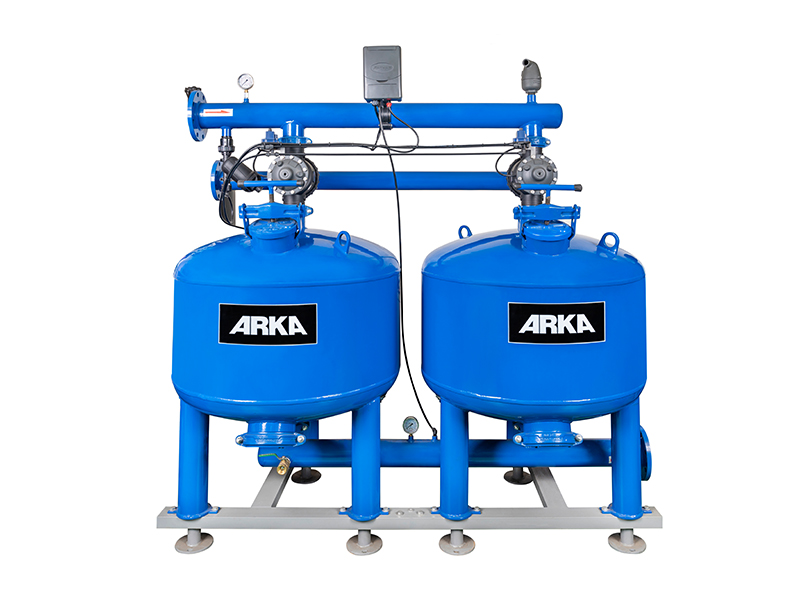
When standard residential filtration methods fail, an industrial-grade alternative engineered specifically for high-particulate environments becomes necessary.
At its core, a sand media filter consists of a large, high-pressure carbon steel or fiberglass tank filled with specially graded silica sand. This media is typically supported by a base layer of coarse gravel. The equipment operates on the principle of depth filtration.
Unlike a paper cartridge that only catches debris on its ultra-thin outer surface, depth filtration forces water to travel through a deep, multi-layered bed of media. As the fluid weaves through the microscopic spaces between the sand grains, sediment gets trapped throughout the entire depth of the tank. This three-dimensional trapping mechanism allows the system to hold massive quantities of debris before the flow rate is negatively affected.
Furthermore, these systems are not static. A critical component of this technology is its ability to purge itself. When the sand bed becomes saturated with trapped sediment, the system reverses the direction of the water flow. This upward surge lifts and expands the entire sand bed. The aggressive agitation releases the trapped debris, flushing it out through a dedicated drain line. Once this cleaning phase concludes, the clean sand settles perfectly back into place, and the system is ready to process raw water again.
Determining when to upgrade your filtration system requires observing the specific hydraulic performance of your current setup. Here are objective engineering indicators that a heavy-duty solution is required.
Standard ten-inch or twenty-inch sediment cartridges are designed strictly for light particulate loads. If your well produces heavy sand, these filters will blind over rapidly. Replacing a costly cartridge every two weeks equates to hundreds of dollars annually. This does not even factor in the manual labor and sheer frustration of a sudden loss of water pressure. If your replacement frequency exceeds once a month, upgrading to a depth filtration system is economically justified.
As sediment accumulates in pipes and standard filters, it creates immense friction loss. This manifests as a noticeable drop in dynamic water pressure. You may notice that the shower flow weakens the moment a toilet is flushed, or that it takes significantly longer to fill a washing machine. A properly sized depth filter maintains consistent pressure by distributing the sediment load across a massive media bed.
One of the most obvious signs of a sediment crisis is visual evidence. If you lift the lid off your toilet tank and discover a thick layer of gritty, brown sludge at the bottom, your current filtration is failing completely. You might also notice a gritty residue left in bathtubs after draining or settling in the bottom of your drinking glasses.
Washing machines, dishwashers, and water heaters are simply not engineered to process dirt. Sediment accumulation at the bottom of a water heater forces the unit to consume vastly more energy to heat the water. This thermal barrier eventually causes the heating elements to burn out prematurely. If you find yourself frequently calling technicians to replace appliance intake valves, heavy sediment is likely the culprit.
Agricultural applications demand high flow rates that standard residential filters cannot physically support. If you operate a farm, greenhouse, or large rural property, heavy sediment will quickly destroy sensitive irrigation equipment. Transitioning to a high-capacity system is mandatory to protect crop yields and expensive distribution infrastructure.
When evaluating a water treatment filter, it is crucial to compare the available technologies. You must ensure you select the appropriate mechanical system for your specific water profile.
Spin-down separators use centrifugal force to throw large particles out of the water stream. They are highly effective for large, heavy rocks and coarse sand. However, they allow fine silt and clay to pass directly through into your plumbing. In addition, they require frequent manual flushing via a bottom ball valve. In contrast, depth filtration catches much finer particles and manages the cleaning process automatically, requiring zero daily manual intervention.
Cartridge filters are ideal for municipal city water or wells with exceptionally light sediment. They are inexpensive upfront but become terrible investments for heavy well sand due to instantaneous clogging. Conversely, depth systems require a higher upfront capital investment but offer massive holding capacity and zero replacement cartridges. This results in a significantly lower total cost of ownership over a ten-year operational period.
| Feature | Spin-Down Filter | Pleated Cartridge Filter | Well Water Sand Filter |
|---|---|---|---|
| Micron Rating | 50 - 100+ microns | 1 - 50 microns | 15 - 40 microns standard |
| Maintenance | Frequent manual flushing | Frequent replacement | Automatic self-cleaning |
| Capacity | Low passes fine silt | Low to Medium | Extremely High |
| Best Use Case | Pre-filtering large rocks | Light sediment city water | Heavy sediment and agriculture |
| Recurring Cost | Low | High constant replacements | Zero automated cleaning |
Understanding the internal fluid mechanics of these systems is essential for determining their long-term viability for your specific site. To maintain high efficiency without manual intervention, modern setups rely on a precise three-step automated cycle. Advanced equipment, such as the F40 series, utilizes highly durable carbon steel construction to handle extreme working pressures during these phases.
During standard operation, raw well water enters through the primary control manifold located at the top of the tank. An internal upper distributor basket disperses the water evenly over the top of the media bed. This critical step prevents the incoming water from channeling a single hole through the sand, ensuring uniform downward flow velocity.
As the water percolates downward through the layers of graded sand and gravel, physical particulates become trapped within the microscopic spaces. Because the entire depth of the tank is utilized, the system holds massive volumes of sediment before pressure drops. The purified water reaches the bottom of the tank, enters the lower distributor laterals, and is pushed up through the center riser pipe to supply your facility.
As sediment accumulates within the media bed, the spaces between the sand grains narrow, causing an inevitable drop in water pressure. To resolve this, an automatic sand filter initiates a cleaning phase. High-end models trigger this cycle using built-in pressure differential sensors, activating exactly when the pressure drop reaches a critical threshold.
The control valve reverses the flow of water, directing it down the center riser tube and forcing it upward through the bottom of the sand bed. This upward flow must be vigorous enough to lift and expand the sand bed by approximately thirty to forty percent. The aggressive agitation loosens the trapped sediment, separating the lighter debris from the heavier sand grains. The dirty water is then flushed out of the top valve and directed straight to a designated drain line.
Once the upward flushing phase is complete, the system cannot immediately return to service mode. If it did, any residual dirty water at the bottom of the tank would be flushed directly into your clean plumbing network. To prevent this contamination, the control valve initiates a brief rinse cycle. Water flows in the normal downward direction, but instead of entering your plumbing, it is sent to the drain. This step flushes out any remaining loose debris and compacts the sand bed back into its proper, highly efficient position.
While residential well owners benefit greatly from depth filtration, agricultural operations view these systems as a strict operational necessity. Pumping groundwater for large-scale crop hydration introduces massive volumes of abrasive sediment that will quickly destroy sensitive distribution equipment.
Modern agriculture relies heavily on micro-irrigation and drip tape to conserve water and deliver nutrients directly to plant roots. However, the emitters on these drip lines possess extremely narrow orifices. Even a moderate amount of fine well sand or suspended silt will permanently clog these emitters. This leads to uneven crop watering, severely reduced yields, and expensive equipment replacement.
For these demanding applications, an irrigation sand filter represents the absolute gold standard in physical water purification. Because the media traps particles down to the fifteen-micron range, it effectively neutralizes the threat of clogged emitters. Furthermore, these heavy-duty systems are highly resilient against organic matter, algae, and clay, which are frequently pulled from shallow agricultural wells.
Agricultural irrigation requires flow rates that far exceed standard residential capabilities. While a home might require fifteen Gallons Per Minute, a commercial farm may demand hundreds or even thousands of gallons per minute.
To accommodate this, commercial setups are installed in parallel configurations, often referred to as filter manifolds. Multiple steel tanks, sometimes featuring massive 1000mm diameters, are connected to a single main header. This modular design not only accommodates extreme flow rates but also allows for continuous operation during cleaning. When one tank requires flushing, the system utilizes the clean, filtered water produced by the adjacent tanks to wash out the dirty unit. This ensures the irrigation process is never paused.
Transitioning from standard surface filtration to depth filtration is a significant mechanical upgrade. Selecting the wrong specifications can lead to inadequate sediment removal or premature system failure. When evaluating your options, you must align the filter’s mechanical requirements directly with your well pump’s specific hydraulic capabilities.
The single most common cause of system failure is an undersized well pump. As previously detailed, the cleaning cycle requires enough upward hydraulic force to lift heavy wet sand. If your well pump cannot produce the required flow rate to achieve this bed expansion, the sediment will never be fully flushed out. Over time, the dirt and sand will solidify, turning the media bed into a concrete-like block. This phenomenon is known in the industry as channeling or mud-balling. Always verify your well pump’s maximum yield before purchasing a specific tank size.
Control valves dictate exactly how and when the system cleans itself. Manual valves require an operator to physically turn a lever to initiate the cleaning cycles. While these are less expensive initially, they rely entirely on human memory. If a maintenance worker forgets to flush the system, the resulting pressure drop can severely damage your plumbing.
Conversely, a reliable backwash sand filter utilizes a digital control head or hydraulic automation. These units can be programmed based on metered volume or pressure differential. For both residential and commercial applications, automated valves are highly recommended. They guarantee consistent maintenance, save water, and dramatically prolong the lifespan of the filter media.
Do not compromise on tank materials. For high-pressure well systems or agricultural manifolds, seek out carbon steel tanks treated with anti-corrosion epoxy coatings, or opt for stainless steel. These materials withstand severe weather exposure, resist UV degradation, and handle the intense pressure spikes associated with large submersible pumps far better than standard residential plastics.
Heavy sediment demands a robust, engineered filtration solution. A properly sized depth filtration system protects your plumbing network, prevents severe damage to your expensive appliances, and completely eliminates the need for constant cartridge replacements. By matching the filter to your pump's hydraulic output and selecting automated controls, you ensure highly effective self-cleaning and maximum equipment longevity. If you are ready to permanently eliminate sediment issues and protect your infrastructure, explore the industrial-grade solutions at ARKA Irrigation. Our F40 automatic self-cleaning systems are engineered for maximum durability and flow efficiency. Visit ARKA Irrigation today to find the exact specification for your residential or commercial project.
Typically every three to five years, depending on total water usage and the severity of the sediment load. Over time, the jagged edges of the sand grains become smooth from constant water friction. This weathering reduces their ability to trap fine particles effectively, signaling it is time for a media swap.
No. A standard depth filter only removes physical, suspended particulates like dirt, sand, and sediment. To remove dissolved iron or sulfur odors, you need a specialized oxidation-reduction system utilizing specific catalytic media.
It varies widely by tank size and flush duration, but a typical residential cycle uses between fifty to one hundred and fifty gallons of water. This hydraulic demand is why ensuring your well has an adequate recovery rate is critical before installation.
While highly experienced personnel can install them, professional installation by a certified plumber or water treatment engineer is strongly recommended. Proper installation requires precise plumbing connections, correct drainage routing for the high-pressure flush line, and accurate programming of the automated control valve.
Standard silica media typically removes particles down to the twenty to forty micron range. If you upgrade to specialized media like crushed glass or Zeolite, the system can capture particles as small as five to ten microns.
A properly sized, clean tank typically experiences a minimal pressure drop of two to five PSI. If the differential pressure drop exceeds ten PSI during normal operation, it indicates the media bed is saturated and a cleaning cycle is immediately required.
Yes. Unlike surface cartridges that blind over immediately when hit with a surge of dirt, the deep media bed easily accommodates sudden spikes in turbidity and suspended solids. It absorbs the heavy load without completely choking off your facility's water supply.


