
Views: 0 Author: Site Editor Publish Time: 2026-10-12 Origin: Site


It is a sweltering Saturday afternoon, and you are ready for a refreshing dip, only to be greeted by a murky, uninviting pool. Maintaining a backyard oasis should never feel like a second job, yet fighting cloudy water week after week often does. Fortunately, installing a premium swimming pool sand filter offers a reliable, low-maintenance solution for achieving that elusive crystal-clear water. This allows you to spend more time swimming and less time scrubbing. By reading this comprehensive guide, you will uncover exactly how to select the optimal size, identify the best media, and implement a painless maintenance routine tailored to your specific fluid dynamics and plumbing setup.
When evaluating pool equipment, grasping the fundamental fluid dynamics of your hardware is the very first step toward making an informed, confident decision. The modern swimming pool sand filter has firmly established itself as an industry standard, perfectly balancing operational efficiency with rugged, long-lasting durability.
The operation of a sand media filter relies on a straightforward, remarkably natural mechanical process. Water is forcefully pushed by the pool pump into the top dome of the filter tank. As this water is driven downward through a thick, tightly packed bed of specialized sand, the microscopic jagged edges of the particles snag dirt, body oils, and organic debris. Standard filtration can capture particles as minuscule as 20 to 40 microns. For context, a single human hair is about 70 microns thick. Once the purified water reaches the bottom of the tank, it enters the slotted plastic pipes known as laterals and is propelled back up through the center standpipe, returning to your pool sparkling clean.
While the market is saturated with various filtration options, top-tier manufacturers distinguish themselves through deliberate material engineering. Modern tanks are typically constructed from heavy-duty, fiberglass-reinforced resin. This specific material choice provides exceptional resistance to ultraviolet degradation from the blazing summer sun, while simultaneously preventing corrosion from harsh pool chemicals like liquid chlorine or muriatic acid. Beyond structural integrity, industry-leading brands integrate user-friendly multi-port valves that eliminate the steep learning curve often associated with backyard maintenance. This allows homeowners to manage their water quality with a simple twist of a handle.
Bottom-of-funnel buyers often find themselves paralyzed when weighing the final decision between sand, cartridge, and diatomaceous earth filters. Each system certainly has its merits, but validating your choice requires a realistic look at long-term ownership. Interestingly, the pool maintenance sector is currently experiencing a massive shift toward sustainable, low-intervention systems. Driven by rising energy costs and water conservation initiatives, homeowners and commercial facility managers are increasingly moving away from chemically intensive or highly manual cleaning processes. Instead, they favor mechanical filtration that drastically reduces both physical labor and ongoing replacement costs.
While diatomaceous earth filters offer the absolute finest filtration down to an impressive 1 to 3 microns, they demand frequent, messy maintenance and the continuous, recurring purchase of filter powder. Cartridge filters, on the other hand, save water since they do not require backwashing; however, replacement cartridges are notoriously expensive. Cleaning them involves manually dismantling the housing, dragging out the heavy, soaking-wet pleated elements, and aggressively hosing them down with chemical soaks. In contrast, a sand system requires the least amount of hands-on dirty work. The internal media only needs replacing every three to five years, and routine cleaning is handled entirely via a valve switch, meaning absolutely zero contact with slimy filter elements.
These robust units are the optimal choice for high-debris environments, such as backyards surrounded by shedding pine trees, as well as for large water volumes. They are specifically designed for pool owners who prefer a highly reliable, set-it-and-forget-it operational model rather than a weekend chore.
| Filter Type | Filtration Precision | Maintenance Effort | Long-Term Cost | Best Use Case |
|---|---|---|---|---|
| Sand Filter | 20 to 40 Microns | Low via valve operation | Lowest | High debris, low-maintenance seekers |
| Cartridge | 10 to 20 Microns | High via manual scrubbing | High | Areas with strict water conservation laws |
| Diatomaceous Earth | 1 to 3 Microns | Medium via powder replacement | Medium to High | Commercial pools, maximum clarity needs |
Selecting the right equipment goes far beyond aesthetic preference; it requires precise mathematical alignment with your pool's unique specifications. Installing an improperly sized unit can lead to persistently cloudy water, elevated head pressure, and burned-out pump motors.
The golden rule of pool filtration from a field engineer's perspective is achieving a complete water turnover within an 8-hour window. This means filtering every single drop of water in your pool daily. To determine the correct size for your tank, you must calculate your pool's volume and match it to the filter’s gallons per minute rating.
For example, if your pool requires 45 gallons per minute for an 8-hour turnover, you must select a sand filter rated for at least 45 gallons per minute. Sizing up slightly is generally recommended to reduce system strain and accommodate heavy bather loads during summer parties.
A common and incredibly costly mistake is pairing a highly powerful pool pump with an undersized filter. If the pump pushes water faster than the filter's maximum flow rating, the intense high pressure will force water to carve direct channels through the sand bed. When this channeling occurs, water bypasses the sand entirely, returning dirty water straight back to the pool. In extreme cases, overpowering a filter can crack the resin tank or shatter the delicate internal laterals. Always cross-reference your pump's performance curve with the filter's maximum operating pressure.
Manufacturers offer models tailored for both above-ground and in-ground setups. Specifically, above-ground systems often feature top-mount valves to maintain a compact footprint on small equipment pads. In contrast, in-ground systems may utilize side-mount valves for easier access in deeper, more complex plumbing setups. Ensure you check the structural specifications to match your pool type, as the plumbing orientation will dictate your installation process and pipe routing.
One of the greatest, yet often overlooked, advantages of a sand filter tank is that you are not strictly limited to using basic sand. Modern material science has introduced advanced alternatives that can significantly upgrade your system's performance without requiring a hardware replacement.
This is the traditional, budget-friendly choice found in millions of backyards. The number 20 silica sand is specifically graded to be 0.45 to 0.55 millimeters in size. Its jagged, irregular edges trap debris effectively. A standard batch will typically last three to five years before the constant water friction wears those edges down, making them as smooth as river rocks and too slippery to filter properly.
Crushed, recycled glass is rapidly emerging as a superior alternative to silica sand. Glass media possesses a slight negative electrical charge that acts like a magnet for fine particles, improving filtration precision down to an impressive 5 to 10 microns. Because glass is less prone to channeling and packing, it requires less frequent backwashing, ultimately saving both water and electricity. Furthermore, glass media can last up to a decade before requiring replacement, aligning perfectly with modern sustainability trends.
Zeolite is a naturally occurring volcanic mineral with a highly porous, sponge-like structure. It offers a massive surface area for trapping microscopic debris. More importantly, Zeolite chemically binds with chloramines, which are the irritating byproducts of chlorine that cause red eyes and that strong public pool smell. By using Zeolite, you effectively turn your standard tank into an advanced water treatment filter, dramatically improving both water chemistry and visual clarity.
The operational hub of any sand filtration setup is the multi-port valve. Understanding these controls demystifies pool maintenance, transforming a daunting chore into a quick weekly routine while ensuring you operate the equipment safely and efficiently.
Most standard models come equipped with a versatile 6-way valve. As a crucial rule of thumb, always turn off the pool pump before pressing down and changing valve positions to prevent tearing the internal spider gasket.
The backwash filter function is precisely what makes these systems so desirable for busy homeowners. Instead of dismantling a heavy tank and scrubbing pleated elements with a garden hose, you simply switch the valve to the backwash position. The pump forces water down the center standpipe and violently up through the sand bed, lifting trapped dirt and flushing it out the waste port. This hands-free process takes roughly three to five minutes and restores the system to peak operating efficiency.
The prospect of installing large pool equipment can cause anxiety, but modern filters are designed with straightforward, logical installation in mind. Whether you hire a local professional or take the DIY route on a Saturday morning, knowing the engineering basics is essential for a leak-free setup.
Standard pool plumbing utilizes either 1.5-inch or 2-inch Schedule 40 PVC piping. Most high-quality models include the necessary threaded union adapters to match these standard sizes. When connecting the valve to your plumbing, it is critical to use Teflon thread sealant tape to prevent micro-leaks. Hand-tighten the fittings; using heavy wrenches and overtightening can easily crack the plastic threads. Always allow PVC cement to cure fully according to the manufacturer's specifications before introducing water pressure.
If you choose to heft the heavy bags and assemble the unit yourself, the process follows a strict sequence to avoid catastrophic internal damage.
Maintaining a swimming pool sand filter requires minimal daily effort, but establishing a consistent long-term maintenance routine is essential for optimal performance. Proper care extends the lifespan of the equipment and ensures the water remains safe and clear. By treating your setup with proactive care, you can maximize filtration efficiency and reduce chemical usage over time.
The pressure gauge is the primary diagnostic tool for your system, acting much like a heart monitor for your pool's circulation. It indicates the internal resistance within the tank. When the filter is clean and freshly backwashed, the gauge displays a baseline pressure, typically between 10 and 15 pounds per square inch, depending on your pump's horsepower and the plumbing configuration.
As the system captures debris, dirt, and body oils, the water flow becomes restricted, causing the internal pressure to rise. The standard industry rule is to initiate a cleaning cycle when the gauge reads 8 to 10 pounds per square inch above the initial clean baseline. Operating the filter at excessively high pressures forces the pump to work harder, accelerating wear and tear on the motor and potentially causing channeling inside the sand bed. To remove the guesswork, take a permanent marker and draw a line at your clean baseline, and another line 10 units above it.
While the fiberglass tank is incredibly durable, the media inside does not last forever. Over years of continuous water flow, the gritty texture of standard silica sand gradually becomes smooth and rounded, losing its ability to trap microscopic particles. This leads to persistently cloudy water, even when your chlorine and pH balances are perfect.
Standard silica sand typically requires replacement every 3 to 5 years. However, if you utilize alternative materials, the replacement intervals vary significantly. Recycled glass media can last 8 to 10 years, while Zeolite typically lasts 5 to 7 years. When replacing the media, always remember to inspect the fragile laterals at the bottom of the tank and use the water-cushion method before pouring in the new material.
For pool owners in climates that experience freezing temperatures, winterizing the filter is a strict, non-negotiable maintenance step. Water expands by approximately nine percent when it freezes. If water is left inside the heavy-duty resin tank during the winter, the expansion will effortlessly crack the fiberglass shell, rendering the unit completely unusable.
Begin by running a thorough backwash cycle to remove all organic matter, preventing bacteria and mold growth over the winter. Next, turn off the pump, disconnect the power, and remove the drain plug at the base of the tank to let all water escape. Leave the plug off throughout the off-season. Finally, move the multi-port valve handle to the winter or closed position, or simply leave it depressed halfway between two settings to relieve pressure on the internal spring and gasket.
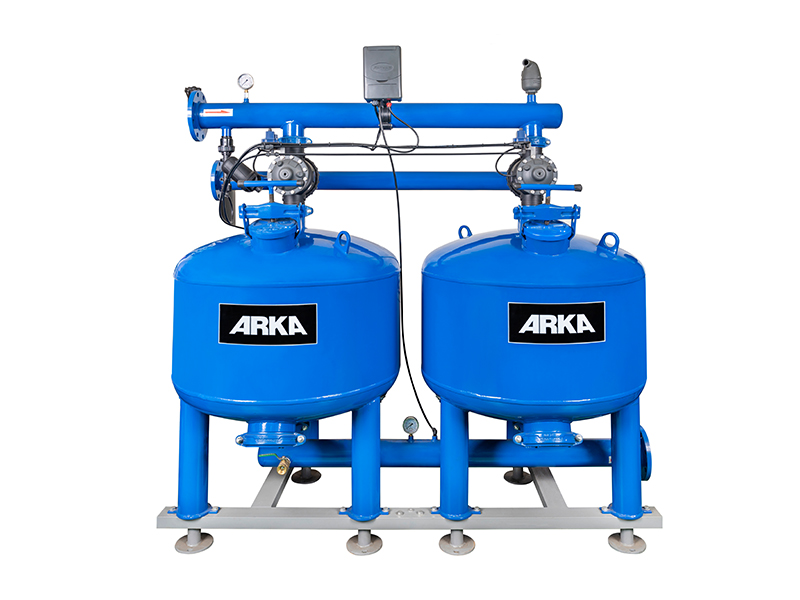
As smart technology becomes more accessible, many facility managers and homeowners look to reduce manual maintenance by upgrading their existing setups. When looking at high-capacity or commercial needs, equipment like the Arka F40-2-1000mm automatic self-cleaning sand media filter sets a benchmark. Integrating an automatic sand filter valve can completely transform your daily routine. These sophisticated valves use electronic sensors to constantly monitor the internal pressure of the tank.
When the pressure reaches that critical threshold, the automated valve communicates with the variable speed pump to initiate a cleaning cycle entirely without human intervention. This ensures the system always operates at peak efficiency, reducing electricity costs and preventing strain on the plumbing. For busy homeowners or commercial facilities, this automation provides unparalleled peace of mind.
Choosing a high-efficiency swimming pool sand filter is a definitive step toward ensuring consistently clean, inviting water. This robust mechanical system provides excellent durability against the elements and harsh water chemistry. By taking the time to match the correct pump size to your filter's flow rating, you guarantee highly efficient water turnover. Furthermore, selecting advanced alternative media types like glass or Zeolite will significantly improve your overall filtration quality, reducing chemical demand. As long as you adhere to consistent routine backwashing and properly winterize the tank to protect it from freezing, this equipment will serve you flawlessly. If you are looking for industrial-grade reliability or automated solutions tailored to your specific water treatment needs, explore the advanced filtration systems at Arka Irrigation to build a truly hassle-free setup.
The exact amount of sand required depends entirely on the specific model and diameter of your tank. Generally, residential models hold anywhere from 100 pounds to over 300 pounds of media. It is absolutely critical to consult the manufacturer's label located on the side of the tank before purchasing your supplies. Inside the tank, you will find a maximum fill line; you must never fill the sand above this indicator. Leaving adequate empty space at the top of the tank, known as freeboard, is essential to allow the water to lift and separate the sand bed during a cleaning cycle. Conversely, using too little sand allows water to channel straight through without passing through a thick enough layer of filtration material.
Yes, upgrading your existing manual setup to an automated system is entirely possible and increasingly popular. The heavy-duty fiberglass tank itself does the physical heavy lifting of trapping debris, meaning the core structure does not need to be replaced. To automate the process, you can install an electronic multi-port valve alongside a smart pump timer. These advanced valves monitor the internal pressure continuously and automatically reverse the water flow to clean the bed when dirty, eliminating the need for manual intervention and significantly reducing your weekly maintenance burden.
Finding sand at the bottom of your pool is a frustrating issue that typically points to one of three mechanical failures. The most frequent cause is a cracked or broken lateral, which are the delicate plastic tubes at the base of the tank that prevent media from entering the return plumbing. If they break due to age or improper media installation, sand will flow freely into the pool. Another common cause is overfilling the tank with media, which leaves insufficient room for the bed to expand during cleaning. Finally, failing to run a 30-second rinse cycle after backwashing leaves loose sand in the plumbing lines, which then shoots straight back into your clean water upon restarting.
Absolutely. These filters are exceptionally well-suited for saltwater environments. Saltwater pools utilize a chlorine generator that converts salt into active chlorine, but the fundamental requirement for removing physical debris remains exactly the same as in traditional chlorine pools. The primary concern with saltwater systems is galvanic corrosion, which degrades metal components. However, modern tanks are constructed from high-quality, corrosion-resistant fiberglass and heavy-duty resin materials. These non-metallic surfaces are completely immune to the corrosive effects of salinity, easily withstanding the harsh demands of a saltwater environment for many years.
To maintain optimal water clarity and chemistry, you should run your pool pump long enough to turn over the entire volume of water in your pool at least once per day. For most residential setups, this requires running the pump for 8 to 12 hours daily. During the peak heat of summer or after heavy pool usage, you may need to increase this run time to prevent algae blooms. Utilizing a variable speed pump allows you to run the system at a lower, energy-efficient speed for 24 hours, ensuring continuous filtration without causing a massive spike in your electricity bill.
While a sand filter is excellent at capturing dead algae and organic debris, it cannot kill or completely remove active, microscopic algae spores on its own. Live algae is often smaller than the 20-micron threshold that standard silica sand can capture. To clear an algae bloom, you must first shock the pool with a heavy dose of liquid chlorine to kill the algae. Once the algae is dead, adding a pool flocculant or clarifier will clump the microscopic dead particles together, making them large enough for the sand filter to easily trap and backwash out of the system.
The entire cleaning process is remarkably fast and should only take about five minutes to complete from start to finish. When you notice the pressure gauge reading 8 to 10 units above the clean baseline, turn off the pump and switch the valve to the backwash setting. Turn the pump back on and watch the sight glass located on the side of the valve. Initially, the water will appear dark and cloudy. Continue running the pump for two to three minutes until the water in the sight glass runs completely clear. Once clear, turn off the pump, switch to the rinse setting for one minute to settle the bed, and then return the system to its normal filter setting.
Understanding the distinction between these two valve settings is critical for proper system maintenance. Backwashing reverses the flow of water through the tank, pushing from the bottom up to aggressively dislodge trapped dirt, oils, and debris, directing the contaminated water out through the waste line. Rinsing, on the other hand, restores the normal downward flow of water but continues to direct the output to the waste line. Because backwashing leaves the sand bed disturbed and loose, the rinse cycle is vital to compact the media back into its proper position and flush out any lingering dirt from the plumbing lines before returning to normal operation.
Disposing of used media requires careful consideration of local environmental regulations. Standard silica sand that has only been exposed to typical pool chemicals can usually be repurposed; many homeowners spread it over icy driveways during winter or mix it into heavy clay garden soil to improve drainage. However, if the pool has been heavily treated with algaecides, metal sequestering agents, or other harsh chemicals, the sand may be considered hazardous waste in certain municipalities. In these cases, you should bag the heavy, wet sand in durable contractor bags and contact your local waste management facility for specific disposal instructions. Never dump chemically treated glass or zeolite media directly into natural waterways or storm drains.


