
Views: 0 Author: Site Editor Publish Time: 2026-11-04 Origin: Site


Emitters clogging again? You check the pumps, inspect the lines, and everything looks solid. Yet, poor water quality keeps ruining expensive agricultural and industrial setups. Often, the hidden culprit behind these frustrating, labor-intensive failures is simple: you are utilizing the wrong filtration threshold. Properly sized Disc Filtration infrastructure permanently solves this issue. It offers a highly efficient, three-dimensional water treatment solution.
Let us break down the mechanics behind these purification systems. We will match specific mesh ratings to your exact operational needs. Stop relying on guesswork and make a smart, field-ready purchasing decision tailored to your unique fluid management requirements.
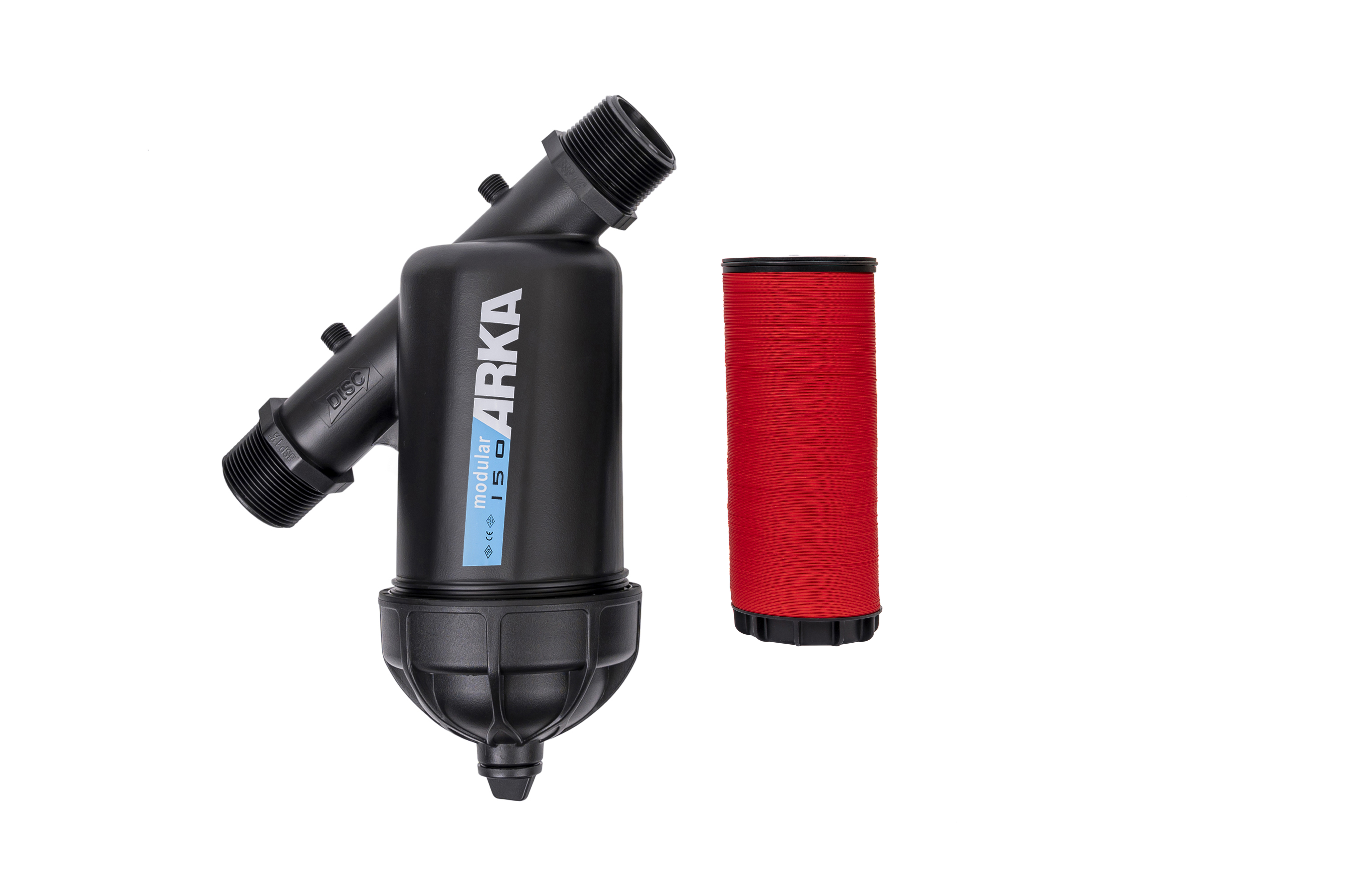
To design a reliable water treatment network, you need to understand the hardware. These units rely on a stack of color-coded, grooved synthetic rings. When compressed, they create a three-dimensional depth matrix. This matrix traps debris deep within the filter body, not just on the flat surface.
A micron is a unit of measurement equal to one-millionth of a meter. To put this microscopic scale into perspective, a single grain of beach sand is approximately 100 to 1,000 microns in diameter. A human hair measures about 70 microns across. A red blood cell is roughly 8 microns.
In fluid management, a specific Micron Rating indicates the exact physical size of the particles the media blocks. If a system is rated for 130 microns, it intercepts particles of that size or larger. Grasping this metric is your foundational step in purifying water without killing hydraulic flow.
Engineers differentiate between absolute and nominal thresholds. A nominal rating indicates the unit traps the vast majority of targeted debris. A nominal 100-micron filter captures 85 to 90 percent of those particles. It allows a tiny percentage of irregular shapes to slip through. Absolute ratings serve as a strict guarantee, stopping 99.9 percent of particles under laboratory conditions.
Commercial disc systems operate on a highly reliable nominal rating basis. The compressed grooves create a tortuous path for the water. This makes them exceptionally efficient at trapping irregular debris in heavy-duty industrial and agricultural applications.
Global water scarcity is forcing a massive shift in how we manage fluid systems. Facilities and farms are increasingly relying on reclaimed wastewater and variable surface water. This trend drives a huge demand for ultra-precise pre-filtration. Modern precision agriculture and automated fertigation systems cannot tolerate fluctuating raw water quality.
Tighter environmental regulations also dictate that industrial plants must polish discharge water more rigorously. Consequently, selecting the exact filtration threshold is no longer just about preventing clogs. It is a critical compliance and conservation strategy designed to protect sensitive automated sensors from premature failure.
Picking the correct threshold directly impacts your financial viability. It dictates operational efficiency and the lifespan of your entire hydraulic network.
Clogged drip tape destroys crop yields. Imagine walking a field in mid-July only to find withered rows because river sand blocked a micro-emitter. Guaranteeing reliable Emitter Protection is the foundation of field irrigation. The golden rule dictates your target should be at least one-seventh to one-tenth the size of the emitter orifice. This mathematical alignment prevents sediment buildup, ensures uniform water distribution, and protects the farm bottom line.
Visual water quality is paramount for commercial water features and advanced manufacturing processes. The threshold you select dictates the aesthetic outcome. To achieve pristine Water Clarity, operators must target finer particles. Higher numbers allow fine silt, clay, and microscopic algae spores to remain suspended. Dropping the target down to 50 or 20 microns captures these fine solids. This highly restrictive physical barrier significantly reduces turbidity.
Finer is not always better. Forcing heavy, algae-laden pond water through a 20-micron stack is a recipe for disaster. The media will trap so much organic material that it blinds almost immediately. This rapid clogging causes a severe pressure drop across the manifold. Your pumps will overwork and consume excessive electricity. The system will trigger constant, inefficient backwash cycles that waste thousands of gallons of water. You need equilibrium: fine enough to protect assets, coarse enough to maintain steady flow rates.
Industry standards use a visual shorthand to eliminate field confusion. Maintenance crews can instantly identify cartridge specifications without reading faded labels under poor lighting conditions.
While slight variations occur among manufacturers, the global industry adheres to a standard Mesh Colour Code. Understanding the inverse relationship between mesh and micron avoids costly procurement errors. Mesh refers to the number of holes per linear inch of screen. More holes mean smaller gaps. Micron indicates the physical particle size.
| Color Code | Mesh Rating | Micron Rating | Primary Application |
|---|---|---|---|
| Blue | 40 Mesh | 400 Microns | Coarse pre-filtering, heavy river water grit |
| Yellow | 80 Mesh | 200 Microns | Industrial cooling nozzles, heavy scale protection |
| Red | 120 Mesh | 130 Microns | Standard agricultural drip and sprinkler networks |
| Black | 150 Mesh | 100 Microns | Sensitive micro-drip, greenhouse misting arrays |
| Green | 200 Mesh | 55 Microns | Municipal polishing, delicate heat exchangers |
| Grey / Purple | 600 Mesh | 20 Microns | Reverse Osmosis membrane pre-treatment |
For example, a standard 1.5-inch Y-type disc filter utilizing a 120-mesh red disc is the absolute workhorse for front-end irrigation. It perfectly balances high flow capacity with rigorous 130-micron protection.
Stop guessing. Systematic evaluation of your site conditions dictates the exact hardware required. Facility managers and farmers can pinpoint their needs by looking at two core factors.
First, analyze your raw water. Well water typically contains rigid inorganic matter like sand and dissolved minerals. Because inorganic particles do not compress, a standard 130-micron unit handles high volumes of well sand easily without frequent clogging. Surface water from ponds carries heavy organic loads. Biological slime and algae are highly compressible. They squeeze into filter grooves and cause rapid blinding. Surface water demands a slightly coarser primary stage or a multi-stage approach.
Second, define downstream tolerances. What does the filtered water need to do? If you are feeding an industrial cooling tower, a 200-micron threshold protects heat exchanger plates from large debris. But if that same water feeds a delicate hydroponic setup, failing to filter down to 100 microns guarantees immediate emitter failure. Align raw water data with downstream equipment tolerances.
The 130-micron red and 100-micron black elements dominate agriculture. Field irrigation processes massive daily volumes. A durable Y-type front filter intercepts sand and organics. It remains coarse enough to allow high flow rates and infrequent backwashing, maximizing farm efficiency.
Heavy manufacturing relies on water for thermal regulation. Cooling towers are highly susceptible to scaling. Facilities generally target 50 to 200 microns. A 200-micron barrier stops rust and airborne debris, protecting expensive centrifugal pump impellers from physical damage.
Pristine visual clarity requires ultra-fine precision. Municipalities and advanced plants use 55-micron green or 20-micron grey discs to polish water. This is a mandatory pre-treatment phase for Reverse Osmosis membranes. It captures fine colloidal particles and extends membrane lifespan.
Objective engineering requires acknowledging physical limitations. A dangerous misconception is that fine physical filters purify water of biological pathogens. Common bacteria like E. coli range from 0.2 to 2 microns. Viruses measure between 0.02 and 0.1 microns.
The finest standard commercial discs operate at 20 microns. Pathogens are ten times smaller than the tightest grooves. Bacteria will pass right through the manifold unimpeded. It is scientifically inaccurate to claim this equipment renders water biologically safe.
However, these units are vital pre-filters for sterilization. Chemical disinfectants and Ultraviolet light neutralize bacteria but are highly sensitive to suspended solids. Turbid water creates a shadowing effect inside UV chambers. Bacteria hide behind grains of silt and survive the lethal light. Deploying a 50-micron filter upstream removes macroscopic debris. This drastically improves Ultraviolet Transmittance and allows secondary sterilization to function efficiently.
Downstream equipment comes with strict tolerance limits. Manufacturers explicitly state the maximum particulate size high-pressure pumps can handle. Installing an inadequate pre-filter instantly voids the warranty on expensive machinery. Meeting published standards prevents abrasive materials from scoring impellers, lowering emergency maintenance costs.
Water sources change. Seasonal aquifer depletion might cause a clear well to pull fine silt. Modern architectures are highly modular. A technician can depressurize the manifold, open the housing, and swap a 130-micron red spine for a 50-micron green spine. This rapid adaptation requires minimal downtime and zero heavy capital expenditure.
Choosing the right micron rating is a critical balancing act. You must align incoming water quality with downstream operational demands. Proper selection guarantees reliable protection, reduces wasted backwash water, and ensures optimal clarity.
By leveraging standardized color codes and prioritizing facility needs, you save time, money, and maintenance headaches. Evaluate your current hydraulic setup today. If you are experiencing frequent pressure drops or clogged nozzles, it is time for an upgrade. Explore high-quality, customizable fluid management solutions at ARKA Irrigation to find the exact micron threshold your project demands. Equip your infrastructure to operate at peak efficiency for years to come.
Selecting a rating that is excessively fine causes over-filtering. The media intercepts particles far smaller than necessary, reaching maximum holding capacity rapidly. This triggers continuous, inefficient backwash cycles, wasting massive volumes of water and electrical energy.
Maintenance frequency depends entirely on total suspended solids in your raw water. Clean municipal lines might require quarterly inspections. Agricultural canals during a summer algae bloom might need daily cleaning. For manual housings, initiate a clean when the pressure differential reaches 5 to 7 psi.
A higher rating is not objectively better; it serves a different mechanical purpose. A 400-micron setup features wider physical pathways, allowing larger particles through. This reduces cleaning frequency and permits higher flow rates, but it offers zero protection for sensitive micro-irrigation emitters.
Screen filters use a two-dimensional woven mesh, trapping debris strictly on the flat surface. Disc technology utilizes depth filtration. The stacked, grooved rings create a complex, three-dimensional matrix of microscopic traps. This depth holds a significantly higher volume of organic material before clogging, making it inherently superior for surface water applications.
The conversion is an inverse relationship. Mesh refers to the number of holes per linear inch, while micron measures the actual physical particle size. A higher mesh number equals a lower micron rating. As a quick field reference: 40 mesh is roughly 400 microns, 120 mesh aligns with 130 microns, and 200 mesh is approximately 55 microns.
For standard agricultural well water, a 130-micron or 100-micron filter is typically the best choice. Well water usually contains rigid inorganic sediment like sand. A 130-micron threshold efficiently captures these abrasive particles without causing excessive pressure drops, perfectly protecting standard irrigation valves and sprinklers.


