
Views: 0 Author: Site Editor Publish Time: 2026-10-22 Origin: Site


Ever look out at your backyard oasis after a heavy summer storm, staring at a surface covered in leaves and murky debris, and wonder what exactly brings it back to that perfectly pristine state? Leaves, airborne dust, and daily human use constantly threaten your water quality. The unsung hero working tirelessly behind the scenes is your filtration system. It essentially functions as the kidneys of your swimming pool.
As fluid dynamics engineers often point out, understanding the internal mechanics of your equipment completely transforms how you maintain it. In this comprehensive guide, we will break down the internal fluid dynamics, explore the daily maintenance routines, and provide actionable insights for keeping your aquatic environment safe and inviting.
Before diving into the complex mechanics of pool purification, it helps to understand the core principles governing these systems. Here is a quick snapshot of how these essential devices maintain water clarity.
Recent market data reveals a massive shift in how we manage recreational and industrial water. Municipalities and commercial facilities are rapidly moving away from manual, water-wasting setups. The current trend is firmly pointed toward smart water conservation and automated backwashing technologies. Facility managers now demand systems that minimize human error and drastically reduce wastewater runoff.
This industry-wide shift is pushing the adoption of advanced sensor-driven valves and highly efficient media. The goal is no longer just keeping water clear. The focus has shifted to maintaining optimal hydraulic efficiency while lowering the total cost of ownership and reducing environmental impact.
To fully grasp the mechanics of water purification, one must first understand the structural anatomy of the equipment. Picture a high-pressure vessel. Manufacturers typically construct these from reinforced fiberglass, durable polymeric plastics, or heavy-duty carbon steel to withstand immense internal forces. Inside this robust outer shell lies a thick bed of carefully calibrated material, serving as the primary purification engine.
The underlying concept relies heavily on biomimicry. It replicates the natural processes found deep within the earth. Rainwater naturally permeates through varying layers of topsoil, clay, and bedrock. As the moisture travels downward, impurities are physically snagged within microscopic crevices, eventually accumulating in deep underground aquifers as pristine groundwater. Your backyard equipment simply accelerates and concentrates this exact natural phenomenon within a controlled, pressurized environment.
Specifically, this technology extends far beyond backyard recreation. Because of its legendary reliability and massive flow-rate capacity, it serves as a foundational water treatment filter across various heavy-duty industries. Municipal water plants, massive agricultural irrigation networks, and industrial cooling towers all rely on scaled-up versions of this exact same architecture to manage high volumes of particulate-laden fluid.
Understanding the internal sequence of events is crucial for proper troubleshooting. The cycle operates through a precise, three-step fluid dynamic process designed to maximize dirt capture while maintaining steady hydraulic pressure.
The journey begins at the circulation pump. Acting as the heart of the system, the pump draws untreated, debris-filled water from the skimmers and main drains. Suddenly, this fluid rushes into the top section of the tank under significant pressure.
As the influent hits the top of the vessel, it encounters a critical component known as the diffuser. If high-velocity water shot directly into the bed, it would bore a deep crater straight through the material. Engineers call this detrimental phenomenon channeling. It allows dirty water to completely bypass the purification zone. The diffuser prevents this disaster by spraying the incoming fluid outward in a gentle, umbrella-like pattern. This ensures an even distribution across the entire flat surface.
Once distributed, gravity and pump pressure force the liquid downward. This is where the actual mechanical separation happens.
Standard pool media is not perfectly smooth. Under a microscope, each tiny grain features sharp, jagged edges. As the liquid navigates the microscopic labyrinth between millions of these grains, particulate matter becomes physically snagged. Dust, pollen, human oils, cosmetics, and organic debris get locked in place. The deeper the flow travels, the tighter the interstitial spaces become. Consequently, the system traps progressively smaller particles as the water descends.
Buried at the very bottom of the tank lies the collection hub. This manifold connects to a series of horizontal, slotted plastic pipes called laterals.
The engineering here is highly specific. The horizontal slots are precision-cut to be narrower than a single grain of the media, yet wide enough to allow purified water to pass freely. This keeps the dirt and media permanently trapped inside the vessel. The freshly sanitized water enters the laterals, flows into a central vertical tube known as the standpipe, and is propelled upward and out of the tank. It then returns to your pool crystal clear.
The structural integrity of a high-pressure tank means nothing without the correct internal material. The choice of material directly dictates water clarity, micron-level efficiency, and the overall workload placed on your pump motor.
The global industry standard remains number 20 silica. This specific grade is aggressively mined, washed, and sifted to ensure every single grain measures between 0.45 and 0.55 millimeters in diameter.
Silica is chemically inert. It will not react with chlorine, bromine, or balancing acids. Its sharp, angular geometry is highly effective at capturing debris down to 20 to 40 microns in size. To provide context, a single strand of human hair is approximately 70 microns thick. The naked human eye can only detect particles larger than 40 microns. Therefore, this medium effectively removes invisible contaminants.
While silica is highly reliable, advancements in material science have introduced alternatives offering superior metrics.
Crushed recycled glass is increasingly popular among facility managers. Because glass possesses an inherent negative electrical charge, it naturally attracts microscopic organic particles that typically carry a positive charge. This allows a filtration media upgrade to trap exceptionally fine particles, often down to 5 to 10 microns. Glass also resists bacterial colonization much better than traditional materials, potentially reducing your chemical sanitizer consumption.
The daily operational magic lies in the external multiport valve. This component dictates the direction of water flow inside the pressurized vessel. Inside the valve sits a heavy-duty rubber spider gasket that creates watertight seals between various internal ports.
Here is a crucial operational detail from the field. You must absolutely turn off the pump before moving the valve handle. Changing settings while the motor is running will immediately tear the internal gasket. This leads to internal leaks and costly system failures.
Over time, as debris is successfully trapped, the tiny spaces between the grains become congested. This accumulation increases hydraulic resistance. It leads to a measurable rise in internal pressure and a sluggish return flow at your pool jets.
To resolve this, the system relies on a reverse-flow cleaning mechanism. Operating a backwash filter is widely considered one of the most straightforward maintenance tasks in property care, provided you read the signs correctly.
The most common mistake owners make is cleaning too frequently. A slightly dirty bed actually traps finer particles than a brand-new one. The trapped debris acts as an additional straining layer.
Rely strictly on objective data from your pressure gauge. When newly installed or freshly cleaned, note the baseline operating pressure. As dirt accumulates, flow restricts, and pressure rises. You should only initiate a cleaning cycle when the gauge reads 8 to 10 PSI above your clean baseline. Waiting too long strains the motor. Doing it too often ruins efficiency.
First, power down the pump entirely. The sudden silence is your cue that it is safe to proceed. Depress the multiport handle and rotate it firmly to the Backwash position. Turn the power back on. Immediately look at the small clear sight glass attached to the waste line. The water will initially surge through looking dark and muddy. Let the motor roar for about 2 to 3 minutes until that sight glass runs completely clear.
Power down again. Move the handle to the Rinse setting and run the motor for 30 to 60 seconds. This crucial step compacts the fluidized bed back into place and flushes residual sludge out of the plumbing lines. Finally, turn off the power one last time, return the valve to Filter, and resume your normal daily operation. Your gauge should now read back at its original baseline.
Despite being highly durable, natural materials are not immune to physics. Constant hydraulic friction causes those microscopic sharp edges to weather and round off. When the grains become smooth, they lose their mechanical ability to snag and hold microscopic particulate matter.
Even with diligent chemical balancing, degraded media will eventually compromise your water quality. You will likely notice persistent cloudiness, even when pH and chlorine levels are perfectly dialed in. Another glaring symptom is short-cycling. If you find yourself needing to flush the system every three days instead of every three weeks, the structural integrity of your sand media filter has likely failed.
Under normal conditions, industry standards dictate replacing the material every 3 to 5 years. High-bather-load commercial properties may require replacement closer to the 3-year mark.
Replacing the material is labor-intensive. After draining the tank and manually scooping out the old sludge with a shop vacuum, you must inspect the delicate plastic laterals at the bottom for hairline cracks. They become incredibly brittle over the years.
When introducing the fresh material, adhere strictly to a professional secret. Cover the top opening of the center standpipe with heavy tape or an inverted plastic cup. If a single scoop falls down that pipe, it will bypass the entire mechanism and shoot directly back into your pool upon startup. Always fill the empty tank one-third full of water before pouring. This liquid cushion acts as a shock absorber, preventing the heavy falling weight from shattering those fragile bottom laterals.
As backyard technology advances, owners face sophisticated choices regarding equipment automation. Selecting the correct architecture depends heavily on your budget, time constraints, and desired level of involvement. Let us compare the actual operational parameters.
| Feature | Traditional Manual System | Automated Smart System |
|---|---|---|
| Initial Cost | Lower capital expenditure. | Higher upfront investment. |
| Labor Requirement | Requires physical presence to monitor gauges and turn valves. | Zero manual labor for routine cleaning cycles. |
| Cleaning Trigger | Human observation of the pressure gauge. | Digital pressure differential switches trigger automatically. |
| Pump Lifespan | Average. Prone to strain if backwashing is forgotten. | Extended. System never runs under extreme pressure restriction. |
| Best Suited For | Residential pools, budget-conscious setups. | Commercial facilities, large estates, agricultural irrigation. |
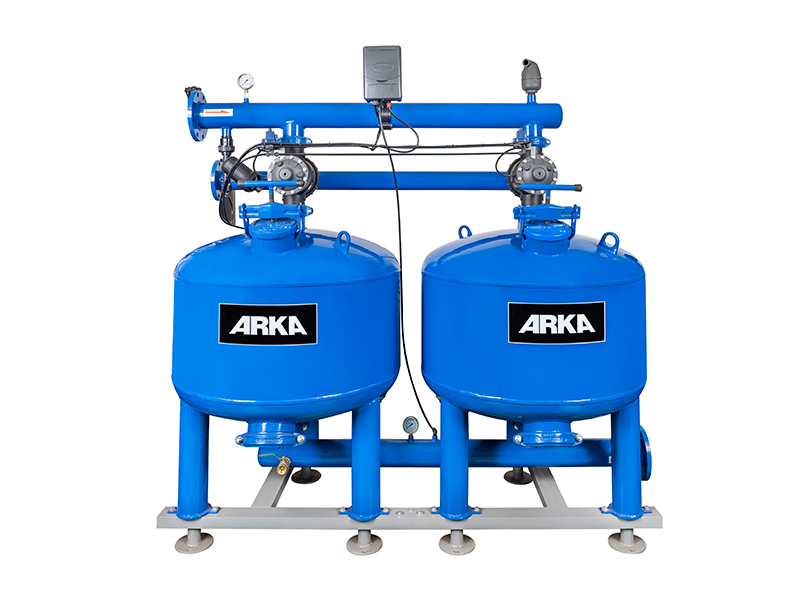
For high-demand environments or those seeking a completely hands-off approach, an automatic sand filter represents a massive technological leap. Take the ARKA F40-2 1000mm Automatic Self-Cleaning unit as a prime engineering example. These advanced systems replace the manual handle with motorized actuators and highly sensitive pressure differential switches.
The onboard computer continuously monitors influent and effluent pressure. The moment the internal pressure exceeds the programmed threshold, the system automatically shuts down the pump, shifts the motorized valve, cleans the media, runs a rinse cycle, and returns to normal filtration. By maintaining optimal pressure automatically, these systems significantly extend the lifespan of your circulation pump and eliminate the risk of human error.
Understanding the internal dynamics of your equipment removes the mystery of maintenance. Water enters the pressurized vessel, pushes through a carefully graded bed to trap microscopic dirt, and returns to your oasis perfectly clear. By keeping a close eye on your pressure gauge, performing regular reverse-flow cleanings, and knowing when to swap out weathered materials, you ensure maximum efficiency.
Ready to eliminate manual maintenance and upgrade your water quality? Explore high-performance filtration solutions tailored for your specific flow rate requirements at ARKA. Equip your facility with reliable, automated purification technology today to guarantee a safe, sparkling environment year after year.
Yes, overfilling a tank is a common and highly detrimental mistake. Every vessel requires a specific amount of empty space at the top, known as freeboard. This space is essential because during the cleaning cycle, the reverse flow of water causes the bed to expand and lift by about 20 percent. If there is too much material and inadequate freeboard, the fluidized bed has nowhere to go. It will be forced up into the valve, eventually blowing out through the waste line or returning directly into your pool. Always adhere strictly to the manufacturer weight limit.
If you notice a steady stream of grit accumulating on the floor, usually directly beneath the return jets, you are experiencing a mechanical failure. The most frequent culprit is a cracked lateral at the bottom of the tank. These plastic components become brittle over years of chemical exposure and snap easily. Another potential cause is a damaged spider gasket inside the multiport valve, allowing unfiltered fluid to bypass the system. Lastly, if the grit appears immediately after maintenance, you likely skipped the crucial Rinse step.
A standard setup is designed to remove physical particulate matter, not to act as a biological sterilizer. High-quality media effectively captures debris down to roughly 20 to 40 microns. While this snags dirt, pollen, and hair, most dangerous bacteria are much smaller. They typically range from 0.2 to 2 microns in size. Therefore, bacteria and viruses will pass directly through the bed. To maintain sanitary water, a chemical sanitizer like liquid chlorine or a saltwater generator is absolutely mandatory to neutralize microscopic biological threats.
The required runtime depends on the total volume of your water and the flow rate of your pump. Engineers call this the turnover rate. The primary goal is to pass the entire volume of your water through the system at least once per day. For most standard residential setups, this requires running the motor for 8 to 12 hours daily. During peak summer months with intense direct sunlight and elevated temperatures, you may need to increase the runtime to 12 to 14 hours to prevent algae blooms.
Persistent cloudiness usually points to three common issues. First, your media might be too old and rounded, losing its ability to catch fine particles. Second, you might be experiencing channeling, where water drills a hole through the bed and bypasses the filtration zone entirely. Third, the issue might not be mechanical at all. Poor water chemistry, specifically low chlorine or unbalanced pH, can cause cloudy water that no amount of physical filtration can fix.
The exact amount depends entirely on the diameter and model of your specific tank. You must check the manufacturer label located on the side of the vessel. It will clearly state the required weight, usually in pounds or kilograms. Material is typically sold in 50-pound bags. Never guess the amount. Underfilling leads to poor water clarity, while overfilling causes the material to blow out into your yard or pool during a cleaning cycle.


