
Views: 0 Author: Site Editor Publish Time: 2026-10-13 Origin: Site


Cloudy pool water despite heavy chemical dosing points to a mechanical failure. The hidden culprit is often degraded filter sand. Many facility managers and homeowners neglect their filtration system until severe hydraulic problems arise. They fail to realize that the media inside loses its mechanical effectiveness over time. In this technical guide, you will discover exactly when and how to replace your premium pool filter sand 50 lb. Mastering this maintenance routine reduces chemical usage, lowers pump strain, and guarantees crystal-clear water all season long.
For standard swimming pools, the established engineering benchmark for replacing pool filter sand is every three to five years. This timeline is based on the physical degradation rate of silica sand under typical hydraulic conditions. When you first pour in fresh pool filter sand 50 lb, the grains capture particles as small as 20 to 40 microns. As thousands of gallons of water continuously force their way through the bed, friction alters the physical structure of the grains. By year four, you will notice a steady decline in water clarity.
The three-to-five-year rule serves as a reliable baseline. However, specific environmental factors can prematurely exhaust your setup. A pool experiencing heavy daily bather loads introduces high volumes of organic contaminants. Body oils, sweat, cosmetics, and sunscreen act as adhesives. These sticky substances coat the grains, causing them to clump together and lose their trapping capacity.
Pools located beneath heavy tree canopies force the system to work significantly harder. The excessive particulate load can permanently clog the lower levels of the tank. In regions with hard water, calcium buildup presents a major mechanical threat. Mineral deposits precipitate out of the water and calcify within the tank. This eventually turns individual grains into solid cement-like blocks.
You can maximize the lifespan of your setup by maintaining strict control over your water chemistry. Keeping the pH between 7.2 and 7.6 prevents mineral scaling. Consistent chemical filter cleanings will also help the media comfortably reach the five-year mark.
To understand why a replacement is necessary, we must look at the materials on a microscopic level. Fresh pool filter sand 50 lb is composed of crushed silica featuring rough, jagged, and highly irregular edges. These sharp microscopic crevices act as tiny hooks. They catch and hold onto passing dirt, algae, and bacteria. The rougher the texture of the filtration media, the higher its dirt-holding capacity.
The primary cause of failure is water erosion. Over several years, relentless hydraulic friction gradually smooths out the jagged edges of the silica. It is similar to how a rushing river smooths out stones. Once the grains become perfectly round, they lose their microscopic hooks. Smooth surfaces allow fine dirt to slip right past and flow directly back into the water.
Another hydraulic phenomenon that ruins steady clarity is channeling. When the bed becomes saturated with oils or calcified by hard water, it begins to clump. As the pump forces water into the tank, the liquid seeks the path of least resistance. Instead of dispersing evenly, the water carves permanent narrow tunnels straight through the clumped mass. When channeling occurs, the water bypasses the cleaning process entirely.
The water treatment industry is currently experiencing a massive shift toward sustainability and automation. Historically, operators relied on manual pressure gauge checks to determine when to clean their systems. Today, modern facilities are adopting IoT-enabled sensors and automated valves. This data-driven approach tracks pressure drops with extreme precision. It prevents over-flushing, a practice that wastes thousands of gallons of chemically treated water annually. Upgrading to an intelligent water treatment filter not only reduces human error but also optimizes the hydraulic flow dynamics, preventing dead zones where algae typically thrive.
The most obvious indicator of exhausted material is water that refuses to clear up. If your chlorine levels are optimal, your pH is balanced, and your pump is running for the appropriate hours, the tank is likely the culprit. The rounded grains are simply incapable of trapping fine particulate matter.
A healthy system only requires flushing when the internal pressure rises to a specific threshold. This usually happens every few weeks depending on usage. If you find yourself needing to engage the backwash filter setting every few days just to maintain normal flow, the bed is severely compacted.
Understanding your pressure gauge is vital. After putting in fresh material and flushing the system, note the baseline operating pressure. You should flush the tank when the pressure rises 8 to 10 PSI above that baseline. If you perform this maintenance and the gauge refuses to drop back down to its original starting point, the material is permanently degraded.
This is the ultimate red flag for any operator. If you vacuum the floor and see a cloudy stream of debris shooting right back into the water, your equipment is failing. The dirt is passing straight through established channels.
If you suspect a failure, turn off the pump, relieve the pressure, and open the top of the tank. Reach inside and feel the texture. Healthy material should feel loose and easily shift through your fingers. If it feels hard or resembles a block of cement, it has calcified. Total replacement is mandatory.
Tanks are categorized by their diameter, typically measured in inches. The physical size directly correlates to the volume required to achieve proper water clarity. Purchasing the correct amount of pool filter sand 50 lb is critical before you begin the replacement process.
Below is a standard engineering reference to help you calculate exactly how much your specific model requires. Always verify these numbers against the manufacturer specifications printed on the equipment label.
Accuracy in filling your tank is non-negotiable. If you put too little in, the distance between the water distributor at the top and the laterals at the bottom is too short. This results in inadequate contact time and cloudy water. Overloading the tank leaves insufficient freeboard space. Internal pressure will skyrocket, potentially crushing the fragile laterals at the bottom or blowing excess material directly into your pool.
Replacing the contents of your sand media filter is a highly manageable project if you follow strict mechanical procedures. Executing this correctly protects your equipment from unnecessary strain.
Turn off all power to the pump at the main circuit breaker. Open the air relief valve on the top of the dome to depressurize the system. Gather a wet/dry shop vacuum, heavy-duty tape, a garden hose, and the correct number of pool filter sand 50 lb bags.
Locate the drain plug at the very bottom of the tank and remove it. Allow all the water to drain out. This makes the old saturated material significantly lighter. Carefully unbolt the multiport valve from the top. Lift the valve straight up gently. Never yank or twist aggressively, as doing so can permanently snap the central standpipe.
Do not attempt to lift the tank and dump it. The wet weight will likely rupture the fiberglass shell. Use a wet/dry shop vacuum to extract the exhausted material. As you get deeper, proceed with extreme caution. Use a small plastic cup to gently scoop out the remaining layers around the delicate plastic laterals at the bottom.
The laterals are the slotted plastic spokes radiating from the bottom of the standpipe. Rinse them with a hose and meticulously inspect each one. Look for hairline cracks or brittle plastic. Broken laterals are the primary cause of debris blowing back into a pool. Replace damaged laterals immediately.
Replace the drain plug and fill the empty tank about halfway with water. This liquid acts as a shock absorber. It cushions the heavy falling bags and protects the fragile laterals from being crushed upon impact.
Securely place a piece of tape over the open top of the standpipe. If any grains get inside this pipe, they will shoot directly into your pool upon startup. Carefully pour in your bags of pool filter sand 50 lb, ensuring the standpipe remains perfectly centered. Remove the tape, lubricate the O-rings, and securely reattach the multiport valve.
Do not run the system on the standard setting yet. Fresh supplies contain fine silica dust from manufacturing. Set your valve to the reverse flow setting, turn on the pump, and let it run for 3 minutes until the water in the sight glass runs completely clear. Follow this with a brief rinse cycle before returning the valve to the normal operating position.
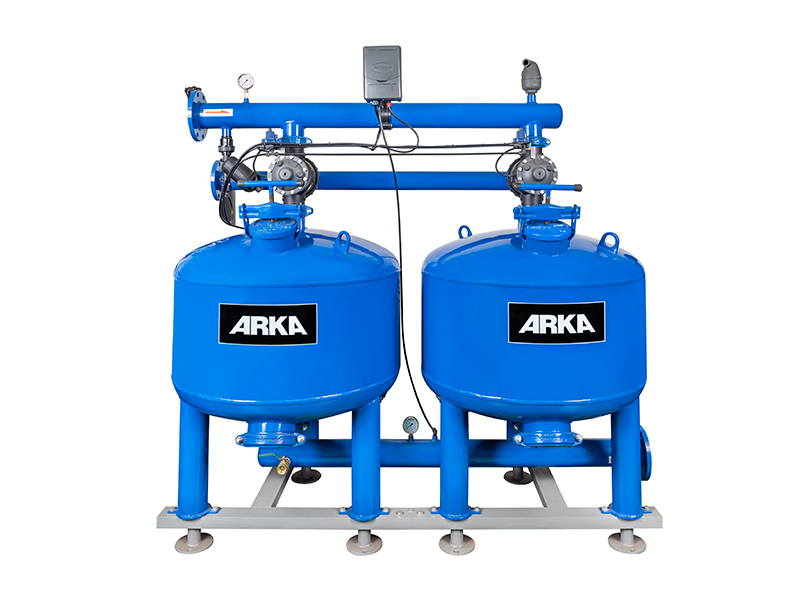
For commercial agricultural setups, industrial water treatment, or high-demand residential pools, relying on manual valves is becoming obsolete. Upgrading to an automatic sand filter eliminates the guesswork from your maintenance routine.
Consider industrial-grade equipment like the F40-2 1000mm Automatic Self-Cleaning Sand Media Filter. These advanced systems feature robust carbon steel or stainless steel housings designed for extreme durability. They utilize differential pressure sensors to automatically trigger backwash cycles exactly when needed. This ensures optimal flow rates and eliminates the risk of media calcification caused by human neglect. By integrating automated self-cleaning technology, facilities can drastically reduce labor costs and ensure steady, uninterrupted filtration.
Understanding how standard silica compares to alternative options helps in making an informed engineering decision for your facility.
| Media Type | Micron Rating | Expected Lifespan | Key Advantage | Primary Drawback |
|---|---|---|---|---|
| #20 Silica Sand | 20 - 40 Microns | 3 - 5 Years | Highly cost-effective and universally available. | Requires replacement more frequently than glass. |
| Recycled Glass | 9 - 15 Microns | 8 - 10 Years | Negatively charged to attract fine particles. | High initial purchasing cost. |
| Zeolite | 3 - 5 Microns | 5 - 7 Years | Traps chloramines, reducing chemical odors. | Requires a complex salt recharge process. |
While glass and Zeolite offer superior micron ratings, they come with higher costs and stricter upkeep requirements. Sticking to trusted pool filter sand 50 lb remains the most reliable and economical choice for standard operations.
Replacing your pool filter sand 50 lb every three to five years is a mandatory maintenance task for any serious water management system. Regular maintenance, proper chemical balancing, and knowing the warning signs of exhausted media will protect your equipment and reduce daily chemical costs. If you are managing a large-scale facility or agricultural irrigation system, consider upgrading your infrastructure. Explore the high-performance automatic self-cleaning filters at Arka Irrigation to guarantee crystal-clear water and maximum hydraulic efficiency all year long.
No, you cannot simply wash and reuse old material to restore its original efficiency. Rinsing removes accumulated dirt, but it does not address the physical degradation of the silica itself. Proper operation relies on the sharp edges of the grains to catch microscopic contaminants. Once these edges are smoothed down by years of water erosion, dirt will simply slip past them. Total replacement is required.
Absolutely not. Using play sand or construction sand will cause catastrophic failure. These types of sand are not uniformly graded and contain fine dust. Play sand is far too fine. It will instantly clump together, restrict flow, and eventually blow directly through the laterals into your water supply. You must exclusively use specifically graded #20 silica sand.
The clearest indicators of bad sand include persistently cloudy water despite perfect chemical balance, unusually short cycles between required backwashes, and a pressure gauge that remains high even after a thorough cleaning cycle. If you open the tank and the sand feels greasy, clumped, or hard like cement, the media is completely exhausted and must be changed.
Yes. When the media bed becomes saturated with debris, oils, and scale, it creates severe hydraulic resistance. This resistance chokes the water flow returning to the pool, resulting in weak return jets and low overall system pressure. This forces your pump to work significantly harder, which can lead to premature motor burnout if left unaddressed.
If you see a cloudy plume returning to the pool immediately after a replacement, a critical mechanical error likely occurred. A lateral at the bottom of the tank may have been cracked while dropping in the new bags without a water cushion. The central standpipe might not be seated correctly into the multiport valve. Alternatively, you may have forgotten to run the initial reverse flow and rinse cycles to flush out manufacturing dust.
Because it is a natural silica product, it is generally safe for environmental disposal, provided it is not heavily saturated with harsh concentrated algaecides. The most common disposal method is to repurpose it in your yard. It can be used to fill in low spots in your lawn, mixed into heavy clay soils to improve garden drainage, or utilized as a base layer for paving stones.
No. Automated systems do not require a proprietary type of material. Whether you are operating a manual multiport valve system or a highly advanced digital setup controlled by electronic actuators, the physical mechanics of the bed remain identical. Standard high-quality media works perfectly in both setups. The automation simply controls the timing of the flow cycles.


