
Views: 0 Author: Site Editor Publish Time: 2026-10-31 Origin: Site


You meticulously balance your chemicals, yet your pool remains stubbornly cloudy. You check the equipment pad and notice the pressure gauge reading unusually high. This scenario frustrates countless property owners. The immediate question arises: what is the exact schedule for reversing the flow through the filtration system? As a water management professional, I constantly see pumps fail prematurely due to guesswork.
Reversing the hydraulic flow is a critical mechanical process. It clears trapped dirt, body oils, and environmental debris from your filtration system. Ultimately, this routine protects your expensive circulation pump from catastrophic failure. Pinpointing the exact schedule is rarely a guessing game. It requires a blend of empirical data, an understanding of your specific equipment, and environmental awareness. In this comprehensive guide, you will learn the exact engineering metrics needed to keep your aquatic environment crystal clear.
The PSI Rule is Supreme: The most reliable indicator for maintenance is when your filter pressure gauge reads exactly 8 to 10 PSI above its clean baseline starting pressure.
Filter Types Dictate Maintenance: Traditional sand systems and Diatomaceous Earth units require drastically different cleaning frequencies. Modern high-efficiency setups offer superior alternative routines.
Avoid Over-Cleaning: A slightly dirty media layer actually traps microscopic particles better than a perfectly pristine one. Reversing flow too frequently actively reduces your system filtration efficiency.
Eco-Friendly Disposal Requires Care: Wastewater can sometimes be repurposed to reduce environmental impact. Strict chemical guidelines must be followed before routing this runoff to landscaping networks.
Before determining the optimal schedule for your backyard oasis, you must grasp the mechanical reality of the process. As a fluid dynamics operation, this routine involves reversing the natural flow of water through your pool filter. Instead of pushing clean circulation back into the swimming basin, this reversed hydraulic action aggressively dislodges trapped contaminants. It sends the murky, debris-filled water out through a dedicated waste line.
A dedicated Backwash Valve controls this entire hydraulic operation. You will typically encounter multiport or push-pull slide piston configurations. The multiport design dominates the market, featuring multiple directional settings such as Filter, Rinse, Waste, Recirculate, and Closed. By simply depressing and turning the handle, you manually alter the internal routing of the plumbing. This ingenious design allows the main pump to push circulation backward through the tank without requiring you to dismantle any PVC pipes.
During a standard afternoon of normal operation, water naturally flows in a top-down outside-in direction through the Filter Bed. In a traditional setup, this bed consists of specialized sharp-edged silica sand or crushed glass. In a Diatomaceous Earth unit, it consists of a fabric grid coated with fossilized diatoms. As the pump forces liquid through, the media snags physical contaminants.
When you initiate the cleaning phase, the fluid direction abruptly reverses to a bottom-up trajectory. This sudden change in pressure lifts and separates the densely packed media. As the sand or powder fluidizes and expands within the tank, the trapped organic matter is released. It becomes suspended in the water and swiftly flushes out into the yard or sewer.
When homeowners ask about maintenance timelines, they usually want a simple calendar schedule. Professional water management, however, relies on hard data rather than guesswork or rigid weekly habits.
The absolute most reliable indicator for cleaning is the analog pressure gauge located on top of your tank. When new media is installed or freshly cleaned, it operates at a specific baseline pressure. You must physically note this baseline Pounds per Square Inch when the system is perfectly clear. For example, your baseline might be a steady 12 PSI.
As the media traps dirt over the ensuing weeks, the water faces increased hydraulic resistance. This causes the internal pressure to steadily rise. Once that needle climbs 8 to 10 PSI above your established baseline, reaching 20 to 22 PSI in our example, it is officially time to intervene. Check your gauge. If it has not moved, leave the valve alone. This simple restraint saves hundreds of gallons of treated water.
While the pressure dial remains the ultimate authority, time-based estimates can help you anticipate your weekend chores. During the peak summer swimming season with average daily use, you can generally expect to flush a sand system roughly once every two to four weeks. Keep in mind that these timelines are strictly secondary. If a full month has passed but the gauge has only risen by a mere 3 PSI, you should confidently wait.
Beyond the numbers, your pool will often give you visual hints. If you notice persistently cloudy water despite perfectly balanced chlorine and pH levels, the media is likely saturated. In addition, if the water returning through the wall jets feels noticeably sluggish or weak against your hand, the internal flow is obstructed. This requires immediate flushing.
Recent shifts in global water management highlight a massive pivot toward resource conservation. With municipalities strictly regulating residential water usage during drought seasons, the industry is rapidly moving away from traditional water-heavy maintenance routines.
Specifically, there is a surging demand for smart pressure monitors and automated hydraulic valves. These IoT-enabled setups alert you exactly when the pressure differential hits that critical threshold. This eliminates wasteful premature cleaning. Furthermore, eco-friendly media alternatives, such as activated recycled glass, are rapidly replacing standard silica sand. Glass media boasts a negative electrical charge that attracts finer particles while requiring significantly shorter cleaning cycles. This innovation saves thousands of gallons of water over a single swimming season.
No two swimming pools exist in the exact same microclimate. Several external variables will drastically accelerate how quickly your equipment reaches that critical plus 10 PSI threshold.
The sheer volume of human activity directly dictates media saturation. Imagine hosting a weekend barbecue where a dozen sunscreen-slathered kids and a golden retriever jump into the water. That single afternoon introduces massive amounts of cosmetics, sweat, body oils, and pet dander. These organic compounds bind together to form a sticky coagulated residue. This sludge clogs microscopic pathways much faster than standard dry leaves.
Meteorological shifts play a surprisingly aggressive role in water chemistry. A heavy sudden rainstorm does not just add water. It washes atmospheric dust, active algae spores, and agricultural phosphates straight into your basin. In the early spring, high airborne pollen counts can quickly coat the top layer of your media in a yellowish sludge. Consequently, after a severe storm, you will likely need to clean the system days or even weeks ahead of your normal schedule.
The specific hardware sitting on your equipment pad fundamentally changes the rules of engagement. Upgrading your equipment requires understanding exact technical parameters. Let us look at how different systems compare and how to choose the right components.
Filter Technology | Filtration Precision | Maintenance Frequency | Water Waste Level | Best Application Scenario |
|---|---|---|---|---|
Silica Sand | 20 to 40 Microns | Every 2 to 4 Weeks | High | Standard residential pools, high debris environments. |
Diatomaceous Earth | 3 to 5 Microns | Every 4 to 8 Weeks | Medium | Premium setups requiring crystal-clear water clarity. |
ARKA Disc Filter | Customizable Grooves | Automated Differential | Extremely Low | Eco-conscious homes, smart automation systems, agricultural crossovers. |
Sand filters are the undisputed workhorses of the residential market due to their rugged durability. They rely on a deep bed of silica sand to catch debris down to about 20 to 40 microns. Because they let smaller microscopic particles pass through, they tend to clog at a highly predictable steady rate. Diatomaceous Earth units offer unparalleled sparkling clarity, capturing debris down to an astonishing 3 to 5 microns. Because they trap incredibly fine particulates, they can suffocate rapidly if neglected. After every cycle, you must manually introduce fresh slurry through the skimmer to re-coat the internal grids.
A fascinating emerging technology in high-end aquatic environments is the Disc Filter. Originally engineered for heavy industrial water treatment, this system uses stacks of tightly compressed color-coded plastic rings covered in microscopic intersecting grooves. When the system initiates a cleaning phase, the rings decompress and spin violently. This sloughs off the trapped debris with minimal water waste.
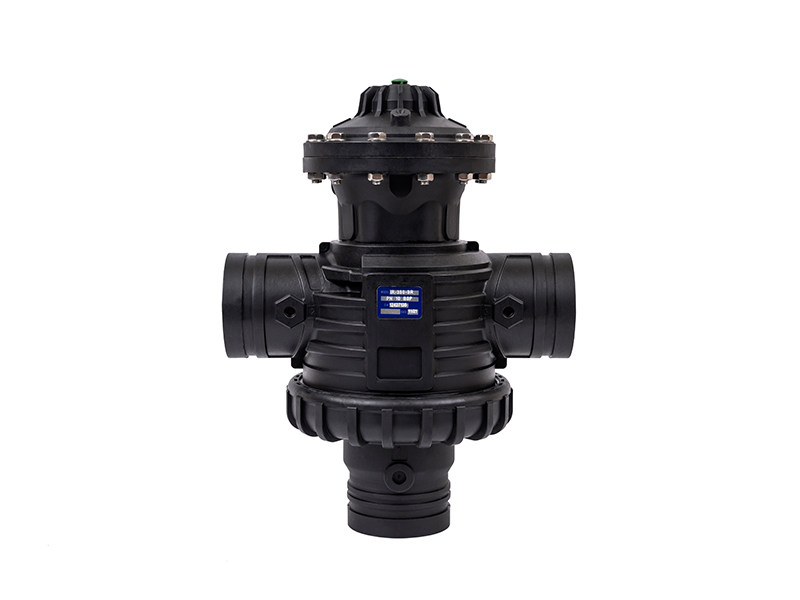
To support these advanced systems, robust plumbing infrastructure is non-negotiable. For instance, integrating the ARKA F63FM 2-Inch Backwash Hydraulic Valve transforms system reliability. Engineered with reinforced polyamide and designed to handle operating pressures up to 145 PSI, this specific valve ensures a leak-proof seal during aggressive flow reversals. Its high flow capacity and precise hydraulic control make it an industry standard for both advanced pool setups and demanding agricultural irrigation networks.
Executing the process correctly is vital. A single wrong move can severely damage your internal plumbing or require a costly service call.
Before you even think about touching the multi-port handle, observe the golden rule of pool mechanics. Always turn off the pump first. Manipulating the valve position while the motor is actively pulling water forces highly pressurized fluid against the internal rubber spider gasket. Doing this will instantly blow the seal. This results in water continuously bleeding out of your waste line even when you return to normal filtering.
Once the power is cut at the breaker, press down firmly on the valve handle and rotate it to the appropriate setting. Roll out your discharge hose, ensuring it is directed toward a safe drainage zone. Turn the power back on. Keep your eyes glued to the sight glass. The water will initially blast through looking dark and murky. Run the Backwash Cycle for roughly 2 to 3 minutes. Terminate the process only when the fluid in the glass runs completely transparent.
Once the glass is clear, power down the motor again. Move the handle to the Rinse setting and turn the power back on for exactly 30 to 60 seconds. This step is strictly non-negotiable. The violent upward flow of the previous step leaves the sand bed chaotic and unsettled. The Rinse setting flows water in the normal top-down direction but safely diverts it to the waste line. This firmly packs the sand back into place, ensuring that a cloud of residual dust does not blast back into your pristine pool.
Aquatic maintenance is a delicate balancing act. Deviating from the established PSI rules in either direction carries distinct negative consequences for both your wallet and your hardware.
Many diligent homeowners mistakenly believe that a perfectly spotless tank is the most efficient one. In fluid dynamics, this is false due to a phenomenon known as cake filtration. As particulate matter builds up on the media, it creates an additional ultra-fine layer of filtration. This catches microscopic debris that would normally slip right through clean sand. By obsessively flushing the system every Saturday, you constantly destroy this beneficial layer. Moreover, excessive flushing wastes hundreds of gallons of heated chemically balanced water. This forces you to spend a fortune constantly replacing salt, cyanuric acid, and alkalinity increasers.
Conversely, ignoring a persistently high-pressure reading is dangerous. When pressure exceeds the 10 PSI threshold, the actual flow rate drops off a cliff. This poor circulation creates stagnant dead zones in the deep end, leading to rapid explosive algae blooms. More severely, this bottleneck puts immense mechanical strain on the pump motor. The motor is forced to work twice as hard and run at higher temperatures. This induces cavitation and eventually causes the expensive electrical windings to burn out entirely.
Environmental consciousness is no longer optional in modern property management. This is especially true in regions prone to seasonal water restrictions.
A standard three-minute flush can easily expel between 150 and 300 gallons of water. A frequent question among eco-conscious owners is whether this runoff can be safely routed to a Drip Irrigation system to hydrate the yard. From an agricultural standpoint, it is possible, but strict caveats apply. Pool fluid is a chemical cocktail containing active chlorine, dissolved solids, and varying pH levels. High sodium hypochlorite levels will aggressively burn the root systems of delicate ornamental plants.
To safely utilize this resource, you must first allow the free chlorine levels in the pool to drop to near zero before initiating maintenance. Second, only apply the neutralized runoff to highly salt-tolerant shrubs or mature trees. Finally, the physical debris flushed from the tank can instantly clog the tiny micro-emitters characteristic of modern landscaping networks. You must utilize secondary agricultural-grade mesh strainers before the fluid ever reaches your delicate irrigation lines.
Maintaining a pristine swimming environment does not require daily mechanical intervention. It requires sharp observation and the right equipment. Make it a habit to check your pressure gauge every single week. Only reverse the flow when the pressure rises by that crucial 8 to 10 PSI margin.
Adhering to this simple data-driven habit protects your expensive pump from burning out, maximizes your filtration efficiency, and saves you a considerable amount of money on replacement chemicals. Stop guessing at your maintenance schedule. If your current valve is leaking or your filtration system is outdated, it is time to upgrade. Explore the high-performance ARKA F63FM 2-Inch Backwash Hydraulic Valve and ARKA Disc Filters at ARKA Irrigation to guarantee a safe, sparkling, and efficient water system all season long.
A standard cycle typically requires two to three minutes of continuous operation. However, the clock is merely a guideline. The primary indicator is the visual clarity of the fluid passing through the clear sight glass on your multiport valve. You must run the pump until the water transitions from highly turbid and dark to completely transparent. Terminating the process prematurely leaves residual debris trapped deep within the tank.
Not necessarily. Doing so can actually degrade your system efficiency. A perfectly pristine media bed is less effective at trapping microscopic particulate matter because a slight layer of existing dirt helps catch smaller debris. Rely strictly on empirical data via the 8 to 10 PSI rule. Adhering to this metric prevents premature wear on your equipment and conserves valuable resources.
Yes, chemical rebalancing is a mandatory follow-up procedure. Because the cleaning process physically expels a significant volume of fluid from the basin, you must introduce fresh makeup water from a garden hose to restore the optimal skimmer level. This influx of fresh untreated water inherently dilutes your existing chemical parameters. Within 24 hours, you must conduct a comprehensive water analysis and adjust your free chlorine, pH, and alkalinity as necessary.
Manipulating the valve handle while the motor is actively running is a severe operational error. The internal mechanism relies on a heavy-duty rubber spider gasket to direct fluid under high pressure. Turning the handle while the system is pressurized creates a destructive hydraulic water hammer effect. This immense force can easily dislodge, tear, or completely blow out the gasket, resulting in continuous uncontrollable leakage out of the waste line during normal operation.
If the dial remains elevated after a thorough cleaning and rinsing, it indicates a structural failure within the media itself. In sand systems, this is often caused by channeling or calcification. Hard water deposits and organic oils solidify the sand into hardened brick-like clumps. When this occurs, reversing the flow is no longer sufficient to break apart the media. You will likely need to perform a complete sand replacement to restore normal hydraulic pressure.
No, standard cartridge filters are not designed for reverse hydraulic flow. Pushing high-pressure water backward through a cartridge will instantly tear the pleated fabric and destroy the internal core. Cartridge systems must be manually disassembled, removed from the tank, and gently hosed off with a standard garden nozzle.
If your pressure gauge drops back to normal but the water remains cloudy, the issue is rarely the filter media. This typically points to dead algae suspended in the water, poor chemical balance, or inadequate daily pump run times. You may need to use a pool clarifier or flocculant to bind the microscopic particles together so the filter can properly catch them.


