
Views: 0 Author: Site Editor Publish Time: 2026-01-30 Origin: Site


filtration plays a crucial role. Water quality is key to the health of your crops and the overall performance of your system, which is why choosing the right filter is so important. Among the various filtration options available, disc filters and screen filters are two of the most commonly used types. Both of these filters are designed to prevent debris, dirt, and other contaminants from entering your irrigation system, but they each have unique features, advantages, and limitations.
At www.arka-irrigation.com, we specialize in providing top-quality irrigation solutions, including the best filtration systems to protect your equipment. In this article, we will compare disc filters and screen filters, helping you understand their differences, benefits, and ideal applications so you can make an informed decision on which one offers better protection for your irrigation system.
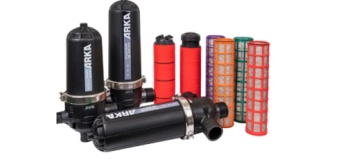
Disc filters consist of a series of stacked, disc-shaped elements made from plastic, stainless steel, or other durable materials. These discs have grooves and fine pores that trap debris and particles as water passes through them. The stacked design creates a large surface area for filtration, which helps increase the flow rate while ensuring efficient filtration.
Screen filters, on the other hand, are made up of a woven mesh screen that filters water by trapping particles and debris that are larger than the openings in the screen. These filters are often used in simpler applications, where the water quality is relatively good, and where fine particles or debris are less of a concern.
Both types of filters are designed to protect irrigation systems from damage caused by dirt, rust, and other particles that can clog pipes, emitters, and valves, ultimately affecting system performance.
While both disc filters and screen filters perform similar functions, they differ in several aspects, including their design, filtration efficiency, maintenance requirements, and applications. Let’s explore these differences in more detail.
Disc filters are renowned for their high filtration efficiency due to their multi-layered design. Each individual disc features multiple grooves and ridges, which work together to trap debris effectively. This multi-layered structure increases the surface area, enabling the filter to handle larger water volumes while still providing fine filtration. As the water passes through the discs, the design ensures that even the smallest particles are captured, making disc filters ideal for applications where water quality is a primary concern.
For example, in systems with high organic matter, algae, or fine dirt particles, disc filters excel because their layered construction ensures finer filtration. This makes them highly effective in protecting sensitive components like drip emitters or micro-irrigation systems from clogging due to debris buildup. Additionally, their ability to handle fine filtration without significantly affecting water flow makes them a preferred choice for high-performance irrigation systems.
Screen filters, on the other hand, typically offer coarse filtration. The mesh used in screen filters is designed to catch larger debris, such as leaves, sand, and coarse particles, but it’s less efficient at trapping smaller particles compared to disc filters. The mesh size can vary, with larger mesh sizes suitable for applications where only larger debris needs to be filtered out. However, screen filters may not effectively filter smaller particles, which can be problematic in systems that require fine filtration to protect smaller or more delicate components, such as micro-irrigation systems. Therefore, if your irrigation system needs protection from fine particulates or organic buildup, a screen filter might not provide sufficient filtration.
Disc Filters: Due to their stacked-disc design, disc filters offer a larger surface area for filtration, which helps maintain a higher flow rate. The grooves in the discs allow for a more even distribution of water as it passes through, minimizing the pressure drop across the filter and improving system efficiency.
Screen Filters: Screen filters tend to have a smaller surface area compared to disc filters, which can result in lower flow rates, especially when filtering fine particles. The pressure drop in screen filters can be more significant, especially when dealing with higher water volumes or systems requiring a constant flow.
Disc Filters: Disc filters are relatively easy to maintain. The multi-disc design can be easily removed and cleaned individually, reducing the need for extensive cleaning. However, because they trap finer particles, they may require more frequent maintenance in systems with poor water quality or higher levels of organic matter.
Screen Filters: Screen filters are generally easier to clean than disc filters because of their simpler design. They can often be cleaned by backflushing, where water is pushed through the filter in the opposite direction to dislodge debris. However, due to the coarser filtration, screen filters may need more frequent cleaning if they are used in areas with significant debris in the water.
Both types of filters have specific applications where they perform best. Understanding these applications can help you choose the right filter for your system.
Micro-irrigation systems: Disc filters are ideal for drip irrigation and micro-sprinkler systems where fine filtration is essential to prevent clogging of small emitters.
High debris areas: If your water source has high levels of organic matter, algae, or suspended solids, a disc filter is the better option due to its superior filtration efficiency.
High-flow applications: Disc filters are suitable for systems requiring high flow rates while maintaining efficient filtration.
Large-scale irrigation systems: Screen filters work well in agricultural irrigation systems with large pipelines where coarse filtration is sufficient.
Cleaner water sources: If the water source is relatively clean and free from fine particles, screen filters may be a cost-effective solution for filtering larger debris.
Pre-filtration: Screen filters are often used as pre-filters in systems where additional fine filtration (such as disc filters or sand filters) is applied downstream.
Feature | Disc Filters | Screen Filters |
Filtration Efficiency | High, especially for fine particles | Lower, ideal for coarse filtration |
Flow Rate | Higher due to larger surface area | Lower, may cause pressure drops |
Maintenance | Requires occasional cleaning of discs | Easier to clean, typically with backflushing |
Cost | Generally more expensive | Less expensive, more affordable for large systems |
Durability | Long-lasting, suitable for harsh conditions | Durable but may wear out faster in high-debris areas |
Best for | Fine filtration, micro-irrigation systems, high debris | Large-scale irrigation, pre-filtration, cleaner water |
When choosing between a disc filter and a screen filter, it ultimately comes down to the specific needs of your irrigation system. If your water source is clean and free of fine debris, a screen filter may suffice and be a cost-effective option. However, if your system requires finer filtration to protect sensitive components like micro-irrigation emitters, or if you're dealing with dirty or organic-rich water, a disc filter will offer better protection and ensure the long-term performance of your system.
At Arka Irrigation, we understand the importance of choosing the right filter for your irrigation needs. Our range of disc filters and screen filters are designed to provide optimal protection for your system, ensuring efficiency and reducing the risk of clogs or damage. We offer expert advice to help you select the best solution based on your water quality, system type, and budget.
Choosing between a disc filter and a screen filter depends on your irrigation needs and the quality of your water source. At www.arka-irrigation.com, we offer both types of filters, providing solutions that best protect your system and improve efficiency. For more information or to discuss your filtration requirements, don’t hesitate to contact us. We're here to help you find the perfect filtration solution for your irrigation system.
The primary difference lies in the filtration efficiency. Disc filters provide finer filtration and are better suited for high-debris areas, while screen filters are ideal for coarse filtration and large-scale irrigation systems.
While screen filters can be used for micro-irrigation systems, they may not offer the fine filtration needed to prevent clogging of small emitters. Disc filters are generally a better choice for these systems.
The cleaning frequency of a disc filter depends on the quality of the water. In areas with high organic content or debris, it may need cleaning more often. Regular maintenance ensures optimal performance.
Yes, disc filters tend to be more expensive due to their higher filtration efficiency and more complex design. However, they provide better protection and are worth the investment for systems requiring fine filtration.


