
Views: 0 Author: Site Editor Publish Time: 2026-10-13 Origin: Site


Picture this scenario. You are walking your agricultural fields during the peak heat of mid-July. Suddenly, you discover an entire row of high-value crops wilting. You inspect the lines closely. The culprit is obvious. A series of clogged emitters, choked by microscopic river silt, bypassed your primary filtration unit. Dirty water destroys expensive irrigation lines rapidly. It leads to uneven water distribution, stressed plants, and severe financial losses.
Filters for irrigation systems solve this pervasive problem. They act as the ultimate safeguard for your horticultural investments. However, selecting the exact mesh size matters immensely. Buyers often feel overwhelmed by technical specifications. They remain unsure how to align their specific water conditions with the appropriate equipment. In this comprehensive guide, we compare the available options. We will empower you to make a data-driven purchasing decision based on the most critical metric. That metric is the filtration degree.
When investing in agricultural infrastructure, operators frequently focus heavily on flow rates, housing materials, and pressure ratings. Furthermore, while those factors are undeniably important, the filtration degree is the structural metric that determines success. It dictates whether your system will function reliably or fail prematurely.
Filtration degree is quantified using two primary units of measurement. These are Mesh and Micron. Understanding the distinction between these terms is vital for making an informed purchasing decision.
Mesh refers to the number of openings per linear inch of the filter screen. A higher mesh number indicates more holes, but those holes are significantly smaller. Specifically, a 200-mesh screen traps much finer particulate matter than a 40-mesh screen. In contrast, a Micron measures the actual physical size of the particle that the barrier will allow to pass through. One micron equals one-millionth of a meter. Unlike mesh, a lower micron number indicates a finer level of purification.
As a quick conversion rule of thumb in the irrigation industry, a 120-mesh screen is roughly equivalent to 125 microns. This serves as the standard baseline for most modern agricultural applications.
Agricultural engineers and agronomists rely heavily on the One-Tenth Rule to prevent emitter clogging. This proven industry standard dictates a strict mathematical ratio. A filter opening should be no larger than ten percent of the diameter of the irrigation emitter's smallest internal passageway.
For example, suppose your heavy-wall drip tape features an emitter orifice of 1.0 millimeters or 1000 microns. Your purification system must be capable of trapping particles larger than 0.1 millimeters or 100 microns. Adhering strictly to this mathematical formula ensures safety. Any microscopic debris passing through the housing is small enough to flush safely through the emitter without accumulating in the labyrinth.
Choosing the incorrect filtration degree directly impacts farm profitability. If the mesh is too coarse, large particles will bypass the barrier. This leads to clogged drip tapes and localized crop failure. Conversely, selecting a micron rating that is unnecessarily fine for your specific water source will result in rapid filter loading. Consequently, this causes excessive pressure drops across the manifold. It forces the system into constant backwashing or requires frequent manual scrubbing. Both outcomes drive up labor costs and waste valuable energy.
Before comparing specific mesh sizes, we must understand the mechanical differences between the core categories of purification devices available on the market today. Each technology is engineered to handle specific types of environmental contaminants.
These are the most common and straightforward devices. They utilize a single layer of woven stainless steel, molded plastic, or synthetic mesh to create a strict physical surface barrier. As fluid flows through the internal cylinder, particles larger than the mesh openings are trapped on the inner surface.
They are best suited for inorganic particles such as coarse sand, silt, pipe scale, and rust. You will typically find them available widely from a coarse 40 mesh up to a fine 200 mesh.
Operating on a completely different mechanical principle, a disc filter utilizes a three-dimensional depth filtration mechanism. The core consists of tightly stacked, color-coded plastic rings. Each ring features diagonal grooves of a specific microscopic depth. When compressed tightly by a central spine, these intersecting grooves create a complex matrix of tiny tortuous passageways. Water is forced through the sides of the stack. This traps debris not just on the surface, but deep within the structural matrix.
This design makes them exceptionally effective for organic matter. They easily handle algae blooms, bacterial slime, and suspended biological solids found in retention ponds. They typically range from 40 to 140 mesh.
This category utilizes deep-bed technology. Raw water is introduced at the top of a large, pressurized carbon-steel or fiberglass tank filled with crushed silica, basalt, or specialized garnet sand. As the water percolates downward through the thick media bed, the sharp microscopic edges of the sand permanently trap massive amounts of organic and inorganic debris.
They are the premier choice for extremely dirty surface water from open canals and rivers. Capable of achieving ultra-fine purification equivalent to 150 to 250 mesh, a sand media filter is highly favored in high-precision setups.
While technically not relying on a physical mesh barrier, centrifugal sand separators are essential pre-filtration devices. They harness vortex action to spin incoming fluid at high speeds. The resulting centrifugal force throws heavy inorganic particles to the outer walls. The debris then drops into a lower collection chamber. They are strictly deployed for coarse pre-filtration to protect primary downstream infrastructure.
To streamline the decision-making process, buyers must align their specific delivery method with the correct filtration category. Below is a comparative breakdown of mesh ratings and their corresponding ideal applications.
| Filtration Category | Mesh Range | Micron Range | Ideal Irrigation Method | Recommended Technology |
|---|---|---|---|---|
| Coarse | 40 - 80 | 400 - 200 | Turf sprinklers, impact rotors | Sand Separators, Basic Screen |
| Medium | 120 - 150 | 130 - 100 | Standard drip lines, orchard micro-jets | Disc Systems, Standard Screen |
| Fine / Ultra-Fine | 200+ | 75 or less | Thin-wall drip tape, greenhouse misting | Media Beds, Fine Disc Systems |
Coarse filtration ranging from 40 to 80 Mesh is designed for systems utilizing large orifice emitters. These emitters possess a high natural resistance to clogging. This degree is a perfect fit for agricultural impact sprinklers, large micro-sprinklers, and commercial turf management. At this level, basic screens and hydrocyclones are the winning technologies. They easily handle massive flow rates with minimal pressure loss.
Representing the industry standard for most modern agricultural applications, medium filtration from 120 to 150 Mesh is the optimal fit. It protects heavy-wall drip lines, micro-jets, and sprawling orchard configurations. Disc-based systems and standard screens dominate this category. They strike a delicate balance between protecting the emitters and maintaining manageable maintenance intervals.
Precision agriculture demands exceptional water purity. Fine filtration exceeding 200 Mesh is absolutely mandatory for thin-wall drip tape, hydroponic nutrient setups, and high-pressure greenhouse misting systems. In these demanding scenarios, even microscopic trace debris can trigger catastrophic failures. Advanced media beds or fine-grooved disc units are required to capture minute suspended solids effectively.
The agricultural sector is currently undergoing a massive technological transformation. Driven by global water scarcity and the rising costs of manual farm labor, the industry is rapidly shifting away from rudimentary, manually operated equipment. As groundwater tables drop, the sediment load in well water increases significantly. Simultaneously, rising global temperatures are causing severe, prolonged algae blooms in surface water reservoirs. These environmental shifts render static, manually cleaned barriers obsolete.
Recent market analyses indicate a heavy surge in the adoption of precision agriculture. This approach is heavily reliant on the Internet of Things and smart water management. As farmers adopt ultra-low-flow drip tapes to conserve water, the tolerance for particulate matter drops to near zero. This necessitates finer micron ratings. To combat the increased loading rates associated with finer meshes, operations are aggressively upgrading to automated solutions. Incorporating a self cleaning filter integrated with cloud-based pressure monitoring is no longer viewed as a luxury. It is a baseline requirement for commercial viability. This ensures crop yields remain protected even when water quality fluctuates dramatically during the peak summer months.
As agricultural operations scale, the focus inevitably shifts toward operational efficiency and reducing overhead. The transition from manual scrubbing to automated systems is a critical bottom-of-funnel decision. Modern buyers look to maximize their long-term returns through smart engineering.
Manual units require field personnel to physically open the heavy housing, remove the internal element, and scrub it clean with pressurized hoses or acid solutions. While the initial capital expenditure for manual equipment is undoubtedly lower, the hidden operational costs are substantial. Frequent manual intervention leads to significant labor hours. It introduces system downtime during critical watering windows. Furthermore, it drastically increases the risk of human error. Improperly reassembling a disc stack instantly allows downstream contamination.
Modern automated infrastructure eliminates manual intervention by utilizing a pressure-differential trigger, commonly known as Delta P. The central controller continuously monitors the hydraulic pressure at both the inlet and the outlet manifolds. As organic and inorganic debris accumulates on the filtration element, the outlet pressure naturally drops. Once this pressure difference reaches a pre-programmed threshold, typically around 5 to 7 psi, the controller automatically initiates a backwash sequence. This process reverses the flow of water, purging the accumulated filter cake through an exhaust valve in a matter of seconds.
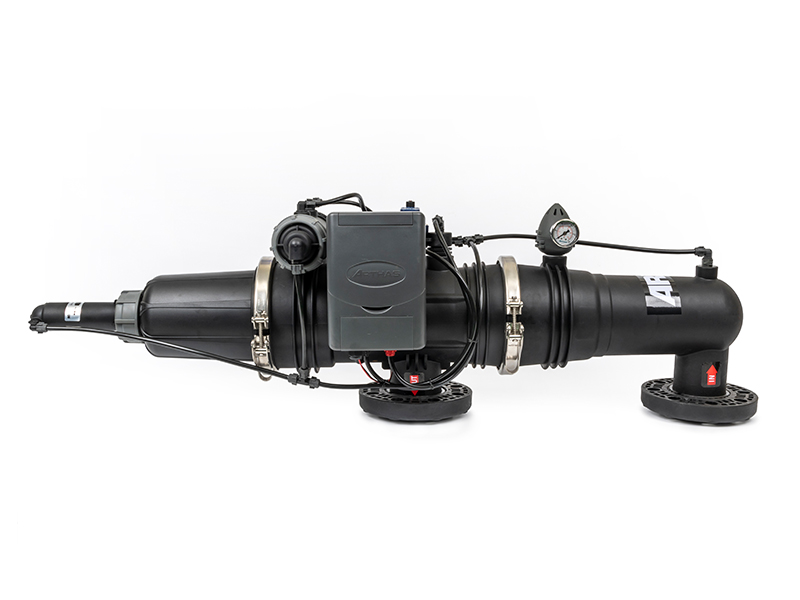
Among automated solutions, the automatic screen filter represents a peak in hydraulic engineering. For instance, advanced models like the F110ASC 4-inch Auto Backflush Filter utilize heavy-duty wire mesh filter screens combined with intelligent internal suction scanners. When triggered by the Delta P switch, these scanners spiral along the inside of the stainless steel cylinder. They aggressively vacuum away the debris. The most significant operational advantage is that this process consumes a minimal volume of flush water. It cleans the mesh without interrupting the main supply to the crops, ensuring perfect hydraulic stability across the field.
Selecting the appropriate equipment is a critical engineering decision. A methodical, data-driven approach is required. This ensures the chosen infrastructure perfectly aligns with your specific operational parameters. Follow this standardized evaluation framework to specify the exact technology for your project.
First, Analyze Your Primary Water Source. The physical and biological composition of your water supply is the foundational metric for determining structural design. If your operation relies on groundwater extracted from deep wells, the primary contaminants are typically inorganic materials such as fine sand and mineral scale. Here, surface filtration methods are highly efficient. Conversely, surface water sources like rivers, open canals, and retention ponds are heavily loaded with organic matter. Standard screens often fail in these environments because soft organics can extrude through the mesh under high pressure. In these scenarios, depth filtration is strictly mandatory.
Second, Calculate System Flow Rate and Pressure Dynamics. A frequent technical failure in agricultural design is undersizing the housing relative to the system's volumetric flow rate. Friction is inevitable. Every housing unit introduces head loss. It is imperative to consult the manufacturer's performance curves. Ensure the selected unit can process the peak flow rate of your largest irrigation zone without causing an unacceptable pressure drop. High-velocity water through an undersized unit forces deformable particles through the mesh, compromising the filtration degree.
Third, Determine the Required Filtration Degree. The primary objective is to protect the terminal emission devices. Therefore, the required mesh is dictated entirely by the physical dimensions of your emitters' orifices. Rely on the One-Tenth Rule discussed earlier. Standard orchard micro-jets may operate optimally with an 80-mesh element. Thin-wall drip tape used in high-density row crops demands 120 to 150 mesh to prevent catastrophic clogging. Always cross-reference the emitter manufacturer's technical specification sheet before finalizing this metric.
Finally, Decide on the Level of Automation. Weigh the initial capital expenditure of automated equipment against the long-term recurring costs of manual labor. For small plots utilizing relatively clean municipal water, a manual unit may suffice. However, for commercial-scale agriculture, high-value crops, or remote fields pulling from dirty surface water, investing in self-cleaning technology is the most economically viable strategy to protect your yield.
Even the most robust infrastructure requires systematic maintenance. This sustains its specified purification degree. Implementing a standardized maintenance protocol minimizes unexpected mechanical failures throughout the grueling growing season.
The most reliable indicator of system health is the pressure differential. Operators should install highly accurate, liquid-filled pressure gauges on the inlet and outlet manifolds. During weekly inspections, personnel must record these readings. A rapid spike in the Delta P suggests a severe contamination event, such as a sudden algae bloom. It could also indicate a mechanical failure in the automated backwash mechanism. Periodically triggering a manual backwash from the controller helps verify that exhaust valves open fully and suction scanners rotate smoothly.
Over time, microscopic particles and biological matter embed themselves deeply into filtration elements. They resist standard backwash cycles. For disc-based systems, organic bacterial slime adheres to the grooved plastic rings. Operators must periodically disassemble the spine and soak the rings in a mild chlorine solution. If the primary issue is mineral scale, which is common in hard water regions, an acid wash using diluted agricultural-grade phosphoric acid is required to dissolve the calcification.
Imagine standing in a freezing pump house in late November, only to find your expensive cast-iron manifold cracked perfectly down the middle. In agricultural zones subject to sub-zero temperatures, improper winterization is a leading cause of catastrophic failure. Water expanding as it turns to ice easily fractures heavy-duty polymer housings and delicate internal sensor tubes. At the conclusion of the season, thoroughly drain the entire station. Open all manual drain valves, remove the bottom caps of the housings, and utilize a low-pressure industrial air compressor to blow out residual moisture.
Protecting your agricultural investment relies entirely on choosing the correct filtration degree. You must pair it with the appropriate mechanical design. Overlooking this critical component will inevitably lead to choked emitters, compromised plant health, and massive replacement costs.
For modern, efficient farming operations, relying on manual labor to scrub heavily loaded elements is no longer a viable business model. Investing in automated technology yields the best long-term return on investment. It guarantees uninterrupted water delivery and drastically minimizes maintenance overhead. Evaluate your water source carefully. Verify your emitter specifications. We highly recommend exploring the advanced filtration solutions at ARKA Irrigation to upgrade your infrastructure today. Secure your crop yields for seasons to come with professional-grade equipment.
The optimal specification for standard heavy-wall drip lines typically falls between 120 and 150 mesh, which correlates to 130 to 100 microns. Drip emitters utilize highly intricate, narrow labyrinth pathways designed to regulate fluid flow precisely. If particles larger than 100 microns enter this labyrinth, they can easily lodge in the corners, causing partial or complete blockages. Always verify this with your specific drip tape manufacturer. Ultra-low-flow emitters may require even finer purification, sometimes exceeding 200 mesh.
While it is technically possible, it is generally considered an inefficient allocation of capital. Well water is primarily characterized by inorganic particulate matter, such as sand, grit, and limestone flakes. These hard particles are easily and effectively captured by surface screening methods. Deploying a complex, heavy, and expensive media bed system for simple inorganic separation is engineering overkill. Screen systems provide identical protection for groundwater at a fraction of the installation and operational cost.
The frequency of backwash cycles is entirely dependent on the real-time quality of the incoming water and the specific flow rate. These systems are not purely timer-based; they are demand-driven. A controller continuously monitors the pressure differential across the internal element. When the accumulation of debris causes the pressure drop to reach a pre-programmed threshold, typically between 5 and 7 PSI, the system automatically triggers a flush cycle. In highly contaminated river water, this might occur every 30 minutes. In relatively clean municipal water, it may only occur once every few days.
The fundamental difference lies in the mechanical method used to trap debris. Screen units utilize a single-layer woven stainless steel or nylon mesh. They operate via surface filtration to create a strict physical barrier that stops hard, inorganic particles. Conversely, disc units utilize a stack of tightly compressed, color-coded plastic rings with microscopic diagonal grooves. This creates a three-dimensional matrix known as depth filtration. Because the fluid must navigate a tortuous path through the thickness of the stacked rings, discs are vastly superior at trapping soft, flexible organic matter like algae. Under pressure, algae would otherwise deform and squeeze through a flat screen.
Calculating the pressure drop, or Delta P, requires reading the pressure at two specific points in your system. You must install a pressure gauge on the inlet manifold before the water enters the housing, and a second gauge on the outlet manifold after the water exits. Subtract the outlet pressure reading from the inlet pressure reading. The resulting number is your pressure drop. A clean unit typically shows a drop of 1 to 3 PSI. When this number climbs to 5 or 7 PSI, it indicates that the internal element is loaded with debris and requires immediate cleaning.
Selecting a micron rating that is excessively fine for your specific water source creates severe hydraulic bottlenecks. While it will certainly protect your emitters, the microscopic mesh will trap even harmless, ultra-fine silt that could have easily passed through the drip labyrinth. This rapid accumulation of debris causes the system to clog constantly. Consequently, your automated valves will trigger backwash cycles relentlessly, wasting massive amounts of water and energy, while starving your crops of their required irrigation volume.


