
Views: 0 Author: Site Editor Publish Time: 2026-11-03 Origin: Site


Are you consistently losing money to unnecessary water waste? Manual filter cleaning inevitably causes costly operational downtime. Meanwhile, improperly configured systems quietly drain both water and energy resources. Fortunately, an automated filtration setup solves these pressing issues by providing continuous, uninterrupted flow. We will explore specific backwash cycles, evaluate advanced control options, and uncover practical ways to maximize your equipment return on investment.
Before diving into advanced control metrics and flush configurations, we must establish a foundational understanding of how these filtration mechanisms operate. Facility managers and agricultural engineers rely heavily on these systems to protect delicate downstream equipment. Mastering the core mechanics is the first step toward true operational optimization.
The operation of a self cleaning screen filter is divided into two primary phases: the active filtration phase and the backwash or cleaning phase. During normal filtration, raw water enters the housing and passes through a cylindrical mesh. Depending on the specific engineering design, this fluid flows either from the inside-out or the outside-in. As the liquid pushes through the fine mesh, suspended solids, sticky organic matter, and rigid debris are trapped on the surface. This accumulation gradually forms a restrictive filter cake.
When this accumulated cake becomes thick enough to impede flow, the cleaning phase initiates. Instead of shutting down the entire plant, an exhaust valve opens to the atmosphere. This action creates a localized pressure drop inside the internal cleaning mechanism. The mechanism is typically a suction scanner equipped with specialized nozzles. The resulting pressure differential forces water to rush backward through the screen at high velocity right at the nozzle opening. It effectively vacuums the debris off the mesh and expels it safely through the exhaust port.
The operational differences between manual and automated filtration setups are stark. Imagine a peak production day coming to a halt just because a strainer basket needs scrubbing. Manual units force maintenance crews to physically isolate the line, dismantle the heavy housing, and manually scrub the mesh with a hose or brush. This outdated process inflates labor costs, introduces human error, and demands complete system downtime.
In contrast, automated systems operate continuously in the background. The internal scanner functions without interrupting the main water flow. This ensures that downstream processes receive a consistent, uninterrupted supply of clean water. The drastic reduction in maintenance labor combined with the elimination of downtime yields a rapid financial return.
The true intelligence of an automated filtration system lies in its ability to determine exactly when a cleaning cycle is necessary. Triggering an auto backflush filter too early wastes valuable resources. Waiting too long risks severe screen deformation and catastrophic pressure loss across the facility.
The most efficient and widely recommended method for initiating a flush is the pressure differential trigger. A dedicated switch or electronic transmitter continuously monitors the pressure difference between the inlet and the outlet. As particulate matter accumulates on the mesh, the outlet pressure drops relative to the incoming flow.
When this delta reaches a predetermined setpoint, commonly established around 0.5 bar or approximately 7 PSI, the controller signals the exhaust valve to open. This instantly starts the cleaning sequence. Relying on pressure differential ensures that the equipment only cleans itself when it is genuinely dirty. This dynamic, real-time response easily adapts to fluctuating water conditions, cementing its status as the gold standard for operational efficiency.
A time-based trigger operates on a strict, unyielding schedule. It initiates a wash at predetermined intervals, such as every four hours or once a day, completely regardless of the actual pressure drop across the mesh.
While timer controls are incredibly simple to program, they possess inherent operational inefficiencies. If the water source happens to be exceptionally clean that day, the system will backwash unnecessarily. This leads to wasted flush water and energy. Conversely, if a sudden influx of algae or silt occurs, the mesh could clog completely before the timer reaches its next scheduled wash. Therefore, time-based triggers are best utilized strictly as a secondary fail-safe.
Certain advanced installations utilize volumetric triggers, which initiate a sequence after a specific volume of liquid has passed through the pipeline. This method requires seamless integration with an inline flow meter and proves highly effective in batch processing environments.
Regardless of the automated triggers you select, every single control panel must feature a manual override button. This crucial component allows maintenance personnel to force a wash during routine visual inspections, complex troubleshooting procedures, or when thoroughly flushing the lines prior to a seasonal winter shutdown.
From a macro perspective, the industrial and agricultural sectors are experiencing a massive paradigm shift toward stringent water stewardship. Regulatory bodies are increasingly penalizing excessive wastewater discharge. Consequently, forward-thinking facility operators are abandoning outdated, water-heavy filtration methods. They are rapidly adopting smart, low-effluent automated screens. This industry-wide migration is not merely about environmental compliance. It is a calculated engineering move to drastically slash utility overhead and achieve aggressive sustainability targets in an era of unpredictable water scarcity.
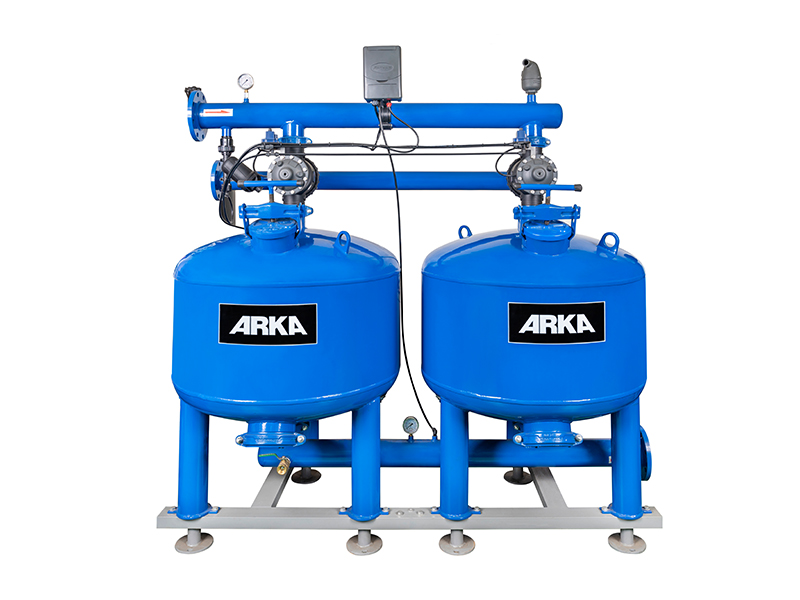
Configuring the exact parameters of the cleaning phase is crucial for balancing debris removal with resource conservation. Field engineers must carefully calibrate both the duration of the flush and the frequency at which it occurs to ensure peak performance.
The duration of the cleaning sequence must be just long enough to allow the internal suction scanner to traverse the entire length of the cylindrical mesh. For a standard screen filter system, this mechanical process typically takes between 10 to 30 seconds.
Setting the duration too short is a frequent, yet easily avoidable, operational error. An incomplete rotation leaves residual sticky debris on the mesh. This rapidly accelerates the next pressure build-up and forces the controller to wash more frequently. On the other hand, setting the timer too long provides zero additional cleaning benefit and merely results in excessive wastewater discharge. The ideal duration should always be referenced directly from the manufacturer technical specifications, as it depends heavily on the specific drive mechanism operating speed.
While pressure differential switches dictate real-time washing, operators must actively monitor how often these cycles occur to assess overall equipment health. The ideal frequency is heavily influenced by the total suspended solids loading in the source water, the specific nature of the debris, and the facility overall flow rate.
Furthermore, seasonal environmental changes require proactive parameter adjustments. Agricultural irrigation setups drawing from shallow open reservoirs often experience severe algae blooms during peak summer months. Naturally, during these challenging periods, the frequency of washes will increase. If you notice the equipment is washing continuously, such as every two minutes, it usually indicates that the micron rating may be far too fine for the current water quality.
Selecting the correct control architecture is a critical engineering decision. It dictates how the equipment integrates with your existing infrastructure. Options range from isolated, off-grid agricultural fields to highly automated, smart manufacturing plants.
Looking at current industry trends, there is a massive shift toward smart water management and internet-connected filtration controllers. Rather than relying solely on basic hydraulic responses, plant managers are leveraging cloud-integrated PLCs. These modern systems track pressure differentials and flush frequencies in real-time. This allows maintenance teams to implement predictive strategies that flag abnormal debris loading before it causes a catastrophic facility shutdown.
For remote agricultural sites, orchards, or locations lacking reliable grid power, battery-operated or solar-powered electronic controllers are the optimal choice. These rugged units typically utilize direct current latching solenoids to actuate the exhaust valves. They offer basic but highly reliable functionality, allowing operators to set pressure thresholds and time-based fail-safes without the exorbitant cost of running complex power infrastructure to the field.
In municipal water treatment plants, large-scale manufacturing, and heavy industrial applications, Programmable Logic Controller automation is the undeniable standard. These controllers offer unparalleled operational flexibility. They allow engineers to program complex sequencing, such as staggering the wash cycles of multiple units operating in parallel. This strictly prevents sudden, dangerous drops in system-wide pressure.
Additionally, these controllers seamlessly integrate with central Supervisory Control and Data Acquisition networks via robust protocols like Modbus or Ethernet. This connectivity enables remote monitoring from a central control room, real-time alarm generation, and extensive historical data logging.
In specific, rugged scenarios where neither alternating current power nor reliable battery maintenance is feasible, installations can be configured to operate purely on hydraulic pressure. These specialized controllers utilize the physical pressure of the water line itself to open and close valves and drive the internal scanner. While less customizable than electronic variants, hydraulic controls offer exceptional durability and brilliant simplicity in harsh environments.
When planning infrastructure upgrades, decision-makers frequently compare modern surface technologies against traditional depth media beds. Understanding the nuanced differences in cleaning mechanics is vital for accurately projecting long-term utility costs and overall operational efficiency.
A conventional sand media filter relies on deep bed filtration to trap suspended particles. To clean this dense media bed, the system must reverse the water flow entirely. This reverse flow must be incredibly strong to physically lift and fluidize the heavy sand. Fluidizing the bed takes several minutes and consumes a massive volume of water. In many industrial setups, this outdated process can waste thousands of gallons per single cycle.
In stark contrast, an automated screen operates using highly targeted surface filtration. It absolutely does not need to reverse the entire system flow to clean itself. Instead, it utilizes a focused suction scanner mechanism that spirals along the inner surface of the mesh. Acting like a localized vacuum cleaner, it removes the cake instantly. Because this targeted approach only lasts 10 to 30 seconds, the water consumed is typically less than one percent of the total system flow. For facilities operating under strict municipal wastewater discharge limits, this efficiency is a game-changing advantage.
Physical space is another vital metric when evaluating upgrades. Sand tanks are inherently bulky, requiring a massive installation footprint and heavy concrete pads to support their operational weight. Conversely, automated screens feature a highly compact, inline design. This allows engineers to easily retrofit them into tight pump rooms or existing pipe galleries.
Energy consumption also differs drastically. Lifting a heavy sand bed requires significant pump head pressure and massive electrical energy. A screen filter utilizes the existing hydraulic pressure of the line, with the scanner often driven by a tiny fractional horsepower motor or driven entirely by the water pressure itself. This leads to a measurable reduction in electrical utility costs.
| Comparison Metric | Automatic Screen Filter | Sand Media Filter |
|---|---|---|
| Backwash Duration | 10 to 30 seconds | 3 to 5 minutes |
| Water Consumption | Very Low (< 1% of flow) | Very High (up to 5% of flow) |
| Energy Requirement | Low (Uses system pressure) | High (Requires high pump head) |
| Physical Footprint | Compact / Inline design | Large / Bulky horizontal tanks |
| Continuous Flow | Yes (Filters while cleaning) | No (Requires multiple parallel tanks) |
Installing the mechanical hardware is only the first step of the integration process. Configuring the control panel correctly dictates the long-term success of the installation. Implementing strict best practices prevents premature wear, eliminates nuisance alarms, and ensures consistent water quality.
Accurate pressure differential readings are the lifeblood of the trigger system. If this switch is not calibrated accurately during commissioning, the equipment will not function properly. First, carefully inspect the high-pressure inlet and low-pressure outlet hydraulic sensing tubes to ensure they are completely clear. Air bubbles trapped inside these small-diameter tubes will compress and cause false, erratic pressure readings. Bleed the lines meticulously to ensure only solid water is interacting with the sensor diaphragm.
Next, set the threshold strictly according to the manufacturer guidelines. Setting this value too low will cause the equipment to wash constantly, wasting water. Setting it too high risks structural damage to the delicate stainless-steel mesh.
One of the most frequent troubleshooting scenarios is an automated unit getting stuck in a continuous cleaning loop. It initiates a cycle, finishes, and then immediately starts another. If you encounter this in the pump room, follow these diagnostic steps:
Environmental protection is absolutely crucial for outdoor or agricultural setups in cold climates. Water expands violently when it freezes. This expansion will easily rupture plastic hydraulic command tubes and destroy the internal diaphragms of expensive pressure switches. Before the first hard freeze, isolate the unit, drain all liquid from the housing, and use compressed air to thoroughly blow out all small control tubing.
Electronic cabinets must also be shielded from ambient moisture. Ensure the enclosure maintains its specific ingress protection rating by inspecting the rubber door gaskets for signs of dry rot. Placing a small, inexpensive desiccant pack inside the panel absorbs trapped condensation. This simple step prevents the fatal corrosion of sensitive circuit boards.
Capital expenditures in facility infrastructure must always be justified by a clear, measurable return on investment. Upgrading from outdated manual strainers to modern automated solutions provides financial benefits that span across labor reduction, utility savings, and extended equipment longevity.
The most immediate financial impact is the complete elimination of manual cleaning labor. Maintenance crews are finally freed from the dirty, time-consuming task of scrubbing baskets. They can now focus on higher-value facility operations. Furthermore, by utilizing precise pressure triggers and rapid 15-second flush cycles, total water waste is drastically minimized. Lower water consumption directly translates to reduced municipal utility bills and lowers the costs associated with treating and discharging wastewater.
Most importantly, continuous, reliable filtration protects expensive downstream equipment from catastrophic particulate damage. It prevents the clogging of delicate agricultural drip emitters, stops scale from fouling industrial heat exchangers, and protects precision spray nozzles in manufacturing processes. Preventing unexpected downtime in these critical assets is where the true value lies.
Specifying the correct equipment requires a thorough, data-driven analysis of your site unique water profile. When consulting with engineering teams, you must provide accurate data regarding your peak maximum and minimum flow rates, operating pressure, power availability, and the specific micron rating required for your target debris size. For instance, high-performance units like the Arka F40 series can handle massive flow volumes while offering precise filtration degrees ranging from 20 up to 3000 microns. A finer micron rating provides superior water quality but naturally requires more frequent washing.
Whether you need a standalone battery-operated unit for a remote orchard or a fully integrated PLC system for an industrial cooling tower loop, providing accurate data ensures you receive a perfectly sized solution. This guarantees a hands-off system that will protect your infrastructure for decades.
Choosing the correct backwash triggers and dialing in your exact cycle parameters ensures peak operational efficiency. Proper control configurations prevent unnecessary water loss entirely while maintaining the continuous flow your facility demands. Ultimately, a perfectly tuned automated filtration setup operates with incredible reliability. It acts as a robust, hands-off equipment protection method that actively defends your entire water network. To take the next step, evaluate your specific flow rate and pressure requirements, and explore the advanced automatic filtration solutions at Arka-Irrigation to find the perfect technological match for your site.
Most units complete a full cleaning cycle in just 10 to 30 seconds. The exact time depends heavily on the physical size of the housing, the specific drive mechanism of the suction scanner, and the manufacturer design. This incredibly rapid process ensures minimal interruption to your facility main water flow.
It primarily relies on a pressure differential switch. As debris builds up on the internal mesh, the hydraulic pressure drops on the outlet side. Once the pressure difference between the inlet and outlet reaches a preset limit, the controller automatically triggers the cleaning sequence.
Yes. Programmable Logic Controllers are highly recommended for complex industrial settings. They allow for precise control over custom flush sequences, extensive historical data logging, and seamless integration into plant-wide automation systems. This ensures your equipment operates at absolute peak efficiency.
An automated screen wastes significantly less water. Traditional sand media tanks require massive flow rates and several minutes to properly fluidize and backwash the heavy media bed. In contrast, screens use focused suction nozzles that clean the mesh in mere seconds while continuously maintaining forward system flow.
For delicate drip emitters, industry standards typically require a filtration degree between 100 and 130 microns. Selecting the correct mesh size is vital to prevent emitter clogging while avoiding unnecessarily frequent wash cycles caused by an overly restrictive screen.
Most standard hydraulic suction scanners require a minimum operating pressure of 2.0 to 2.5 bar during the flush cycle to create sufficient vacuum force at the internal nozzles. If your system pressure drops below this critical threshold during a wash, a booster pump will be necessary to ensure the screen is properly cleaned.


