
Views: 0 Author: Site Editor Publish Time: 2026-10-19 Origin: Site


Are you tired of cloudy water ruining your system? Many facility managers and farm owners struggle with poor filtration and clogged drip emitters. They often listen helplessly to the unmistakable hum of an overworked pump. Not knowing the internal mechanics of your setup inevitably leads to costly downtime, premature equipment failure, and frustrating maintenance cycles.
In this comprehensive engineering guide, we will break down the exact mechanical processes at play. We strip away the complex technical jargon to focus on practical field operations. Whether you are managing a sprawling commercial agricultural plot or an industrial water facility, you will learn exactly how these purification vessels operate to deliver crystal-clear results while protecting your bottom line.
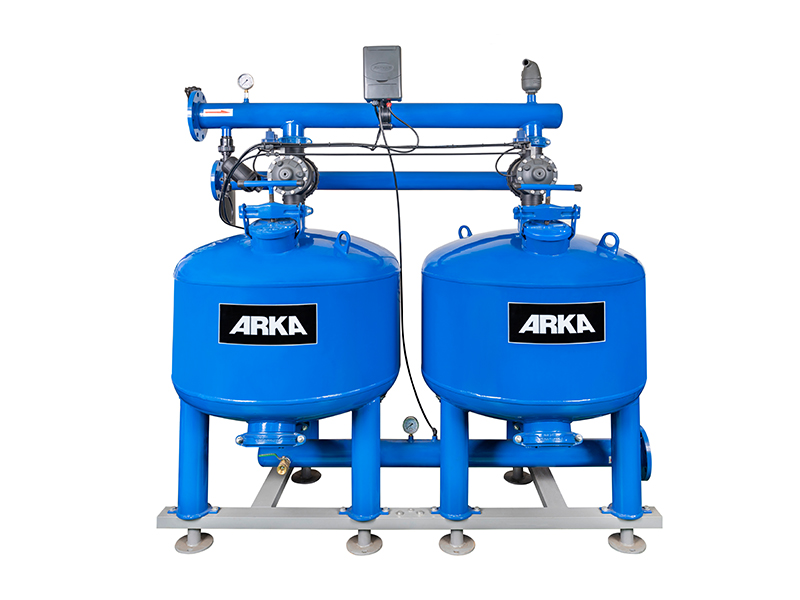
To truly understand the core mechanics of water purification, we must first define the equipment itself. A sand media filter is a large, pressure-sealed vessel filled with a specific filtration medium. While typically loaded with specially graded silica sand, modern industrial setups frequently utilize alternatives like crushed recycled glass or zeolite for enhanced performance and longevity.
The underlying principle of this equipment is deeply rooted in biomimicry. It essentially replicates nature’s highly effective method of purifying groundwater. When rain falls, it seeps slowly through layers of earth, sediment, and bedrock. As the fluid travels downward, impurities are naturally stripped away by the porous materials. A commercial tank accelerates this exact natural process. By leveraging a heavy-duty motorized pump within a confined environment, the system delivers pristine water at a highly rapid flow rate.
Grasping the physical components inside and outside the vessel is essential for mastering its overall operation. The entire assembly relies on three primary structural elements working in unison.
First is the directional valve. Often referred to as the brain of the operation, this valve sits either on top of the vessel or along its side. It allows the operator to dictate the flow of water by selecting distinct modes like Filter, Backwash, Rinse, and Waste.
Second is the media bed itself. The tank is typically filled roughly two-thirds full of silica. The remaining empty space at the top is known as the freeboard. This empty zone is absolutely critical because it allows incoming water to disperse evenly and gives the media room to violently expand during the cleaning cycle.
Finally, we have the laterals. Tucked away at the very bottom of the tank, laterals are a series of durable plastic pipes featuring microscopic slits. These slits are precision-engineered to be large enough to let purified water pass through, yet narrow enough to prevent the heavy grains from escaping into your clean water supply.
During normal daily operation, the multi-port valve remains locked in the standard filtration position. This cycle relies entirely on downward hydraulic pressure to physically separate clean fluid from suspended solids.
Initially, dirty, unfiltered water is drawn from the source by the main pump. It is forcefully pushed into the valve, which seamlessly directs the fluid into the upper dome of the tank. As the water enters, it passes through a diffuser. Acting much like a gentle showerhead, the diffuser sprays the fluid evenly across the entire surface area of the bed. Without this component, the high-pressure stream would drill a crater directly into the media, completely ruining the purification process.
Driven by relentless pressure from the pump, the water is forced downward through the tightly packed grains. The microscopic, sharp edges of the silica act as thousands of tiny hooks. They snag dirt, organic slime, algae, and other microscopic debris. By the time the fluid reaches the bottom of the vessel, it has been thoroughly stripped of its impurities. The now-purified water enters the slotted laterals, travels up a central standpipe, and is pushed back out into the clean supply line.
From an operational standpoint, field engineers often encounter a fascinating mechanical paradox. A slightly dirty bed actually performs better than a brand-new, perfectly clean one. As the top layer begins to trap debris, this accumulated grime creates an even tighter, denser web. This phenomenon allows the system to catch progressively smaller particles that might otherwise slip through fresh media. However, this benefit has a strict limit. Once the vessel becomes oversaturated with debris, flow is severely restricted, signaling the immediate need for maintenance.
As debris accumulates, the microscopic spaces between the grains become severely clogged. This restriction forces the pump motor to work significantly harder, driving up internal pressure. If left unaddressed, the water will eventually seek the path of least resistance. It will carve deep tunnels directly through the bed in a destructive phenomenon known as channeling. When channeling occurs, filthy water bypasses the medium entirely, and the overworked pump risks catastrophic overheating.
To prevent such mechanical failures, operators must routinely utilize a backwash sand filter mechanism. This ingenious process physically scrubs the internal media without requiring anyone to manually open the heavy tank.
When the valve is firmly shifted to the reverse flow position, the internal routing of the plumbing is completely inverted. The valve directs the incoming dirty water down the central standpipe, bypassing the top entirely, and pushes it directly into the bottom laterals. The fluid is then forced violently upward through the compacted bed.
This intense upward hydraulic pressure causes the heavy silica to lift and expand into a state known as fluidization. As the grains separate and aggressively agitate against one another, the trapped dirt, oils, and organic matter are knocked loose. Because this debris is significantly lighter than the dense silica, it floats quickly to the top of the dome. The valve then intercepts this filthy slurry and redirects it out through a dedicated waste line, ensuring the contaminants never return to the pristine supply.
One of the most frequent errors made by facility managers is improper maintenance timing. Relying on sheer guesswork or a rigid calendar schedule inevitably leads to inefficient operation. The only truly objective metric for determining when to flush the system is the dial on the pressure gauge.
Proper maintenance begins with establishing a clean operating baseline. Immediately after installing fresh media or completing a thorough flushing cycle, power the system on and inspect the gauge. Depending on pump horsepower and plumbing friction, this baseline typically hovers between 10 and 15 PSI. Record this specific number with a permanent marker near the equipment.
Industry best practices dictate that a cleaning cycle should be initiated only when the dial rises exactly 8 to 10 PSI above your recorded baseline. Furthermore, operators must be warned against the dangers of over-maintenance. Flushing the vessel every few days is a documented operational flaw. Doing so continuously strips away that beneficial slight layer of dirt, drastically reducing the system's ability to catch ultra-fine particles. Excessive flushing also wastes massive volumes of water and flushes expensive chemical treatments straight down the drain.
Executing this maintenance incorrectly can cause catastrophic damage to the multi-port valve or internal structural components. Imagine the frustration of cracking a valve simply because a step was rushed. The following standard operating procedure is designed to ensure safe, foolproof maintenance.
First and foremost, turn off the pump. This is a crucial safety warning. Never press down or rotate the multi-port handle while the motor is running. Doing so forces high-pressure fluid against the internal rubber spider gasket, tearing it out of its seating and causing permanent leaks.
With the power off, press the handle down fully and rotate it to the appropriate setting, locking it into the designated groove. Ensure your waste hose is unrolled and safely directed toward a proper drainage zone. Power the pump back on and let the system run continuously. Keep your eyes on the small, clear plastic sight glass located on the side of the valve. Initially, the fluid will appear dark and murky. Keep the motor running for 2 to 3 minutes until the water in that glass runs perfectly clear, then immediately shut the power off again.
Many hasty operators skip the final rinse setting, which inevitably leads to a burst of cloudy debris shooting back into the clean irrigation line. After a violent upward flush, the bed is left unsettled and the internal plumbing remains coated with residual dirty water. With the pump off, shift the valve to the rinse position. Turn the power back on for just 30 to 60 seconds. This brief downward flow resettles the grains back into a compact, flat state while simultaneously flushing the remaining dirty water out through the waste hose. Finally, turn the motor off, return the valve to normal filtration, and confidently resume operation.
Translating theoretical mechanics into field application requires looking at actual equipment capabilities. Industrial and agricultural demands far exceed the capacity of standard residential units. For instance, high-demand environments require robust solutions engineered for continuous flow and minimal human intervention.
When selecting a system, evaluating the tank diameter, flow rate capacity, and automation features is critical. Below is a comparison detailing the operational differences between traditional manual setups and modern industrial solutions.
| Feature | Traditional Manual Filter | ARKA F40-2 1000mm Automatic Filter |
|---|---|---|
| Operation Mode | Manual valve turning required | Fully automatic self-cleaning |
| Cleaning Trigger | Visual inspection of pressure gauge | Smart Differential Pressure sensors |
| Flow Rate Capacity | Low to moderate | High volume, ideal for large agriculture |
| Maintenance Labor | High labor costs and potential for human error | Virtually zero daily maintenance |
| Best Application | Small residential setups, low-budget projects | Commercial farms, municipal water treatment |
By leveraging systems like the ARKA 1000mm dual-tank configurations, operators ensure that while one tank is flushing, the adjacent tank continues to supply clean water. This parallel plumbing guarantees zero downtime for critical drip irrigation grids.
Looking at recent developments in fluid dynamics and heavy agriculture, there is a clear, industry-wide shift towards water conservation and smart technology. Historically, operators would flush systems based on arbitrary schedules, wasting millions of gallons globally. Today, the trend heavily favors precision data.
For sprawling agricultural operations and industrial plants, manual labor is rapidly being phased out in favor of the automatic sand filter. These highly advanced systems utilize electronic differential pressure sensors connected to both the inlet and outlet pipes. When the computerized controller detects that internal resistance has reached the critical threshold, it takes over completely.
Without any human intervention, the system commands motorized pneumatic valves to execute a precise backwash, runs a settling rinse cycle, and seamlessly returns to normal filtration. This evolution drastically reduces wastewater and eliminates chemical loss, proving that traditional filtration physics can perfectly adapt to strict modern eco-standards.
While the general public most commonly associates this technology with backyard swimming pools, the true workhorses of the filtration industry are found in heavy agriculture and municipal infrastructure. The core physics remain identical, but the scale and operational stakes are vastly different.
In the modern agricultural sector, water is frequently drawn from natural, untreated sources such as lakes, rivers, or retention ponds. This raw fluid is heavily loaded with organic slime, silt, and fine clay. An irrigation sand filter is installed as the primary, non-negotiable defense mechanism before that water ever reaches the fields.
Farmers rely heavily on micro-irrigation and drip-tape systems, which feature precision-engineered emitters with microscopic orifices. If raw river water were pumped directly into these lines, the emitters would clog within hours, leading to localized crop dehydration and massive financial losses.
On an even grander scale, a water treatment filter utilizing porous media is a critical stage in producing safe drinking water for millions. Municipal plants often use massive rapid sand basins. While the scale is exponentially larger, the foundational mechanical principle is exactly the same. They force contaminated fluid through a porous, jagged bed to strip away microscopic hazards before secondary chemical disinfection occurs.
Mastering the mechanics of your purification system does not require an engineering degree. It simply boils down to understanding the downward hydraulic pressure used to trap dirt, and the violent upward flow required to flush that debris away. By religiously monitoring your pressure gauge, never skipping the crucial final rinse, and knowing when it is time to upgrade to automated valves, you ensure your equipment will operate at peak efficiency.
If you are experiencing frequent clogging, high labor costs, or inconsistent water clarity, it is time to evaluate your current setup. Upgrading to a professional-grade automated system protects your pumps and secures your agricultural yields. Explore the full range of high-performance filtration solutions at ARKA Irrigation to find the exact specifications required for your next project.
Yes, you absolutely can. It is a very common misconception that a spotless, perfectly clean media bed is the most efficient. In reality, the system operates at its absolute peak efficiency when it is slightly dirty. The initial layer of trapped debris actually helps to close the microscopic gaps between the grains, allowing the bed to catch even finer particles. If you flush the tank too frequently like every single day, you constantly strip away this beneficial layer, which often results in persistently cloudy water. Always wait until the gauge reads 8 to 10 PSI above your clean baseline.
If you observe a continuous accumulation of grit beneath your return jets, the internal structural mechanics of your tank have unfortunately failed. This almost universally indicates a cracked or broken lateral, which are the slotted plastic pipes located at the very bottom of the vessel beneath the heavy bed. It can also be caused by a damaged standpipe O-ring. To rectify a broken lateral, the entire system must be shut down, the tank completely emptied of all heavy media, and the delicate plastic manifold parts replaced by hand.
Moving the handle while the motor is actively running is the most destructive mistake an operator can make. When the pump is active, the fluid inside the valve head is under immense pressure. Forcing the handle down and turning it against this pressurized flow will aggressively tear, unseat, or completely blow out the internal rubber spider gasket. Once this vital gasket is compromised, water will continuously leak out of the waste line even during standard operation, and dirty water will bypass the purification process entirely. Always cut the power first.
Under standard commercial or agricultural operating conditions, traditional silica remains highly effective for roughly 3 to 5 years. The degradation is purely mechanical. When brand new, each tiny grain features rough, jagged edges that easily snag passing debris. After years of constant hydraulic friction and routine agitation, these sharp edges become weathered, smooth, and round. Once the grit is worn down, microscopic dirt simply slips right past the media bed, signaling it is time for a complete replacement.
Channeling occurs when the media bed becomes severely calcified or oversaturated with oils and debris, creating a solid, impenetrable block. Because water under pressure will always seek the path of least resistance, it forces its way through weak points in the hardened bed, carving deep vertical tunnels. Once these channels form, the incoming dirty water flows straight through the tunnels without passing through the actual filtration media, resulting in completely untreated water exiting the system.


