
Views: 0 Author: Site Editor Publish Time: 2026-11-03 Origin: Site


Clogged emitters and uneven water distribution are the silent killers of any irrigation system. Have you ever walked through a field to find patches of drought-stressed plants amidst a lush landscape? That is the harsh reality of failed filtration. A professional-grade 2 Inch Disc Filter serves as the ultimate defense mechanism for your crops. Yet, its effectiveness hinges entirely on one critical variable. That variable is the volume of water passing through it. Miscalculating your system's hydraulic demand often leads to excessive pressure drops. Worse still, it causes premature clogging that forces debris straight into your delicate emitter lines.
This guide demystifies the technical requirements for sizing your filtration unit. We will look at this from an operational engineering perspective to ensure your water system remains robust, highly efficient, and capable of supporting your long-term agricultural goals.
At its core, this equipment is a marvel of fluid engineering. Unlike basic screen models that capture debris on a single flat surface, the disc matrix relies on three-dimensional depth filtration. Imagine a stack of synthetic, color-coded rings tightly compressed together. Each ring features microscopic, diagonally intersecting grooves. When water is forced through these grooves, it is effectively scrubbed of organic contaminants like algae and inorganic particles like fine sand.
Specifically, the "2 inch" designation refers to the physical inlet and outlet diameter rather than the dimensions of the housing itself. Industry trends in precision agriculture lean heavily toward modular and scalable plastics. Many commercial growers are abandoning massive stationary metal stations. Instead, they are adopting high-capacity polymer units that resist chemical fertilizer corrosion. These offer a versatile sweet spot for mid-to-large-scale operations. Choosing the right capacity avoids heavy capital expenditure while vastly outperforming basic residential hardware.
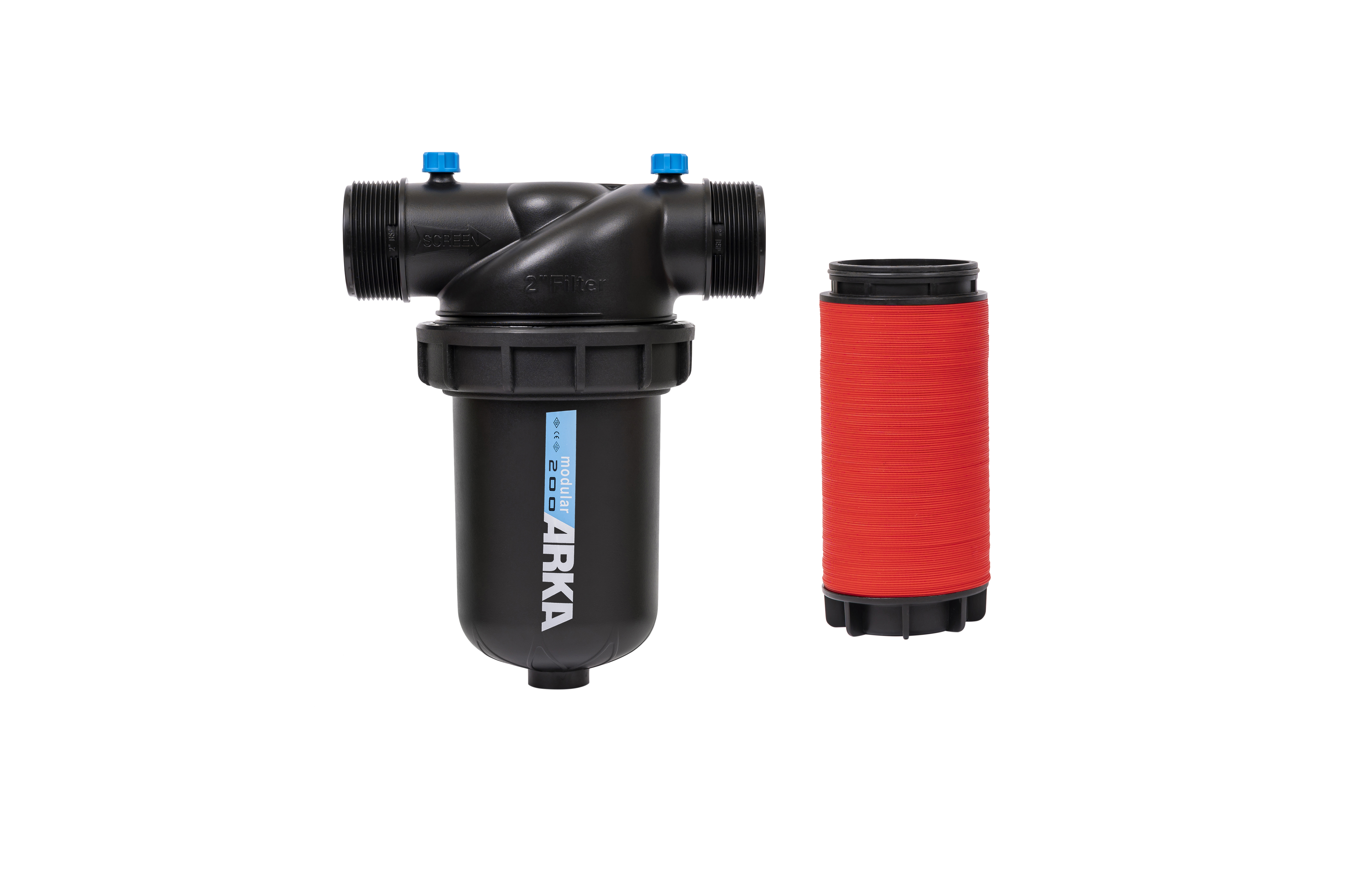
Matching your water volume to the capacity of the unit is the most vital step in the design phase. Manufacturers typically rate a standard 2-inch unit with an absolute maximum Flow Rate of 25 cubic meters per hour. This translates to roughly 110 gallons per minute. However, operating constantly at this absolute ceiling is a recipe for maintenance headaches. A more sustainable nominal flow sits comfortably between 15 and 20 cubic meters per hour.
| Water Source Quality | Recommended Flow Limit | Expected Maintenance Frequency |
|---|---|---|
| Deep Well Water | 20 - 25 cubic meters per hour | Low |
| Municipal / Treated Water | 18 - 22 cubic meters per hour | Low to Medium |
| Open Canal / Pond | 12 - 15 cubic meters per hour | High |
To calculate your specific needs, simply multiply the total number of emitters by the output per emitter. For instance, a block with 5,000 emitters outputting 1 gallon per hour requires 5,000 gallons per hour. That equals about 83 gallons per minute. This sits perfectly within the optimal range. Pushing beyond this threshold increases water velocity drastically. Consequently, trapped debris may be sheared and forced through the grooves, defeating the entire purpose of your investment.
Theoretical capacity charts rarely account for the raw reality of field conditions. If your water source is a pristine deep well, you can safely operate near the higher end of the flow spectrum. In contrast, drawing from an open pond filled with seasonal algae requires a much more conservative approach. You must intentionally reduce the water velocity to allow the matrix the necessary contact time to retain suspended solids.
Furthermore, we are witnessing a massive shift in global agricultural trends. Driven by escalating water scarcity, the farming industry is rapidly transitioning to ultra-precision drip systems that demand flawless water quality. Modern engineering designs increasingly incorporate pre-filtration, such as hydrocyclone separators, to handle heavy grit before it ever reaches the plastic rings. This tiered strategy is now the industry standard for commercial farms. It effectively extends the lifespan of the equipment and reduces labor costs during the peak growing season.
The physical connection points act as the gateway for your entire irrigation network. Forcing high volumes through an undersized inlet creates severe turbulence. Why does this matter? Because turbulent water fails to settle into the engineered pathways. Instead, it creates high-velocity channels that bypass the filtering media entirely.
From a strict installation perspective, be wary of aggressive pipe reduction techniques. Necking a 4-inch main pipe down to a smaller Port Size creates a massive hydraulic bottleneck. This causes the pump to struggle against its own resistance. Maintaining a consistent pipe diameter that matches the inlet and outlet will ensure a laminar fluid dynamic. This allows your network to operate at peak efficiency with minimal mechanical strain.
Every component introduces a degree of friction as water navigates the tortuous grooves of the stacked rings. In a healthy and clean setup, a brand-new unit might only register a drop of 2 to 5 PSI. Monitoring this Pressure Loss is absolutely essential. As the matrix traps dirt, the differential between your upstream and downstream gauges will steadily climb.
Once you observe a drop of 10 to 15 PSI, your efficiency is critically compromised. At this stage, your plants are at risk of starving for water. Drip tapes are precision-engineered to function within very narrow pressure windows. Neglecting this simple diagnostic step leads to wildly uneven crop performance. Keeping a daily log of these gauge readings is a powerful habit that separates amateur setups from highly profitable agricultural operations.
Large-scale growers rarely irrigate an entire farm simultaneously. Instead, they segment their land into specific Drip Zones controlled by automated solenoid valves. A common misconception is that the main station must be sized for the entire property's total potential demand.
In reality, you only need to calculate for the single largest operating sector. Because the valves are cycled sequentially, the hardware will only ever face the demand of the currently active section. This principle makes a 2-inch unit a remarkably economical and scalable choice for multi-acre projects.
Selecting the right hardware is a delicate balancing act between environmental conditions, fluid physics, and operational strategy. By carefully calculating your volume, respecting the physical limits of the inlet, and actively managing friction loss, you protect your crops from chronic drought stress. A properly maintained setup is the most cost-effective yield insurance policy you can buy.
If you are ready to upgrade your agricultural water management, selecting reliable and modular equipment is your first step. We highly recommend evaluating your field layout and exploring the professional-grade solutions available at ARKA Irrigation. Matching their precise engineering specifications to your farm's exact needs will ensure your harvest remains protected season after season.
While specific manufacturer specifications can vary based on internal design, the maximum capacity for a standard unit is generally rated at 25 cubic meters per hour. However, operating continuously at this absolute limit leaves no margin for error during spikes in water turbidity. For optimal longevity, aim for a continuous volume within the 15 to 20 cubic meters per hour range.
The key advantage lies in three-dimensional depth filtration. While screen filters capture debris on a flat surface that clogs quickly, disc filters utilize a stack of grooved rings to trap particles throughout the entire matrix. This makes them far more resilient against organic matter like algae.
A clean filter typically exhibits a nominal drop of 2 to 5 PSI. When the differential between the upstream and downstream gauges hits 10 to 15 PSI, the matrix is significantly loaded with debris. It requires immediate cleaning to maintain the necessary force for downstream emitters.
Yes, this is a standard practice for commercial farming. Since you are likely irrigating one or two sectors at a time, the equipment only needs to handle the requirement of your largest single sector. As long as that sector's demand stays within the 110 gallons per minute limit, a single 2-inch unit will suffice.
For most agricultural applications involving standard drip tape or emitters, 120-mesh is the industry standard. This equates to 130-micron. It offers the ideal balance, providing enough scrubbing power to prevent emitter clogging while keeping hydraulic friction at an acceptable level.
The flushing frequency depends entirely on your water source and operating volume. Systems drawing from deep wells may only need weekly maintenance. Conversely, setups pulling from open ponds during the summer algae bloom might require daily flushing. Always rely on your pressure gauges rather than a calendar to dictate your cleaning schedule.
Yes. Forcing water beyond the manufacturer's maximum rating creates severe internal turbulence. Over time, this extreme velocity can warp the plastic rings, compress the grooves unevenly, and force abrasive sand particles entirely through the matrix, permanently compromising the filtration grade.


