
Views: 0 Author: Site Editor Publish Time: 2026-10-17 Origin: Site


Clogged emitters can ruin healthy crops in a matter of days. This leads to uneven water distribution, severe plant stress, and frustratingly costly repairs. Modern agricultural setups rely heavily on precision components. Unfortunately, these delicate parts are highly susceptible to particulate damage. Reliable water filtration solves this persistent problem. It acts as the protective heart of your entire system.
However, with various technologies on the market, choosing the right purification method can be overwhelming. Recent industry analyses highlight a massive shift toward precision water management. As global water scarcity intensifies, farm managers must scrutinize their purification methods to cut energy costs. The prevailing engineering consensus shows that while depth filtration has its merits, surface filtration via specialized hardware is rapidly becoming the standard for groundwater sources. This shift is largely driven by its exceptionally low energy footprint and seamless integration with modern smart-farming sensors. In this comprehensive guide, we will explore the mechanics behind surface purification. We will detail exactly when and why it outperforms other methods in specific environmental conditions.
Understanding the fundamental mechanics of water purification is the first critical step in designing an efficient agricultural or landscape watering network. This technology operates strictly on the principle of surface filtration. It establishes a physical barrier that prevents any particle larger than a specifically woven aperture from passing downstream.
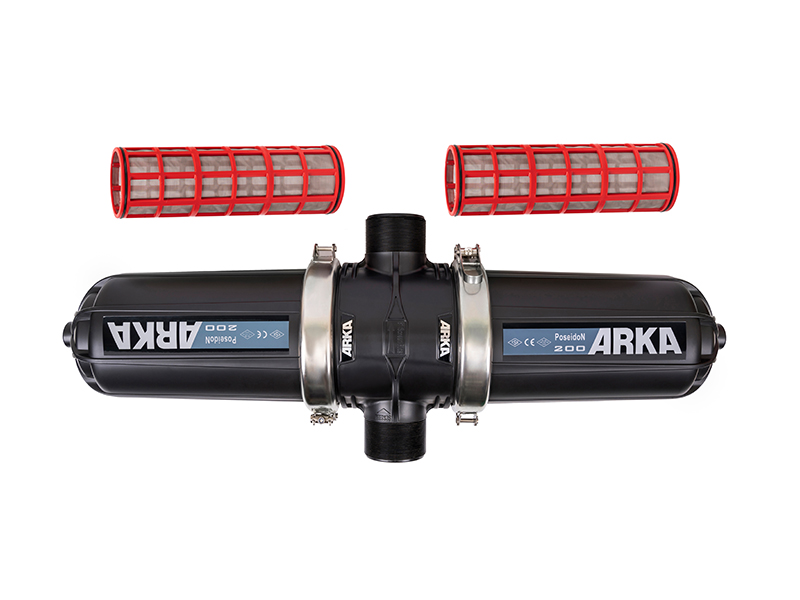
A standard unit consists of two primary components. These are the outer protective housing and the internal purifying element. The housing is typically manufactured from high-impact, UV-resistant plastics. For example, commercial-grade 3-inch H-Type plastic models utilize glass-reinforced polyamide to withstand harsh field conditions and high hydraulic stress. Inside this robust casing sits the cylinder containing the woven threads.
As fluid enters the main body, it is forced through this internal cylinder. Depending on the specific engineering design, the fluid either flows from the inside out or the outside in. When the water pushes through the precise woven threads, suspended solid debris is instantly trapped on the surface. Consequently, clean fluid exits the housing and continues its journey into the mainline. The trapped debris accumulates in a localized area until the unit is manually scrubbed or an automatic flush cycle is electronically triggered.
A frequent debate among newer agricultural practitioners is whether secondary filtration is strictly necessary. This is especially common when utilizing seemingly pristine municipal supply lines. The empirical, field-tested answer is always yes. Modern watering systems rely on precision components such as solenoid valves, pressure regulators, and pressure-compensating micro-emitters. These parts feature extremely narrow, labyrinth-like flow paths.
Even minor, microscopic particulate accumulation can cause devastating micro-clogging. This inevitably leads to dry spots in the field, compromised crop yields, and premature abrasive wear on expensive pump impellers. Implementing a robust protective strategy acts as a vital insurance policy. It safeguards the mechanical integrity of the entire network. This ensures that flow rates and emission uniformities remain perfectly consistent with your original hydraulic design.
While various purification technologies exist, specific environmental and hydraulic conditions dictate when a woven barrier is the most logical choice. Evaluating your primary water source and its unique contaminant profile is critical. This objective data forms the foundation for a structurally sound purchasing decision.
Groundwater extracted from deep boreholes or agricultural wells is generally insulated from sunlight. Therefore, it rarely contains biological contaminants like algae, moss, or heavy organic sludge. However, as submersible pumps operate deep underground, they frequently draw up fine geological particulate matter straight from the aquifer. This includes sand, sediment, and fractured mineral fragments.
Surface barriers excel in these exact conditions. Because the contaminants are hard and rigid, they do not deform, smear, or stick to the woven material. Instead, they are neatly blocked by the threads and easily expelled during a routine cleaning cycle. Furthermore, municipal water often carries rust flakes or calcium scale from aging underground infrastructure. These units capture such abrasive debris with remarkable efficiency.
The physical properties of the debris in your fluid dictate the exact type of hardware required. Inorganic particles are solid and non-compressible. Common examples include quartz sand, gravel, PVC shavings from recent installations, and calcium carbonate scale.
A tightly woven stainless steel or nylon barrier is the optimal defense against these materials. When a hard grain of sand hits the surface, it simply stops abruptly. It cannot be extruded or forced through the microscopic holes, regardless of the hydraulic pressure pushing behind it. This ensures absolute, uncompromising protection up to the specified rating. It prevents highly abrasive materials from reaching sensitive drip tape or delicate rotating nozzles.
Every single component added to a mainline creates friction. This results in a measurable loss of water pressure, known in the industry as head loss. Compared to deep sand media tanks or stacked-disc systems, surface barriers generally exhibit a significantly lower initial pressure drop. For instance, a well-sized 3-inch H-Type unit handling up to 50 cubic meters per hour will barely register a 2 PSI drop when perfectly clean.
Because the fluid only has to navigate a single, remarkably thin layer of woven material, hydraulic resistance is minimized. It does not have to fight its way through a deep, complex three-dimensional matrix. This specific characteristic is particularly advantageous in gravity-fed scenarios. It is also ideal for layouts where the primary pump is already operating near its maximum capacity. It helps maintain the crucial operating pressure required for the furthest downstream emitters to function correctly.
System designers and farm managers frequently face the difficult decision between screen and disc technologies. It is important to note that neither is universally superior. Their operational effectiveness depends entirely on the application context. Understanding the mechanical differences is vital for drafting a correct specification.
Disc technology operates utilizing a depth filtration method. The internal element consists of hundreds of tightly stacked, color-coded plastic rings. Each individual ring is etched with microscopic diagonal grooves. When compressed tightly together by a central spine, these intersecting grooves create a complex, three-dimensional labyrinth of pathways.
Water must navigate this winding labyrinth to pass through. This specific design is highly effective at capturing soft, organic matter. Biological material gets trapped deep within the intersecting grooves rather than simply smearing across a flat, two-dimensional surface.
To make an objective, data-driven choice between the two technologies, buyers should evaluate three primary factors. You must weigh contaminant type, budget constraints, and available maintenance labor.
| Evaluation Criteria | Screen Technology | Disc Technology |
|---|---|---|
| Filtration Type | Surface - Single layer physical barrier | Depth - Three-dimensional grooved matrix |
| Best For | Inorganic debris - Sand, silt, pipe scale | Organic matter - Algae, biological slime |
| Water Source | Deep wells, boreholes, municipal supply | Ponds, open lakes, rivers, reservoirs |
| Initial Cost | Generally lower and highly budget-friendly | Generally higher due to complex manufacturing |
| Pressure Drop | Consistently Low | Moderate to High - requires higher pump energy |
| Maintenance | Intuitive; easy to brush clean manually | Requires loosening the spine and rinsing stacked discs |
If your source is drawn from a well or municipal line and is relatively free of biological matter, surface technology is the smarter, more economical choice. It provides the necessary rugged protection against hard particulates without the added capital cost or higher energy demands associated with disc systems.
Selecting the appropriate equipment requires an intimate understanding of your operational scale and available labor force. You must match the hardware to your daily farming realities.
Representing the most straightforward approach to agricultural water purification, manual models are highly cost-effective. Typically designed as Y-strainers or T-strainers, these static units are ideal for small market gardens. They also serve well in residential landscapes or greenhouse operations operating at lower flow rates.
When debris inevitably accumulates, the operator must physically shut down the main flow. You have to depressurize the line, open the casing, remove the cylinder, and rinse it by hand. The primary advantage here is the incredibly low initial capital expenditure. However, if the source contains high levels of particulate matter, the hidden cost of manual labor can increase significantly due to frequent interventions.
For mid-sized operations where shutting down the entire network for cleaning is financially impractical, semi-automatic models provide a brilliant bridge. Picture a mid-summer watering cycle where downtime equals severe crop stress. This is exactly where these units shine. They feature an exterior manual crank or a specialized directional flush valve.
When the operator notices a pressure differential on the system gauge, they simply turn the crank or open the valve. The lines remain fully pressurized during this process. This action alters the internal fluid dynamics, creating a localized suction or brushing effect. It sweeps the mesh clean and expels the waste through a dedicated port. It drastically reduces maintenance time from minutes to mere seconds.
Large-scale modern farming demands ruthless efficiency and minimal human intervention. Fully automatic systems are seamlessly integrated with pressure differential sensors. As debris builds up, the pressure on the outlet side naturally drops. Once this differential reaches a pre-set threshold, the sensor triggers an automatic self-cleaning backflush cycle.
During this brief cycle, internal suction scanners rotate and vacuum the threads using the system's own hydraulic pressure. They discharge the waste without ever interrupting the primary flow to the crops. For buyers looking to invest in durable, high-performance automated solutions, selecting a commercial-grade irrigation screen filter ensures reliable operation across demanding agricultural environments. It protects downstream components from premature wear and tear while saving countless hours of labor.
The physical dimensions of the internal woven threads dictate the absolute success or failure of your entire strategy. Choosing an aperture that is too large allows harmful particulates to pass right through and lodge in your emitters. Conversely, selecting a size that is excessively fine will result in rapid blinding of the surface. This causes severe pressure drops and necessitates constant, frustrating cleaning cycles.
In the agricultural industry, purification capacity is measured using two primary metrics. Understanding the inverse relationship between these two is critical for accurate system design.
The end-point distribution method dictates the required precision. The general engineering rule of thumb is that the aperture should be at least one-tenth the size of the smallest emitter pathway in the entire layout.
When designing a layout for sprinkler filtration, the requirements are generally less stringent. Heavy-duty impact sprinklers and large agricultural rotors possess relatively wide nozzles. Passing small, microscopic grains of sand through these nozzles will not cause blockages. Therefore, a 40 to 80 rating is typically sufficient. Utilizing an ultra-fine barrier on a high-volume rotor setup will only lead to unnecessary friction loss.
Drip irrigation, in stark contrast, operates on a microscopic scale. The labyrinth pathways inside a pressure-compensating emitter are incredibly narrow. Even fine silt can accumulate in these corners and cause permanent micro-clogging. For thin-wall drip tape and micro-sprays, a 120 to 150 rating is considered absolutely mandatory. It provides the exact delicate balance needed to trap fine inorganic particles while allowing dissolved liquid fertilizers to pass through freely.
To make a structurally sound engineering decision, buyers must evaluate equipment based on empirical data and objective physical limitations. While highly effective, this specific technology is not a universal cure-all for every water quality issue encountered in the field.
The primary advantage of this technology lies in its structural simplicity. This translates directly to affordability, longevity, and field reliability.
The physical nature of a two-dimensional woven barrier creates specific, unavoidable operational boundaries.
The operational longevity of your agricultural hardware is directly proportional to the consistency of your maintenance protocols. A neglected unit will eventually collapse under severe pressure differentials. Worse, it may allow contaminants to bypass compromised rubber seals, instantly contaminating the entire downstream network.
Establishing a strict, calendar-based maintenance schedule prevents catastrophic system failures. For manual systems, the cleaning protocol must be followed with precision to ensure operator safety and component integrity.
In geographical regions subject to harsh freezing temperatures, improper winter storage is the leading cause of catastrophic housing fractures. Water left inside the sealed casing will naturally expand as it turns to ice. This expansion easily cracks high-density plastics and permanently warps metal bodies.
At the end of the growing season, the entire setup must be completely drained. Remove the internal cylinder, clean it thoroughly, and store it indoors in a dry, temperature-controlled environment. Leave the empty housing open or loosely capped to allow any residual moisture to evaporate naturally. By strictly adhering to these seasonal protocols, a high-quality screen filter will deliver consistent, reliable performance for multiple consecutive agricultural seasons.
Yes, absolutely. Drip emitters feature microscopic internal labyrinth pathways that easily clog with even the finest particles of silt or sand. A dedicated purification unit is mandatory to prevent widespread system failure, ensure uniform water distribution, and protect your crop yields from drought stress.
While it will technically catch the algae, it is highly discouraged. Algae and biological slime will quickly smear over the woven threads, causing the unit to blind and clog extremely rapidly. This results in constant maintenance and severe pressure drops. A stacked-disc or sand media tank is a far superior choice for handling heavy organic matter from surface water.
Maintenance frequency depends entirely on your specific water quality. For moderately clean well water, checking the unit once a month may suffice. However, for dirtier sources high in sediment, you may need to flush it weekly or even after every major watering cycle. Monitoring your installed pressure gauges is the best practice.
In the context of agricultural and landscape irrigation, they are essentially referring to the exact same equipment. The screen typically describes the physical hardware component or the overall unit, while the mesh refers specifically to the woven material itself and the standardized size of the microscopic holes that perform the actual physical trapping of debris.
A clean, properly sized unit typically shows a minimal 2 to 3 PSI pressure drop. As debris accumulates on the surface, this resistance increases. When the pressure differential between the inlet and outlet gauges reaches 7 to 10 PSI, it is the definitive engineering signal that a cleaning cycle is required immediately.
Beyond relying on pressure gauges, field operators should watch for visual performance indicators. A noticeable reduction in sprinkler throw radius, sputtering spray nozzles, or dry soil spots at the very end of your drip lines are immediate signs of restricted flow caused by a blinded element.
In summary, surface purification remains the ultimate engineering choice for well water, municipal supplies, and layouts dealing primarily with inorganic debris like sand and silt. It is highly cost-effective, remarkably easy to maintain, and perfectly adaptable to both delicate micro-drip and heavy-duty sprinkler setups. By accurately evaluating your specific water source and choosing the correct aperture size, you protect your entire agricultural investment. Upgrade your purification strategy today to ensure maximum crop yields, vibrant landscape health, and years of trouble-free operation. For industry-leading solutions and expert sizing advice, explore the comprehensive range of professional hardware at Arka Irrigation to find the exact match for your field requirements.


