
Views: 0 Author: Site Editor Publish Time: 2026-11-24 Origin: Site


Standing next to your pool equipment, you watch gallons of water rush out of the waste line. Your hand hovers over the pump switch. Is it done yet? This hesitation is a common experience for property owners and facility managers alike. Mastering Backwashing Sand Filter maintenance goes beyond a simple weekly chore. It serves as the heartbeat of clear, healthy swimming water. Timing this process requires a delicate balance. Stop the pump too early, and you leave a reservoir of trapped debris inside the tank. That debris will inevitably cloud your pool the moment you flip the valve back to the filter position. Wait too long, and you literally throw money down the drain. You waste precious chemically-treated water and force your plumbing system to work harder than necessary.
Recent industry trends highlight a massive shift toward water conservation and data-driven filtration management. Environmental regulations and rising chemical costs are pushing facilities to abandon guesswork. Modern water treatment focuses on minimizing wastewater while maximizing media efficiency. While automated pressure-differential systems are becoming the standard in commercial settings, manual verification remains a critical skill for residential and light-commercial operators. Precision is no longer optional; it is a vital component of sustainable water management.
Knowing when to shut off the pump demands your full attention. Do not simply set a timer and walk away. The primary diagnostic tool at your disposal is the sight glass. This small, transparent vial protrudes from the side of your multiport valve. As you initiate the purge, you will notice a brief moment of clarity. Soon after, the water transforms into a dark, muddy slurry. This dramatic color change proves that your Cycle Timing is functioning exactly as intended. It effectively flushes out body oils, dead algae, and fine sediment.
As the minutes pass, the discharge will gradually brighten. The golden rule here is absolute. The exact second that water in the sight glass turns crystal clear, you must stop the pump. If your specific setup lacks a sight glass, monitor the discharge at the end of your waste hose. When the effluent runs as transparent as the water in your main basin, the purge is complete.
When evaluating Rinse Water Clarity, remember that mostly clear is a dangerous trap. Even a faint milky or pale brown haze signifies trouble. It means microscopic contaminants are still hanging in suspension within the media bed. Failing to clear these particles guarantees they will be sent straight back into your circulation system. This leads to a lingering, frustrating cloudiness that no amount of chemical shock will fix.
Furthermore, if you find yourself squinting at the hose and feeling unsure about the purity level, perform a manual Turbidity Check. Capture a small sample in a clean, white plastic bucket or a clear glass jar. Hold it up to a strong light source. Do you see any dancing particles or a hazy tint? If so, give the system another 30 seconds of flushing. Once the sample is essentially invisible, your tank is fully clean.
Visual confirmation remains your most reliable metric. However, having a baseline duration helps manage your overall water inventory. For standard setups, the process usually settles into a sweet spot of two to three minutes. This provides enough time to expand the media bed and whisk away the bulk of accumulated waste.
In contrast, you should never treat this timeframe as a rigid law. A recent dust storm, heavy bather load, or significant algae bloom will heavily burden your equipment. Under these harsh conditions, achieving the desired output may take four minutes or longer. External factors like pump horsepower and the physical volume of the tank also play massive roles. A high-performance, variable-speed pump might clear a tank much faster than a smaller, single-speed unit. Always trust what you see through the glass over the numbers on your watch.
Many operators mistakenly assume the job is finished once the waste line runs clear. Skipping the final stabilization step is a recipe for disaster. During the reverse flow phase, the water lifts and fluidizes the sand. This leaves the internal media in a chaotic, suspended state. Switching directly back to the standard filtration mode causes a massive problem. That loose sand and any lingering dirty water will bypass the laterals entirely and blast directly through your return jets.
To prevent this contamination, you must allow the Media Settle. Switch the multiport valve to the rinse setting for 30 to 60 seconds. This action forces water downward through the tank. It effectively packs the sand back into a tight, functional bed while sending residual grime out the waste port. This is the final safety buffer. It ensures your next cycle starts with a perfectly reset foundation.
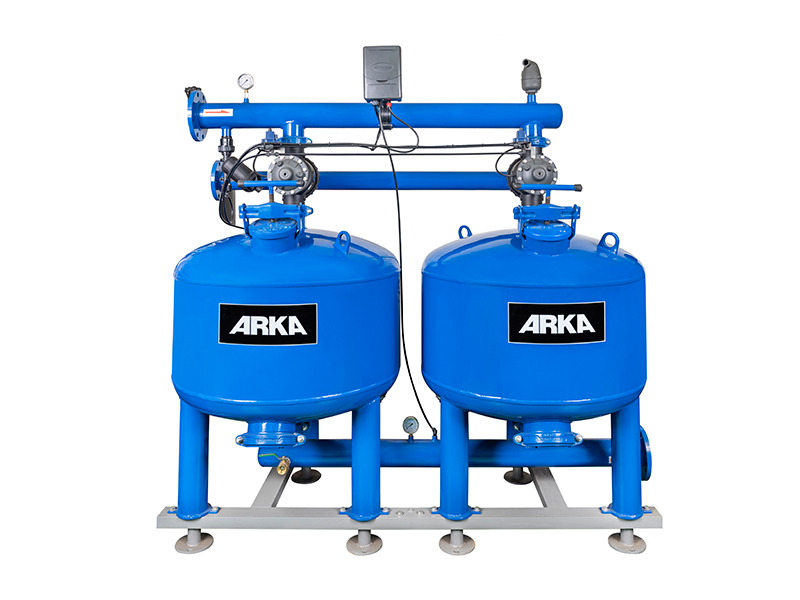
From an engineering perspective, efficient maintenance starts with selecting the right hardware. Outdated or undersized tanks require longer flush times and waste significantly more water. Upgrading to professional-grade equipment drastically reduces maintenance overhead. For instance, advanced systems like the Arka F40 Automatic Self-Cleaning Sand Media Filter utilize heavy-duty materials and optimized flow dynamics to cut down manual labor.
Below is a core comparison highlighting the difference between standard residential units and industrial-grade solutions.
| Feature | Standard Residential Filter | Arka F40 Industrial Grade Filter |
|---|---|---|
| Operation Mode | Manual Multiport Valve | Automatic Self-Cleaning |
| Max Pressure Rating | 2.5 to 3.5 Bar | Up to 10 Bar |
| Port Size | 1.5 inch | 2 inch to 3 inch |
| Material Construction | Thermoplastic | Carbon Steel or Stainless Steel |
| Maintenance Time | High manual monitoring | Minimal automated cycles |
Maintaining the structural integrity of your hardware prevents catastrophic failures and costly downtime. As a best practice, check your pressure gauge weekly. Your clean baseline is the most critical number in your mechanical logbook. When the gauge hits 8 to 10 PSI above that initial baseline, the media is saturated. Adhering strictly to this metric prevents the vessel from over-pressurizing. Excessive pressure places severe stress on the internal plumbing, the spider gasket, and the fiberglass shell itself.
Even with strict protocols, mechanical issues occasionally arise. If the sight glass remains stubborn and cloudy after five minutes of flushing, you are likely dealing with channeling. Channeling occurs when water carves a permanent path through calcified or hardened sand, rendering the rest of the filtration area useless. A gentle prod with a non-metallic tool or soaking the bed in a specialized chemical cleaner can break up these blockages.
Specifically, if you notice actual sand grains exiting your return jets, shut the system down immediately. This is a severe warning sign. An internal lateral or the central standpipe has likely cracked, requiring a complete media removal and internal repair.
Mastering your maintenance schedule saves water, protects your expensive plumbing, and guarantees a sparkling aquatic environment. Always rely on strict visual transparency. Respect the rinse phase to let your media compact properly. Never skip your routine baseline pressure checks. By adopting these professional habits, you transition from merely reacting to cloudy water to actively engineering a healthy ecosystem.
If your current setup requires constant, frustrating maintenance, it might be time for an upgrade. Explore high-efficiency, automated solutions at Arka Irrigation to drastically reduce your workload, protect your water chemistry, and improve your overall water clarity.
Yes. While an extended cycle will not physically explode your tank, it wastes a significant amount of chemically balanced water. This unnecessary loss forces you to replenish and rebalance your chemicals more often. This creates an expensive and time-consuming cycle. Always stop the pump as soon as the water runs clear.
You should only initiate a purge based on the pressure gauge reading, not a calendar. A sand bed is actually more efficient when it is slightly dirty. The trapped debris helps catch even finer particles. Only trigger a cleaning cycle when the pressure reaches 8 to 10 PSI above your clean baseline.
This issue is almost always due to skipping the rinse cycle. If you go straight from the reverse flow position to standard filtration, you push leftover dirty water and loose sand sitting in the pipes directly back into your clean pool. The rinse cycle serves as the mandatory bridge that keeps that dirt out of your circulation system.
Yes. Because you have just discharged a substantial volume of water and replaced it with fresh, unconditioned water, your chemical balance will shift. You must test your pH, alkalinity, and chlorine levels shortly after your next filtration cycle begins. Make the necessary adjustments to keep your pool safe and clear.
A failing spider gasket often reveals itself through constant leaking out of the waste line while the valve is set to filter. You might also notice dirty water returning to the pool or a sudden drop in operating pressure. Replacing the gasket promptly prevents water loss and maintains proper hydraulic flow.
Frequent flushing does not necessarily damage the sand grains themselves, but it severely reduces your filtration efficiency. Clean sand allows microscopic particles to pass through easily. Constantly resetting the bed prevents it from capturing fine debris, leading to perpetually hazy water.


